 Save to Pinterest
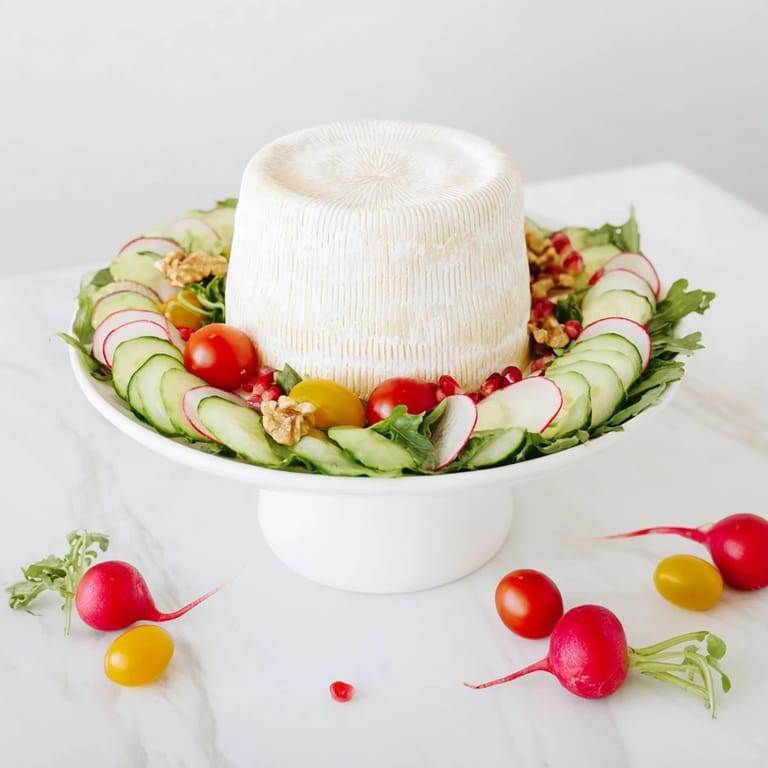
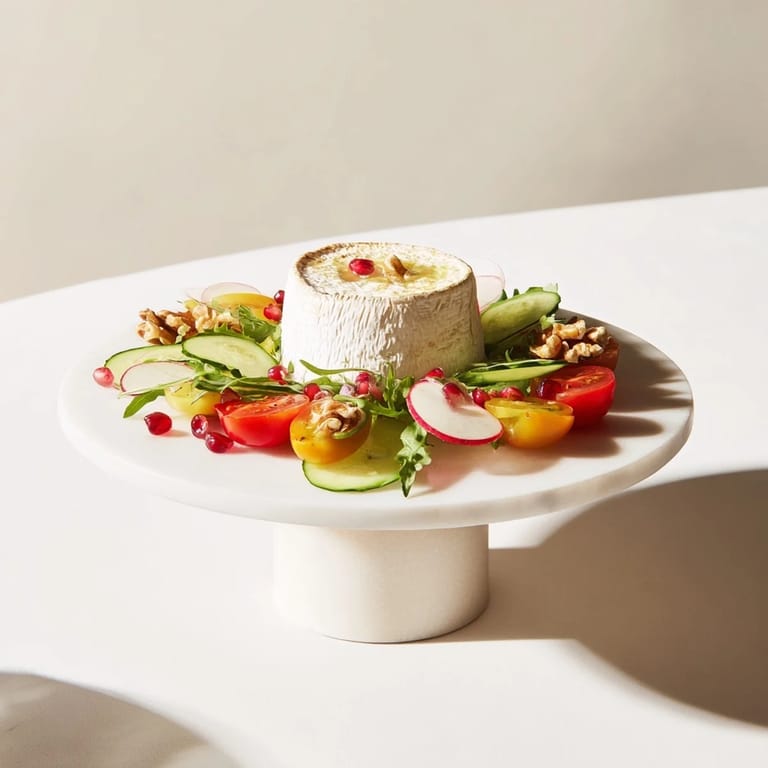
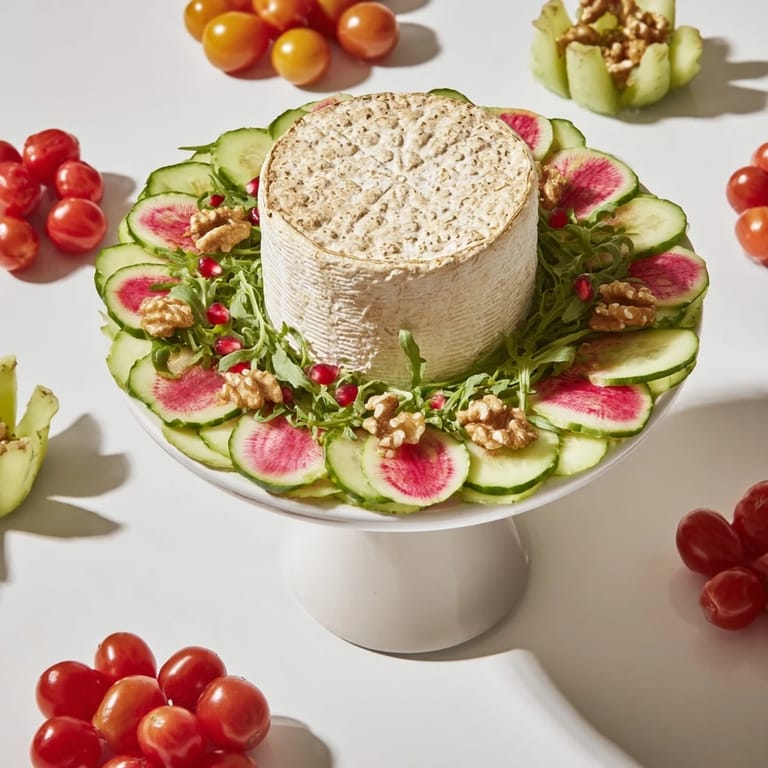
 I stumbled onto this salad by accident while reorganizing my kitchen one afternoon, realizing I had all these beautiful vegetables but no real plan for them. Instead of tossing them into a bowl like usual, I thought about how my favorite cheese shop owner always talked about presentation—how food gets eaten with the eyes first. So I grabbed a small wheel of Saint-Marcellin, set it down like a centerpiece, and started arranging everything around it. The moment my guests arrived and saw this geometric, almost architectural arrangement pointing toward the cheese like spokes on a wheel, something just clicked.
I made this for a dinner party on a particularly chaotic week, and I remember standing in front of the platter feeling genuinely nervous—not about the flavors, but about whether the visual would hold up to what I'd imagined. My partner came into the kitchen, saw it arranged on the board, and actually paused. Then one of our guests spent a solid minute just admiring it before eating, which felt like validation I didn't know I needed. That's when I realized presentation can actually make food taste better, or at least make people enjoy it more fully.
Ingredients
- Baby arugula: Use it fresh and cold straight from the fridge—it wilts disappointingly fast, so assemble this right before serving.
- Cherry tomatoes: Halving them exposes the juicy interior and makes them less likely to roll around while you're arranging.
- Cucumber: A mandoline slicer is your friend here, but be careful—thin, uniform slices create those clean lines that make the geometry work.
- Watermelon radish: The pink and white rings are what make this salad visually stunning, so don't skip it even if you can't find it immediately.
- Pomegranate seeds: These are your flavor wildcards and visual jewels—buy them pre-seeded if you're short on time.
- Toasted walnuts: Toast them yourself if possible, even just in a dry pan for three minutes—the smell will convince you it's worth it.
- Extra-virgin olive oil: This is your dressing's backbone, so use something you'd actually want to taste.
- White balsamic vinegar: It's milder and won't turn everything muddy brown like regular balsamic would.
- Honey: Just a teaspoon rounds out the dressing and keeps it from feeling too sharp.
- Dijon mustard: The emulsifier that holds the whole dressing together and adds a gentle kick.
- Artisanal cheese wheel: This is your focal point—pick something soft enough to spread but sturdy enough to sit pretty, like a Saint-Marcellin or ripe Brie.
Tired of Takeout? 🥡
Get 10 meals you can make faster than delivery arrives. Seriously.
One email. No spam. Unsubscribe anytime.
Instructions
- Set your stage:
- Place the cheese wheel slightly off-center on your platter—I learned the hard way that dead center feels too formal and less dynamic. A small pedestal or just a nice ceramic dish makes it feel intentional.
- Create the first arc:
- Spread the arugula in sweeping lines radiating outward from the cheese like you're drawing with greens. The loose, organic shape of arugula naturally creates movement.
- Build your geometry:
- Now comes the satisfying part—arrange tomatoes, cucumber, and watermelon radish in parallel rows, all angled toward the cheese like an invisible force is pulling them inward. This is where patience pays off.
- Add the sparkle:
- Scatter pomegranate seeds and walnuts throughout, keeping the directional pattern alive—they catch the light and break up the geometric lines in the right way.
- Make your dressing:
- Whisk oil, vinegar, honey, and mustard in a small bowl until emulsified and creamy, then season carefully. Taste as you go—this needs to brighten everything without overpowering the delicate vegetables.
- The final touch:
- Drizzle the dressing lightly across the vegetables, being very intentional about avoiding the cheese—you want people to experience both the dressed salad and the pure, creamy cheese separately. Let the platter sit for just a few minutes to let everything settle into place.
 Save to Pinterest
 What surprised me most about this salad wasn't the way it looked—though people do still talk about it—but how it changed the way we eat together. Everyone ended up using the cheese as a condiment, spreading it on their fork and mixing it with vegetables like we'd discovered some new recipe on the spot. It turned a salad into a hands-on experience, and somehow that made the meal feel less like dinner and more like play.
Playing with Your Cheese Choice
The personality of this salad completely shifts depending on which cheese you choose, and experimenting is part of the fun. I've used creamy Brie when I want something buttery and forgiving, Saint-Marcellin when I'm feeling a little more adventurous (it's nuttier and has this wrinkled rind that looks incredible on a board), and even a bloomy-rind goat cheese when I want brightness and tang. The geometry stays the same, but the eating experience is entirely different—that's the magic of letting one ingredient be the star.
Adapting for Your Vegetables and Season
This arrangement works because the vegetables have such varied colors and textures, but you're not locked into my specific choices. In summer, I add thin slices of ripe stone fruits and swap the arugula for some mixed greens. In fall, roasted beets and shaved fennel feel right. In winter, thinly sliced pear and toasted hazelnuts work beautifully. The principle is the same—variety in color and texture pointing toward that creamy center—so trust your seasonal instincts and what looks good at your market.
Making It Your Own
Once you've made this once, you'll start seeing endless variations, which is exactly what happened to me. Some guests have asked about adding protein like prosciutto or smoked salmon, which threads beautifully between the vegetables. Edible flowers scattered across the top add another visual dimension without changing the flavor profile. Even the dressing can shift—I've made versions with sherry vinegar, with a touch of maple instead of honey, or with fresh thyme whispered into the oil.
- If you want something non-vegetarian, lay thin slices of good prosciutto or smoked salmon in delicate arcs around the cheese.
- Edible pansies, nasturtiums, or violas scattered across the board make this feel like something from a magazine shoot.
- The best part is that every time you make it, it's actually a different salad based on what moved you that day.
 Save to Pinterest
 This salad taught me that beautiful food and delicious food don't have to be complicated to be memorable. It's become my go-to when I want to feel like I'm doing something special without disappearing into my kitchen.