 Save to Pinterest
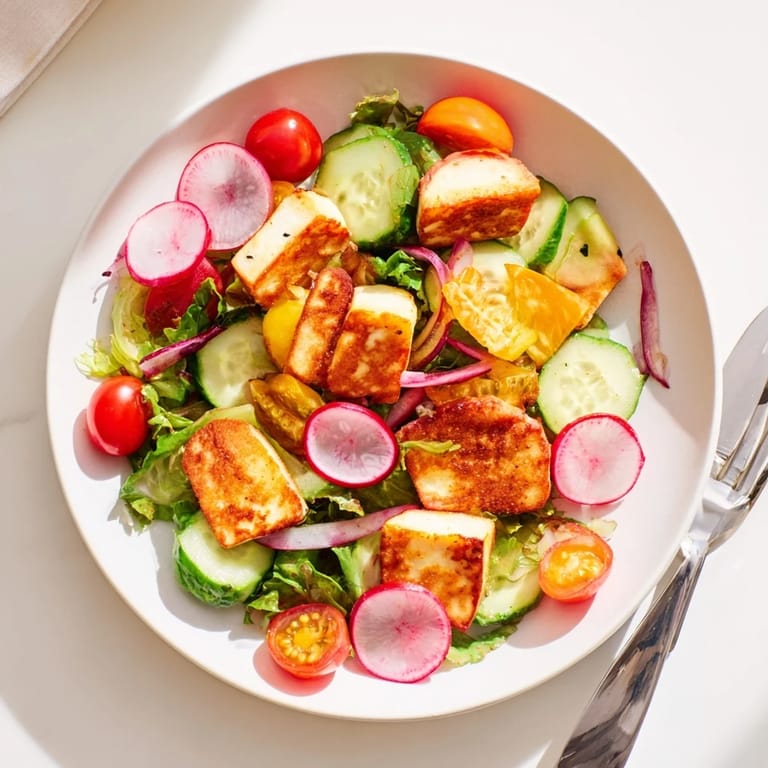
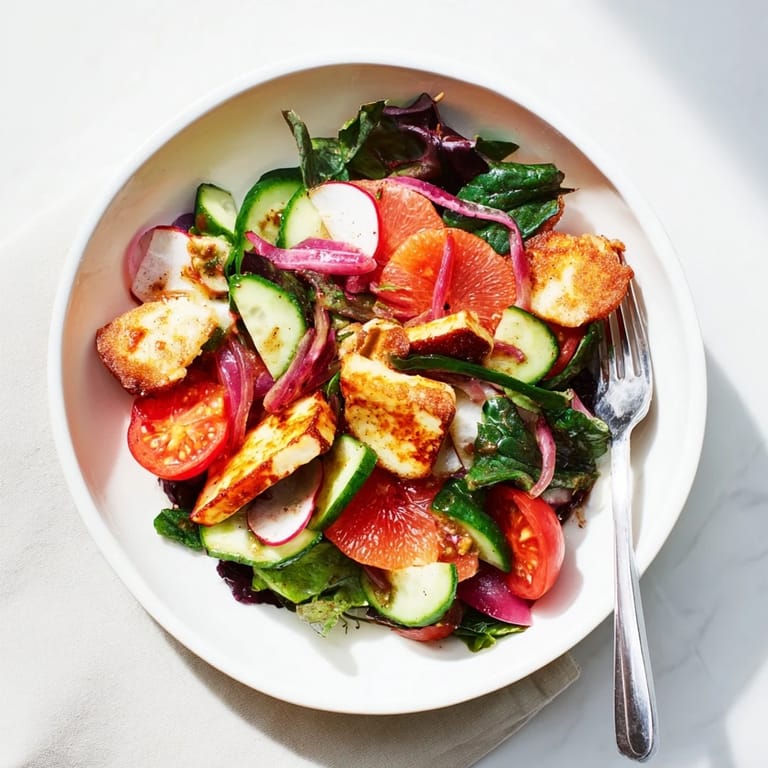
 My neighbor once handed me a bag of blood oranges from her tree, their crimson flesh bleeding through the peel like stained glass. I had halloumi in the fridge and stale sourdough on the counter, so I threw together what I thought would be a quick lunch. What emerged was something far more alive than I expected: salty, tangy, sweet, and so bright it felt like eating sunshine with an edge.
I made this for a friend who swore she hated salads, and she scraped the bowl clean with a piece of pita. She kept asking what made it taste so good, and I realized it was the contrast: the way the hot, salty halloumi softened the bitter greens, and how the blood orange cut through the richness like a knife. Sometimes the best meals happen when you stop trying to follow a plan and just let ingredients talk to each other.
Ingredients
- Halloumi cheese: This is the star, a squeaky, salty cheese that fries up golden without melting into a puddle, giving you crispy edges and a soft, chewy center.
- Blood oranges: Their deep ruby color and sweet-tart flavor make this salad feel special, but regular oranges work just fine if that is what you have.
- Mixed salad greens: I like a mix of romaine for crunch, arugula for pepper, and fresh parsley and mint for that herbal brightness that makes it taste alive.
- Cucumber: Adds a cool, watery crunch that balances the richness of the cheese and dressing.
- Cherry tomatoes: Halved so their juices mingle with the dressing, turning every bite a little more flavorful.
- Radishes: Thinly sliced for a crisp, peppery bite that wakes up your palate.
- Red onion: Slice it thin and it adds sharpness without overwhelming the other flavors.
- Sourdough bread: Stale bread is actually better here because it crisps up beautifully and soaks up the dressing without turning soggy.
- Olive oil: Use the good stuff for the dressing, it makes a difference when the flavors are this simple.
- Lemon juice and red wine vinegar: The acid duo that brightens everything and makes the salad sing.
- Ground sumac: This tangy, lemony spice is the secret to that unmistakable Middle Eastern flavor.
- Pomegranate molasses: Thick, tart, and slightly sweet, it adds depth and a glossy richness to the dressing.
Tired of Takeout? 🥡
Get 10 meals you can make faster than delivery arrives. Seriously.
One email. No spam. Unsubscribe anytime.
Instructions
- Toast the croutons:
- Preheat your oven to 180°C and toss the sourdough cubes with olive oil and a pinch of salt. Spread them on a baking sheet and bake for 8 to 10 minutes, turning once, until they are golden and crisp.
- Whisk the dressing:
- In a small bowl, whisk together the olive oil, lemon juice, red wine vinegar, sumac, pomegranate molasses, salt, and pepper. Taste it and adjust if you want more tang or sweetness.
- Fry the halloumi:
- Heat a tablespoon of olive oil in a nonstick skillet over medium heat and add the halloumi slices. Fry them for 1 to 2 minutes per side until they are golden brown and crispy on the edges, then transfer to a plate.
- Assemble the salad base:
- In a large bowl, combine the salad greens, cucumber, cherry tomatoes, radish, and red onion. Toss them gently so everything is evenly mixed.
- Add the toppings:
- Lay the blood orange slices, warm halloumi, and sourdough croutons on top of the greens. The contrast of hot and cold makes every bite interesting.
- Dress and serve:
- Drizzle the dressing over everything and toss gently to combine. Serve immediately while the halloumi is still warm and the croutons are crisp.
 Save to Pinterest
 The first time I served this at a potluck, someone asked if I had ordered it from a restaurant. I laughed because half the ingredients came from my fridge clean out pile. But that is the magic of a good salad: it makes leftovers and odds and ends look like you knew what you were doing all along.
How to Pick the Best Ingredients
Look for halloumi that feels firm and springy, not soft or wet. Blood oranges should feel heavy for their size, which means they are juicy inside. If your sourdough is fresh, leave it out overnight uncovered so it dries out a bit, it will crisp up better in the oven. Fresh herbs make a huge difference here, so grab a bunch of parsley and mint if you can.
What to Do with Leftovers
This salad does not keep well once dressed, but you can store the components separately. Keep the greens, vegetables, and cheese in one container, the croutons in another, and the dressing in a jar. When you are ready to eat, fry fresh halloumi and toss everything together. Leftover dressing is excellent on roasted vegetables or drizzled over grilled chicken.
Ways to Make It Your Own
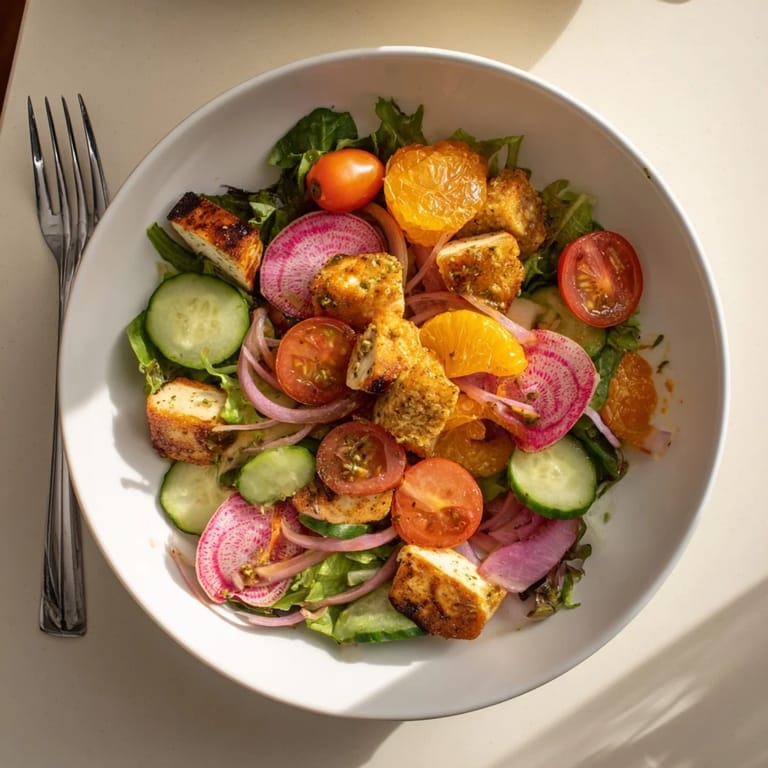
Some nights I throw in a handful of toasted walnuts or pine nuts for extra crunch. Other times I add pitted Kalamata olives or a few spoonfuls of cooked chickpeas to make it more filling. If blood oranges are not in season, regular oranges or even grapefruit work beautifully.
- Swap the halloumi for grilled tofu or vegan feta if you want a plant based version.
- Add a handful of pomegranate seeds for a jewel like pop of sweetness.
- Use gluten free bread if you need to avoid gluten, it crisps up just as well.
 Save to Pinterest
 This salad has become my answer to the question of what to make when I want something that feels special but does not require a plan. It is bright, filling, and full of texture, and it always reminds me that good food does not have to be complicated.
Common Recipe Questions
- → Can I prepare this salad ahead of time?
You can prep the components separately in advance—make the dressing, toast the croutons, and chop the vegetables up to 2 hours ahead. Fry the halloumi just before serving to keep it warm and crispy. Assemble and toss everything together right before eating to maintain texture.
- → What can I use instead of blood oranges?
Regular oranges, navel oranges, or even tangerines work wonderfully as substitutes. If you prefer something less sweet, try using grapefruit segments or pomegranate arils for a different flavor profile while maintaining the citrus brightness.
- → How do I make this salad vegan?
Simply replace the halloumi with grilled tofu slices, tempeh, or vegan feta crumbles. Pan-fry the tofu or tempeh until golden and crispy using the same method as the cheese. The rest of the salad is naturally vegan-friendly.
- → Where can I find sumac and pomegranate molasses?
Both ingredients are available at Middle Eastern markets, specialty grocery stores, and online retailers. Sumac has a lemony tartness, while pomegranate molasses adds depth. If unavailable, substitute extra lemon juice and a touch of honey for similar brightness.
- → Can I make this gluten-free?
Yes, absolutely. Simply use gluten-free bread for the croutons and prepare them the same way—toss with olive oil and salt, then bake until golden. All other ingredients are naturally gluten-free, making this an easy adaptation for dietary needs.
- → What's the best way to store leftovers?
Store dressed and undressed salad components separately in airtight containers for up to 1 day. Keep the halloumi and croutons in separate containers to maintain their texture. The dressing keeps refrigerated for up to 3 days. Reassemble when ready to eat.