 Save to Pinterest
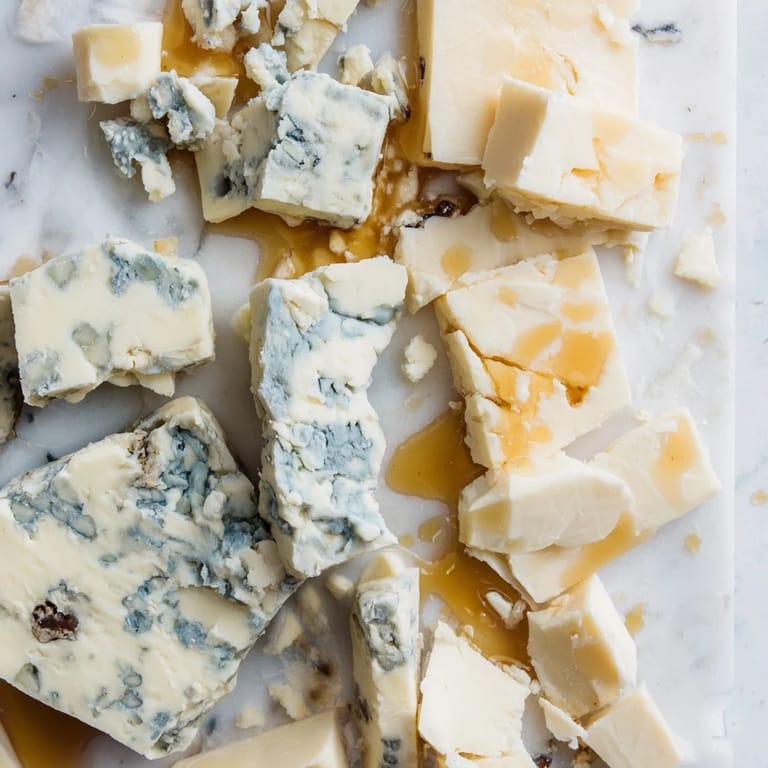
 I discovered this presentation at a wine tasting where a server laid out an almost sculptural cheese board on a slab of marble—it looked less like food and more like an art installation. The irregular chunks of blue and white cheddar caught the light differently, and suddenly I realized that cheese didn't have to be carefully cubed or sliced thin. That casual, almost careless arrangement felt both elegant and utterly relaxed, which is exactly how I wanted to entertain.
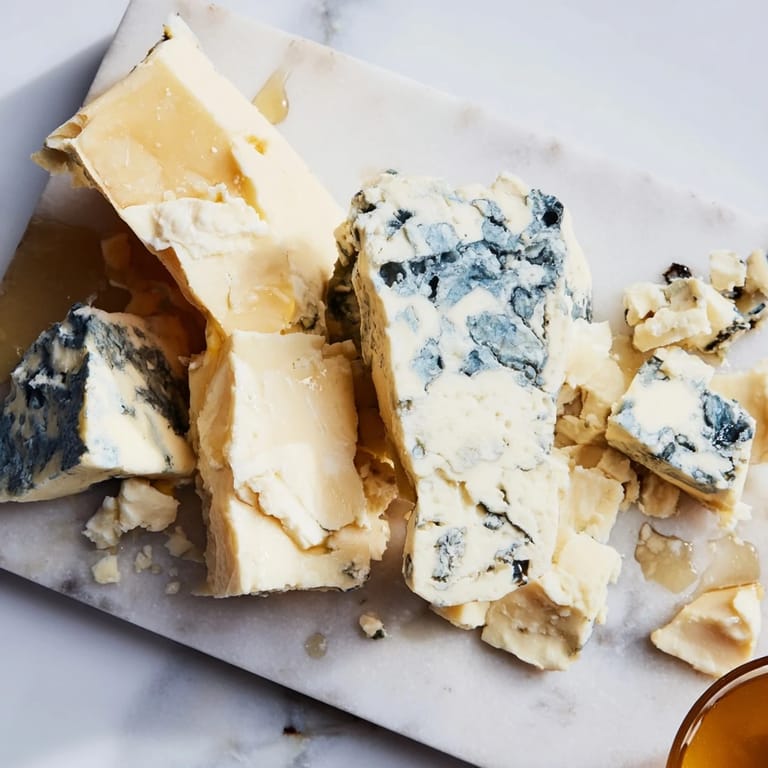
I made this for a small gathering on a lazy afternoon, and I watched friends gravitate toward the board like moths—not because it was complicated, but because the visual alone made them curious. Someone asked if I'd arranged it that way on purpose, and I realized the 'quarry' effect, with all those irregular chunks and negative space, actually made the cheese feel more approachable than a carefully organized spread ever could.
Ingredients
- Blue cheese (Roquefort, Gorgonzola, or Stilton): Two hundred grams cut into large, irregular chunks—buy a wedge and break it apart with your hands or a knife, letting the pieces fall where they will, because perfection here is imperfection.
- Aged white cheddar: Two hundred grams in similarly rough chunks, which will have a slightly firmer texture and a more subdued sharpness than the blue, creating a genuine dialogue between the two.
- Fresh grapes or sliced pears: Optional but wonderful, they provide sweetness and a cool, crisp contrast that makes guests reach for more cheese.
- Crackers or crusty bread: Whatever you choose should be sturdy enough to hold a chunk without crumbling, and flavorful enough not to disappear against the bold cheeses.
- Honey or fig jam: A small bowl of either adds a touch of refinement and gives people a choice in how they want to experience the cheese.
Tired of Takeout? 🥡
Get 10 meals you can make faster than delivery arrives. Seriously.
One email. No spam. Unsubscribe anytime.
Instructions
- Set the stage:
- Place your marble slab on the table where it will live for the next hour or two—you want it visible and inviting.
- Scatter and space:
- Distribute the blue cheese and white cheddar chunks across the slab with breathing room between them, as though you're arranging stones in a garden rather than filling every gap.
- Layer in the sweetness:
- Tuck grapes, pear slices, and small bowls of honey or jam into the negative space, letting them sit among the cheese like found objects.
- Bring it to the table:
- Set crackers or bread nearby, close enough to reach but not crowding the star of the show.
 Save to Pinterest
 There was a moment when my mother-in-law, who rarely ventures beyond mild flavors, tried a piece of the blue cheese with a grape and her whole face changed—not in rejection, but in surprise that bold and sweet could live on the same bite. That's when The Marble Quarry stopped being about presentation and became about permission: permission to try something sharp, something different, something you might not have reached for on your own.
The Marble Slab Matters More Than You'd Think
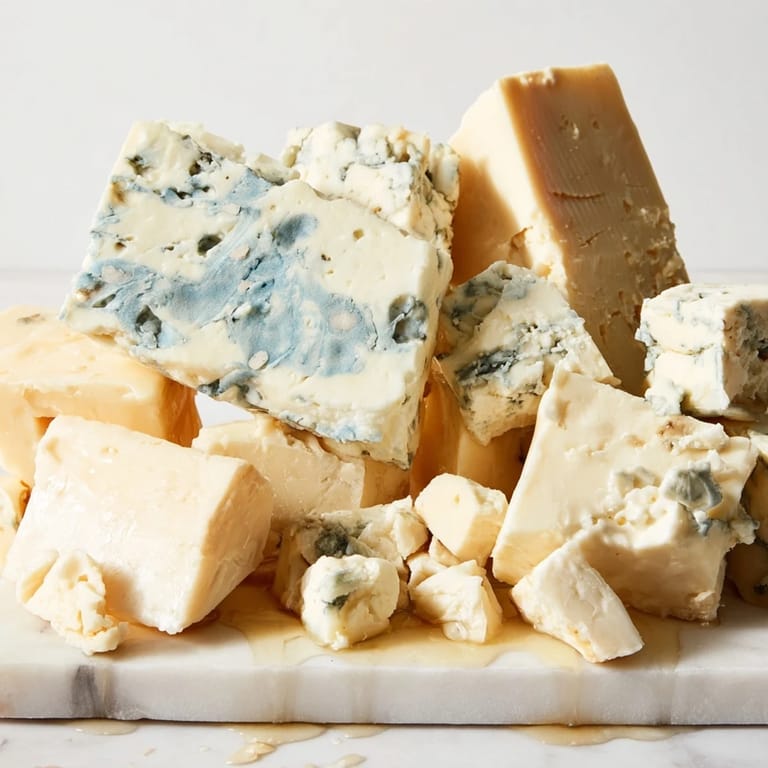
I used a regular platter for my first attempt and felt like something was missing—not the taste, but the visual authority. The moment I switched to marble, the whole board transformed into something with weight and intention. The cool surface keeps the cheeses at the right temperature longer, and aesthetically, the neutral gray or white marble lets the blue and golden-white cheeses be the focal point instead of competing with a busy pattern. If you don't have marble, a polished stone slab or even a large, pale wooden board can work, but do chill it beforehand.
Why Irregular Chunks Change Everything
Perfectly cubed cheese reads as formal and controlled, which is fine for some occasions, but these rough chunks feel more generous and less precious. They also break apart into different sizes as people pick at them, so the board evolves throughout the evening—some guests want a small bite, others hack off a bigger wedge. The irregular shapes catch light differently too, which sounds like a detail but makes the whole thing look more alive and less staged. You're not curating; you're inviting.
Pairing and Serving Wisdom
This board wants companions that won't fight for attention—a crisp white wine or a light-bodied red will let the cheese be the focus. Avoid heavily spiced or smoked accompaniments, because the goal is to taste the cheese, not mask it. If you're serving this as part of a larger spread, position it so it's the first thing people encounter, before they fill up on heartier items.
- Chill your marble slab in the freezer for fifteen minutes before arranging so the cheeses stay cool through the first hour of entertaining.
- Add a third cheese in a contrasting color—a golden washed-rind or creamy goat cheese—if you want to expand the visual impact without adding complexity.
- Never cut the cheese more than twenty minutes before serving, because exposed edges dry out and lose their appeal.
 Save to Pinterest
 This is the kind of recipe that proves that restraint and good ingredients do more work than complicated technique. It's a love letter to cheese, yes, but also to the people you're serving it to, because you're saying: I trust your palate and your taste, so here are the best things, arranged for you to explore.
Common Recipe Questions
- → What cheeses work best for this presentation?
Large chunks of blue cheese, such as Roquefort or Stilton, paired with aged white cheddar create a bold flavor and visual contrast.
- → How can I keep the cheeses fresh during serving?
Chilling the marble slab beforehand helps keep the cheeses cool and maintains their texture throughout serving.
- → What accompaniments enhance the flavor experience?
Fresh grapes or pear slices, along with honey or fig jam, add sweetness and freshness to balance the cheeses.
- → Are there suggested beverage pairings?
Crisp white wines or light-bodied reds complement the bold and creamy flavors of the cheeses nicely.
- → Can I add more varieties of cheese?
Yes, including a third cheese with unique color or texture, like a creamy goat cheese, adds visual and taste contrast.