 Save to Pinterest
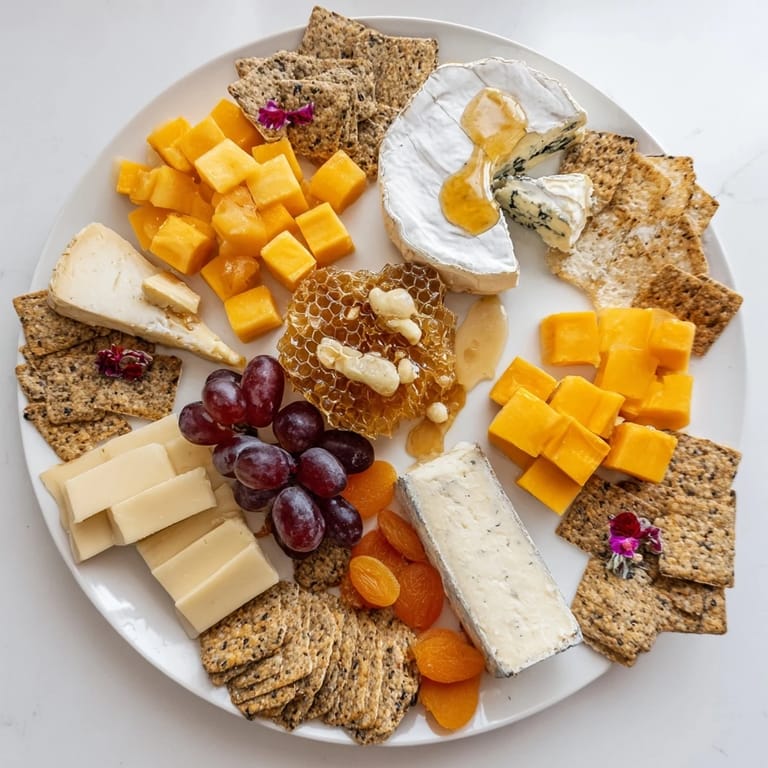
 I discovered the magic of geometric precision in entertaining quite by accident when a friend brought honeycomb to my kitchen one autumn afternoon. She set it on the counter, golden and gleaming, and suddenly the whole idea of a cheese board transformed in my mind—what if every element echoed that perfect hexagonal pattern? That's when I started cutting, testing, and eventually perfecting this radiant arrangement that makes people pause before eating because it's almost too beautiful to disturb.
I'll never forget the moment my usually impatient teenage cousin actually slowed down and studied the board before picking anything, asking why the pattern made the food taste different. It didn't, of course, but there's something about intention in presentation that changes how people experience what you've made.
Ingredients
- Manchego cheese: This Spanish staple brings a nutty, slightly salty note that anchors the board without overpowering softer cheeses.
- Aged cheddar: Choose one with visible crystallization for both flavor depth and visual interest among the pale hexagons.
- Gruyère: Its smooth, caramel undertones create a bridge between sharp and mild, essential for flavor balance.
- Brie: The creamy anchor that everyone gravitates toward—chill it before cutting for edges that don't crumble.
- Blue cheese: Just enough intensity to remind people why they love cheese boards, without dominating the experience.
- Goat cheese log: Slice and chill this one first; it's the most temperamental but worth the extra care.
- Whole wheat crackers: The sturdy foundation that won't shatter under the weight of cheese and won't fade visually next to golden honey.
- Seeded crackers: These add textural variety and their flecks create visual rhythm across the board.
- Edible honeycomb: The true centerpiece—order this ahead because it's harder to find than you'd think but absolutely worth tracking down.
- Runny honey: Use the good stuff here; its warmth and viscosity make the final drizzle look intentional and inviting.
- Marcona almonds: Roasted and salted, they fill gaps with color and keep people reaching back to the board.
- Dried apricots: Their apricot-orange brings warmth and prevents the board from looking too monochromatic.
- Fresh grapes: A few scattered gems that catch light and add juiciness to an otherwise dry board.
- Edible flowers or microgreens: Optional but they transform the board from elegant to unforgettable in seconds.
Tired of Takeout? 🥡
Get 10 meals you can make faster than delivery arrives. Seriously.
One email. No spam. Unsubscribe anytime.
Instructions
- Gather your tools and chill what needs chilling:
- Get your hexagon cutter, a sharp cheese knife, and your serving board ready. If you're working with Brie or goat cheese, pop them in the fridge for 20 minutes so they firm up just enough to cut cleanly without sticking to the blade.
- Cut the cheeses into perfect hexagons:
- Work through each cheese deliberately, wiping your cutter clean between cuts because residual cheese makes the next cut ragged. If a piece breaks, set it aside for later snacking—there's always broken cheese in this recipe, and it tastes just as good.
- Transform the crackers into hexagons:
- Use the same cutter for visual cohesion, but know that some crackers will shatter and that's okay. You only need the intact ones anyway, so select your best pieces and don't fight with fragile ones.
- Position the honeycomb at the center:
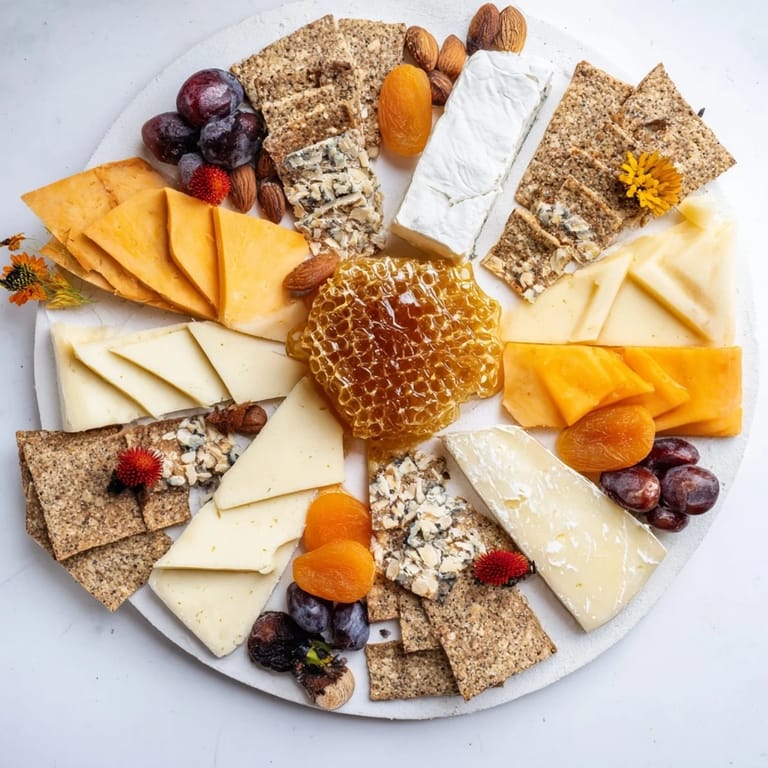
- Place it directly in the middle of your board, centered and slightly elevated if possible so it becomes the visual anchor everything radiates from. This isn't just decoration—it's the compass point of the entire arrangement.
- Arrange cheese in radiating circles:
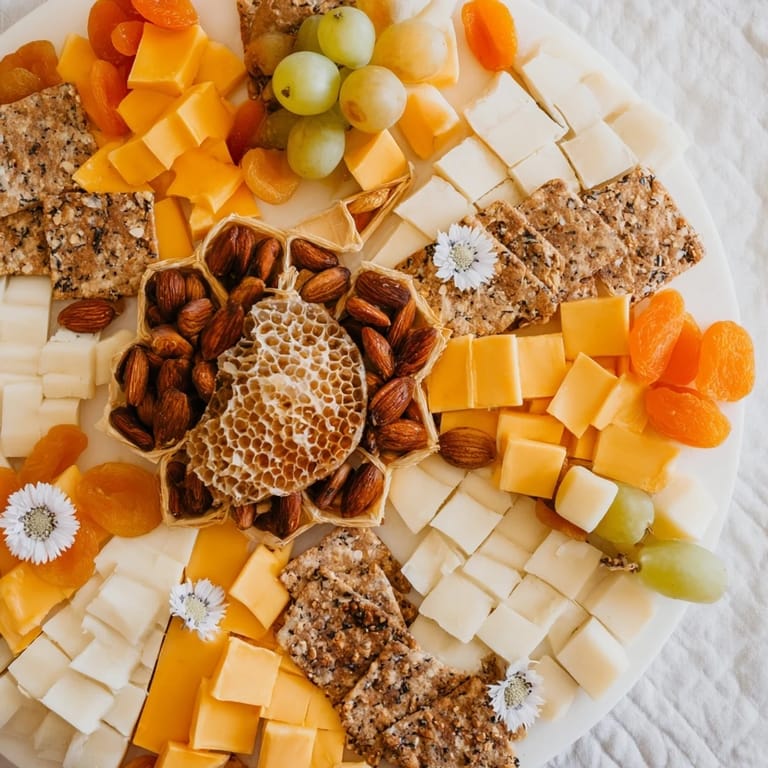
- Starting closest to the honeycomb, lay down your first circle of cheese hexagons, alternating types and colors. Watch the pattern emerge as you place each piece, stepping back occasionally to see if the color balance feels right.
- Build concentric circles with crackers:
- Create rings of crackers around the cheese circles, continuing that outward spiral. The repetition of hexagon shapes creates a hypnotic quality that makes people lean in closer.
- Fill the gaps with almonds, apricots, and grapes:
- Tuck these into the empty spaces between shapes, using them to add color balance and visual movement. Apricots near the center catch light similarly to honey, while grapes add unexpected pops of green and jewel tones.
- Drizzle honey with intention:
- Create thin lines or small pools of honey around the honeycomb center and across some of the cheeses, letting it pool slightly. The honey becomes both flavor and visual gloss, catching light and reminding people why this board is called The Gilded Hive.
- Add garnish and serve immediately:
- If using edible flowers or microgreens, place them just before serving so they stay fresh and vibrant. Set out cheese knives or small spreaders so guests feel invited to engage with the board rather than tentatively plucking pieces.
 Save to Pinterest
 There was a quiet moment at a dinner party when someone asked the host—my friend—if she'd ordered this from a caterer. She hadn't, and I watched her face light up with that specific joy that comes from making something so beautiful people assume it's professional. That's when I realized this board isn't just about taste or presentation; it's about claiming your own skill and feeding people something made with deliberate care.
Why Geometry Makes Everything Better
The hexagon isn't just decorative—it's strategic. Unlike random arranging, geometric patterns create visual rest for the eye and make the board feel intentional rather than scattered. When everything echoes the same shape, your brain relaxes into the pattern, and that relaxation makes people actually enjoy their experience instead of just grabbing snacks. I learned this through trial and error, and once I saw how much the pattern itself contributes to the meal, I stopped apologizing for the extra cutting time and started owning it as part of the craft.
The Cheese Selection Strategy
Don't overthink which cheeses to use, but do think about contrast. You want at least one funky cheese (blue), one creamy cheese (Brie), one dense cheese (Manchego), and something with personality (aged cheddar or Gruyère). When I started treating the cheese board like a color palette instead of just a grocery list, the whole thing came together faster and tasted more balanced. Season, availability, and personal preference should guide your choices—this is a starting point, not a rigid formula.
Timing and Temperature Secrets
The biggest mistake I made early on was assembling the board hours ahead, thinking I was being efficient. Cheese at room temperature starts sweating and losing definition; crackers get soft; the whole careful arrangement begins to lose its crisp energy. Now I assemble no more than two hours before guests arrive, and I keep everything cool until the final moment. If you're worried about prep, cut and arrange everything on parchment beforehand, then slide it onto your actual serving board right before people arrive. You'll also want to chill your board itself if it's marble or wood—a cool surface keeps cheese from softening too quickly once it's placed.
- Cut all components ahead, but don't assemble until two hours before serving.
- A chilled board extends the window before cheese begins to soften noticeably.
- Have cheese knives ready so guests don't tear soft cheeses trying to pick them up.
 Save to Pinterest
 Every time I make this board, I'm reminded that feeding people isn't just about nutrition or even flavor—it's about the story you tell with care and presentation. The Gilded Hive feels like a small luxury, but it's really just intention made edible.
Common Recipe Questions
- → How do I get clean hexagon cuts on soft cheeses?
Chill softer cheeses like Brie or goat cheese briefly before cutting to help them slice cleanly with a hexagon cutter.
- → What is the best way to arrange the cheese and crackers?
Place the honeycomb at the center, then arrange cheeses in a circular pattern around it, followed by concentric layers of hexagon-cut crackers for a radiant effect.
- → Can I substitute any cheeses for this board?
Yes, feel free to use seasonal or preferred cheeses as long as you offer a variety of textures and flavors for balance.
- → What accompaniments enhance the board’s flavor?
Adding Marcona almonds, dried apricots, fresh grapes, and drizzled honey enhances both color and taste.
- → Are gluten-free crackers suitable for this arrangement?
Gluten-free crackers work well as a substitute if needed, just ensure they can be trimmed into hexagons without breaking excessively.
- → How should I serve this board for best presentation?
Arrange just before serving to maintain cheese texture and provide cheese knives or spreaders for guests.