 Save to Pinterest
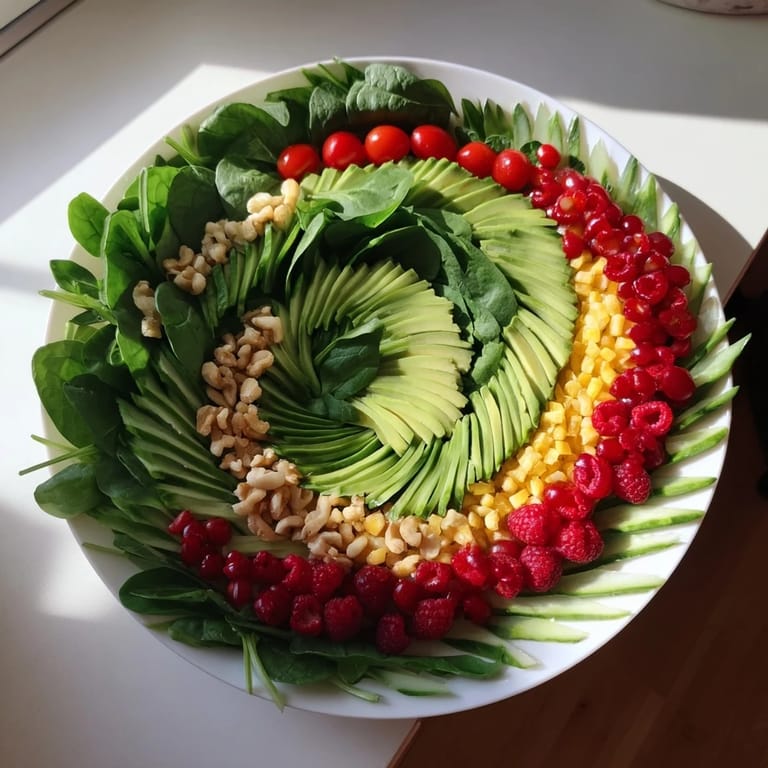
 I discovered the Fibonacci Fan Salad while sketching spirals on a napkin at a farmers market, surrounded by vendors calling out their produce in overlapping voices. It struck me that nature's perfect ratio—the golden spiral—could translate into something edible and beautiful, a way to arrange vegetables that made sense both mathematically and on the palate. That afternoon, I went home with a basket of greens and began layering them in expanding arcs, each ingredient cascading outward like the universe unfolding. What started as a visual experiment became a salad that tastes as thoughtfully composed as it looks.
I made this for a potluck where everyone else brought casseroles and dips, and I watched my partner's face light up when I set it down—not just because it looked striking, but because they recognized the spiral pattern we'd studied together in a library book about nature. That small moment of connection, baked into the arrangement itself, reminded me that the best meals are the ones that whisper something personal to the people eating them.
Ingredients
- Baby spinach leaves: The foundation of your spiral—mild, tender, and the perfect canvas for everything that follows.
- Arugula: Its peppery bite wakes up the palate and bridges the softer spinach with the sharper elements ahead.
- Cherry tomatoes, halved: A burst of sweetness and color that catches the light on the plate.
- Cucumber, thinly sliced: Keep it crisp by slicing just before assembly; it stays freshest this way.
- Radishes, thinly sliced: Their crunch is non-negotiable—they're what makes you keep eating.
- Red onion, finely sliced: Use less than you think; its sharpness travels farther than it appears.
- Avocado, sliced: Add it last and serve immediately, or toss it lightly in lemon juice to prevent browning.
- Blueberries: A secret ingredient that adds a subtle sweetness and unexpected visual drama.
- Toasted walnuts, chopped: Toast them yourself just before using—the difference between stale and alive is five minutes in a dry pan.
- Crumbled feta cheese: The salty anchor that ties everything together.
- Extra-virgin olive oil: Don't compromise here; a good oil tastes like autumn.
- Lemon juice: Fresh squeezed, always—bottled tastes like resignation.
- Honey: One teaspoon rounds out the dressing's sharp edges.
- Dijon mustard: It emulsifies the dressing and adds a subtle backbone you'll taste but not identify.
Tired of Takeout? 🥡
Get 10 meals you can make faster than delivery arrives. Seriously.
One email. No spam. Unsubscribe anytime.
Instructions
- Arrange the spinach foundation:
- Lay your large round platter in front of you like a canvas, then gently place baby spinach leaves in a loose crescent shape at the center, forming the innermost arc of your spiral. Think of it as laying a path for everything to follow.
- Create the arugula fan:
- Overlap arugula leaves outward from the spinach, each leaf slightly larger than the last, so they catch light differently and create visual depth. This is where the spiral truly begins to reveal itself.
- Build the expanding rings:
- Arrange cherry tomato halves in the next arc, then cucumber slices, then radishes, each section growing incrementally outward and following the spiral's natural ratio. You're not measuring with rulers—just trust your eye to sense when each ring feels proportional.
- Add the accent elements:
- Lay thin red onion slices as a delicate ring near the outer edge, then nestle avocado slices and blueberries throughout the spiral, spacing them so your eyes travel the pattern before settling on any one thing.
- Finish with texture:
- Scatter toasted walnuts and crumbled feta across the entire arrangement, letting them land where they may rather than distributing them evenly—the randomness makes it feel less staged and more honest.
- Whisk the dressing:
- In a small bowl, combine olive oil, lemon juice, honey, and Dijon mustard, whisking until it emulsifies into something glossy and unified. Taste, then adjust salt and pepper until it tastes like brightness.
- Serve with intention:
- Drizzle the dressing over the salad just before bringing it to the table, moving the bottle in a spiral to mirror what's on the plate. This final gesture transforms arrangement into a meal.
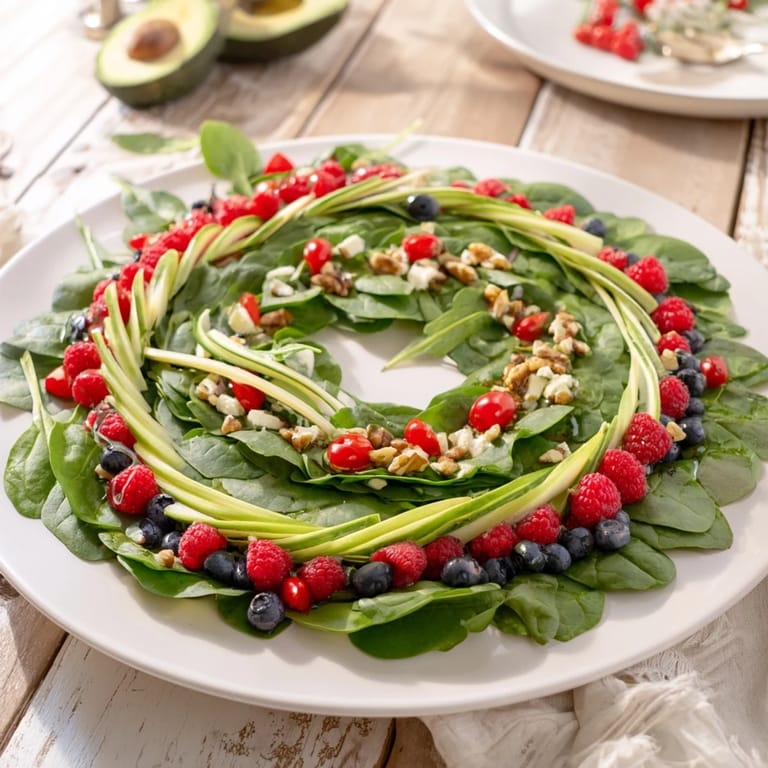 Save to Pinterest
 There's something profound about making food that is beautiful enough to photograph but humble enough to dismantle and eat. This salad taught me that perfection isn't about things staying exactly as arranged—it's about the moment of appreciation before everything becomes part of something nourishing.
The Math Behind the Beauty
The Fibonacci sequence appears everywhere in nature—in sunflower seeds, in spiral galaxies, in the curl of a fern—and arranging ingredients according to this ratio creates a visual harmony that feels almost inevitable once you see it. I didn't invent this idea, of course; nature did, and I simply borrowed it. What surprised me was how this mathematical arrangement actually enhances the eating experience, because as you make your way inward or outward around the plate, the flavors build and shift in a deliberate way, never chaotic, always balanced.
Customization Without Losing the Pattern
The beauty of this salad is that it's not rigid—you can swap ingredients based on season, availability, or what's in your garden without breaking its visual logic. In summer, I've used heirloom tomatoes and fresh corn kernels; in autumn, I've added roasted beets and apple slices; in spring, tender peas and shaved asparagus work beautifully. The spiral is merely the vessel; what you fill it with is your own conversation with what's available.
Making It a Meal
On its own, this salad is a luminous side dish, a palate cleanser, a small work of art. But it also accepts additions gracefully—grilled chicken breast, pan-seared tofu, roasted chickpeas, or even soft-boiled eggs nestle into the spiral without disrupting its visual integrity. I've learned that the best recipes are those that know what they are but don't insist on staying that way.
- Add grilled chicken for protein without losing the visual thread of the dish.
- Swap in goat cheese if feta feels too intense, or use both for a richer, more complex bite.
- Serve alongside crusty bread to catch any dressing that pools at the bottom of the platter.
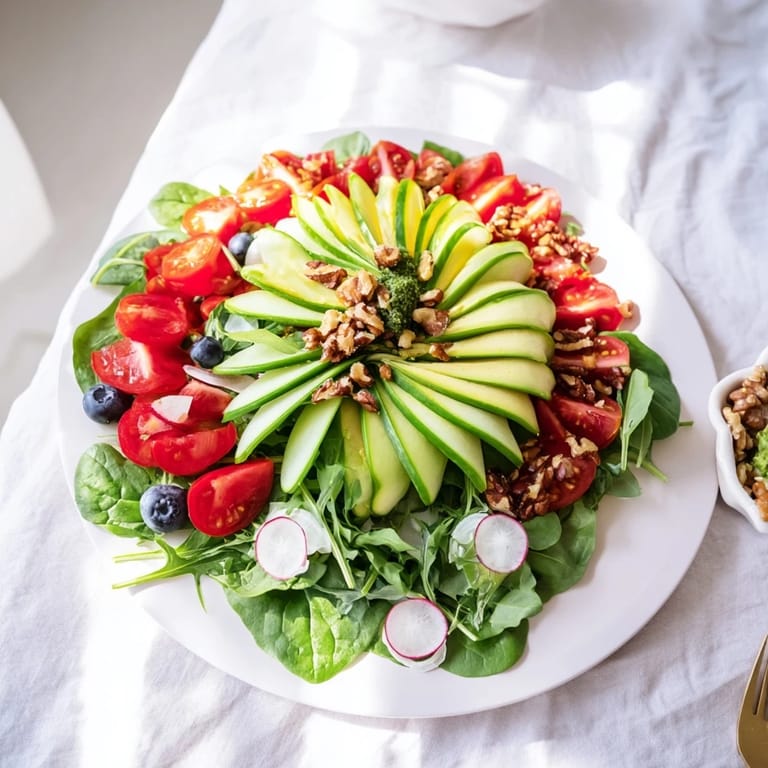 Save to Pinterest
 This salad reminds me that food is a language—it speaks through color and shape and texture before your fork ever touches it. Make it slowly, arrange it with attention, and you've already said something worth hearing.
Common Recipe Questions
- → How is the salad arranged for presentation?
The ingredients are layered in expanding arcs following the golden spiral pattern, starting with spinach and moving outward with arugula, cherry tomatoes, cucumbers, radishes, and red onion for a visually balanced look.
- → What dressing complements this salad?
A simple dressing made from extra-virgin olive oil, lemon juice, honey, Dijon mustard, salt, and pepper is whisked together and drizzled just before serving to enhance flavors.
- → Can protein be added to this salad?
Yes, grilled chicken or chickpeas can be added on top to increase protein content while maintaining freshness.
- → Are there any common allergens in this dish?
This salad contains dairy from feta cheese, tree nuts from walnuts, and mustard in the dressing, which should be noted for allergen awareness.
- → What substitutions are recommended for cheese?
Goat cheese can be substituted for feta to vary flavor while keeping the creamy texture.
- → How long does preparation take?
Preparing the salad takes approximately 20 minutes, with no cooking required, making it a quick and easy option.