 Save to Pinterest
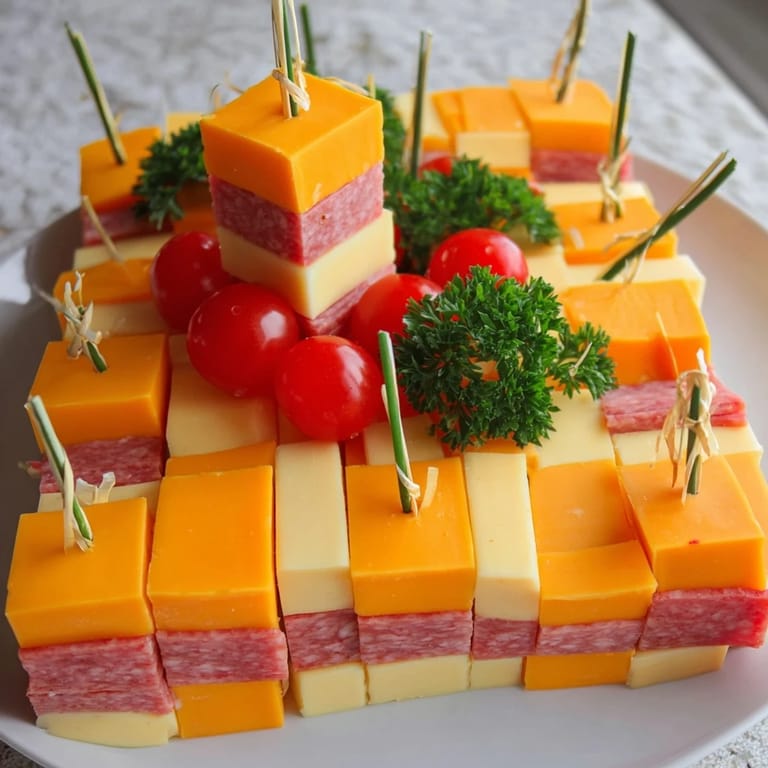
 My sister called with an impossible request: impress thirty people at her gallery opening with something nobody had ever seen before. I was standing in my kitchen at midnight, surrounded by cheese wheels and cured meats, when it hit me—what if I built them an actual structure? The Checkerboard Chalet was born from that moment of creative panic, and it became the dish that made people stop mid-conversation and actually look at their food.
I still remember pulling that platter out from the kitchen and watching the room go completely quiet. Someone asked if it was edible, and when I nodded, five people reached for toothpicks at once. That's when I knew this wasn't just an appetizer—it was a conversation starter that happened to be delicious.
Ingredients
- Sharp cheddar cheese: Cut into 1.5 cm cubes and slices; the sharpness cuts through the richness of the cured meats and keeps your palate interested.
- Swiss cheese: Cubed and sliced to match the cheddar for that classic checkerboard look and a slightly nutty flavor.
- Smoked ham: Cubed and sliced, it's the salty backbone that makes people keep reaching.
- Salami: Cubed and sliced alongside ham to add depth and a hint of spice to the base.
- Fresh chives: These aren't just decoration—they become the roof beams that hold everything together structurally and add a whisper of onion flavor.
- Cherry tomatoes: Halved and optional, but they add color and a burst of freshness that prevents the appetizer from feeling too heavy.
- Flat-leaf parsley: A small bunch torn or scattered around the chalet creates greenery that makes it look like a proper landscape.
- Toothpicks or short skewers: These are your invisible architecture—they keep the cubes stacked without toppling.
Tired of Takeout? 🥡
Get 10 meals you can make faster than delivery arrives. Seriously.
One email. No spam. Unsubscribe anytime.
Instructions
- Cut everything to uniform size:
- Slice your cheeses and meats into pieces roughly 1.5 cm thick, then cut the thicker pieces into cubes. Uniformity matters here because it's what makes the checkerboard pattern actually pop—mismatched sizes blur the whole effect.
- Build your checkerboard foundation:
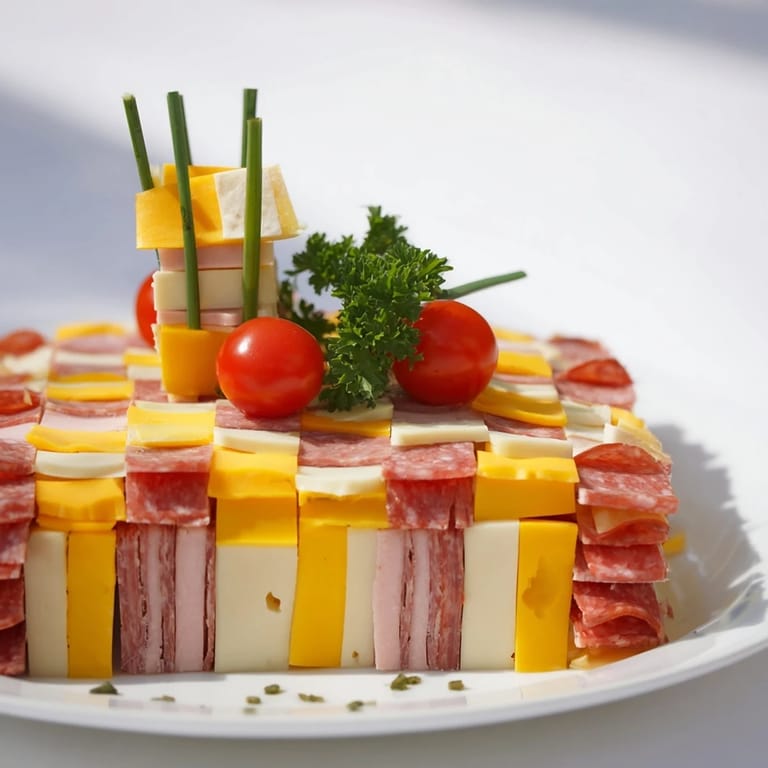
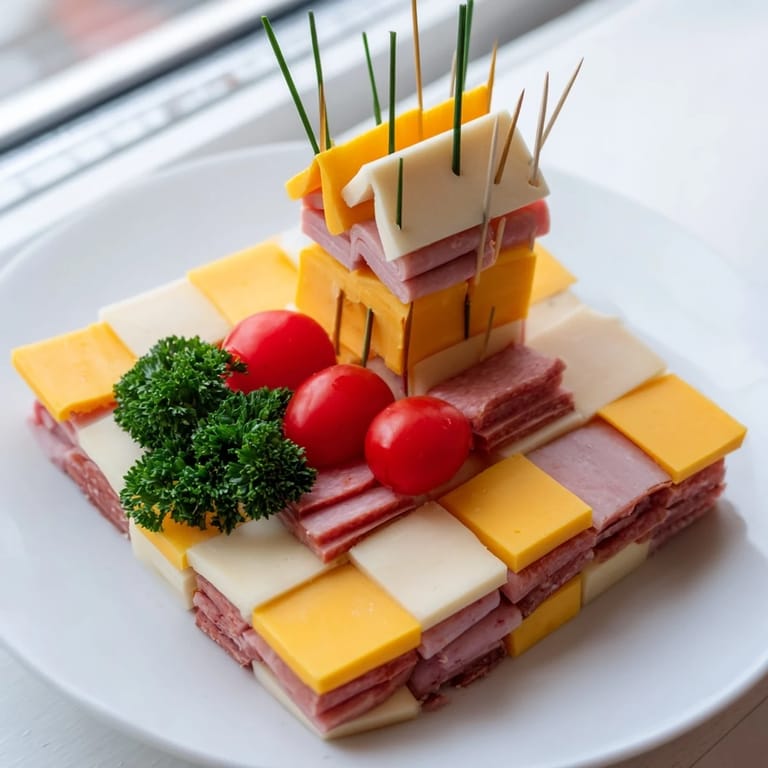
- On your platter, arrange a 4x4 grid by alternating cheddar slices, Swiss slices, ham slices, and salami slices. Press them together tightly so there's no gap—this is your visual anchor and the stage for everything else.
- Stack the chalet walls:
- On one side of the checkerboard, create a square footprint with four cubes per layer, alternating cheese and meat as you go up. Use toothpicks pushed through the cubes to anchor them, then stack three or four layers high. The tower should feel intentional and sturdy, not fragile.
- Add a playful roof:
- Lean cheese slices against the top of your stack at an angle to create a peaked roof, then secure chives along the peak like wooden beams. It should look whimsical but recognizable—less Swiss Alps, more storybook cabin.
- Decorate the landscape:
- Scatter halved cherry tomatoes around the base of the chalet to look like a garden, and tuck parsley pieces in and around everything. Step back and look at it—if it makes you smile, you've nailed it.
- Serve with ceremony:
- Put out small forks or cocktail picks nearby so people can pluck pieces without dismantling your creation. The best part is watching people's faces when they realize they can actually eat it.
 Save to Pinterest
 My nephew watched me build the chalet and asked why I was making a house out of snacks. I told him it was because sometimes food should be fun, not just fuel. He ate three pieces of cheddar and announced it was the best building he'd ever tasted, which is honestly the highest compliment I've ever received.
Choosing Your Cheeses and Meats
The magic of this dish lives in the contrast between sharp and smooth, salty and sweet. Sharp cheddar and Swiss are the obvious choice, but don't be afraid to experiment—Gouda adds a buttery richness, pepper jack brings a subtle kick, and aged Manchego gives you something almost toffee-like. On the meat side, prosciutto is more delicate than ham and will bend like fabric, while soppressata adds Italian flair. The key is balancing bold flavors so no single ingredient overpowers the others.
The Architecture Behind the Beauty
Building vertically on a flat base is what transforms this from a nice cheese board into an actual showstopper. The checkerboard grounds the whole composition and draws the eye, while the chalet creates dimension and tells a story. When you stack the cubes, think of it like building with blocks—each layer needs to sit flat and true before you add the next one. The toothpicks are invisible but critical; they're the difference between a creation that lasts through the party and one that collapses at the first enthusiastic reach.
Making It Your Own
This recipe thrives on personalization, so treat it like a template rather than a rule book. Your color palette can shift depending on what's in your market that day, and your garnishes can reflect whatever you've got growing on your windowsill or stashed in your fridge. I've seen versions with roasted red peppers tucked into the checkerboard, olive tapenade piped on top, and even candied nuts scattered around for a sweet-savory twist.
- Pimento-stuffed olives make perfect little windows on the chalet if you position them carefully into the cube stacks.
- A light drizzle of balsamic glaze across the checkerboard adds sophistication and keeps everything from looking too bright and sterile.
- If you're making this ahead, keep the components separate and assemble just before guests arrive so nothing dries out or softens.
 Save to Pinterest
 The Checkerboard Chalet isn't really about being fancy—it's about reminding people that food can be playful and delicious at the same time. Once you build it, you'll want to make it again and again.
Common Recipe Questions
- → How do you achieve the checkerboard pattern?
Cut cheese and meats into uniform cubes and slices then arrange them alternately in a tight 4x4 grid to create a clear checkerboard effect.
- → What cheeses work best for this appetizer?
Sharp cheddar and Swiss cheeses provide contrasting colors and flavors, but you can try pepper jack or Gouda for variety.
- → How is the chalet structure stabilized?
Toothpicks or short skewers hold stacked cheese and meat cubes together, ensuring the chalet retains its shape.
- → Can I substitute the meats in the dish?
Yes, smoked ham and salami are traditional here, but turkey breast or other cured meats can be used as alternatives.
- → What garnishes enhance the presentation?
Fresh chives act as roof beams, while halved cherry tomatoes and parsley add garden-like decoration around the chalet.
- → Is this dish suitable for special diets?
It's gluten-free and low carb, but contains dairy and pork, so check allergen info if needed.