 Save to Pinterest
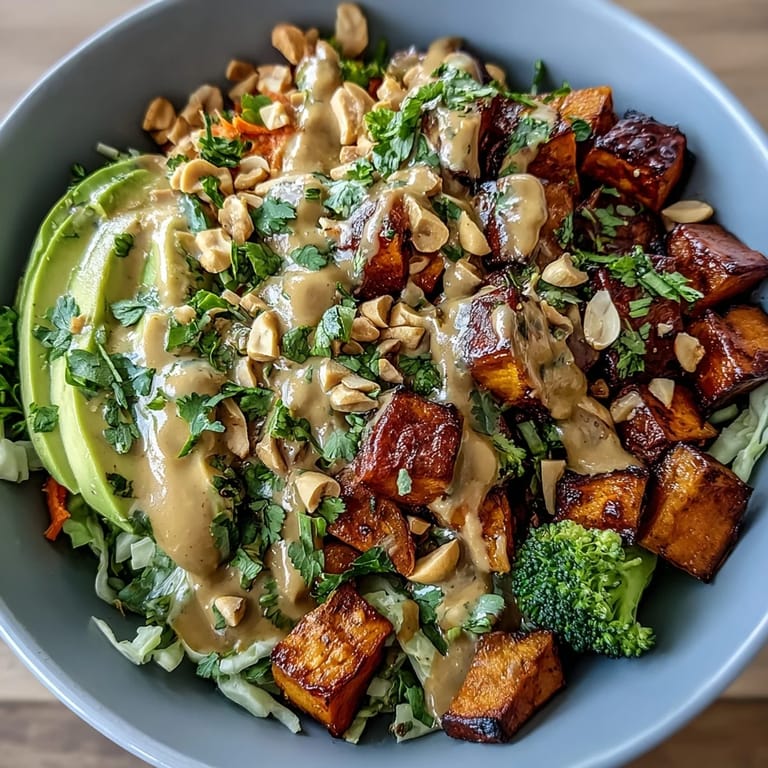
 There's something about assembling a Buddha bowl that feels less like cooking and more like creating edible art. My kitchen got quiet one Tuesday evening while I was experimenting with roasted sweet potatoes and a peanut sauce that tasted vaguely like Thailand, and suddenly my partner wandered in asking what smelled so good. That sauce, creamy and tangy with just enough heat hiding in the background, changed everything about how I thought about weeknight dinners. This bowl became our answer to the question we asked ourselves almost nightly: what can we make that's both nourishing and exciting?
I made this for a friend who'd just started eating plant-based, and I remember her eyes lighting up when she took that first bite of sweet potato coated in peanut sauce. She kept asking if it was "actually healthy" because nothing that tasted this satisfying seemed like it could be. That's when I realized this bowl does something special: it erases the line between what tastes good and what feels good to eat.
Ingredients
- Medium sweet potatoes (2): Choose ones that feel firm with no soft spots, as they'll hold their shape beautifully when roasted and create those caramelized edges everyone reaches for first.
- Olive oil (1 tablespoon): This is your connector, helping the sweet potatoes brown evenly and trapping flavor during roasting.
- Salt and black pepper: Don't skip seasoning the potatoes directly; it builds layers of flavor rather than adding it all at the end.
- Broccoli florets (1 cup): Cut them smaller than you think you need because they get tossed around in the bowl and smaller pieces are easier to navigate with sauce.
- Shredded green cabbage (1 cup): Its slight bitterness plays beautifully against the sweet potatoes and creamy sauce, keeping everything balanced.
- Grated carrots (1/2 cup): The sweetness echoes the roasted potatoes while adding textural variety and visual brightness.
- Avocado (1): Wait to slice this until assembly; it browns quickly and loses its appeal sitting around even for a few minutes.
- Fresh cilantro (1/4 cup, chopped): Fresh herbs are what make people ask if you ordered this from a restaurant, so don't substitute dried.
- Chopped peanuts (1/4 cup): Toast them lightly in a dry pan for thirty seconds before adding to wake up their flavor and add satisfying crunch.
- Natural peanut butter (1/2 cup): The ingredient that makes this sauce taste luxurious without any pretense.
- Soy sauce or tamari (2 tablespoons): This provides the savory backbone that keeps the sauce from tasting one-note.
- Maple syrup (1 tablespoon): A touch of sweetness that rounds out all the flavors, making them work together instead of competing.
- Lime juice (1 tablespoon): Fresh lime juice is non-negotiable; bottled versions taste flat and won't give you that bright finish.
- Sesame oil (1 teaspoon): This small amount carries so much flavor that it transforms ordinary peanut butter into something Thai-inspired.
- Warm water (2-3 tablespoons): Start with two and add gradually so your sauce ends up silky rather than separated and thin.
Tired of Takeout? 🥡
Get 10 meals you can make faster than delivery arrives. Seriously.
One email. No spam. Unsubscribe anytime.
Instructions
- Get Your Oven Hot and Ready:
- Set your oven to 400°F and let it preheat completely while you prepare the sweet potatoes; this ensures they start cooking immediately and develop golden, crispy edges.
- Prepare and Roast the Sweet Potatoes:
- Toss your diced potatoes with olive oil, salt, and pepper, then spread them on a parchment-lined baking sheet in a single layer. Roast for 25 to 30 minutes, stirring halfway through so they brown evenly on all sides and become tender inside.
- Prep Your Fresh Vegetables:
- While the potatoes roast, cut your broccoli into bite-sized pieces, shred the cabbage thinly, grate your carrots, and slice the avocado just before you're ready to assemble. Having everything ready means assembly feels easy rather than rushed.
- Whisk Together Your Peanut Sauce Magic:
- In a small bowl, combine peanut butter, soy sauce, maple syrup, lime juice, and sesame oil, whisking until combined. Add warm water one tablespoon at a time until the sauce reaches a consistency that coats the back of a spoon but still flows gracefully.
- Build Your Bowl:
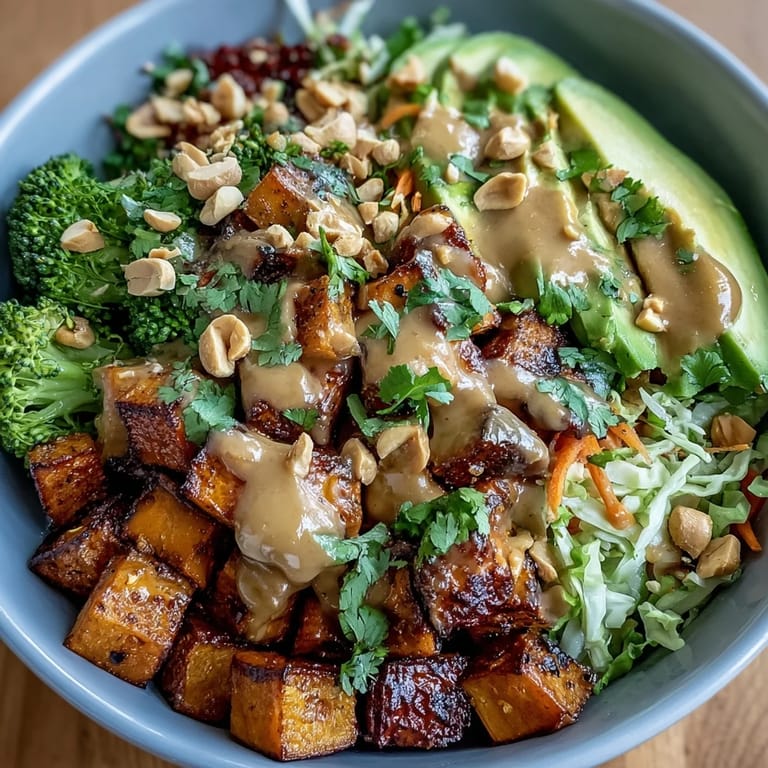
- Divide the raw vegetables among four bowls, then top each with roasted sweet potatoes arranged so they stay visible and appealing. Drizzle generously with peanut sauce, letting it pool slightly so you get some with every bite.
- Finish with Garnish and Serve:
- Sprinkle cilantro and peanuts over top just before serving, adding that fresh contrast and textural interest that makes the bowl feel complete. Serve immediately while everything is still warm enough to soften the avocado slightly without making it mushy.
 Save to Pinterest
 There was a moment during a busy week when I realized I'd made this bowl four times, and everyone in my house still got excited about it. That's when it stopped being a recipe and became something I could make without thinking, knowing it would always turn out nourishing and satisfying.
Why This Bowl Became My Go-To
This recipe works because it respects both your time and your taste buds. The roasting happens while you prep, the sauce comes together in seconds, and the assembly is genuinely fun rather than another cooking task. I've found that having a formula this simple means I actually make it instead of ordering takeout, which somehow always feels like the real victory.
Making It Your Own
The beauty of a Buddha bowl is that it invites customization without requiring it. I've added baked tofu for protein, swapped in cashew butter when that's what I had, and once threw in snap peas and red bell pepper because they were about to go soft in my crisper drawer. The sauce and roasted sweet potatoes stay constant, but everything else can shift with what your kitchen offers and what your body is craving that day.
The Sauce Is Everything
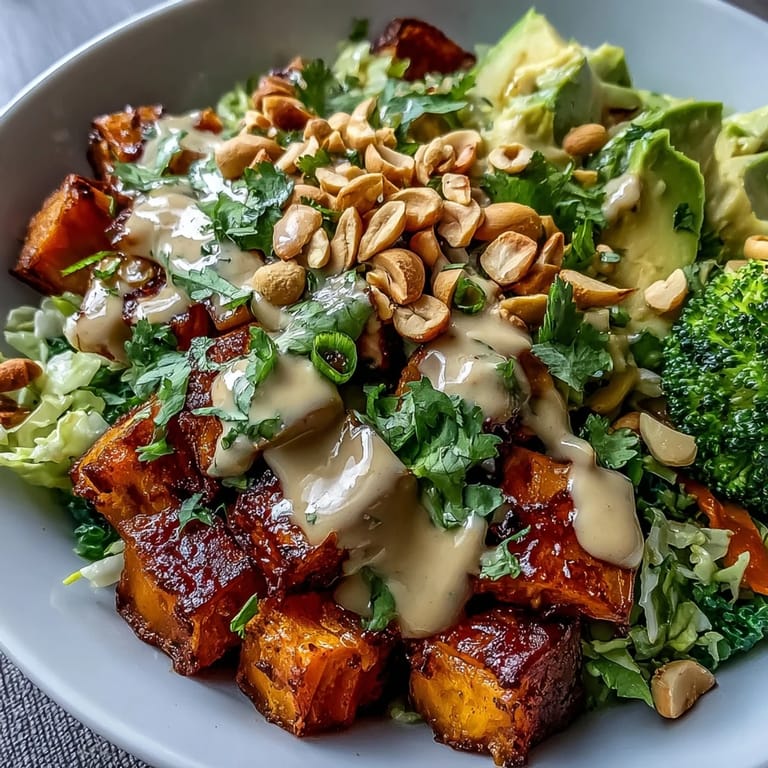
The first time someone told me my peanut sauce tasted like a restaurant version, I realized that the sauce is honestly the whole story. It's creamy without cream, rich without heaviness, and balanced in a way that makes people ask for the recipe before they've finished eating. That sesame oil is doing more work than its tiny measure suggests, and the lime juice keeps everything tasting bright instead of heavy and one-dimensional. You could pour this sauce over steamed broccoli alone and have something worth eating.
- Make extra sauce because you'll want it on everything from salads to roasted vegetables throughout the week.
- If your sauce breaks or separates, whisk in a teaspoon of warm water and it usually comes back together.
- The sauce tastes better the next day after flavors have time to meld, so make it ahead if you can.
 Save to Pinterest
 This bowl reminds me why cooking at home matters: you're not just feeding yourself, you're creating moments where food becomes part of taking care of yourself. Every time you make it, you'll probably tweak it slightly, and that's exactly how it should be.
Common Recipe Questions
- → Can I make this bowl ahead for meal prep?
Absolutely. The roasted sweet potatoes and chopped vegetables store well in separate airtight containers for up to 4 days. Keep the sauce separate and add fresh garnishes like avocado and cilantro when serving.
- → What can I substitute for peanut butter?
Almond butter, cashew butter, or sunflower seed butter all work beautifully as substitutes. The flavor profile will shift slightly but still deliver that creamy, nutty richness the dish needs.
- → How do I make this bowl gluten-free?
Simply replace the soy sauce with tamari or coconut aminos. Double-check that your other ingredients, particularly the peanut butter, are certified gluten-free if you have severe sensitivities.
- → Can I add protein to this bowl?
Baked tofu, edamame, chickpeas, or grilled chicken all make excellent protein additions. Simply prepare your protein separately and arrange it in the bowl alongside the vegetables and sweet potatoes.
- → What other vegetables work well in this bowl?
Snap peas, red bell pepper, cucumber, shredded Brussels sprouts, or roasted cauliflower all complement the Thai peanut flavors beautifully. Use whatever is fresh and in season.