 Save to Pinterest
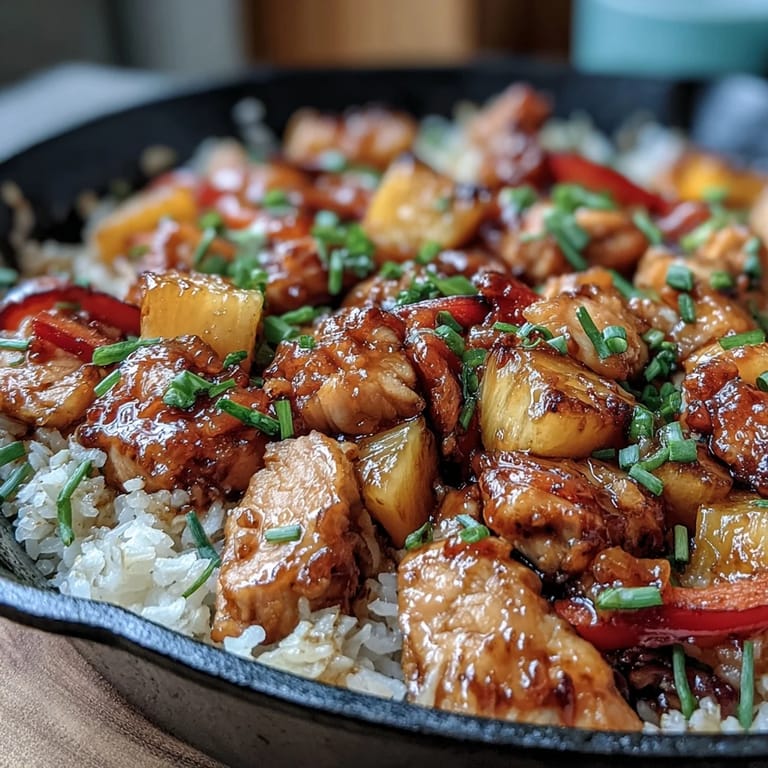
 One Tuesday evening, my kitchen filled with the most unexpected aroma—sweet pineapple mingling with soy sauce and garlic in a way that shouldn't have worked but absolutely did. I'd been craving something bright and comforting all at once, and this one-pan miracle came together while my partner set the table. There's something magical about watching a simple skillet transform into a complete meal without fussing over multiple pots.
I made this for my sister's first night back after six months abroad, and she took one bite and actually closed her eyes. She said it tasted like a thousand different places but felt like home, which is exactly what I was hoping for in a dish. That's when I realized this isn't just convenient—it's the kind of meal that makes moments matter.
Ingredients
- Chicken breast or thighs (1 lb): Thighs stay juicier if you're worried about dryness, but breasts work beautifully when cut into bite-sized pieces so they cook evenly and fast.
- Long-grain white rice (1 cup): Rinsing it first prevents that gluey texture and lets each grain stay separate and fluffy in the skillet.
- Red and yellow bell peppers: The color combination isn't just for show—different peppers bring different sweetness levels, creating depth in flavor.
- Fresh pineapple chunks (1 cup): Fresh tastes brighter than canned, but canned works in a pinch if you drain it well and save the juice for the sauce.
- Yellow onion and garlic (1 small onion, 2 cloves): These are your flavor foundation—don't skip the mincing step, as it helps them dissolve into the sauce more smoothly.
- Soy sauce (1/4 cup): Low-sodium keeps you in control of the salt balance, and gluten-free versions exist if that matters for your table.
- Pineapple juice (1/4 cup): This is what makes the sauce sing—use fresh or canned, but don't water it down.
- Honey or brown sugar (2 tbsp): Honey adds a subtle floral note, while brown sugar brings earthiness; choose based on your mood.
- Rice vinegar (1 tbsp): A small splash that cuts through the sweetness and wakes up your palate with every bite.
- Sesame oil (1 tsp): Just a teaspoon is all you need—this stuff is potent in the best way.
- Chicken broth (2 cups): Low-sodium gives you room to taste and adjust flavors as you go.
- Vegetable oil (2 tbsp total): Split between cooking the chicken and sautéing the vegetables for even browning.
Tired of Takeout? 🥡
Get 10 meals you can make faster than delivery arrives. Seriously.
One email. No spam. Unsubscribe anytime.
Instructions
- Sear the chicken golden:
- Heat 1 tablespoon oil in your skillet until it shimmers, then add the chicken and let it sit undisturbed for a moment—resist the urge to stir right away. You want a proper brown crust on each piece before tossing and cooking for about 5 minutes total until the outside is sealed.
- Build your flavor base:
- Add the remaining oil to the pan, then sauté the onion and garlic until they smell absolutely irresistible, roughly 2 minutes. Toss in your bell peppers and let them soften slightly for 3 to 4 minutes, stirring occasionally so nothing sticks.
- Toast the rice:
- Stir the rice into the pan and let it cook for just 1 minute, which sounds short but toasting it this way adds a subtle nutty depth that raw rice misses. Return your chicken to the skillet so everything mingles.
- Mix your sauce:
- Whisk together the soy sauce, pineapple juice, honey, rice vinegar, sesame oil, and pepper in a bowl, then pour it over everything in the skillet. The sauce should smell like a balance between salty and sweet, with vinegar cutting through—taste it if you're unsure.
- Bring it to a simmer:
- Pour in the chicken broth and scatter the pineapple chunks over the top, then bring the whole pan to a boil. Once you see bubbles breaking the surface, reduce the heat to low, cover with a lid, and let it simmer gently for 18 to 20 minutes.
- Check for doneness:
- The rice should be tender and the liquid mostly absorbed when you lift the lid; if there's still liquid pooling, give it another minute or two. Fluff the rice gently with a fork so it separates without breaking apart.
- Finish and serve:
- If you want a thicker sauce clinging to everything, stir in the cornstarch slurry and cook for 1 to 2 minutes until it coats the back of a spoon. Scatter green onions on top and bring it straight to the table.
 Save to Pinterest
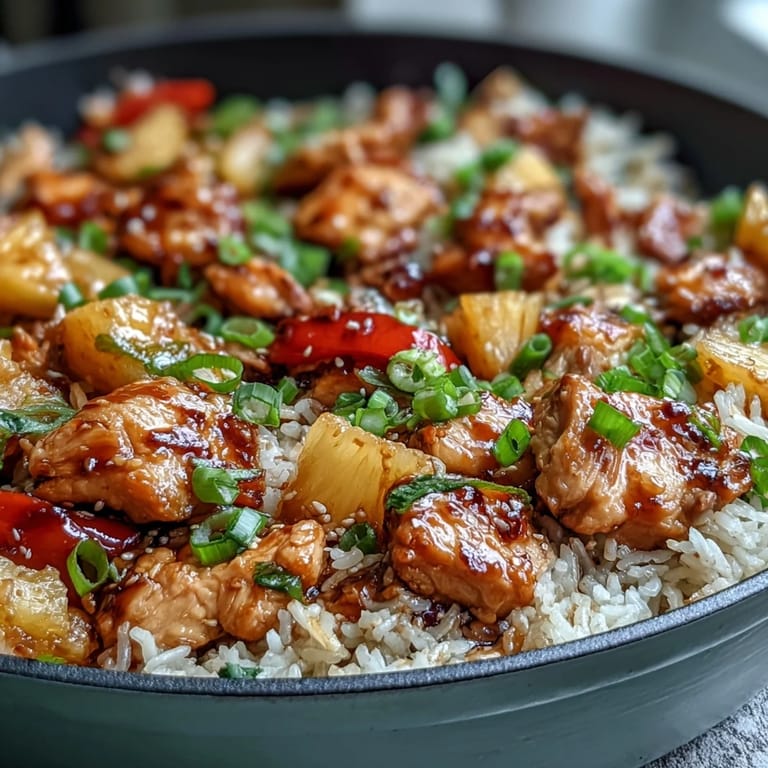
 There's a moment right before you serve this when the skillet is still warm and steaming, and the whole room smells like something between a Thai restaurant and your grandmother's kitchen in the best possible way. That's the moment I know I've gotten it right.
Playing With Heat and Spice
If you like things with a kick, add 1/2 teaspoon of crushed red pepper flakes or a sliced chili pepper when you sauté the garlic—it'll heat up gradually without overpowering the delicate pineapple sweetness. I learned this the hard way after making it bland for someone who loves spice, and now I always let people customize their own heat level at the table.
Switching Up Your Grains and Vegetables
Brown rice works beautifully here if you prefer it, though you'll need to increase your broth slightly and add 5 to 10 extra minutes to the simmering time since it takes longer to soften. The vegetable possibilities are endless too—snap peas add crunch, carrots bring sweetness, and broccoli gives you something substantial to chew on.
The Sauce Matters Most
The magic of this dish lives in that sweet-savory sauce, and getting the balance right is worth a taste test before you add the broth. Trust your instincts—if it seems too sweet, add more vinegar; if it tastes too salty, a touch more honey balances it out. You're the chef here, and tiny adjustments at this stage create the meal you actually want to eat.
- Make the sauce in a separate bowl first so you can taste it and tweak the flavors without ruining the whole skillet.
- Cornstarch slurry is optional but transforms the sauce into something glossy and cling-worthy that coats every grain beautifully.
- A squeeze of fresh lime at the very end brightens everything up if you're feeling adventurous.
 Save to Pinterest
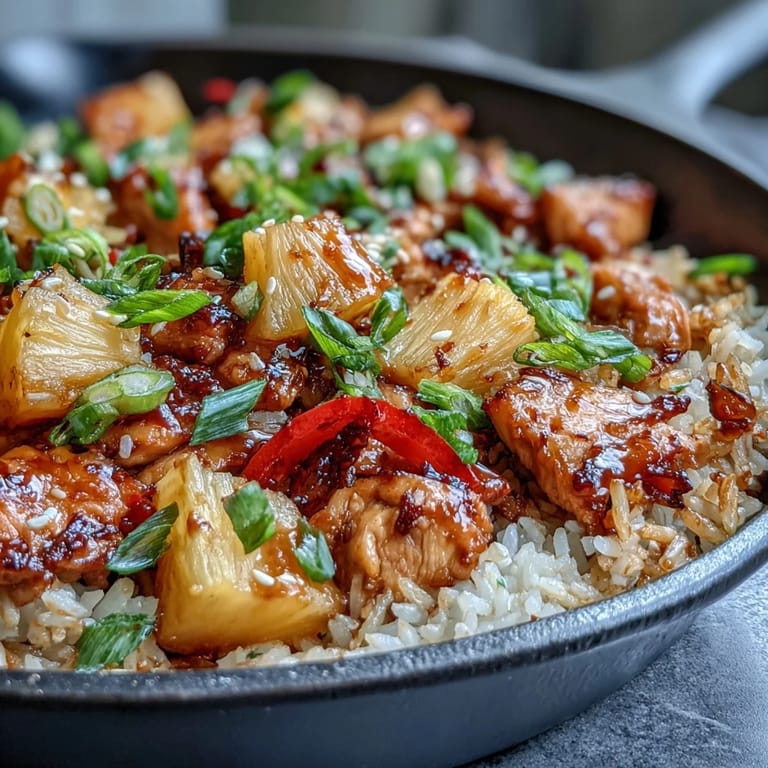
 This dish has become my reliable friend for weeknights when I want something that feels special but doesn't demand special effort. Every time I make it, someone asks for the recipe.
Common Recipe Questions
- → Can I use brown rice instead of white rice?
Yes, but increase the broth and simmering time to ensure the brown rice cooks through properly.
- → How can I make the sauce thicker?
Stir in a cornstarch slurry (1 tbsp cornstarch mixed with 2 tbsp water) near the end of cooking and cook for 1–2 minutes until thickened.
- → What protein cuts work best for this dish?
Boneless, skinless chicken breast or thighs cut into 1-inch pieces provide tender, flavorful bites well-suited to this preparation.
- → Can this dish be made spicier?
Yes, add crushed red pepper flakes or sliced chili peppers along with the garlic for a spicy kick.
- → What kitchen tools are recommended?
A large skillet or sauté pan with a lid, knife, cutting board, and measuring spoons and cups will streamline preparation.
- → Is it possible to add more vegetables?
Absolutely, snap peas, carrots, or broccoli can be added for additional color and nutrition.