 Save to Pinterest
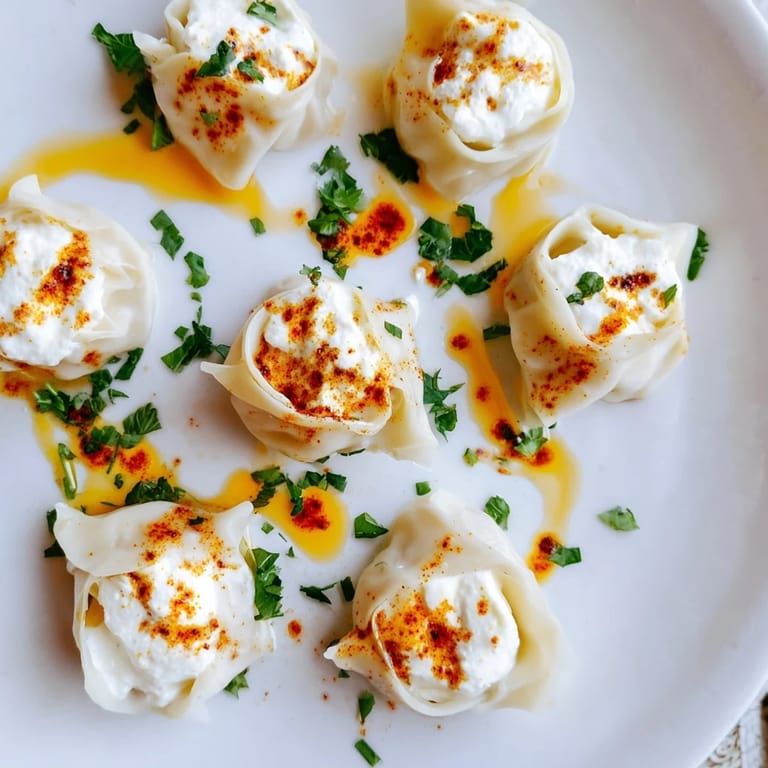
 The first time I made manti, my hands were too clumsy with the corners—they kept popping open in the boiling water, releasing little clouds of cheese into the pot. My Turkish neighbor laughed and showed me the trick: pinching with intention, folding the dough like it was something alive that needed reassurance. Now these delicate dumplings feel like small edible promises, tender on the tongue and rich with the kind of creamy cheese that makes you understand why they've been made this way for centuries.
I remember making a massive batch one Sunday afternoon while my partner sat at the kitchen counter with coffee, and we just talked—about nothing important, really. The rhythm of rolling, cutting, filling, and folding became this meditative thing, and by the end, we had enough manti to feed us for days. That's when I realized this wasn't just dinner; it was the kind of food that creates quiet moments where you're actually present with someone.
Ingredients
- All-purpose flour (2 cups): The foundation needs to be smooth and elastic—this is where patience with kneading actually matters, because you want dough that's forgiving when you're stretching it thin.
- Egg (1 large): Acts as the binder that holds everything together without making the dough tough; it's the quiet MVP.
- Water (1/2 cup, plus more): Add gradually because humidity in your kitchen affects how much you'll really need—trust your hands, not the measurement.
- Turkish white cheese or feta (1 cup): The soul of the filling; use the crumbly kind that actually tastes tangy, not the rubbery stuff that's been sitting in plastic.
- Ricotta cheese (1/2 cup): This softens the sharpness of the white cheese and gives the filling a creamy texture that feels luxurious on the palate.
- Fresh parsley (2 tablespoons, finely chopped): Don't skip this—it brings brightness that keeps the filling from feeling one-dimensional.
- Black pepper (1/4 teaspoon): A whisper rather than a shout, just enough to remind you it's there.
- Plain Greek yogurt (1 1/2 cups): The cooling, tangy base that balances the richness of the cheese filling beautifully.
- Garlic clove (1, minced): Only one, which tells you everything about restraint—this is support, not a statement.
- Unsalted butter (3 tablespoons): The vehicle for the warm spices; it carries them to your palate like a love letter.
- Paprika (1 teaspoon): Adds color and a soft, sweet heat that pulls everything together.
- Aleppo pepper or chili flakes (1/2 teaspoon): The secret finish that makes people ask what that mysterious warmth is.
Tired of Takeout? 🥡
Get 10 meals you can make faster than delivery arrives. Seriously.
One email. No spam. Unsubscribe anytime.
Instructions
- Make the dough with your whole hand:
- Flour and salt go into a bowl, then you push your hand into the center and crack the egg there. Slowly work in water as you go, feeling the dough shift from shaggy to smooth—it should take about ten minutes of kneading before it feels alive under your palms. Let it rest under a cloth while you handle the filling; this resting time is non-negotiable, because it makes the dough willing to stretch thin without tearing.
- Blend the cheese filling gently:
- Crumble the cheeses together with parsley and pepper, using your fingers to keep it light and airy rather than squashing it into a paste. You want pockets of white cheese visible throughout, not a uniform spread.
- Prepare the yogurt sauce while you wait:
- Stir the minced garlic into yogurt slowly, tasting as you go—it should taste garlicky but not aggressive. Salt it just enough to balance the tang.
- Roll the dough thinner than you think is possible:
- Dust your surface lightly and use a rolling pin with steady, confident pressure—aim for sheets thin enough to see your hand through them. This is where that dough rest pays off; it'll stretch like it's forgiving, almost eager.
- Cut and fill with deliberation:
- Squares of about 1.5 inches across are the right size, and a tiny mountain of filling (about 1/2 teaspoon) in the center is all you need. When you pinch the four corners together, seal them firmly but gently—think of it as closing a secret.
- Cook in batches so they have room to move:
- Salted boiling water is crucial; drop them in gently and wait for them to float, then give them a minute or two more until they're tender throughout. A slotted spoon lifts them out without tearing.
- Warm the spiced butter at the very end:
- Melt it gently, stir in the paprika and Aleppo pepper just until fragrant—about thirty seconds—and then pour it over immediately. This timing keeps the spices vibrant.
 Save to Pinterest
 There was a night when I served this to someone who'd never had it before, and watching their face when they took that first bite—eyes closing slightly, fork pausing in mid-air—reminded me that food is really about creating moments where people feel seen and cared for. After that, manti became the dish I make when I want to say something without words.
The Art of Stretching Dough Thin
The thickness of your dough sheets is what separates delicate manti from chewy dumplings, and it's a technique that requires a light hand and zero fear. I learned this by making mistakes: pressing too hard and creating thin spots that would tear, or leaving it too thick so the dough overpowered the filling. The sweet spot is about 2 millimeters, thin enough that light passes through it, but sturdy enough to hold the filling without breaking apart in the water.
Why Yogurt Changes Everything
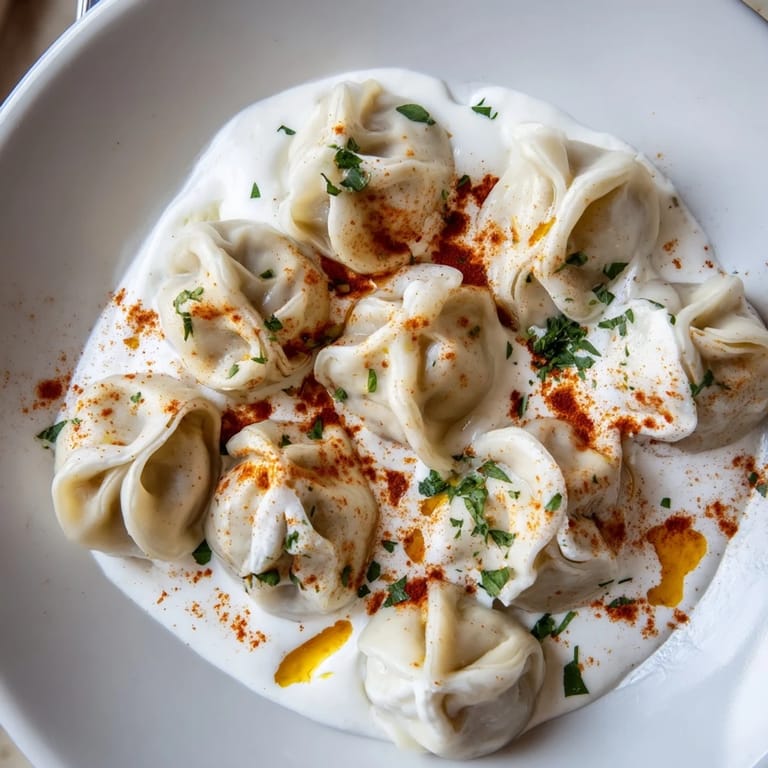
The yogurt isn't just a topping—it's the reason manti tastes the way it does in Turkey, where cool, tangy dairy is the foundation of so many dishes. Greek yogurt is thick and creamy, but regular yogurt works too if that's what you have; the important thing is that it's real yogurt, not the artificially stabilized kind that tastes like nothing. When you spoon it warm over the hot manti, something almost chemical happens—the contrasts deepen each other, and suddenly every flavor is more vibrant than it would be alone.
Cheese Selection and Spiced Butter Finishes
Turkish white cheese is crumbly and slightly tangy, which is why it works so much better than smooth ricotta alone; if you can't find it, feta is your backup, though it's sharper and might need a touch less salt. The spiced butter finish is what transforms this from a simple dumpling into something memorable—that warm paprika and Aleppo pepper blooming across the plate is the moment people stop eating on autopilot and actually taste what's in front of them.
- You can make the manti up to two days ahead and keep them on a floured tray in the fridge, or freeze them for up to three months without any quality loss.
- A pinch of sumac or dried mint scattered on top at the very end adds an unexpected brightness that makes people ask for your secret.
- Serve immediately after assembling, while the yogurt is still cool and the manti are still warm—timing is everything.
 Save to Pinterest
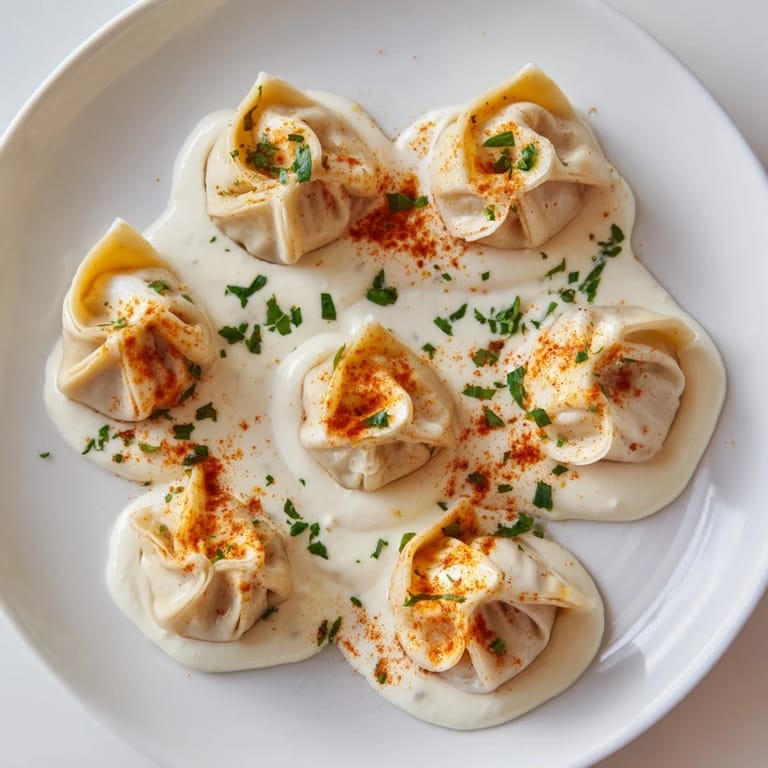
 These manti are the kind of food that proves cooking doesn't have to be complicated to be meaningful—it just has to be made with attention. Serve them as soon as they're plated, with cold white wine if you're in the mood, and watch what happens when people taste real, honest food made with your own hands.
Common Recipe Questions
- → What cheeses work best for the filling?
Turkish white cheese or feta combined with ricotta gives a creamy and slightly tangy filling that's balanced by parsley and pepper.
- → How thin should the dough be rolled?
Roll the dough very thin, about 2 millimeters thick, to ensure the dumplings cook quickly and have a delicate texture.
- → How to know when the dumplings are cooked?
The dumplings float to the surface of boiling water and feel tender to the bite when done, usually after 5 to 7 minutes.
- → Can the spiced butter be adjusted?
Yes, the paprika and Aleppo pepper can be varied to control spiciness, or swapped with chili flakes for adjustment.
- → Is there a way to enhance the flavor further?
Sprinkling sumac or dried mint on top adds a fragrant, tangy note that complements the creamy and spicy elements.