 Save to Pinterest
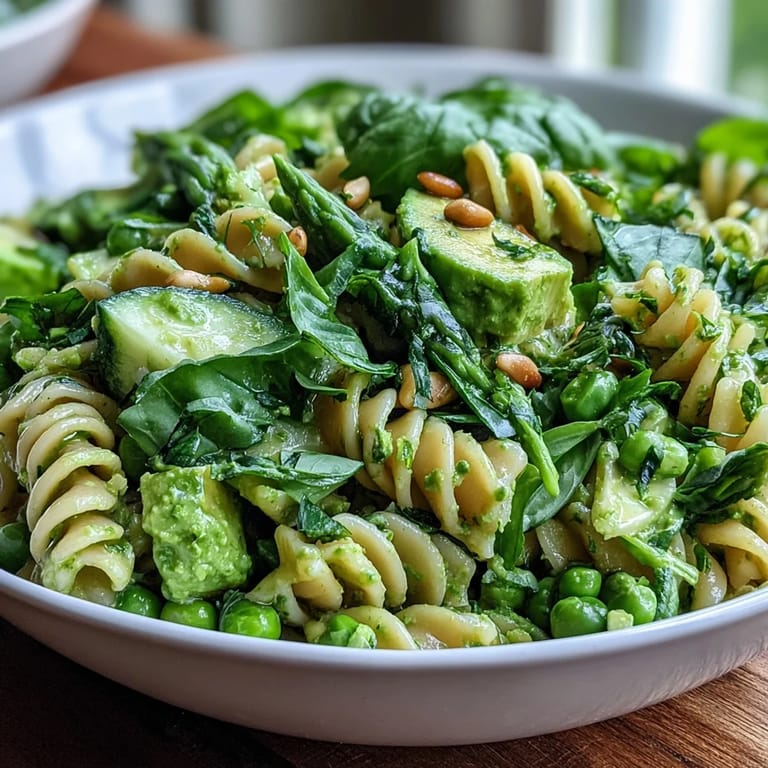
 There's something about the first warm day of spring that makes you want to abandon heavy cooking altogether. My neighbor brought over a bowl of this pasta salad last April, and the moment I tasted it—that bright, herby green goddess coating every piece of pasta—I realized I'd been making salads all wrong. The avocado was so creamy it practically melted into the dressing, and somehow the peas stayed crisp instead of turning to mush. I've made it at least a dozen times since, and it never disappoints.
I brought this to a picnic last June, and watching everyone go back for thirds convinced me this was the one. My friend Sarah, who normally picks the croutons off salads and calls it a meal, actually asked for the recipe on the spot. That's when I knew I'd created something special—not because it was fancy, but because it was genuinely craveable.
Ingredients
- Short pasta (250 g/8 oz): Fusilli, penne, or farfalle work best because their shapes actually catch the dressing instead of letting it slide off—this matters more than you'd think.
- Fresh or frozen peas (1 cup/150 g): The frozen ones are honestly better here since they're blanched at peak ripeness, though fresh spring peas are magical if you can find them at the farmers market.
- Sugar snap peas (1 cup/100 g): Buy them a day or two ahead and keep them crisp in the coldest part of your fridge—they'll stay snappy and sweet.
- Cucumber (1 small): English cucumbers have fewer seeds and won't water down the salad, which I learned the messy way.
- Baby spinach (2 cups/60 g): The tender leaves wilt slightly from the warm pasta without turning to mush, which is exactly what you want.
- Spring onions (2): These give a gentle onion flavor without the sharp bite of regular onions—slice them thin to distribute that mild sweetness throughout.
- Avocado (1 small): Wait to add this until right before serving or it'll brown, and nobody wants brown avocado at a gathering.
- Greek yogurt (1/2 cup/120 g): This is what makes the dressing creamy without being heavy—it's the secret weapon of green goddess dressing.
- Mayonnaise (1/4 cup/60 ml): Yes, you need both yogurt and mayo; the mayo gives richness while yogurt keeps it light.
- Fresh parsley (1/4 cup/10 g): Use the flat-leaf kind if you can—it has more flavor than curly parsley and blends into a smoother dressing.
- Fresh basil (1/4 cup/10 g): This is non-negotiable for that spring flavor; dried basil will turn your dressing a sad brownish-green.
- Fresh chives (2 tbsp): The onion undertone brings all the other flavors together without overwhelming them.
- Fresh tarragon (1 tbsp, optional): If you have it, add it—the subtle anise note makes people ask what's in the dressing.
- Lemon juice (2 tbsp): Fresh squeezed makes a noticeable difference in brightness; bottled works in a pinch but feels a bit flat by comparison.
- Garlic (1 small clove): One clove is enough—too much and it overpowers everything else, which I discovered by accident once.
- Olive oil (2 tbsp): Good quality matters here since it's one of the main flavors; I use something I'd actually want to drizzle on bread.
- Salt and pepper: Taste as you go because the dressing needs proper seasoning to shine.
- Toasted pine nuts (2 tbsp, optional): Toast them yourself if possible—the difference between toasted and raw is like the difference between bland and crunchy heaven.
Tired of Takeout? 🥡
Get 10 meals you can make faster than delivery arrives. Seriously.
One email. No spam. Unsubscribe anytime.
Instructions
- Cook the pasta and peas:
- Boil a big pot of salted water—and I mean salty, like the sea—and add your pasta. With about two minutes left on the timer, dump in the fresh or frozen peas and sugar snaps so they get just warm enough to soften slightly but stay bright and snappy. Drain everything and rinse under cold running water while you work, which stops the cooking dead and keeps the pasta from turning mushy.
- Blend the green goddess dressing:
- While the pasta cools, throw the yogurt, mayo, all those herbs, lemon juice, and that single garlic clove into a blender or food processor. Blend it until it's smooth and a gorgeous bright green—the color tells you everything is working. Taste it and adjust the salt, lemon, or pepper until it tastes alive.
- Assemble the salad:
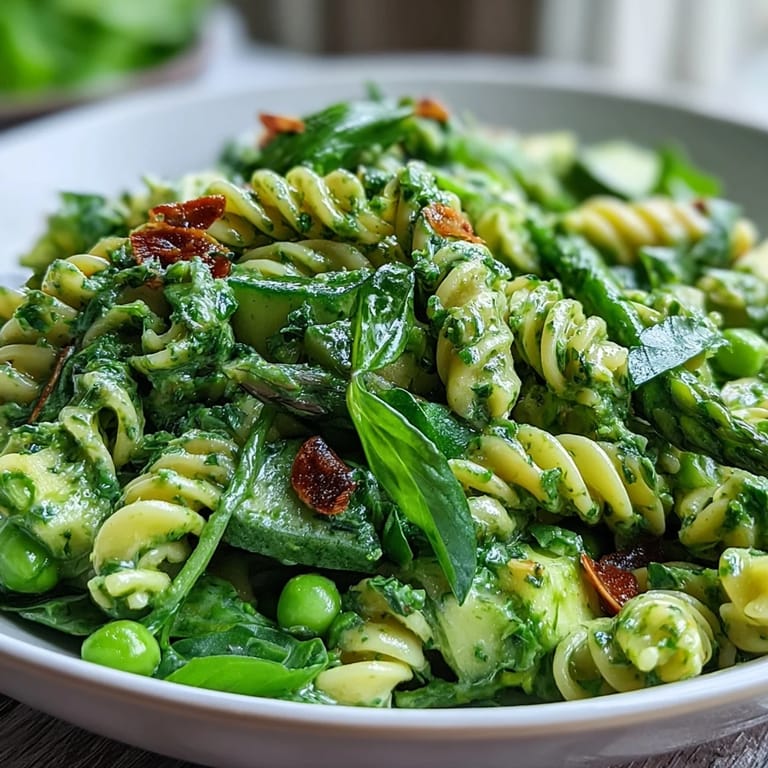
- In your biggest bowl, toss together the cooled pasta and peas with the cucumber, spinach, spring onions, and avocado. This is the moment where you can actually see all the colors coming together, which never gets old.
- Dress and toss:
- Pour that green goddess dressing over everything and toss gently—you want to coat every bite without bruising the avocado or squashing the delicate spinach. A light hand here makes all the difference.
- Finish and serve:
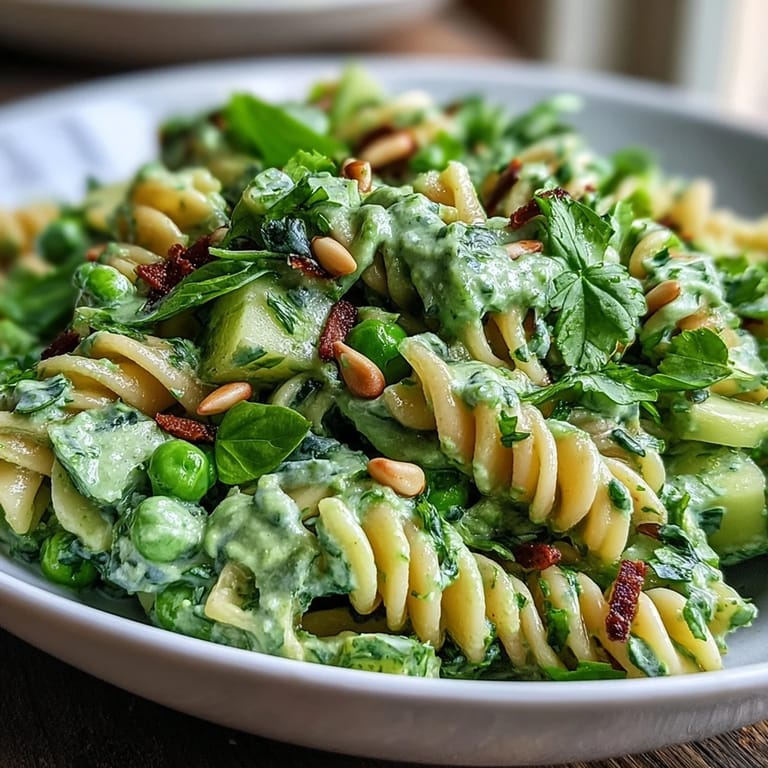
- Scatter the toasted pine nuts and a handful of extra chopped herbs on top right before you serve, so they stay crunchy and don't wilt into the dressing. Serve it chilled or at room temperature depending on the weather and your mood.
 Save to Pinterest
 This salad showed up at a family dinner once, and my picky-eating cousin—the one who usually just eats bread at gatherings—went back for seconds without being asked. My mom asked if it was the avocado or the herbs, and honestly, I think it's that everything just tastes like springtime, which is somehow both simple and hard to pull off.
Making the Dressing Sing
The difference between a good green goddess dressing and a great one often comes down to how you treat the herbs. I used to throw everything in raw, but I learned that letting the herbs sit in the lemon juice for a minute before blending actually intensifies their flavor—the acid wakes them up somehow. Also, blend it longer than feels necessary; a silky-smooth dressing coats the pasta better than one with little herb chunks floating around, which means every bite tastes balanced instead of occasionally grassy.
Keeping Everything Fresh and Crisp
The biggest mistake I made early on was cutting everything and letting it sit in the bowl while I dealt with other dishes. By the time I dressed it, the cucumber had wept into the pasta, the spinach was tired, and the whole thing felt sad. Now I prep everything separately and keep it cold until the absolute last minute. The cold bowl makes a difference too—I'll run ice water around the inside of my serving bowl and dump it out right before assembling, which keeps everything crisp during the meal.
Building Flavor and Texture
What makes this salad work beyond just looking pretty is that every element brings something different to the table. The soft pasta carries the dressing, the crisp peas and snap peas give you that springy bite, the creamy avocado grounds it all, and the herbs make it taste like you actually care about what people are eating. The toasted pine nuts add a fancy crunch that feels intentional rather than accidental. When you're planning this, think about those different textures and tastes—it's not just throwing things together, it's building something that keeps your interest with every spoonful.
- Make sure the dressing is well-seasoned on its own before you combine it with everything else, or you'll end up adding more at the end when it's harder to distribute evenly.
- If you're doubling this for a crowd, make double the dressing rather than the same amount—the vegetables release liquid as the salad sits, and you'll want extra dressing to maintain the coating.
- Bring it to room temperature before serving if you've made it ahead and refrigerated it; cold salad is fine, but there's something about room temperature that makes the flavors taste clearer.
 Save to Pinterest
 This is the kind of salad that reminds you why fresh ingredients matter, and why spring cooking can be just as satisfying as anything that requires hours of fussing. Make it for people you actually like, and watch them ask for the recipe.
Common Recipe Questions
- → What type of pasta works best?
Short pasta like fusilli, penne, or farfalle holds the dressing well and pairs nicely with the crisp vegetables.
- → Can I use frozen peas in this dish?
Yes, fresh or frozen peas both work well. Just add them in the last minutes of cooking before rinsing with cold water.
- → How do I make the green goddess dressing vibrant and smooth?
Blend Greek yogurt, mayonnaise, fresh herbs, lemon juice, garlic, and olive oil until smooth. Adjust seasoning to taste for brightness.
- → What are good garnishes for added texture?
Toasted pine nuts add crunch and extra herbs like parsley, chives, or basil enhance freshness.
- → Can this dish be served warm?
It’s best served chilled or at room temperature to keep the fresh and crisp flavors intact.