 Save to Pinterest
 There's something about a bowl that invites you to slow down. I discovered this tuna avocado rice bowl on a lazy Tuesday afternoon when I had almost nothing in the pantry except a can of tuna, half an avocado going soft, and jasmine rice. Instead of making something forgettable, I remembered a small restaurant in a neighborhood I'd visited years ago, where bowls like this appeared with such ease and grace. That memory pushed me to layer things thoughtfully, and the moment I drizzled that ginger-sesame dressing over warm rice, I understood why people keep coming back to bowls.
I made this for my friend who had just started meal prepping, and she was skeptical until she took one bite. She said, "This doesn't taste healthy," which we both knew was a compliment. Watching her pick out the avocado pieces like she was finding treasure made me realize this bowl isn't just nutritious—it's genuinely craveable, the kind of meal that reminds you that taking care of yourself can also taste good.
Ingredients
- Jasmine rice (1 cup uncooked): The fragrance matters here more than most recipes admit; it makes the whole bowl feel intentional rather than rushed.
- Water (2 cups): Use filtered if you have it, though tap works fine—this isn't the place to overthink.
- Salt (1/4 teaspoon): Season the rice water generously; the rice absorbs it all and carries flavor into every bite.
- Canned tuna (5 oz, drained) or fresh cooked: The canned version is reliable and works beautifully, but fresh flaked tuna elevates this to something restaurant-feeling.
- Ripe avocado (1, diced): Pick one that yields just slightly to pressure; too soft and it falls apart, too firm and it tastes waxy.
- English cucumber (1/2, diced): The thin skin means no peeling needed, and it stays crisp longer than regular cucumber.
- Scallions (2, thinly sliced): They're the bridge between richness and freshness; don't skip them even if you think you might.
- Soy sauce (2 tablespoons, low-sodium): Low-sodium lets you taste the other flavors instead of salt drowning everything out.
- Rice vinegar (1 tablespoon): This gentle acid wakes up the whole bowl without the aggressive edge of regular vinegar.
- Sesame oil (1 teaspoon): A little goes far; it's concentrated flavor, not a cooking oil.
- Honey or maple syrup (1 teaspoon): Just enough to balance the vinegar and soy sauce—don't add more.
- Fresh ginger (1/2 teaspoon, grated): Use a microplane if you have one; it distributes more evenly than mincing with a knife.
- Sriracha (1/2 teaspoon, optional): Add it if you like heat, skip it if you don't; the bowl stands perfectly on its own either way.
- Toasted sesame seeds (1 tablespoon): Buy them already toasted; raw sesame seeds taste flat and slightly bitter.
- Nori strips or roasted seaweed (1 tablespoon, optional): Adds umami and a whisper of oceanic flavor that ties everything together.
- Fresh cilantro or microgreens (optional): A small handful is all you need for brightness and visual appeal.
Tired of Takeout? 🥡
Get 10 meals you can make faster than delivery arrives. Seriously.
One email. No spam. Unsubscribe anytime.
Instructions
- Rinse and start the rice:
- Run the jasmine rice under cold water while rubbing it gently between your fingers until the water runs clear; this removes excess starch so the rice stays separate and fluffy. Combine the rinsed rice, water, and salt in a medium saucepan and bring to a boil over high heat.
- Cook low and slow:
- Once boiling, cover the pot, reduce heat to the lowest setting, and let it cook undisturbed for 12 to 15 minutes—you'll hear almost nothing, which means it's working perfectly. When the time is up, remove the pot from heat, keep the lid on, and let it sit for 5 minutes so the steam finishes its work.
- Fluff and transfer:
- After those 5 minutes, lift the lid carefully (the steam is hot) and use a fork to gently separate the grains, moving from the edges toward the center. The rice should smell incredible at this point.
- Build the dressing while rice cooks:
- While the rice is steaming, whisk together the soy sauce, rice vinegar, sesame oil, honey, and grated ginger in a small bowl—this only takes 2 minutes but creates the soul of the entire bowl. Taste it; it should make your mouth water slightly.
- Dress the tuna:
- In a separate bowl, gently fold the drained tuna with 1 tablespoon of the dressing; this seasons it from the inside rather than just coating the surface. Set aside the remaining dressing for drizzling.
- Assemble with care:
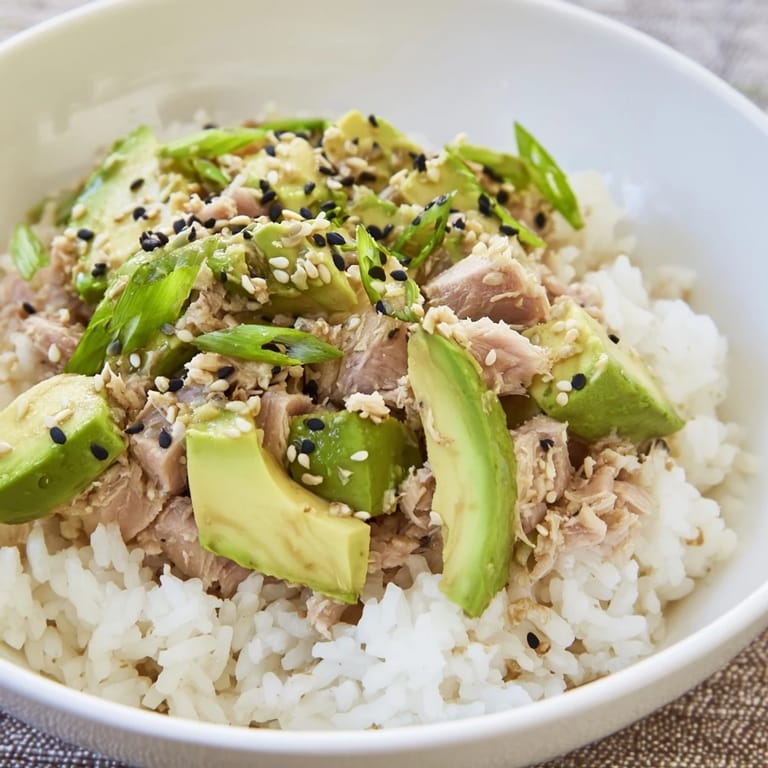
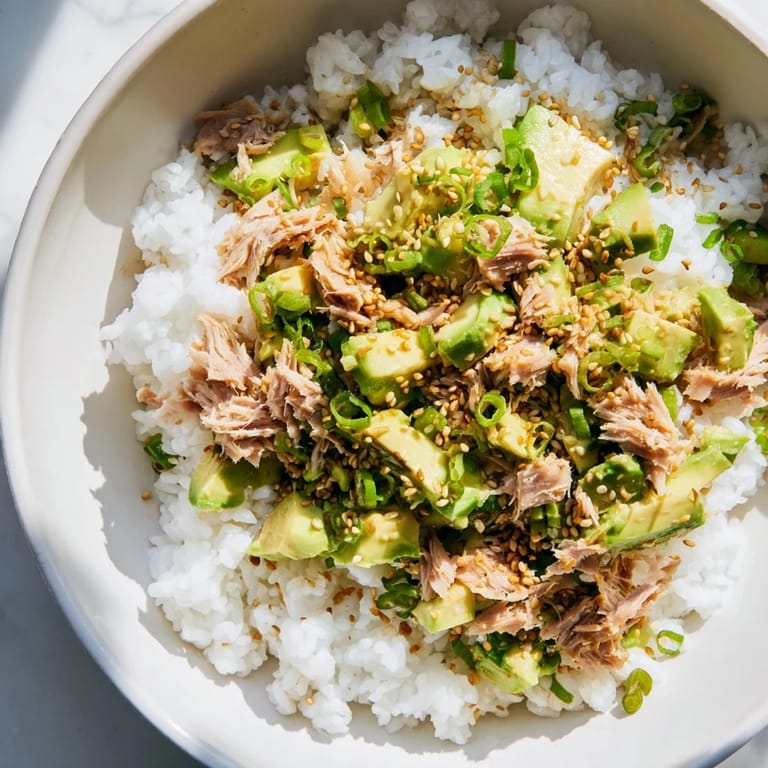
- Divide the warm jasmine rice between two bowls, creating a small well in the center of each—this isn't just for show, it helps the dressing pool where it matters most. Arrange the dressed tuna, avocado, cucumber, and scallions in separate sections on top of each rice bed.
- Finish and serve:
- Drizzle the remaining dressing over each bowl, letting some collect in that center well, then scatter the toasted sesame seeds, nori strips, and cilantro on top. Serve immediately while the rice is still warm and the avocado is at its creamiest.
 Save to Pinterest
 My mother tasted this bowl without knowing what was in it and asked if I'd made it at a restaurant. When I told her it was three components and a dressing, she got quiet in that way she does when she's recalculating something. She's made it three times since then, each time adding her own small invention—sesame oil drizzled an extra second longer, or nori that's been crumbled with her hands. That's when I knew it had crossed from recipe to ritual.
Why the Rice Matters
The rice is more than a base; it's the element that makes this bowl feel intentional rather than assembled. Jasmine rice in particular absorbs and holds flavors in a way that other varieties simply don't, which means every grain tastes like it belongs to the whole dish rather than sitting underneath it. I learned this the hard way after making this bowl with regular white rice once and feeling genuinely disappointed by how flat everything tasted.
Making It Your Own
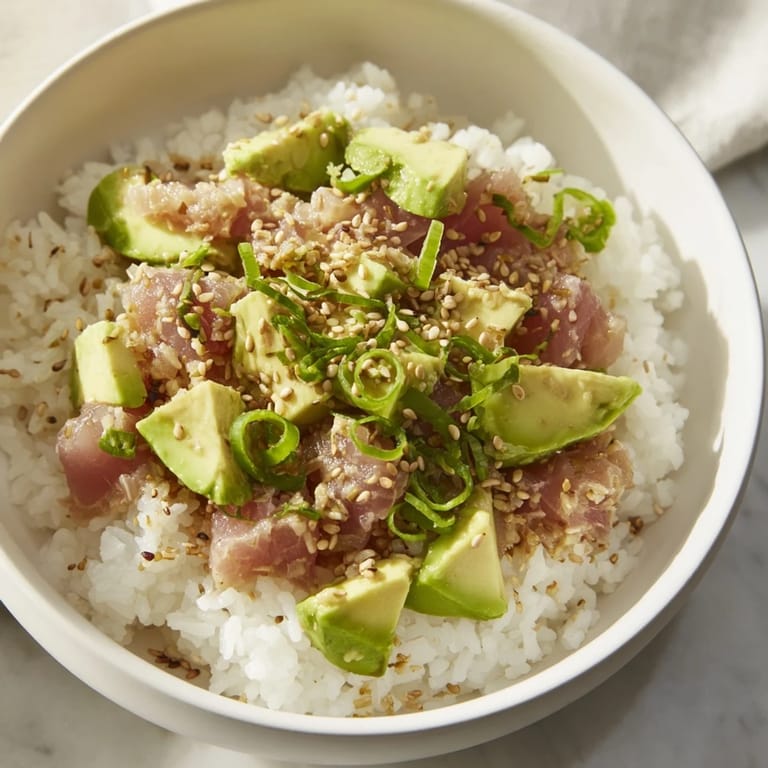
This bowl invites personalization without losing its identity. Some days I add a soft-boiled egg that breaks into the warm rice, creating a richness that ties everything together. Other times I swap in sushi-grade raw tuna for a poke-style version that feels more restaurant-quality, or substitute quinoa when I want something with more texture and earthiness. The dressing stays constant—that's the anchor—but everything else can shift with your mood or what's in your refrigerator.
Pairing and Serving
Serve this bowl with something cold and slightly herbaceous to drink—chilled green tea brings out the ginger in the dressing, while a crisp white like Riesling creates an elegant contrast if you're making this for company. The bowl works equally well as a weeknight dinner for one or as the kind of meal you serve when a friend stops by unexpectedly and you want them to know you're glad they came.
- If meal prepping, keep the components separate and assemble right before eating to preserve the contrast of temperatures and textures.
- Double the dressing if you're making more than two bowls; it's easy to underestimate how much you want to drizzle.
- Taste the dressing before pouring it over everything—adjust the ginger or sriracha now rather than at the table.
 Save to Pinterest
 This bowl taught me that nourishing food doesn't require complicated technique or rare ingredients—it requires attention. When you take care with rinsing rice, balancing a dressing, and arranging things thoughtfully, people can taste that you meant it. That's the real magic happening here.
Common Recipe Questions
- → What type of rice is best for this dish?
Jasmine rice is preferred for its fragrant aroma and soft texture, which complements the fresh ingredients well.
- → Can I use fresh tuna instead of canned?
Yes, sushi-grade fresh tuna can be diced and used for a more delicate texture similar to poke bowls.
- → How can I add extra protein to this bowl?
Adding a soft-boiled egg on top enhances protein content and adds a creamy element to the dish.
- → Is there a way to adjust the heat level?
Sriracha is optional in the dressing and can be added according to your preferred spice level.
- → What are good substitutes for jasmine rice?
Brown rice or quinoa work well as fiber-rich alternatives while maintaining the bowl’s hearty texture.