 Save to Pinterest
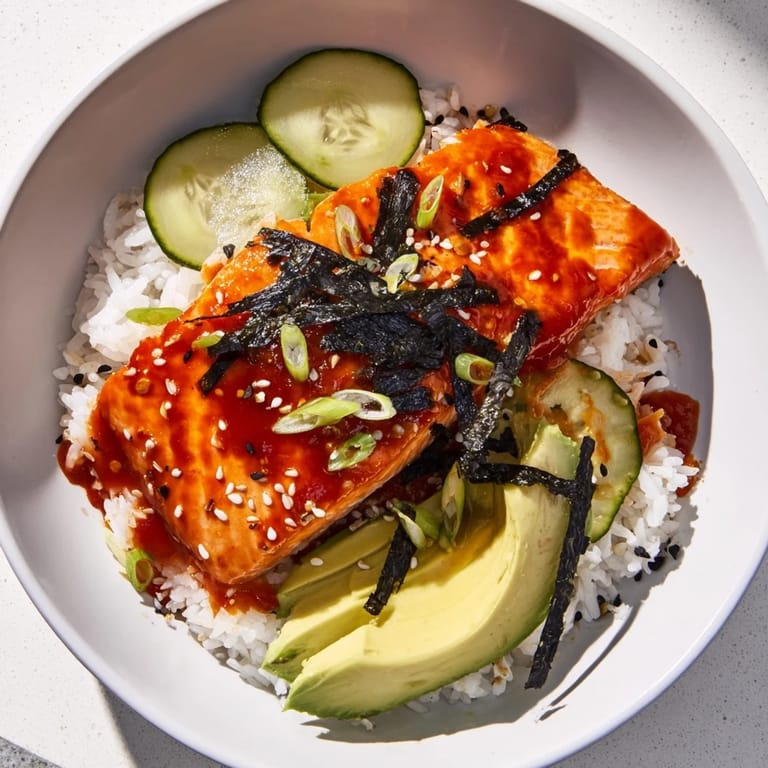
 There's something about the moment when you pull a glazed salmon fillet from the oven and the kitchen fills with that sweet, spicy orange-gochujang aroma that just makes you pause. I first made this dish on a Tuesday evening when I wanted something bright and energizing, and honestly, I was inspired by how beautifully simple yet impressive it looked on the plate. The glossy glaze caught the light, the colors were naturally vibrant, and I realized I'd stumbled onto something I'd keep making again and again.
I made this for my brother last month when he was going through a phase of wanting to eat healthier, and watching his face when he took that first bite was worth every minute of prep. He kept saying it tasted like something from a trendy lunch spot, not something I'd just assembled at home, and that's when I knew this recipe had staying power.
Ingredients
- Salmon fillets (150 g each, skin removed): The star of the show—look for fillets that are evenly thick so they cook at the same rate, and remove that skin yourself with a sharp knife rather than asking the fishmonger because you'll get better control.
- Salt and black pepper: These humble seasonings actually matter; they wake up the salmon before the glaze even touches it.
- Gochujang: This Korean chili paste is essential and non-negotiable—it brings heat, umami, and a subtle funkiness that makes everything else taste more interesting.
- Orange juice (freshly squeezed): Fresh is truly the difference here; bottled orange juice tastes flat against the gochujang, but fresh juice sings.
- Soy sauce: Use good-quality soy sauce if you have it; the saltiness needs to balance rather than overpower the citrus and chili.
- Honey: This smooths out the rough edges of the chili and adds a subtle shine to the final glaze.
- Rice vinegar, sesame oil, ginger, and garlic: Together, these create the backbone of the glaze—each one adds a layer of flavor that wouldn't work quite as well without the others.
- Short-grain rice: Warm, fluffy rice is your canvas; it should be tender enough to hold the glaze but still individual grains.
- Cucumber, avocado, nori, sesame seeds, and scallions: These toppings are where freshness lives; don't skip them because they're what makes every bite textural and alive.
Tired of Takeout? 🥡
Get 10 meals you can make faster than delivery arrives. Seriously.
One email. No spam. Unsubscribe anytime.
Instructions
- Heat your oven and prep your canvas:
- Preheat to 200°C and line your tray with parchment paper so the salmon releases cleanly and you don't have to wrestle with it later. This small step saves frustration.
- Season the salmon gently:
- Pat the fillets dry first, then sprinkle salt and pepper on both sides—this matters because moisture is the enemy of good browning. Let them sit for just a minute while you gather everything else.
- Build the glaze into something smooth:
- Whisk gochujang, orange juice, soy sauce, honey, rice vinegar, sesame oil, ginger, and garlic together in a bowl until there are no lumps in the chili paste. The texture should be pourable but thick, like a loose paste.
- First glaze and bake:
- Brush half the glaze over the salmon and slide it into the oven for 12 to 14 minutes—you're looking for that moment when the flesh is just opaque and flakes when you press it gently with a fork. Don't overbake or it'll turn dry.
- Prepare the bowl components while the salmon cooks:
- Slice your cucumber thin, cube or slice your avocado, cut nori into strips, and have your sesame seeds and scallions ready. This keeps you from scrambling when the salmon comes out.
- Finish with a sticky shine (optional but worth it):
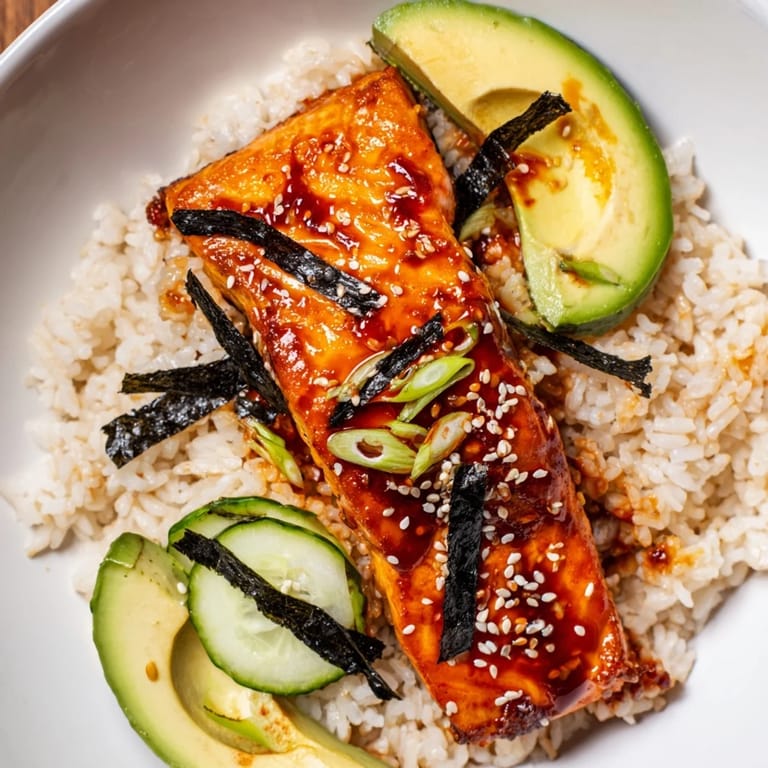
- Once the salmon is cooked through, brush the remaining glaze over the top and slide it under the broiler for 1 to 2 minutes—you'll see the glaze darken and bubble slightly, which creates that irresistible sticky coating.
- Assemble with intention:
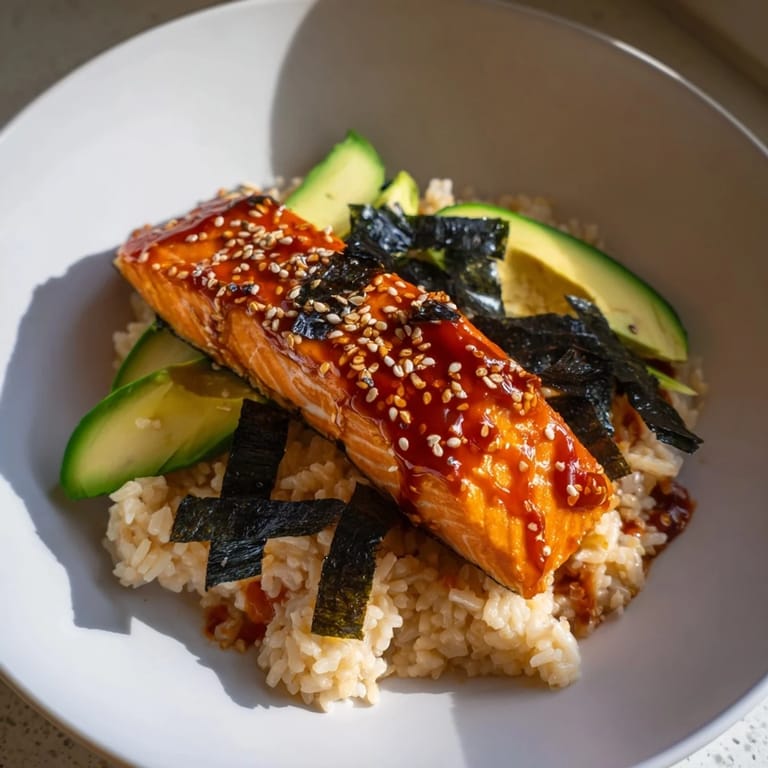
- Divide warm rice between bowls, top each with a salmon fillet, then arrange cucumber, avocado, nori, sesame seeds, and scallions around it in whatever way feels pretty to you. The arrangement is half the pleasure.
 Save to Pinterest
 This dish taught me that you don't need complicated technique to feel like you're feeding people something special. There's a quiet confidence in setting down a bowl that looks like it came from somewhere else entirely, and knowing it took you less than 40 minutes.
The Magic of Gochujang
Gochujang is one of those ingredients that seems intimidating until you realize it's just a wonderful flavor delivery system that happens to be spicy. I used to think it was too strong for anything but Korean food, but then I started playing with it in glazes, and suddenly it was everywhere on my weeknight table. The chili paste deepens other flavors rather than erasing them, which is why it pairs so beautifully with the brightness of fresh orange juice.
The Architecture of a Good Bowl
A really good bowl is built like a story—you need your foundation (the rice), your main character (the salmon), and then the supporting cast that makes every bite interesting (the fresh toppings). I learned this by accident when I forgot to slice my cucumber one evening and just threw in chopped carrot instead, and suddenly it wasn't quite the same because the texture story changed. The crunch matters, the freshness matters, and yes, the visual appeal of seeing different colors and textures matters too.
Making This Recipe Your Own
The beauty of a salmon bowl is that it's endlessly flexible once you understand the bones of it. The glaze is the anchor, but everything else is negotiable depending on what's in your kitchen and what you're in the mood for. I've made this with pickled ginger for extra tangy brightness, added shredded carrots for sweetness, and even thrown in edamame for a protein boost when I was feeling experimental.
- Try swapping the salmon for crispy tofu or even roasted chicken if you're having a different kind of day.
- Pickled ginger, shredded carrots, and edamame are your friends if you want to add color, crunch, and even more complexity.
- The glaze works on virtually anything, so don't be afraid to double the recipe and use it on vegetables or grain bowls throughout the week.
 Save to Pinterest
 This recipe lives in the intersection of simple and impressive, which is exactly where the best weeknight meals belong. Make it once and you'll understand why it keeps showing up on my table.
Common Recipe Questions
- → What is gochujang and how does it affect the dish?
Gochujang is a Korean fermented chili paste that adds a complex spicy and sweet depth to the glaze, balancing the citrus notes of the orange.
- → Can I substitute salmon with another protein?
Yes, tofu can be used as a vegetarian alternative while still soaking up the flavorful glaze.
- → What is the best rice to use for this bowl?
Short-grain rice works well because of its sticky texture, helping to hold the bowl ingredients together.
- → How do you achieve the sticky finish on the salmon?
After baking, brushing on the remaining glaze and briefly broiling the salmon creates a glossy, sticky surface.
- → What toppings add freshness and crunch?
Sliced cucumber, avocado, nori strips, toasted sesame seeds, and scallions contribute crisp textures and fresh flavors.