 Save to Pinterest
 The first time I made a spring cake with pressed edible flowers, the kitchen was alive with sunlight streaming across a jumble of pans and petals. I'd just returned from the farmer's market with a small paper envelope of violets and pansies, their colors so bright that I almost hesitated to use them. Instead of fussing, I found myself humming as I measured flour and zest, letting the scent of lemons transport me to a garden in full bloom. It became an afternoon of gentle mess and small discoveries, the counter scattered with lemon rinds and petals that made me smile. There's a quiet joy in creating something beautiful for no occasion other than celebrating spring itself.
I remember last April, baking this cake for a friend's birthday—her garden was just waking up and she laughed at how the pansies matched her dress. We spent half an hour arranging petals on top, and even the momentary panic over melting whipped cream felt like part of the celebration. Everyone was drawn to the cake before dinner, admiring its wild beauty and fragrant citrus. It started a conversation about edible flowers, sparking stories and smiles. That evening, nobody wanted leftovers—just one last taste as the tea cooled beside us.
Ingredients
- Unsalted butter: Starting with softened butter ensures a lighter crumb and lends richness that's unmistakable in homemade cakes.
- Granulated sugar: Beating sugar with butter until pale is the secret to a tender sponge—patience here really pays off.
- Eggs: Room temperature eggs emulsify smoothly, giving the cake lift and a fine texture.
- Vanilla extract: Pure vanilla adds warmth that rounds out the lemon's brightness.
- All-purpose flour: Sifting flour guarantees no lumps and helps with even baking—never skip this step.
- Baking powder: The right amount makes the sponge rise without overexpanding and drying.
- Fine sea salt: A dash heightens flavors—don't underestimate its power here.
- Whole milk: Room temperature milk blends seamlessly, keeping the batter smooth and silky.
- Lemon zest: Freshly grated zest gives the cake its fresh, Spring aroma—don’t use bottled.
- Eggs (for curd): Whisking thoroughly gives the lemon curd its creaminess; don't rush.
- Granulated sugar (for curd): The curd’s sweetness balances even tart lemons; taste and tweak if needed.
- Fresh lemon juice: Only squeeze just before using—older juice loses vitality.
- Finely grated lemon zest (for curd): Adds body and color to the curd.
- Unsalted butter (for curd): Stirring butter in off the heat gives silky texture—don't skip.
- Heavy cream: Properly chilled cream whips faster and stays stiff; keep it cold until ready.
- Powdered sugar: Sifts quickly and sweetens whipped cream without graininess.
- Vanilla extract (for topping): A touch in the whipped cream ties the flavors together.
- Pressed edible flowers: Only use organic flowers meant for eating; always check they're pesticide-free.
Tired of Takeout? 🥡
Get 10 meals you can make faster than delivery arrives. Seriously.
One email. No spam. Unsubscribe anytime.
Instructions
- Preheat and Prepare Pans:
- Set oven to 350°F (175°C), grease the pans generously and line with parchment—it makes unmolding a breeze. You can hear the anticipation in the kitchen as you tear the paper to fit.
- Cream Butter and Sugar:
- Beat butter and sugar together until light and fluffy; the mix turns almost ivory and smells like sweet dreams. Add eggs one at a time, then stir in vanilla and lemon zest—the aroma will fill the kitchen.
- Mix Dry Ingredients:
- In a separate bowl, whisk flour, baking powder, and salt together so everything’s evenly distributed. Gradually add dry ingredients to the wet, alternating with milk, mixing gently just until combined—you’ll see the batter turn silky.
- Bake the Cake Layers:
- Divide the batter between pans and gently even out the tops. Bake for 25–30 minutes, check after 25—if your toothpick comes out clean and the cake pulls from the edge, it’s ready. Cool in pans for 10 minutes, then lift onto a wire rack for full cooling.
- Make Lemon Curd:
- Whisk eggs, sugar, lemon juice, and zest in a heatproof bowl; set over simmering water. Stir constantly until the curd thickens (about 10 minutes), then whisk in butter until glossy and smooth; let it chill fully before layering.
- Whip the Cream:
- Beat cold cream with powdered sugar and vanilla until stiff peaks form; listen for the rhythmic thump of the whisk as the cream thickens.
- Assemble the Cake:
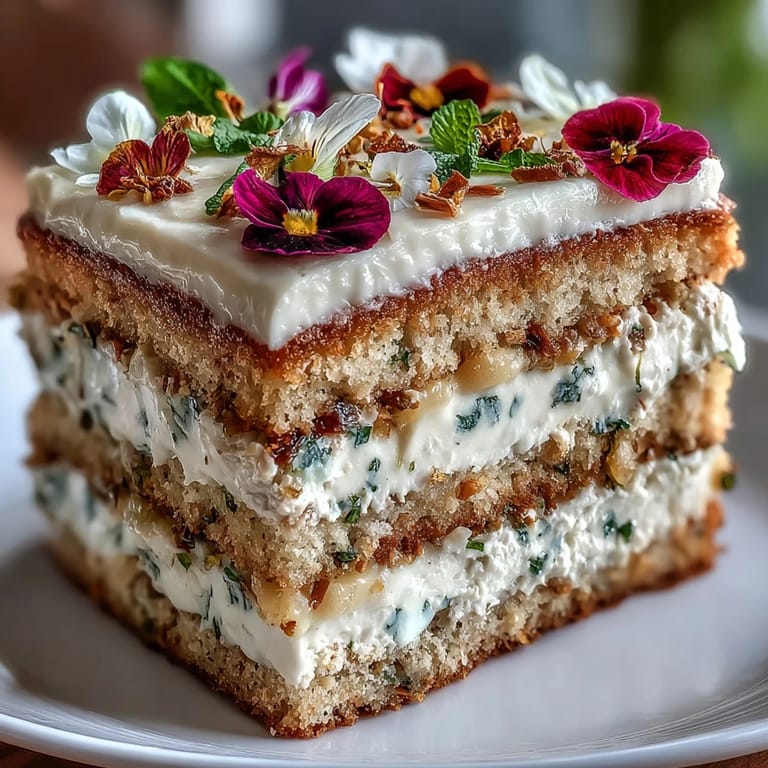
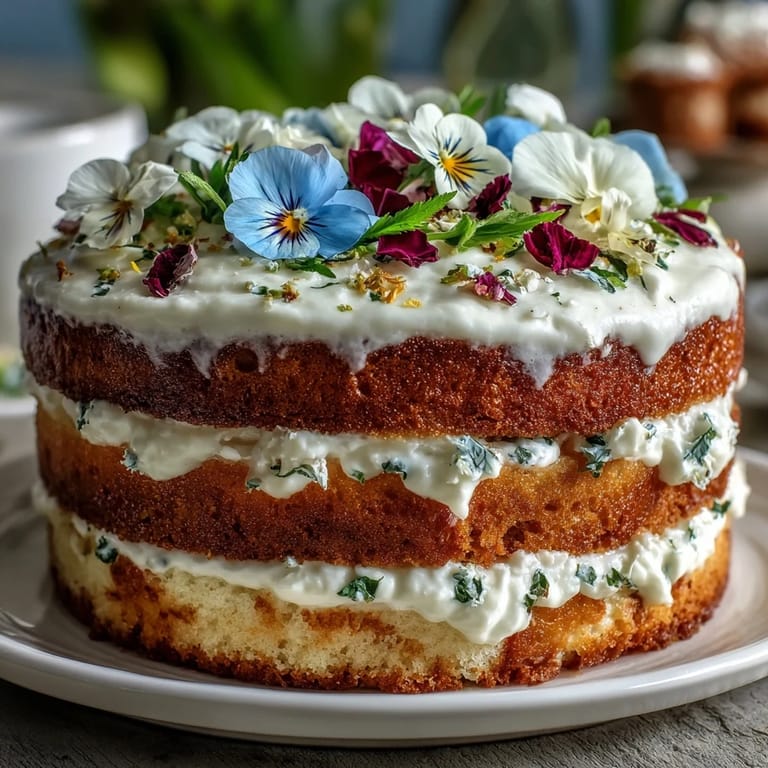
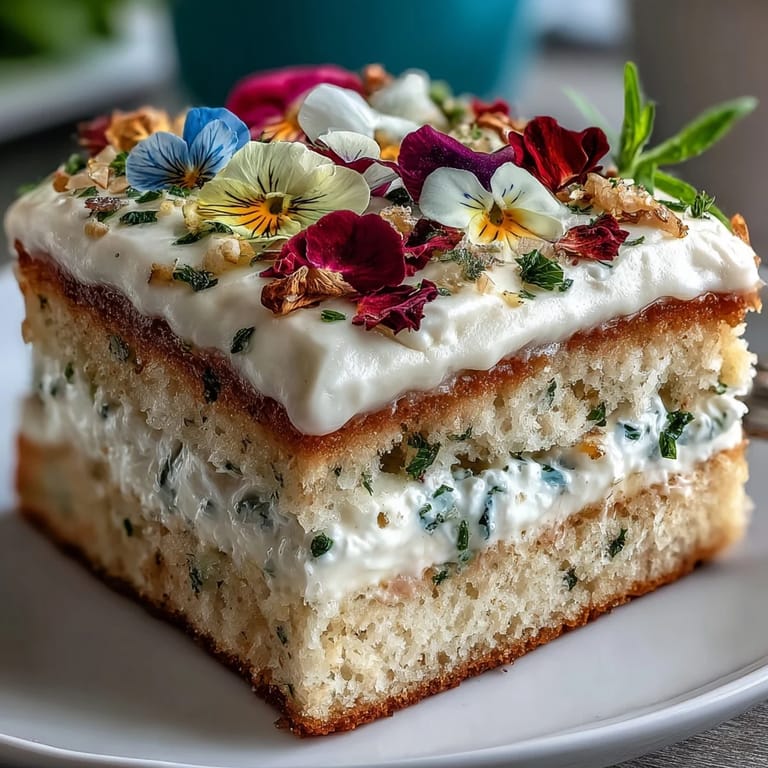
- Layer one cooled cake on a plate, slather with lemon curd, then add the second cake. Frost lightly with whipped cream—don’t worry if the cream’s imperfect, the flowers will finish the look.
- Decorate with Flowers:
- Arrange pressed edible flowers across the surface, pressing gently to stick. It’s like painting with petals, and each placement feels creative.
- Chill Before Serving:
- Refrigerate for at least 30 minutes so the whipped cream and blooms set, making slicing easier. Use this time to clear up—or admire your handiwork.
 Save to Pinterest
 One spring evening, serving the cake to my family, I watched as everyone paused to admire it before cutting in. The silence lasted only a moment—then laughter and gentle arguments began over who found the prettiest flower on their slice. It reminded me how food can spark wonder and quiet pleasure, even on an ordinary night. Cakes like this add a little magic to the memory. The edible blooms seemed to invite imagination to the table.
Choosing Your Edible Flowers
The adventure starts with sourcing edible blooms—pansies, violets, nasturtiums, and sometimes petite rose petals are reliable for color and flavor. I always check for organic certification and avoid supermarkets unless the flowers are labeled for culinary use. If you're unsure, ask your local florist or market vendor about growing practices. Avoid anything sprayed or grown roadside—safety is worth the extra effort. The flowers’ fragrance intensifies as they press and dry, adding subtle perfume each time the cake is sliced.
Getting the Lemon Curd Right
I’ve made curd that separated when I rushed or skipped constant stirring. The secret is patience over gentle heat—stir without stopping, even when your arm aches, until the curd coats the back of your spoon. Adding the butter off the heat keeps it creamy and glossy. If you want a more pronounced tang, use zest from nearly all your lemons. Lemon curd holds up beautifully—you can make it a day ahead and chill.
Making the Cake a Showstopper
The real fun begins when layering and decorating—the kitchen transforms from simple baking to artistry. I sometimes let guests pick their favorite petals and place them themselves; it's an unexpected icebreaker. Chill the assembled cake before slicing for perfect presentation.
- Have extra flowers on hand in case some break during decorating.
- Use an offset spatula for smooth whipped cream edges.
- When serving, wipe your knife clean between cuts for sharp slices.
 Save to Pinterest
 May your spring cake bring delight to both the eyes and the taste buds—each slice is a tiny celebration. Don’t worry about perfection; the flowers and citrus will do the talking.
Common Recipe Questions
- → How do I prepare the pressed edible flowers?
Ensure flowers are organically grown, lightly press them in parchment, and confirm they're edible before decorating.
- → Can the cake layers be baked ahead of time?
Yes, layers can be made a day early and kept wrapped at room temperature until assembling.
- → How can I intensify the lemon flavor?
Brush cake layers with lemon syrup before layering to boost citrus notes in each bite.
- → What is the best way to achieve fluffy whipped cream?
Use cold heavy cream and whip with powdered sugar and vanilla until stiff peaks form for optimal texture.
- → What pairs well with this spring cake?
Earl Grey tea or sparkling Moscato complements the cake's flavors and presentation.
- → What allergens are present?
Contains eggs, dairy, and wheat; ensure flowers are pesticide-free before use.