 Save to Pinterest
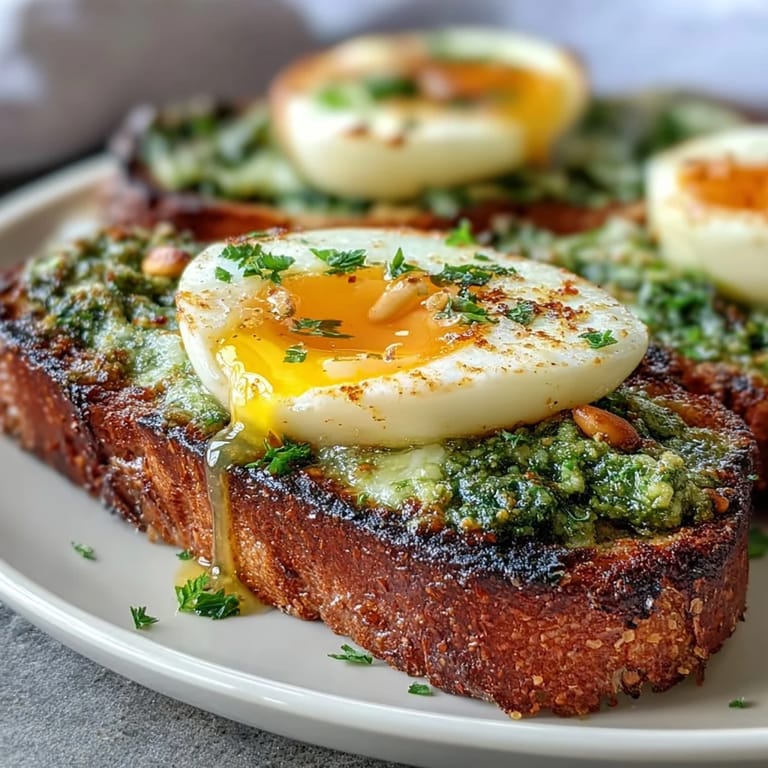
 There's something about the moment when a soft-boiled egg breaks open onto vibrant green pesto that feels like breakfast has finally grown up. I discovered this combination on a lazy Sunday morning when I had spinach going slightly wilted in the drawer and a sourdough loaf that deserved better than being toasted plain. The golden yolk pooling into the herbaceous pesto was so visually stunning that I took a photo before eating, which I almost never do. Now it's become my go-to when I want to impress someone without actually trying hard.
I made this for my sister who'd just started trying to eat "cleaner," and she was shocked that something this delicious could actually be good for her. She kept asking what I'd done differently, as if I'd discovered some secret technique, when really it was just fresh spinach and the willingness to let a perfectly cooked egg do the talking. That's when I realized this wasn't just breakfast—it was the kind of dish that changes how people think about eating at home.
Ingredients
- Fresh baby spinach: Use the tender kind that doesn't need cooking; it blends into silky pesto without bitterness.
- Fresh basil leaves: A quarter cup might seem small, but it's enough to give the pesto personality without drowning out the spinach.
- Toasted pine nuts: Toast them yourself if you can—they become nuttier and less likely to taste waxy or old.
- Parmesan cheese: Grate it fresh; pre-grated sometimes has starch that makes the pesto grainy.
- Extra virgin olive oil: This is where you taste the difference, so don't use cooking oil.
- Lemon juice: A tablespoon keeps everything bright and stops the pesto from tasting heavy.
- Sourdough bread: The tang and chew of sourdough actually complements the herby pesto in a way white bread never could.
- Large eggs: Fresher eggs peel more cleanly after soft-boiling, so check your carton date.
- Flaky sea salt: The crunch matters more than you'd think; it adds texture and doesn't dissolve into the yolk immediately.
Tired of Takeout? 🥡
Get 10 meals you can make faster than delivery arrives. Seriously.
One email. No spam. Unsubscribe anytime.
Instructions
- Make your pesto:
- Pulse the spinach, basil, nuts, garlic, and Parmesan until it looks like fine breadcrumbs, then stream in the olive oil while the processor runs until it's smooth and glossy. The whole thing takes about two minutes, and you'll hear it change pitch as it transforms from chunky to creamy.
- Soft-boil the eggs:
- Bring water to a gentle boil, carefully lower in the eggs, and set a timer for exactly six minutes—this is when the yolk is still jammy but the whites are set enough to peel without falling apart. When time's up, plunge them into an ice bath for two minutes so they stop cooking.
- Toast your bread:
- While the eggs cook, toast the sourdough until the exterior is golden and crisp but the inside still has some give; if you like butter, brush it on right now while the heat will melt it into the crumbs. The toaster goes faster than you'd think, so stay nearby.
- Assemble with care:
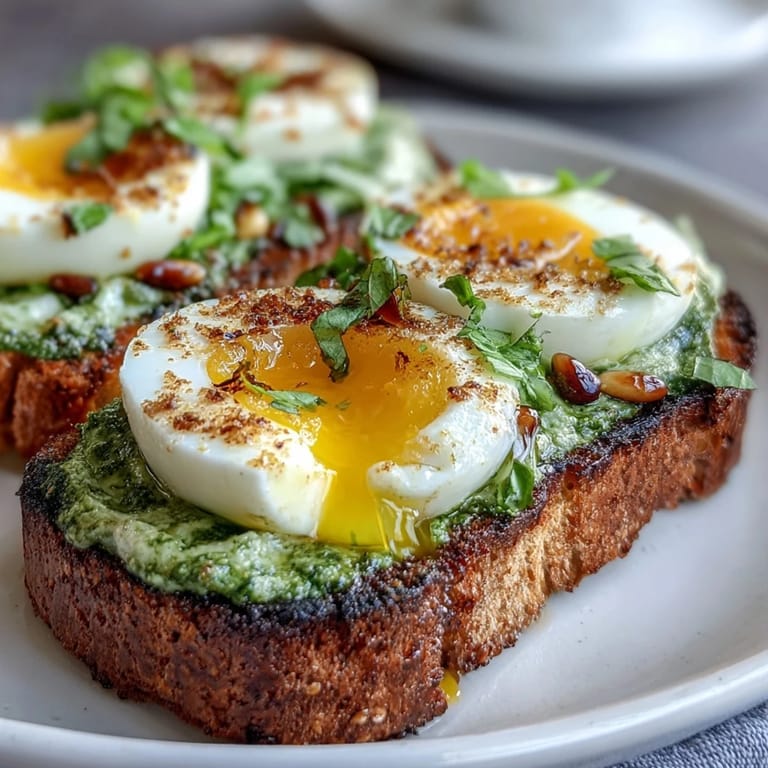
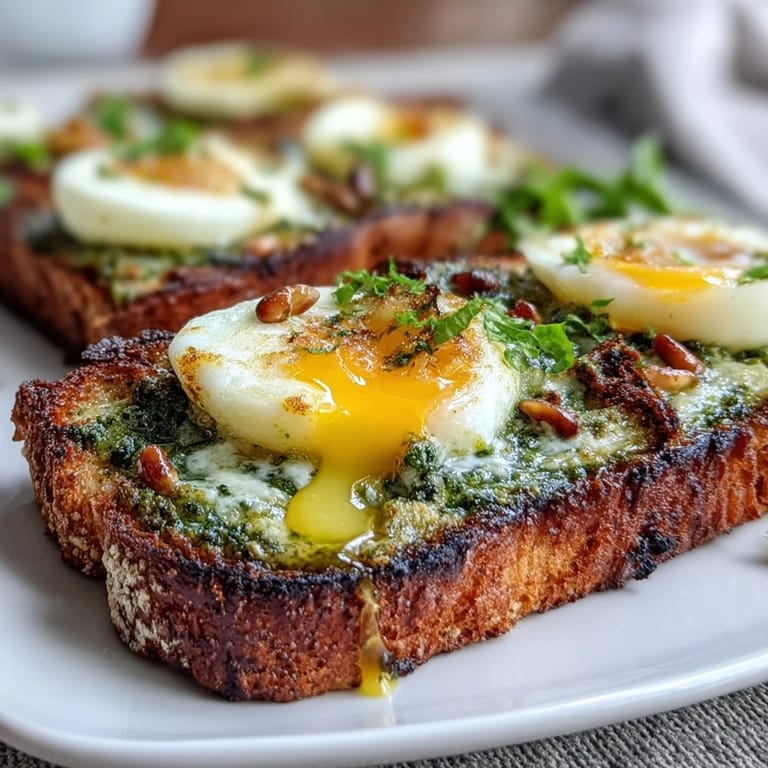
- Spread the pesto thick enough that you can see it on every bite, then halve the eggs and nestle them yolk-side up on top. Season aggressively with flaky salt and pepper because the toasted bread can handle bold flavors.
- Eat immediately:
- The magic happens while everything is still warm and the yolk is still runny enough to act as a sauce.
 Save to Pinterest
 What surprised me most was how often people came back and asked me to make this again, like I'd unlocked some secret formula for breakfast. It became the thing I made when I wanted to feel proud of what I was serving, not because it took hours, but because every element had been thought through and actually tasted good. That's the whole point, really.
Why Sourdough Matters Here
Sourdough isn't just a trendy bread choice—its natural tang and sturdy crumb actually balance the herby richness of the pesto in a way that keeps the whole thing from feeling heavy. The slight chew also stands up to the yolk without turning into mush, and the crispy exterior provides textural contrast that makes you want another bite. If you only have regular bread, it'll still work, but you'll notice the difference.
The Science of the Perfect Soft-Boiled Egg
Six minutes is almost magical for eggs at a rolling boil—it's the exact point where the white has set completely but the yolk is still liquid gold in the center. Room temperature eggs take slightly longer than cold eggs from the fridge, so if you're being precise, start with eggs that have been sitting out for five minutes. The ice bath stops the cooking process immediately and prevents that gray ring around the yolk that means the egg is overcooked.
Making This Your Own
Once you understand how these three elements work together—a sharp green sauce, a perfectly cooked protein, and a sturdy toast base—you can improvise based on what's in your kitchen. I've made it with arugula pesto on a rushed morning, and another time I added crispy pancetta because I was feeding someone hungrier than usual. The core idea stays the same, but it's flexible enough to play with.
- Swap the pine nuts for toasted walnuts, almonds, or even sunflower seeds if nuts aren't your thing.
- Add a thin slice of tomato or avocado between the pesto and egg if you want more substance.
- Dust it with chili flakes or microgreens right before serving if you're feeling fancy.
 Save to Pinterest
 This is the kind of breakfast that reminds you why you learned to cook in the first place. It's simple, it tastes restaurant-quality, and it takes less time than waiting in a coffee shop line.
Common Recipe Questions
- → How do you make the spinach pesto smooth?
Pulse fresh spinach, basil, pine nuts, garlic, Parmesan, and lemon juice in a food processor, slowly adding olive oil until creamy and spreadable.
- → What is the ideal cooking time for soft-boiled eggs?
Cook eggs gently for 6 minutes in boiling water for a soft, jammy yolk, then cool them in an ice bath to stop cooking.
- → Can I use nuts other than pine nuts in the pesto?
Yes, walnuts or almonds can be used as alternatives to pine nuts to add a different but delicious flavor.
- → How do you toast sourdough for this dish?
Toast sourdough slices until golden and crisp, optionally brushing with unsalted butter while warm for extra richness.
- → What garnishes complement the toast?
Flaky sea salt, freshly ground black pepper, chili flakes, or microgreens add texture and brightness to the finished toast.
- → How can I adapt this for a vegan diet?
Omit Parmesan or substitute with a plant-based cheese, and skip the eggs or replace with a vegan alternative.