 Save to Pinterest
 I was scrolling through my phone at midnight when a friend sent me a video of this pasta, and honestly, the creamy tomato sauce with that fierce kick of heat looked so effortlessly elegant that I had to try it that same week. There's something about the way the vodka mellows into the cream, creating this velvety texture that feels restaurant-quality but takes barely thirty minutes. The first time I made it, my kitchen smelled incredible—garlic and chili dancing through the air—and I knew this would become a regular rotation in my dinner plans.
I made this for my sister on a random Tuesday when she was stressed about work, and watching her face light up after the first bite was one of those small kitchen wins that stick with you. She kept asking how it was so creamy without feeling heavy, and I realized that's exactly what makes this recipe special—it satisfies completely but never tips into being too much.
Ingredients
- Rigatoni (400 g): The ridges grab onto every bit of sauce, so don't swap it for something smoother unless you want to miss out on the magic.
- Olive oil (2 tbsp): Use something decent here—it's the foundation for building flavor when you sauté the shallots and garlic.
- Shallot (1 small, finely chopped): Gentler than onion and melts into the sauce like it was always supposed to be there.
- Garlic (2 cloves, minced): Fresh is non-negotiable; jarred garlic will make you regret it immediately.
- Red chili flakes (1 tsp): This is your heat control—taste as you go because everyone's tolerance is different.
- Tomato paste (60 ml): The concentrated tomato flavor that gives the sauce its depth; caramelizing it is worth those extra minutes.
- Vodka (60 ml): It burns off the alcohol while leaving behind a subtle sophistication that rounds out the sauce.
- Heavy cream (120 ml): Full fat, please—this isn't the place to skim corners.
- Parmesan cheese (60 g, grated): Freshly grated makes a noticeable difference in how it melts into the sauce.
- Salt and black pepper: Taste multiple times throughout cooking; seasoning builds flavor layer by layer.
- Butter (2 tbsp, unsalted): Added at the end, it makes the sauce silky and brings everything into harmony.
- Fresh parsley (2 tbsp, chopped): The bright finish that cuts through the richness and adds a fresh visual contrast.
Tired of Takeout? 🥡
Get 10 meals you can make faster than delivery arrives. Seriously.
One email. No spam. Unsubscribe anytime.
Instructions
- Get the water boiling:
- Fill a large pot with salted water—it should taste like the sea—and bring it to a rolling boil before the rigatoni goes in. This is your only real time investment here, so let it happen while you prep everything else.
- Cook the pasta to al dente:
- Follow the package time but check a minute or two early; you want it tender but still with a slight bite because it'll finish cooking in the sauce. Scoop out about half a cup of pasta water before draining—this liquid gold is what controls your sauce consistency later.
- Build the flavor base:
- In a large skillet over medium heat, warm the olive oil until it shimmers, then add the shallot and let it soften for a few minutes until it turns translucent. You'll notice it smells sweet and mellow—that's your signal to add the garlic and chili flakes, which only need about a minute to become fragrant.
- Toast the tomato paste:
- Stir it into the aromatics and let it sit for a couple of minutes, stirring occasionally, until it deepens to a darker rust color. This step tastes like the difference between a good sauce and an incredible one.
- Add the vodka:
- Pour it in carefully—it might sizzle a bit—and stir everything together, then let it simmer for a few minutes so the alcohol cooks off and leaves behind its subtle magic. You'll notice the sharp smell mellowing into something more refined.
- Bring in the cream:
- Lower the heat and pour in the heavy cream slowly, stirring gently so everything blends into a silky base. Simmer for just two or three minutes; you're looking for it to thicken slightly and become uniform in color.
- Melt in the cheese:
- Add the grated Parmesan a handful at a time, stirring constantly so it melts smoothly instead of clumping. Taste and season with salt and pepper—remember that Parmesan is already salty, so go easy at first.
- Bring the pasta into the party:
- Add the drained rigatoni to the sauce and toss everything together until each piece is coated. If it looks too thick, add a splash of that reserved pasta water and keep tossing until it flows like you want it to.
- Finish with butter and herbs:
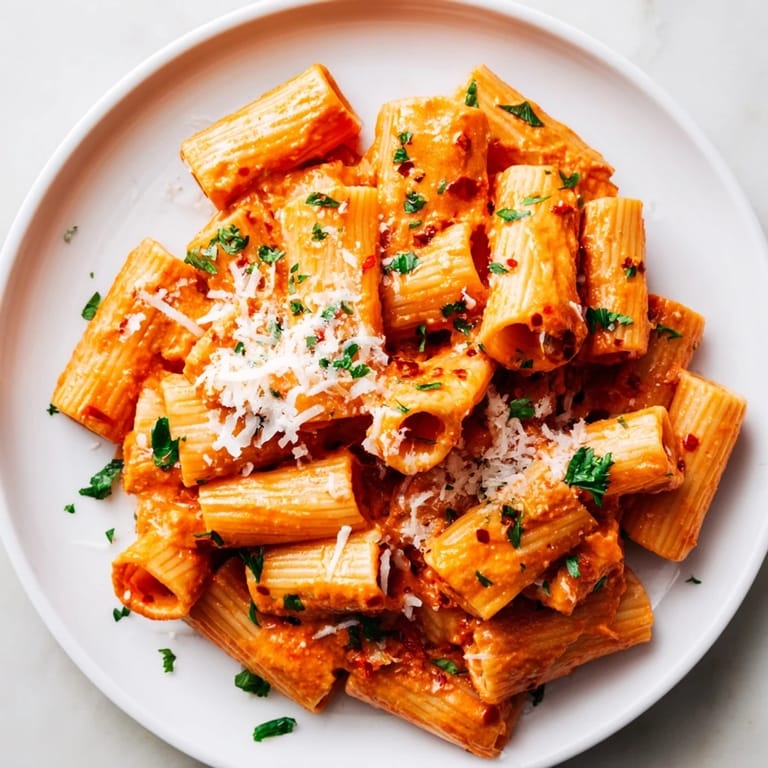
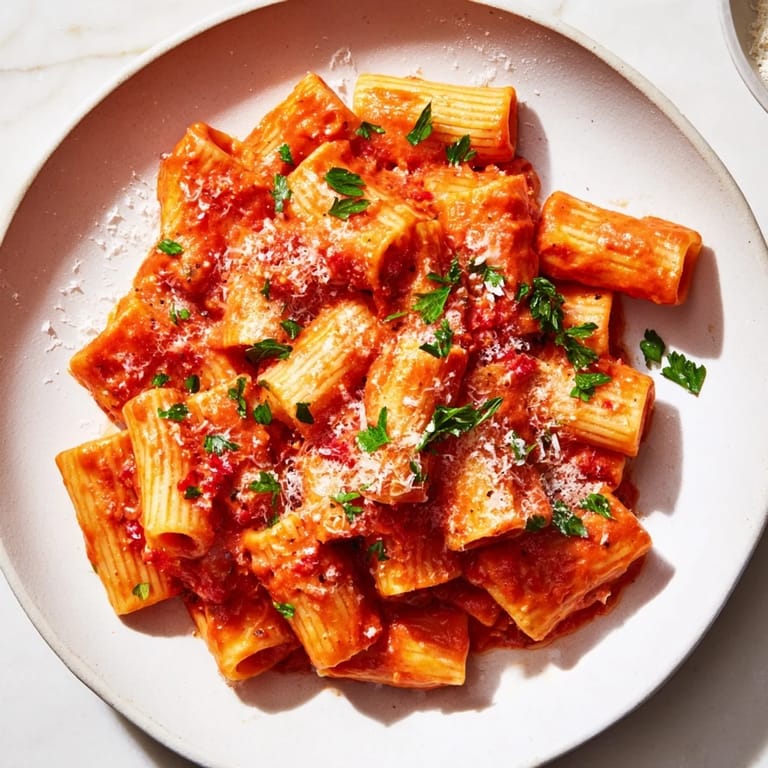
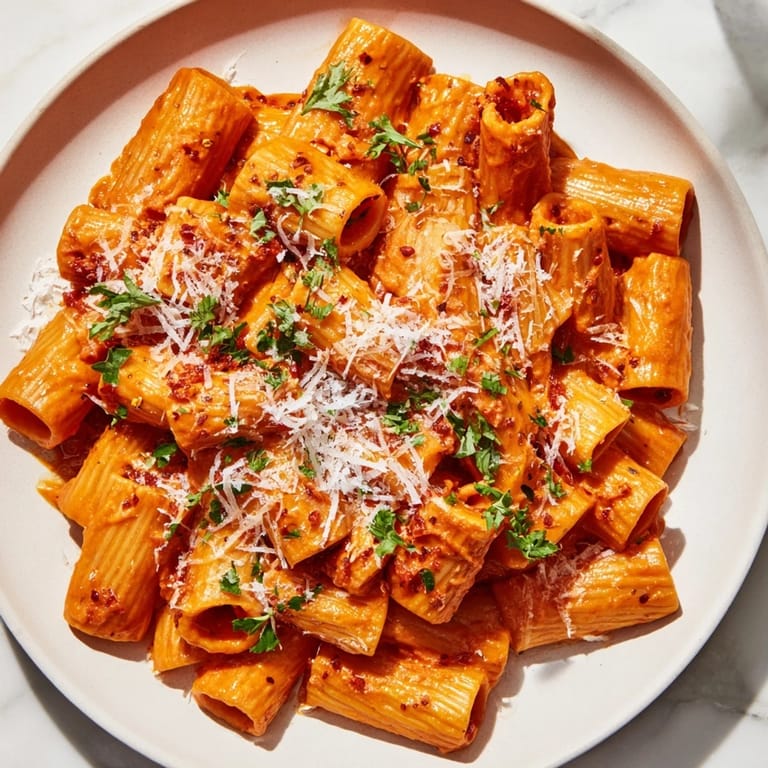
- Stir in the butter so the sauce becomes glossy and luxurious, then scatter the fresh parsley on top for brightness and color. The whole thing should look elegant enough to photograph but comfort-food enough to dive into.
 Save to Pinterest
 There's a moment right after you toss the pasta into the sauce when everything comes together—the cream turns that perfect peachy-pink from the tomato, the heat rises from the chili, and the whole kitchen smells like a cozy restaurant kitchen where someone actually knows what they're doing. That feeling of creating something this good in your own space never gets old.
The Magic of Vodka in Tomato Sauces
I spent years wondering why restaurant tomato sauces tasted so different from mine, and the vodka was part of that secret I didn't know I was missing. It doesn't make the sauce taste boozy; instead, it acts like a flavor amplifier, pulling out notes from the tomato and garlic that would otherwise hide in plain sight. The alcohol burns off during cooking, leaving behind this subtle roundness that makes people pause and ask what you added.
Making It Your Own
The beauty of this recipe is that it's flexible without losing its identity. I've added sautéed mushrooms when I had them, and the earthiness paired beautifully with the spicy cream. Fresh spinach wilted into the sauce at the last second adds nutrition and a pop of color without changing the essential character of the dish.
Timing and Temperature Matters
I learned the hard way that rushing this recipe doesn't work the way it does with other quick pastas. Each step—from sautéing the shallots to simmering the cream—needs its moment so the flavors layer properly and the sauce develops body instead of staying thin and one-dimensional. The slow caramelization of the tomato paste, the gentle simmer of the vodka, the patient melting of the cheese—these aren't steps to race through.
- Cook the shallots fully before adding garlic so the base is sweet and mellow, not raw.
- Stir frequently while the tomato paste darkens to prevent it from scorching on the bottom of the pan.
- Keep the heat low once the cream is in, or it might break and become grainy instead of silky.
 Save to Pinterest
 This pasta has become my reliable answer to the question of what to cook when someone matters enough to deserve something special but your time is limited. It's the kind of dish that makes you feel like a better cook than you were an hour ago.
Common Recipe Questions
- → How can I adjust the spice level?
Modify the amount of red chili flakes according to your preference. Start with less and add gradually for milder heat.
- → Can vodka be omitted or substituted?
Yes, vodka adds depth but can be skipped or replaced with water or broth, keeping the sauce flavorful with tomato and cream.
- → What type of pasta works best?
Rigatoni's ridged surface holds the creamy sauce well, but penne or rigatoni-sized tubes can be used alternatively.
- → How to make this dish vegan-friendly?
Use plant-based cream and Parmesan substitutes, and replace butter with vegan margarine or olive oil.
- → Is it necessary to reserve pasta water?
Yes, reserved pasta water helps thin the sauce to the desired consistency and aids in coating the pasta evenly.