 Save to Pinterest
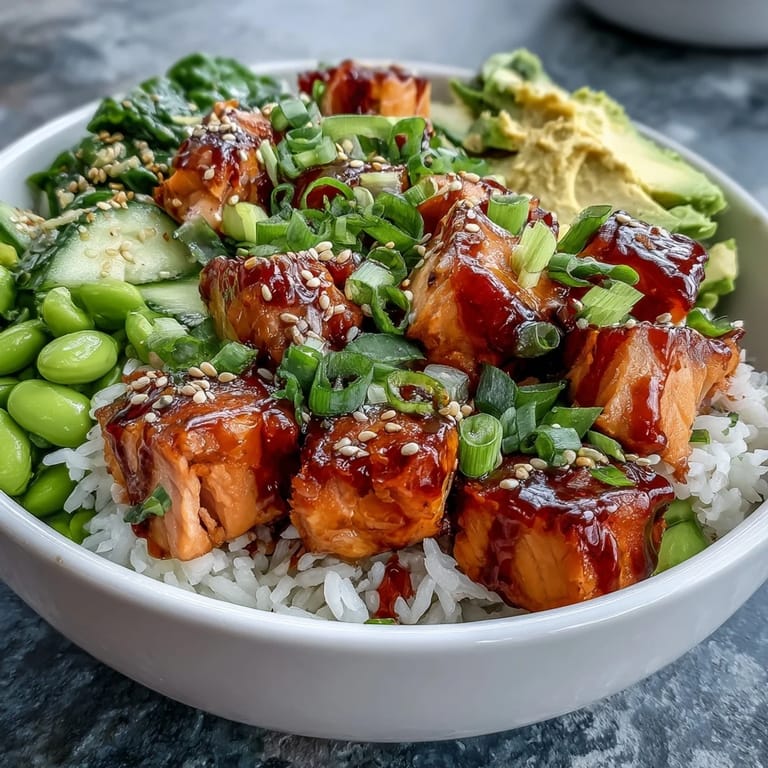
 There's something about a salmon rice bowl that feels both effortless and indulgent at the same time. I discovered this combination on a weeknight when I had some gorgeous salmon fillets in the fridge and an oddly perfect lineup of toppings in my pantry. What started as improvisation became my go-to bowl whenever I want something that tastes like I spent hours in the kitchen but actually takes less than forty minutes. The colors alone—golden salmon, emerald edamame, creamy avocado—make it feel like a celebration of flavors rather than just dinner.
I made this for my sister last summer when she mentioned she was tired of the same salads, and watching her arrange all the toppings exactly how she wanted them reminded me that the best bowls are the ones you customize yourself. She drowned hers in sriracha mayo, naturally, and I remember her laughing when a piece of avocado slipped off her spoon onto the table. That's when I knew this recipe had staying power—it's interactive, it's fun, and nobody takes themselves too seriously while eating it.
Ingredients
- Salmon fillet, cut into cubes: The size matters more than you'd think; aim for 2 cm pieces so they bake evenly without drying out at the edges.
- Soy sauce: This is the backbone of your marinade, so don't skip it or use low-sodium without adjusting the salt.
- Sesame oil: A little goes a long way, and toasted sesame oil gives you that nutty depth that makes people ask what your secret ingredient is.
- Honey: It caramelizes beautifully on the salmon and balances the savory notes with a whisper of sweetness.
- Rice vinegar: Adds brightness without the harshness of regular vinegar; it's the detail that keeps everything from feeling heavy.
- Fresh ginger and garlic: These two are non-negotiable if you want that authentic marinated flavor.
- Jasmine rice: Its slight floral quality pairs perfectly with the asian-inspired toppings, though sushi rice works too if that's what you have.
- Edamame: Buy them pre-cooked and shelled if you can; it saves time and they're already perfectly tender.
- Cucumber: Slice it fresh right before assembly so it stays crisp; it's your textural anchor against the soft rice and salmon.
- Avocado: Wait to slice it until you're ready to assemble or it'll turn that unfortunate shade of brown.
- Sriracha mayo: The heat from sriracha cutting through creamy mayo is where the magic happens; adjust it to your threshold for spice.
Tired of Takeout? 🥡
Get 10 meals you can make faster than delivery arrives. Seriously.
One email. No spam. Unsubscribe anytime.
Instructions
- Get your oven ready and prep your workspace:
- Preheat to 200°C and line your baking tray with parchment paper so the salmon won't stick and cleanup is effortless.
- Build your marinade and coat the salmon:
- Whisk soy sauce, sesame oil, honey, rice vinegar, minced garlic, and ginger together in a bowl, then add your salmon cubes and toss gently. Let it sit for 10 to 15 minutes while you handle the rice; this time is enough for flavor to develop without the acidity cooking the fish prematurely.
- Cook your rice while salmon waits:
- Rinse jasmine rice under cold water until the water runs clear, then combine with water and salt in a saucepan. Bring to a boil, drop the heat to low, cover, and let it steam for 12 to 15 minutes until the grains are tender and have absorbed all the liquid. This might be the most hands-off part, but listen for when the water stops sizzling; that's your cue it's almost done.
- Roast the salmon until golden:
- Spread marinated salmon on your prepared tray and slide it into the oven for 10 to 12 minutes; you want the edges caramelized and the center barely opaque when you peek inside. The marinade creates a glossy coating that tastes like you reduced it on the stovetop, but the oven does all the work.
- Whisk together your sriracha mayo:
- In a small bowl, combine mayonnaise, sriracha (start with 1 tablespoon if you're cautious), and lime juice, stirring until smooth and pourable. Taste it and adjust the heat level now, before you drizzle it on everything.
- Assemble your bowls with intention:
- Divide fluffy rice among four bowls, then top each with baked salmon, edamame, fresh cucumber slices, and avocado slices arranged how you like them. Drizzle sriracha mayo across the top, sprinkle sesame seeds and green onions, and serve immediately while the rice is still warm and the toppings are still fresh.
 Save to Pinterest
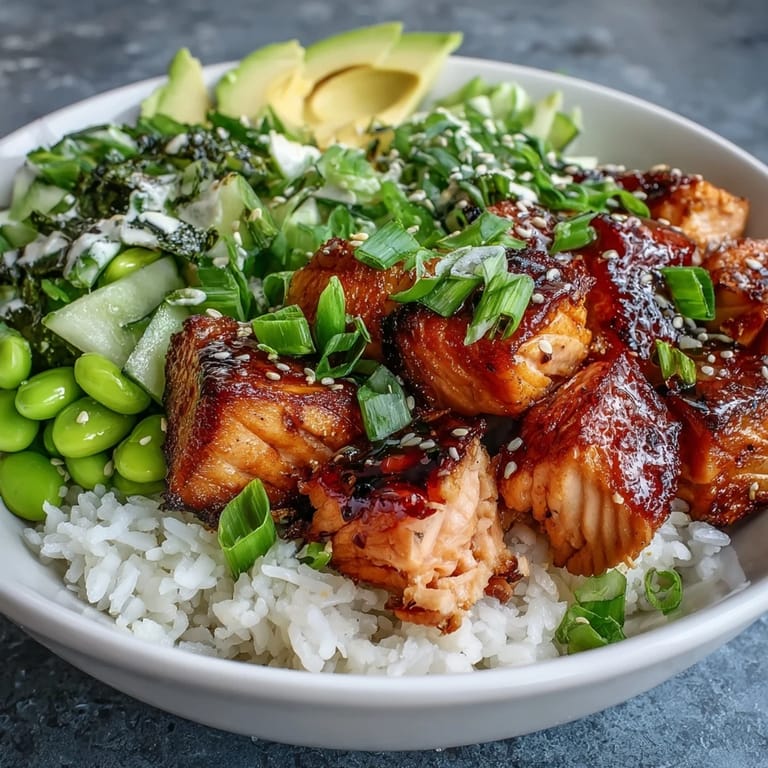
 There was a moment during a particularly chaotic week when I made this for myself and sat down at my kitchen counter, and instead of eating at my desk like usual, I stayed right there and actually tasted each element. The warm rice steaming slightly, the cool crunch of cucumber cutting against creamy avocado, that spicy mayo hitting at the end—it felt like a small act of self-care disguised as dinner. Sometimes the simplest recipes teach us the most important lessons about slowing down.
Why Marinating Makes All the Difference
I used to bake salmon plain and wonder why restaurant versions tasted so much better, until I realized those extra 15 minutes in a proper marinade transform the fish from good to genuinely crave-worthy. The soy sauce and sesame oil penetrate the delicate flesh while the honey and vinegar create a caramelized exterior that's slightly sweet and deeply savory. It's the same technique that changes a weeknight dinner into something you'd order if you saw it on a menu.
Building Texture and Temperature Balance
The best thing about rice bowls is how they play different temperatures and textures against each other; warm rice meets cool avocado, soft salmon sits beside crispy cucumber, and creamy mayo ties it all together without making it feel one-dimensional. I've learned that the order you layer things matters less than making sure you get a bit of everything in each bite, which is why some people arrange their bowl like a puzzle and others just pile things on and call it done. Both ways work because the foundation—that perfectly cooked salmon and fluffy rice—is solid enough to handle whatever chaos you build on top.
Make It Your Own and Know Your Heat Level
This bowl is incredibly forgiving and begging to be personalized based on what's in your kitchen or what you're craving that day. Pickled ginger adds a sharp tang, shredded carrots bring sweetness, microgreens add elegance, and a squeeze of fresh lime right before eating brightens everything. My final reminders for a perfect bowl every time:
- Taste your sriracha mayo before assembly and adjust the spice to match your mood, not someone else's tolerance.
- Don't prep the avocado until you're ready to eat or brown avocado is never anyone's favorite surprise.
- If you're making this for others, set up a toppings bar and let everyone build their own bowl exactly how they like it.
 Save to Pinterest
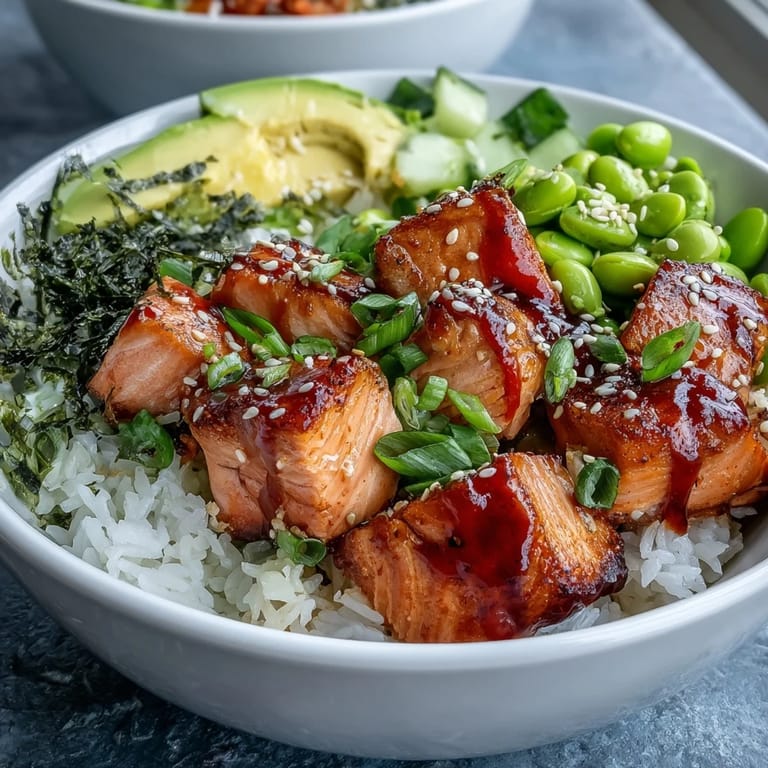
 This salmon rice bowl has become my answer to the question of what to make when you want something that feels special but doesn't demand hours in the kitchen. Make it once and you'll understand why it's hard to stop making it again.
Common Recipe Questions
- → How do I know when the salmon is cooked through?
The salmon cubes should be opaque and slightly firm to the touch, about 10-12 minutes at 200°C (400°F). Avoid overcooking to keep the fish tender and moist.
- → Can I use brown rice instead of jasmine rice?
Yes, brown rice works well but will require longer cooking time and more water. Plan for approximately 40-45 minutes cooking time instead of 12-15 minutes.
- → How can I make this dish gluten-free?
Substitute regular soy sauce with tamari or a certified gluten-free soy sauce alternative. The rest of the ingredients are naturally gluten-free.
- → Can I prepare components in advance?
Yes, cook the rice and chop vegetables up to a day ahead. Marinate and bake the salmon fresh, then assemble just before serving for best texture and temperature.
- → What other toppings work well in this bowl?
Pickled ginger, shredded radishes, sliced carrots, seaweed salad, or pickled vegetables add complementary flavors and textures. A soft-boiled egg also makes an excellent protein addition.
- → How spicy is the sriracha mayo?
Adjust the sriracha amount from 1-2 tablespoons based on your spice preference. Start with less, taste, and add more gradually to achieve your desired heat level.