 Save to Pinterest
 There's a particular Tuesday morning I keep coming back to—the kind where everything smells like butter and possibility. I was standing in a French patisserie in Lyon, watching a baker layer phyllo dough with the kind of precision that made it look effortless, and I realized I'd been thinking about croissants all wrong. They didn't have to be just buttery vehicles; they could be canvases for something richer, something unexpected. The moment I tasted pistachio cream cradled in crispy phyllo, I knew I had to figure out how to recreate that feeling at home.
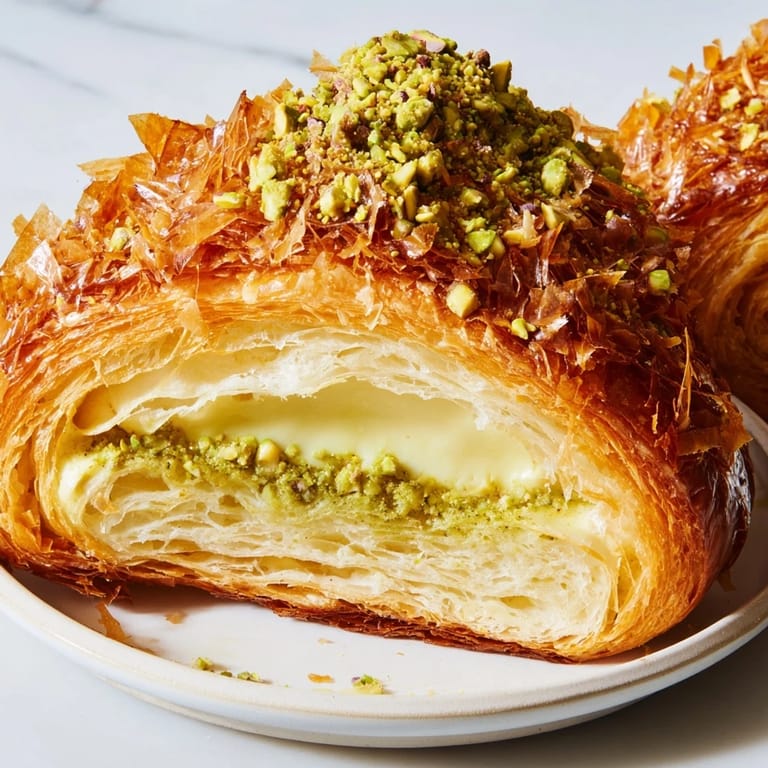
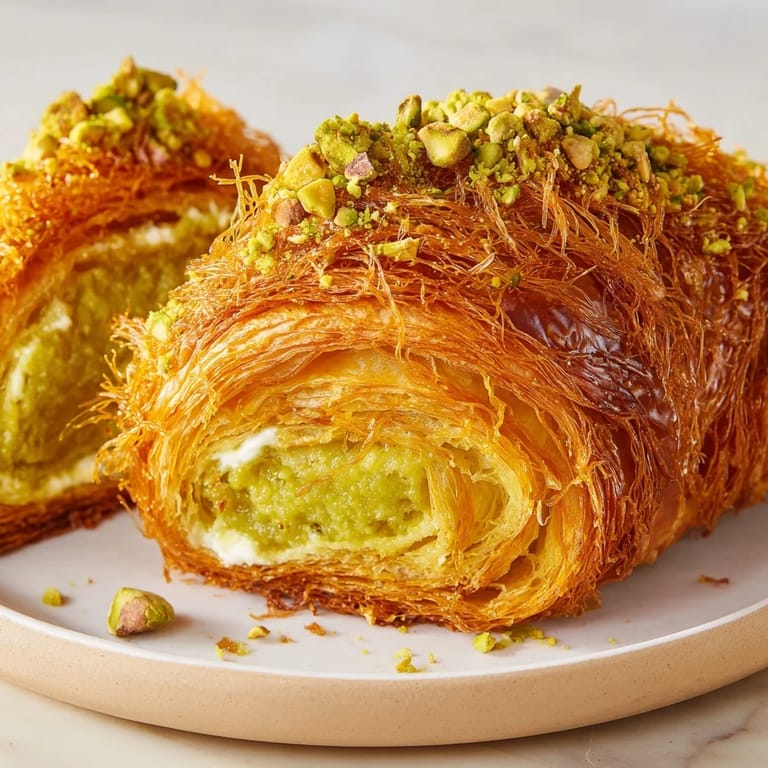
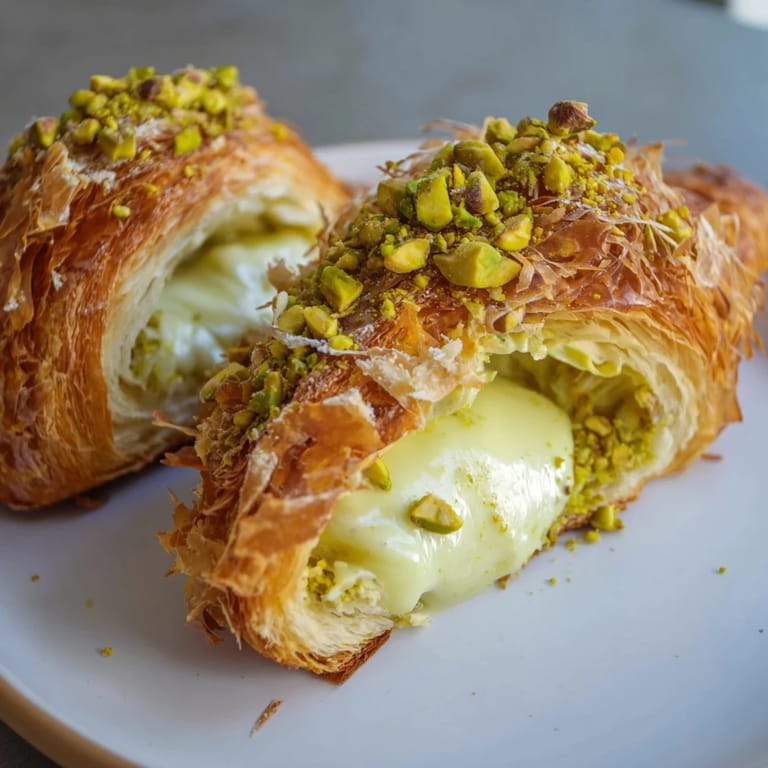
I made these for my partner on his birthday, and the kitchen was chaos—phyllo sheets everywhere, butter pooling on the counter, my hands sticky and dusted with sugar. But when he bit into one and that crispy top shattered, releasing the green, nutty filling underneath, he got this quiet, focused expression that said everything. That's when I understood these weren't just pastries; they were a small edible apology for all the mornings I rush out the door without properly saying hello.
Ingredients
- All-butter croissants (8, day-old): Day-old ones work better because they're slightly drier and hold up to the filling and syrup without getting soggy—fresh croissants will fall apart in your hands.
- Unsalted pistachios (120 g, shelled): The quality of your pistachios makes a real difference in flavor, so splurge slightly if you can.
- Granulated sugar (80 g for cream, 2 tbsp for phyllo, 50 g for syrup): Keep these separate and measured; phyllo dough demands precision or it'll burn.
- Unsalted butter (100 g softened for cream, 40 g melted for phyllo): Softened butter means your pistachio cream will be smooth and spreadable without any grainy texture.
- Large egg (1): This is what transforms the pistachio mixture from paste into something luxurious and airy.
- Heavy cream (2 tbsp): Just enough to lighten the cream without making it too loose to hold inside the croissant.
- Vanilla extract (1 tsp): A whisper of vanilla deepens the pistachio flavor rather than competing with it.
- Salt (pinch): Non-negotiable; it's what makes the pistachio taste like itself.
- Phyllo dough (4 sheets, thawed): Thawed phyllo is forgiving, frozen phyllo will crack and splinter before you can even pick it up.
- Orange blossom water (1 tsp, optional): If you use it, your kitchen will smell like a Moroccan dream—optional but I never skip it.
- Chopped pistachios (30 g for garnish): A final flourish that catches light and announces what's inside.
- Water (80 ml for syrup): The vehicle that carries flavor directly into the croissant without weighing it down.
Tired of Takeout? 🥡
Get 10 meals you can make faster than delivery arrives. Seriously.
One email. No spam. Unsubscribe anytime.
Instructions
- Heat your oven and prepare:
- Preheat to 180°C (350°F) and line your baking sheet with parchment paper—this prevents any sticking drama later on.
- Make the syrup:
- In a small saucepan, combine water and sugar, stirring gently as it simmers until every crystal dissolves. If you're using orange blossom water, add it off the heat and let the whole thing cool completely—a warm syrup will wilt your phyllo before you're ready.
- Blend the pistachio cream:
- Process pistachios and sugar until they're ground fine as sand, then add the softened butter, egg, cream, vanilla, and salt. Keep processing until it's silky and homogeneous—any grittiness means you stopped too early.
- Prepare your croissants:
- Slice each one horizontally, being careful to leave a small hinge so it stays in one piece. Brush the inside gently with cooled syrup; go light here or you'll end up with soggy pastry.
- Fill and close:
- Spread a generous spoonful of pistachio cream inside each croissant, then close it up carefully and set it on your prepared sheet.
- Build the phyllo crunch:
- Lay one phyllo sheet flat, brush with melted butter, sprinkle lightly with sugar. Repeat layering until all four sheets are stacked, then roll the whole thing into a loose log and slice it thinly—you want irregular, crunchy shreds, not neat ribbons.
- Assemble and garnish:
- Top each croissant with a loose nest of phyllo shreds and scatter chopped pistachios over the top. Don't pack it down; let it sit naturally and catch the heat.
- Bake until golden:
- Bake for 15 to 18 minutes—your oven might run hot or cold, so watch for deep golden phyllo and a warm croissant that yields slightly when pressed. Underbaked phyllo stays chewy and sad; overbaked tastes bitter.
- Cool slightly before eating:
- The pistachio cream and phyllo need just a few minutes to set slightly so you can actually pick one up without it collapsing.
 Save to Pinterest
 The smell of these baking—butter, toasted nuts, a hint of orange—fills your entire house with a kind of quiet confidence. I've learned that pastries like this aren't really about impressing people; they're about the small moment of care they represent.
Why Phyllo Is Worth the Effort
Phyllo seems intimidating, but here's what I've discovered: it's actually more forgiving than puff pastry because it doesn't require any resting time or lamination. The key is keeping it covered and working quickly but without panic. Once you've made it once, you realize phyllo is just thin sheets of dough that want to be brushed with butter and coaxed into shape—nothing sinister about that.
The Magic of Pistachio Over Almond
Most pastries reach for almonds by default, and almonds are lovely, but pistachios have this subtle earthiness and a faint natural sweetness that doesn't need as much sugar to shine. They also have that gorgeous pale green color that makes people think you've done something impossibly sophisticated, even though you've really just bought pistachios and blended them with butter. There's something satisfying about that.
Serving and Storage
These are best eaten the day you make them while the phyllo is still crisp, but I've kept them in an airtight container for two days and they're still pleasant—not quite as crackling, but still good with strong coffee or a glass of Moscato d'Asti. If you're serving them to guests, have everything prepped the night before and just assemble, top, and bake in the morning.
- Use roasted pistachios if you find raw ones too subtle for your taste.
- Store-bought pistachio paste works beautifully if you're short on time—just use it instead of making the cream from scratch.
- Pair with dark roast coffee to let the pistachio flavor take the spotlight without competition.
 Save to Pinterest
 Every time I make these, I'm reminded that the best dishes aren't the ones that look fussy or demand your attention constantly—they're the ones that taste like someone took a moment to think about what would make your morning better. These definitely qualify.
Common Recipe Questions
- → How is the pistachio cream made?
It’s prepared by blending shelled pistachios with sugar, softened butter, egg, heavy cream, vanilla extract, and a pinch of salt until smooth and creamy.
- → What creates the crunchy topping?
Thin phyllo dough sheets are brushed with melted butter and sprinkled with sugar, then rolled and sliced into shreds to form a golden, crunchy layer atop the croissants after baking.
- → Can the syrup be flavored differently?
Yes, the syrup combines water and sugar, with orange blossom water added optionally for a subtle floral aroma enhancing the overall flavor.
- → What is the best way to store these croissants?
Store them in an airtight container at room temperature and consume within two days to maintain freshness and texture.
- → Are day-old croissants recommended for this preparation?
Yes, day-old croissants hold their shape better when sliced and filled, making them ideal for this preparation.
- → What pairing complements these pastries?
Strong coffee or a glass of Moscato d’Asti pairs wonderfully, balancing the richness and sweetness.