 Save to Pinterest
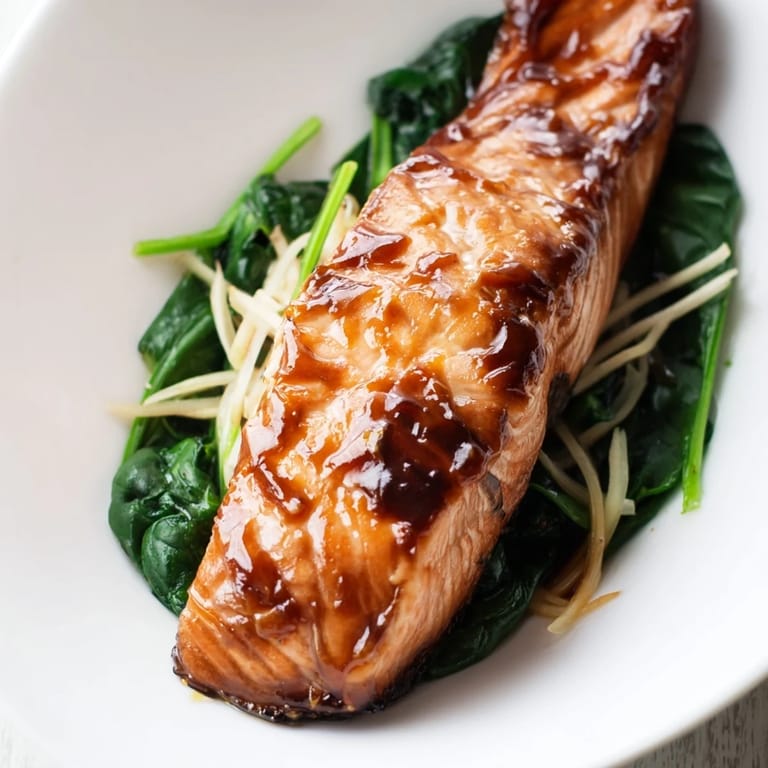
 The smell of miso caramelizing in the oven is what got me hooked on this recipe. I was testing dinner ideas for a busy weeknight and wanted something that felt elegant without the fuss. The salmon came out glossy and tender, the spinach wilted down in minutes, and I remember thinking this is the kind of meal that makes you look like you tried harder than you did. It's been my go-to ever since when I want to impress without stress.
I made this for my sister when she came over after a long shift at the hospital. She took one bite and closed her eyes, which is her version of a compliment. We didn't talk much that night, just ate slowly and sipped cold white wine. Sometimes a good meal does the work conversation can't.
Ingredients
- Salmon fillets: Skin on or skinless both work, but I prefer skin on because it crisps up nicely and holds the fillet together during cooking.
- White miso paste: The heart of the glaze, it brings that umami depth without being too salty or overwhelming, look for it in the refrigerated section near tofu.
- Mirin: This sweet rice wine balances the saltiness of the miso and adds a subtle gloss, dry sherry works in a pinch.
- Low sodium soy sauce: Keeps the saltiness in check so the glaze doesn't overpower the delicate salmon.
- Honey or maple syrup: A touch of sweetness helps the glaze caramelize beautifully in the oven.
- Sesame oil: Just a teaspoon adds a toasty, nutty aroma that ties the whole dish together.
- Fresh ginger: Grated into the glaze and julienned for the spinach, it brings brightness and a gentle heat.
- Olive or sesame oil for spinach: I use sesame oil when I want extra richness, olive oil when I want it lighter.
- Shallot and garlic: They create a fragrant base for the spinach that makes the whole kitchen smell incredible.
- Fresh baby spinach: It wilts down to almost nothing, so don't be shy with the volume, it's nutrient dense and silky when cooked.
- Lemon wedges: A squeeze at the end cuts through the richness and makes everything taste brighter.
Tired of Takeout? 🥡
Get 10 meals you can make faster than delivery arrives. Seriously.
One email. No spam. Unsubscribe anytime.
Instructions
- Preheat and prep:
- Set your oven to 200°C (400°F) and line a baking tray with parchment paper. This keeps cleanup easy and prevents sticking.
- Make the miso glaze:
- In a small bowl, whisk together miso paste, mirin, soy sauce, honey, sesame oil, and grated ginger until smooth. It should look glossy and smell sweet and savory.
- Prepare the salmon:
- Pat the fillets dry with paper towels so the glaze sticks properly. Place them on the tray and brush generously with the miso mixture, making sure every surface is coated.
- Bake the salmon:
- Slide the tray into the oven and bake for 10 to 12 minutes, until the salmon is just cooked through and the glaze has caramelized into a golden sheen. The edges should look slightly darker and sticky.
- Sauté the aromatics:
- While the salmon bakes, heat olive or sesame oil in a large skillet over medium heat. Add the shallot, garlic, and julienned ginger, stirring for 1 to 2 minutes until fragrant and softened.
- Wilt the spinach:
- Add the spinach in batches, tossing as it wilts down. Season with soy sauce and black pepper, then remove from heat.
- Plate and serve:
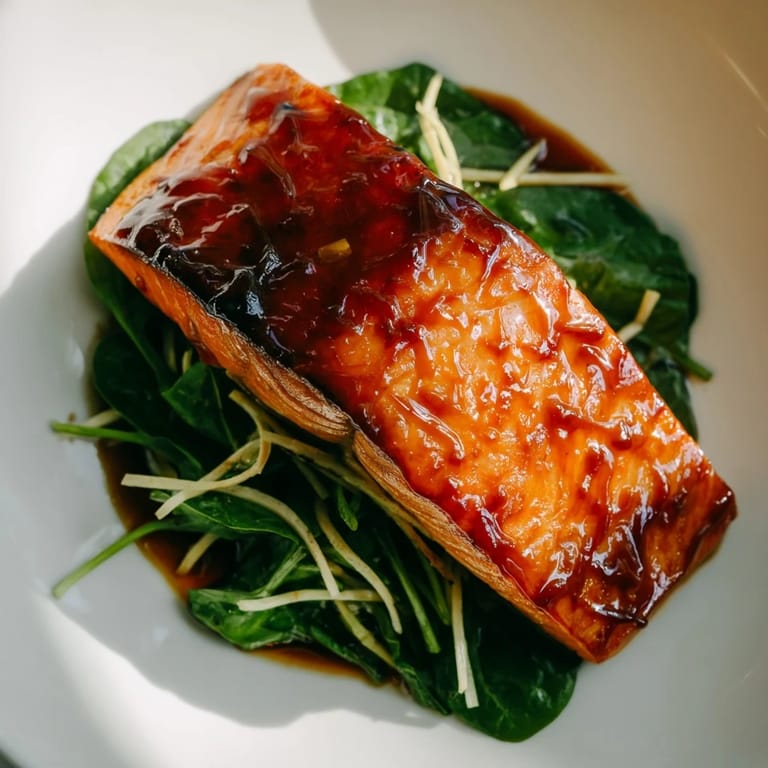
- Divide the spinach among four plates, top each with a miso glazed salmon fillet, and serve with lemon wedges on the side. Squeeze the lemon over everything just before eating.
 Save to Pinterest
 The first time I made this, I plated it with a sprinkle of sesame seeds and sliced scallions, and my partner looked at me like I'd turned into a food stylist. It's funny how a little garnish can make a dish feel like an event. Now I keep both in the pantry just for moments like this.
Choosing Your Salmon
I buy salmon fillets that are similar in size so they cook evenly. If one is thicker, it might need an extra minute or two in the oven. Fresh is ideal, but frozen works beautifully as long as you thaw it in the fridge overnight. Look for bright color and firm texture, and don't be afraid to ask the fishmonger for a recommendation.
Making It Your Own
This recipe is forgiving and loves to be tweaked. I've swapped the spinach for bok choy or kale when that's what I had on hand. You can add a pinch of red pepper flakes to the glaze if you like heat, or drizzle a little extra sesame oil over the finished dish for richness. Serve it over steamed rice, quinoa, or even soba noodles to make it heartier.
Storage and Reheating
Leftovers keep well in the fridge for up to two days in an airtight container. I reheat the salmon gently in a low oven or toaster oven to keep it moist, microwaving can make it rubbery. The spinach reheats fine in a skillet with a splash of water.
- Store the salmon and spinach separately if you can, it keeps textures better.
- Cold leftover salmon is excellent flaked over a salad the next day.
- If you're meal prepping, make extra glaze and keep it in a jar for up to a week.
 Save to Pinterest
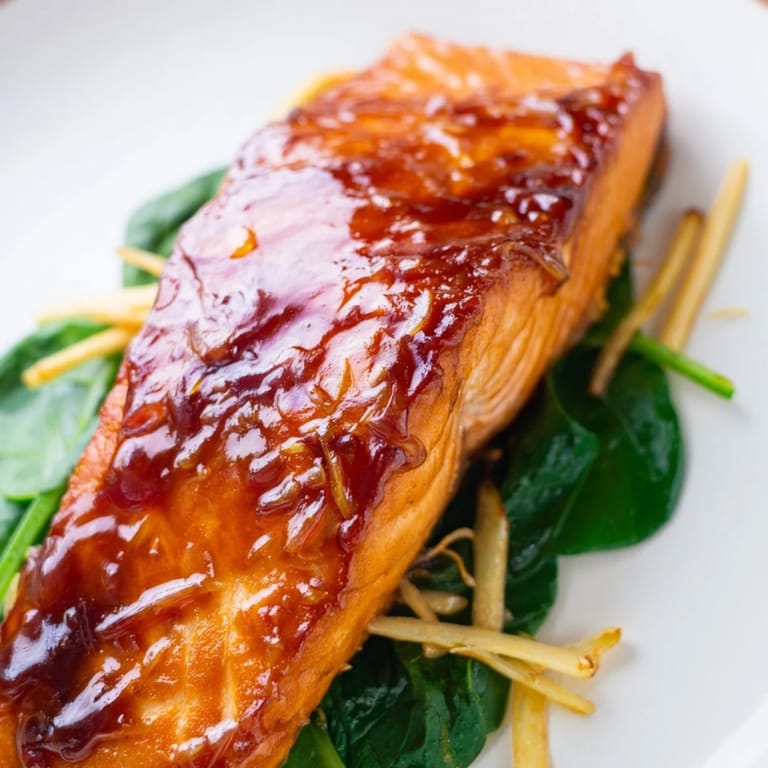
 This dish has a way of making weeknights feel special without demanding much from you. I hope it becomes one of those recipes you reach for when you want something nourishing, flavorful, and just a little bit fancy.
Common Recipe Questions
- → Can I use a different type of miso paste?
Yes, white miso provides a delicate, slightly sweet flavor that works wonderfully with salmon. Red miso will create a deeper, more robust taste. Adjust quantity slightly as red miso is saltier. Both create delicious results.
- → What's the best way to prevent overcooked salmon?
Pat your fillets dry before glazing and watch carefully during the final minutes of baking. The salmon continues cooking after removal, so pull it out when just opaque in the center. A meat thermometer reading 45°C (113°F) ensures perfect doneness.
- → Can I make the miso glaze ahead of time?
Absolutely. Mix the glaze up to 24 hours in advance and store in an airtight container in the refrigerator. Let it come to room temperature before brushing onto salmon for even coating.
- → What substitutes work for mirin?
Dry sherry, sake, or a mixture of honey and rice vinegar work well. Each brings slightly different sweetness and depth. Use equal quantities as the mirin called for in the glaze.
- → How do I know when the spinach is properly sautéed?
Cook until the leaves are just wilted and bright green, typically 2-3 minutes total after adding to the skillet. Overcooking diminishes flavor and nutrition. Work in batches if needed to avoid overcrowding the pan.
- → Can this dish be made gluten-free?
Yes. Use tamari or certified gluten-free soy sauce instead of regular soy sauce in both the glaze and spinach seasoning. All other ingredients are naturally gluten-free. Always verify label certifications.