 Save to Pinterest
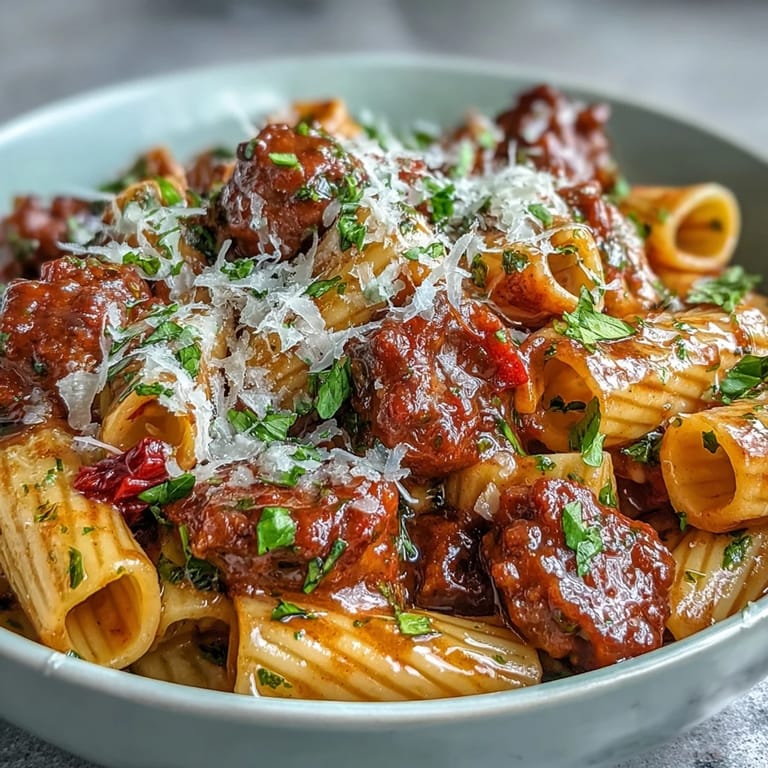
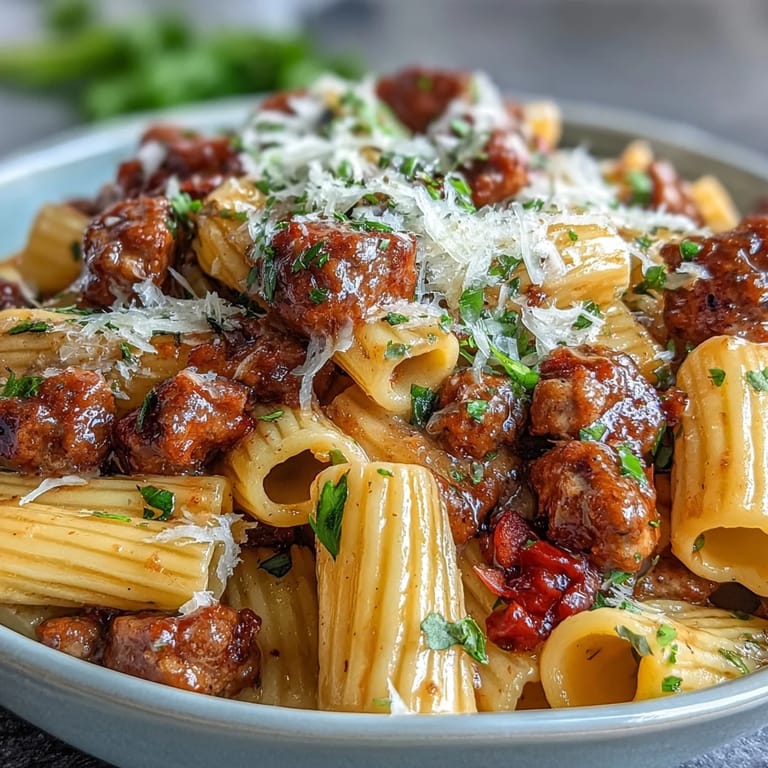
 My neighbor knocked on my door one Tuesday night holding a bottle of red wine she couldn't finish alone. I had sausage thawing, a box of penne in the pantry, and no plan whatsoever. What came out of that pot thirty minutes later tasted like I'd been simmering it all day. The wine didn't just add flavor, it loosened everything into this glossy, brick-red sauce that clung to every ridged edge of pasta. We ate it straight from the skillet with two forks and decided some of the best meals happen by happy accident.
I made this for my brother after he moved into his first apartment with nothing but a single skillet. He stood over the stove, skeptical that uncooked pasta could go straight into the pot with everything else. When it worked, when the noodles softened and soaked up all that tomato and wine, he actually laughed out loud. Now it is the only recipe he makes when he wants to impress someone, and he texts me every time to confirm the timing.
Ingredients
- Italian sausage: Use spicy if you like heat, mild if you want the wine and tomato to stay front and center, and always brown it well for those crispy, caramelized bits.
- Yellow onion: Chop it fine so it melts into the sauce rather than sitting in chunks, adding sweetness that balances the acidity of the wine.
- Garlic: Mince it fresh and add it after the vegetables soften so it perfumes the oil without burning.
- Red bell pepper: Diced small, it adds a gentle sweetness and a pop of color that makes the whole dish look alive.
- Crushed tomatoes: The canned kind works perfectly here, breaking down into a thick, rustic base that coats every piece of pasta.
- Penne or rigatoni: The ridges and tubes catch the creamy sauce, making every bite satisfying and full.
- Dry red wine: Use something you would actually drink, nothing fancy, but nothing you would pour down the drain either.
- Chicken broth: Low sodium gives you control over the salt, and it helps the pasta cook without turning the sauce into soup.
- Soy sauce: This is the secret umami boost that deepens everything without tasting like soy at all.
- Heavy cream: Stir it in at the end to turn the sauce silky and rich, rounding out the wine's sharpness.
- Dried oregano and basil: Classic Italian herbs that bloom in the heat and make your kitchen smell like a grandmother's Sunday dinner.
- Crushed red pepper flakes: Optional, but a pinch adds a gentle warmth that lingers on the back of your tongue.
- Parmesan cheese: Freshly grated melts right into the hot pasta, adding salty, nutty richness.
- Fresh basil or parsley: A handful of chopped herbs at the end brightens everything and makes it feel restaurant fancy.
Tired of Takeout? 🥡
Get 10 meals you can make faster than delivery arrives. Seriously.
One email. No spam. Unsubscribe anytime.
Instructions
- Brown the sausage:
- Heat your skillet over medium high and add the sausage, breaking it up as it sizzles and browns. Let it get some color, those crispy edges are flavor gold.
- Soften the vegetables:
- Toss in the onion and bell pepper, stirring until they soften and smell sweet, then add the garlic for just a minute until fragrant. Do not let the garlic burn or it will taste bitter.
- Deglaze with wine:
- Pour in the red wine and scrape up all those browned bits stuck to the bottom of the pan. Let it simmer for two minutes, the alcohol will cook off and leave behind deep, fruity flavor.
- Add tomatoes, pasta, and broth:
- Stir in the crushed tomatoes, soy sauce, oregano, basil, red pepper flakes if using, uncooked pasta, and chicken broth. Everything goes in raw and cooks together, which is the magic of this dish.
- Simmer until tender:
- Bring it to a boil, then lower the heat, cover, and let it bubble gently for twelve to fourteen minutes, stirring now and then. The pasta will absorb the liquid and turn perfectly al dente.
- Finish with cream:
- Stir in the heavy cream and simmer uncovered for two to three minutes until the sauce thickens and clings to the pasta. Taste and adjust with salt and pepper.
- Garnish and serve:
- Remove from heat, sprinkle with Parmesan and fresh herbs, and serve straight from the pot. The smell alone will have everyone gathering around.
 Save to Pinterest
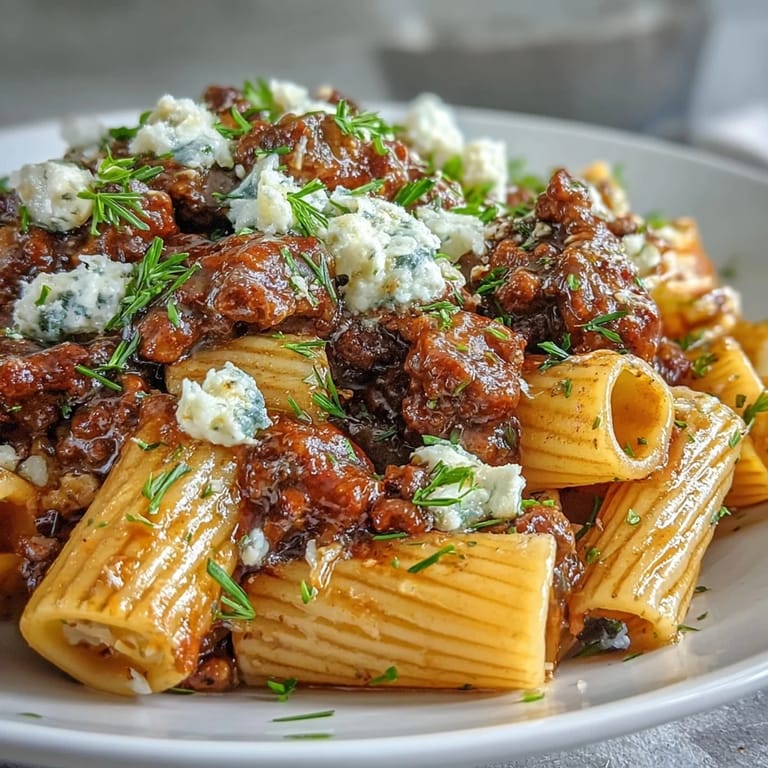
 One winter evening I made this for a friend going through a rough patch. She sat at my kitchen counter, quiet, spooning up pasta while I pretended not to notice her tearing up. When she finally spoke, she said it was the first thing that tasted like comfort in weeks. I realized then that food like this does more than fill you up, it reminds you that warmth and richness still exist, even on the hardest days.
Choosing Your Sausage
I have tried this with mild, spicy, and even chicken sausage, and each one shifts the personality of the dish. Spicy sausage gives you a slow building heat that plays off the cream, while mild lets the wine and tomatoes shine without competition. If you use turkey or plant based sausage, add a drizzle of olive oil to the pan first since they tend to be leaner and can stick. The key is browning whatever you choose until it has some texture and color, that caramelization is non negotiable.
Wine Selection and Substitutions
I keep a bottle of decent, drinkable red on hand just for cooking, nothing expensive, but nothing I would be embarrassed to serve either. A Chianti, Merlot, or Sangiovese works beautifully here, adding fruity acidity and depth without overpowering the dish. If you do not want to use wine, substitute with an equal amount of extra chicken broth plus a tablespoon of balsamic vinegar for tang. The flavor will be different but still delicious, just a little less complex and a bit sweeter overall.
Make It Your Own
This recipe is forgiving and practically begs you to improvise based on what is in your fridge. I have stirred in handfuls of baby spinach or chopped kale in the last three minutes, wilting them right into the sauce for color and nutrition. Sun dried tomatoes, olives, or even a spoonful of pesto at the end can take it in new directions without much effort. If you want it lighter, swap the heavy cream for half and half or even a splash of pasta water whisked with a little cornstarch.
- Add greens like spinach or kale in the final few minutes for extra vegetables.
- Toss in sun dried tomatoes or olives for a briny, Mediterranean twist.
- Use half and half or a cornstarch slurry instead of cream for a lighter finish.
 Save to Pinterest
 This is the kind of dish that makes you feel capable and generous, even on a weeknight when you are too tired to think. Serve it with crusty bread, pour yourself a glass of the same wine you cooked with, and let the one pot wonder do all the talking.
Common Recipe Questions
- → Can I use a different type of pasta?
Yes, penne and rigatoni work best because their shapes hold the creamy sauce well, but you can substitute fusilli, farfalle, or any short pasta. Adjust cooking time as needed based on package directions.
- → What type of red wine should I use?
Use a dry red wine you'd enjoy drinking, such as Chianti, Merlot, or Cabernet Sauvignon. Avoid sweet wines as they'll alter the savory profile of the sauce.
- → Can I make this ahead of time?
While best served fresh, you can prepare it up to 2 days ahead. Store in an airtight container in the refrigerator and reheat gently on the stovetop, adding a splash of broth or cream to restore creaminess.
- → How can I make this dish lighter?
Substitute turkey sausage for pork, use half-and-half instead of heavy cream, and reduce the Parmesan. You can also add extra vegetables like zucchini or spinach to increase volume without added calories.
- → Why add soy sauce to an Italian-style dish?
Soy sauce adds umami depth and enhances the savory flavors without making the dish taste Asian. It's a chef's secret for boosting richness in tomato-based sauces.
- → Can I make this without wine?
Yes, replace the red wine with an equal amount of chicken broth mixed with 1 tablespoon balsamic vinegar or red wine vinegar to maintain the acidity and depth of flavor.