 Save to Pinterest
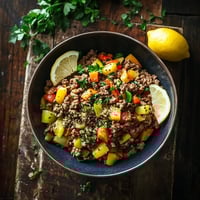
 There's something about assembling a Buddha bowl that feels less like cooking and more like creating edible art. My first one came together almost by accident on a Tuesday afternoon when I had random vegetables in the crisper drawer, a can of chickpeas I'd been meaning to use, and just enough quinoa for a proper base. What started as a practical lunch solution became a weekly ritual, and now I can't imagine my kitchen without a Buddha bowl rotation happening at all times.
I made this for a potluck once and watched people go back for seconds while barely acknowledging the casserole next to it. One friend asked if I'd bought it from a deli, and I realized that moment was when I stopped viewing Buddha bowls as "just a salad" and started treating them with the respect they deserved.
Ingredients
- Quinoa: Rinsing it first removes bitterness and makes a real difference in taste, though many people skip this step without realizing what they're missing.
- Zucchini: Cut into roughly the same size pieces so everything roasts evenly; uneven pieces will burn while others stay pale.
- Red bell pepper: This adds sweetness that rounds out the earthiness of the other vegetables beautifully.
- Red onion: Sliced thin so it caramelizes properly and doesn't overpower the bowl with sharpness.
- Cherry tomatoes: These stay fresher tasting than chopped regular tomatoes and add pops of brightness throughout.
- Olive oil: Use good quality here since it coats everything and flavors the whole dish.
- Dried oregano: This Mediterranean staple ties the whole flavor profile together instantly.
- Ground cumin: A pinch adds warmth and depth that nobody expects but everyone tastes.
- Chickpeas: Warming them lightly brings out their nutty flavor instead of serving them cold straight from the can.
- Kalamata olives: Pitted saves you from biting down on a pit at the worst moment possible.
- Hummus: Acts as both a protein boost and a creamy element that ties everything together.
- Greek yogurt: Provides tanginess that cuts through the richness and adds probiotics.
- Feta cheese: Crumbled fresh gives you salty bites rather than a uniform saltiness throughout.
- Fresh parsley: Chopped at the last minute so it stays vibrant and alive on the plate.
- Lemon wedges: Squeeze these over your bowl right before eating to brighten every single bite.
Tired of Takeout? 🥡
Get 10 meals you can make faster than delivery arrives. Seriously.
One email. No spam. Unsubscribe anytime.
Instructions
- Heat your oven and prep your vegetables:
- Set the oven to 425°F and get everything chopped to roughly similar sizes so nothing burns while other pieces are still raw. Toss them all together on a baking sheet with olive oil, oregano, cumin, salt, and pepper until everything glistens.
- Roast until they're golden:
- Slide the baking sheet in and roast for 20 to 25 minutes, stirring halfway through so the pieces caramelize evenly on multiple sides. You'll know they're ready when the edges look slightly charred and the vegetables are tender enough to pierce easily with a fork.
- Cook your quinoa while vegetables roast:
- Rinse your quinoa under cold water, then combine it with two cups of water in a saucepan and bring to a boil. Reduce the heat to low, cover, and let it simmer for exactly 15 minutes without peeking.
- Let the quinoa rest and fluff:
- Remove the pan from heat and leave it covered for 5 minutes so the grains finish absorbing all the moisture. Use a fork to fluff the quinoa gently, breaking up any clumps before you divide it into bowls.
- Warm the chickpeas gently:
- In a small skillet over medium heat, add your drained chickpeas and warm them for just 2 to 3 minutes, seasoning lightly with salt if you like. This brings out their nutty flavor without drying them out.
- Assemble your bowls:
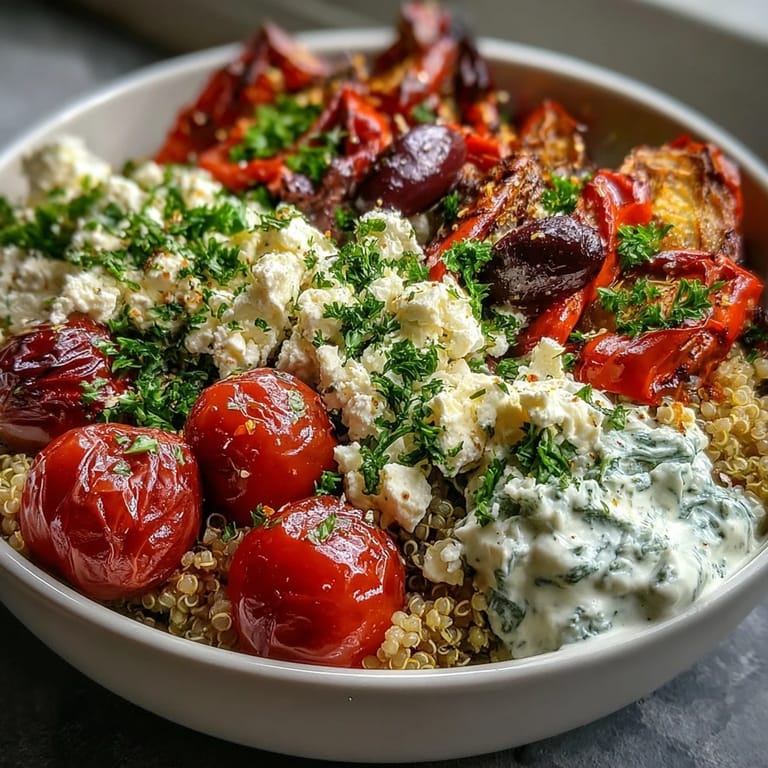
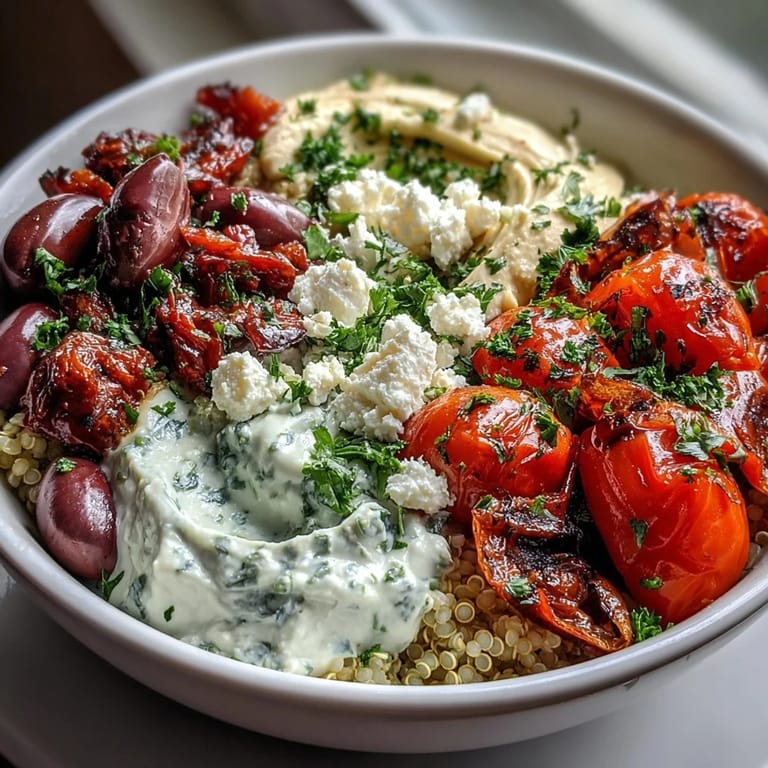
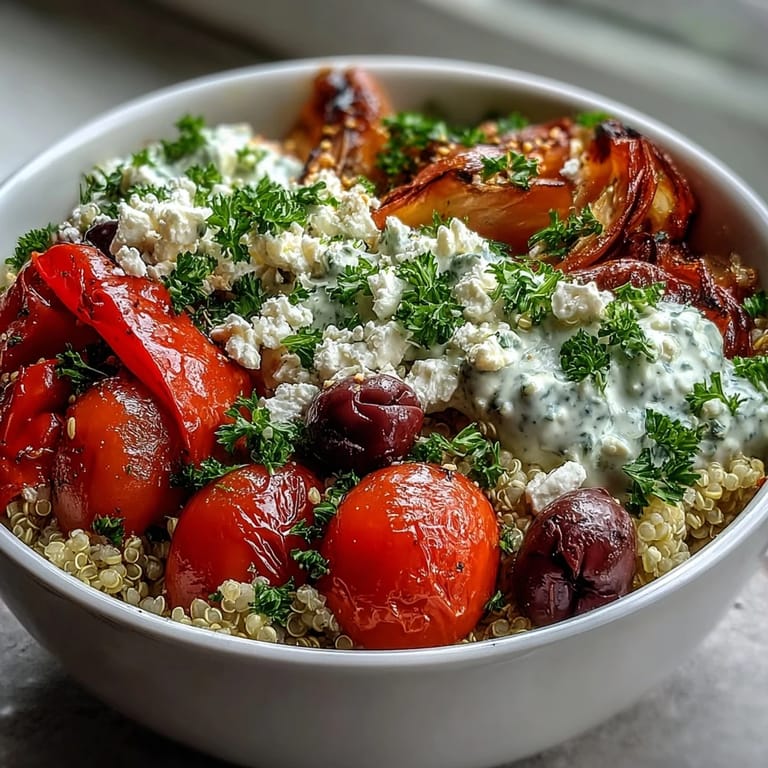
- Divide the fluffy quinoa among four bowls, then arrange the roasted vegetables, warm chickpeas, olives, hummus, Greek yogurt, and crumbled feta on top in whatever pattern makes you happy. There's no wrong way to arrange a Buddha bowl.
- Finish and serve:
- Scatter fresh parsley over everything, place lemon wedges on the side, and serve immediately while the vegetables are still warm and the feta is still cold.
 Save to Pinterest
 My partner who usually avoids anything "healthy" asked for seconds of this bowl and that's when I knew the formula had actually worked. It turned out that when vegetables are properly roasted and seasoned, when the grains are fluffy instead of mushy, and when you layer in textures and temperatures, healthy food stops feeling like a compromise and starts feeling like an actual choice.
Why This Bowl Works
The magic happens because you're combining warm and cool, creamy and crunchy, earthy and bright all in one place. The roasted vegetables provide depth, the quinoa anchors everything, and the toppings add personality and freshness. It's balanced in a way that satisfies you for hours without making you feel sluggish afterward.
Storage and Meal Prep
You can roast vegetables up to three days ahead and store them in an airtight container, which means you're genuinely 10 minutes away from lunch on hectic mornings. The quinoa also keeps for several days, though you might want to make the hummus, yogurt, and feta fresh since they're what keep the bowl tasting alive. Just pack the lemon wedges separately so they don't dry everything out before you eat.
Variations and Substitutions
Honestly, this recipe is a starting point more than a rule book, which is part of why it's become my default when I'm unsure what to make. Swap the roasted vegetables for whatever is seasonal or on sale, use farro or brown rice instead of quinoa, or add grilled chicken if you want more protein. For a vegan version, skip the feta and Greek yogurt and use plant-based alternatives, though I'll admit the bowl changes character without that salty, creamy contrast.
- Try roasted sweet potato, cauliflower, or Brussels sprouts when you want to change things up.
- Add a drizzle of tahini dressing or balsamic glaze for extra flavor without much effort.
- Make a double batch of roasted vegetables on Sunday and use them throughout the week in different bowls, grain salads, or even tucked into sandwiches.
 Save to Pinterest
 Make this bowl once and you'll understand why it's become a staple for anyone trying to eat well without sacrificing joy. It's the kind of recipe that teaches you how to cook intuitively rather than by rote, which might be the most valuable thing a dish can offer.
Common Recipe Questions
- → Can I make this bowl vegan?
Simply omit the feta cheese and substitute the Greek yogurt with a plant-based alternative. The rest of the ingredients are naturally vegan-friendly.
- → How long does this bowl keep in the refrigerator?
Store components separately in airtight containers for up to 4 days. Keep the roasted vegetables and quinoa refrigerated, and add fresh toppings when serving.
- → What other grains can I use instead of quinoa?
Farro, brown rice, couscous, or bulgur work beautifully as substitutes. Adjust cooking time according to package directions.
- → Can I add protein to this bowl?
Grilled chicken, shrimp, or baked salmon make excellent additions. Simply cook your chosen protein separately and arrange it in the bowl during assembly.
- → What vegetables work best for roasting?
Bell peppers, zucchini, red onion, and cherry tomatoes are ideal. You can also add eggplant, sweet potato, or cauliflower based on seasonal availability.
- → Is this bowl gluten-free?
Yes, when made with certified gluten-free quinoa and verified gluten-free hummus, this bowl is naturally gluten-free and suitable for those with gluten sensitivities.