 Save to Pinterest
 I discovered mason jar meals on a particularly chaotic Tuesday when I had everything I needed for lunch scattered across my kitchen—cooked noodles cooling on the counter, fresh vegetables waiting to be used, and exactly four empty jars staring at me from the cabinet. Instead of throwing together a sad desk lunch, I started layering everything deliberately, and something clicked: the sauce kept everything moist, the vegetables stayed crisp, and suddenly I had four days of lunches that actually tasted better than when I made them. That moment of creative problem-solving turned into something I genuinely look forward to eating.
I made these for my friend who was drowning in deadlines, and watching her face light up when she realized she could grab a complete meal without thinking about it reminded me that sometimes the most loving thing you can cook is something that gives someone back fifteen minutes of their morning. She's been making them ever since, with her own wild combinations of vegetables that I never would have thought of.
Ingredients
- Dried ramen or rice noodles, 200 g: These form your base and will soften perfectly when you pour hot water into the jar—I learned the hard way that thin noodles work better than thick ones because they hydrate evenly.
- Cooked chicken breast, tofu, or shrimp, 200 g diced: Whatever protein you choose should be bite-sized and already cooked so there's no raw surprises when you're eating straight from the jar.
- Shredded carrots, 1 cup: Raw carrots stay crisp for days and add natural sweetness that balances the savory sauce beautifully.
- Thinly sliced bell peppers, 1 cup (red or yellow): The thinner you slice them, the faster they'll soften when the hot water hits, so go thin if you like them tender.
- Baby spinach or kale, 1 cup: Either works, though kale holds up slightly better in storage without wilting into oblivion.
- Thinly sliced scallions, 1/2 cup: These add a sharp bite that cuts through the richness of the sesame oil—save some to sprinkle on top when you eat.
- Bean sprouts, 1/2 cup: They're delicate and best added fresh if you're eating within a couple of days, otherwise they'll get a bit soft.
- Soy sauce, 4 tbsp (use tamari for gluten-free): This is your flavor anchor, and going with quality soy sauce makes a noticeable difference in the final taste.
- Rice vinegar, 2 tbsp: The acidity brightens everything and keeps the sauce from tasting one-note and heavy.
- Sesame oil, 2 tbsp: Just two tablespoons is enough to make your entire jar smell incredible when you open the lid.
- Honey or maple syrup, 1 tbsp: This balances the salt and acid, and it also helps the flavors meld together as the jar sits.
- Sriracha or chili sauce, 2 tsp (optional): I keep this optional because some days you want gentle warmth, other days you want your lunch to wake you up.
- Minced garlic, 1 clove: Fresh garlic is non-negotiable here—jarred garlic turns bitter after a couple of days in the fridge.
- Grated fresh ginger, 1 tsp: The ginger keeps the sauce tasting bright and prevents everything from tasting stale as it sits.
- Chopped cilantro, 2 tbsp (optional): Cilantro lovers should add this right before eating since it'll bruise and discolor if it sits in the jar.
- Roasted peanuts or cashews, 2 tbsp chopped (optional): The crunch here is essential for texture contrast, so don't skip it even if you have to crush some roasted nuts instead.
- Sesame seeds, 1 tbsp: Sprinkle these on top just before serving for a final touch of nuttiness and crunch.
- Lime wedges: A squeeze of fresh lime just before eating brightens everything and reminds you why you packed this in the first place.
Tired of Takeout? 🥡
Get 10 meals you can make faster than delivery arrives. Seriously.
One email. No spam. Unsubscribe anytime.
Instructions
- Cook your noodles until they're just tender:
- Boil water, add your noodles, and cook exactly to package directions—not a second longer or they'll turn to mush when the hot water hits them again in the jar. Drain and rinse under cold water until they're completely cool, shaking out any excess water.
- Make the sauce and let it come together:
- Whisk soy sauce, rice vinegar, sesame oil, honey, Sriracha if you want it, minced garlic, and ginger in a small bowl until the honey dissolves completely. This takes about a minute of actual whisking, and the moment it comes together it'll smell like you're about to do something exciting.
- Divide the sauce among your jars:
- Pour about 2 tablespoons of sauce into the bottom of each jar—this is your flavor foundation and it'll coat everything as the jar sits. The sauce acts as a protective layer that keeps the noodles from drying out.
- Layer your protein directly into the sauce:
- Add your diced protein on top of the sauce in each jar, making sure it's in a single layer that touches the sauce. This way it stays moist and flavorful throughout the week.
- Add your vegetables in layers:
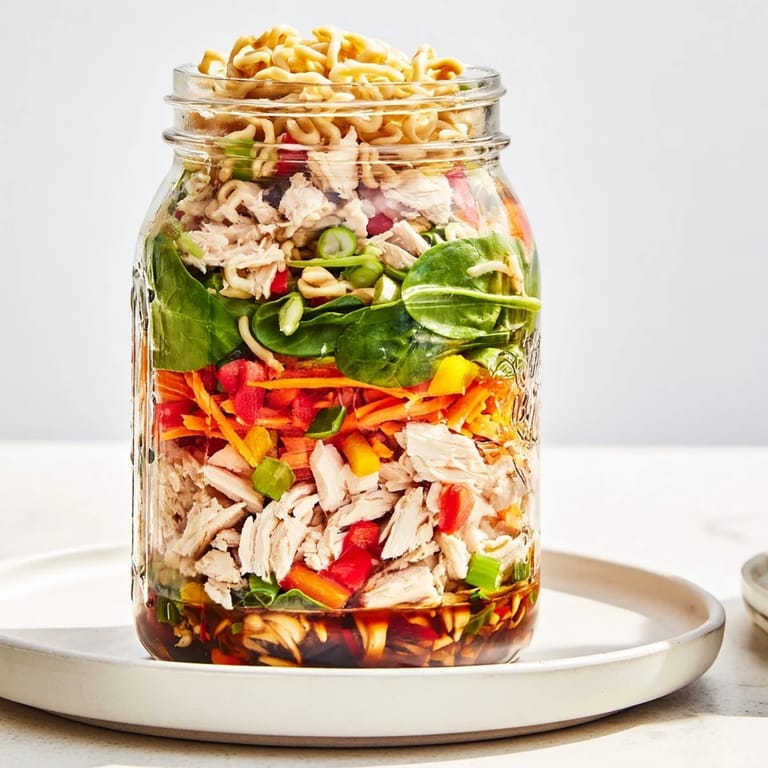
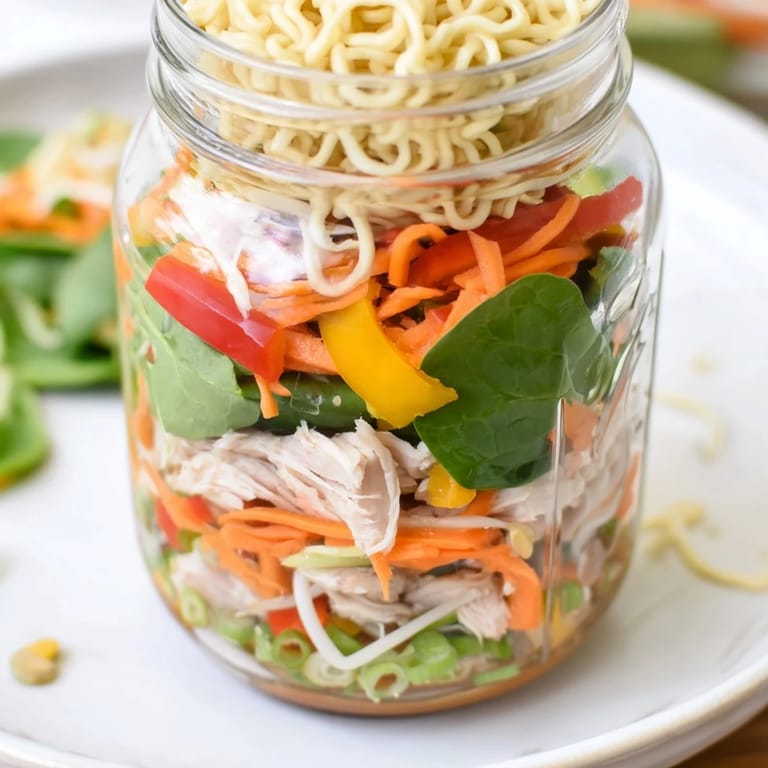
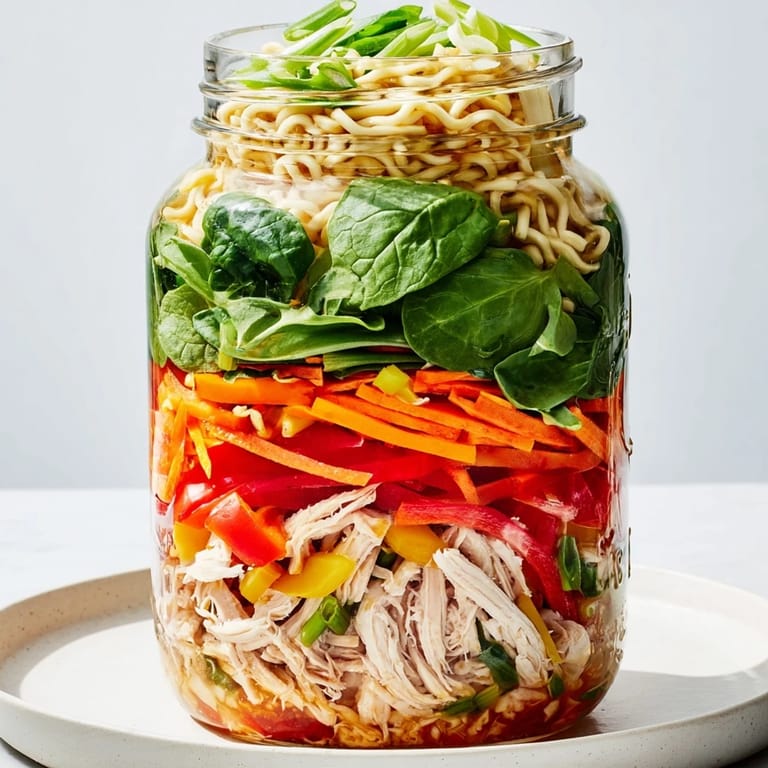
- Next comes carrots, then bell peppers, then spinach or kale, then scallions, then bean sprouts—layering keeps heartier vegetables away from the sauce so they stay crisp longer. Each vegetable acts as a buffer, which is why the order actually matters here.
- Crown with your cooked noodles:
- Pile your cooled noodles on top as the final layer, pressing down gently so everything fits. The noodles sit on top and won't absorb sauce until you pour hot water into the jar.
- Seal and refrigerate:
- Screw the lids on tight and slide these into the fridge where they'll stay fresh for up to four days. The sealed environment keeps everything tasting bright and the flavors actually improve after a day as they meld.
- When you're ready to eat, add hot water and wait:
- Pour about 1/2 cup of hot water into the jar right from the kettle, let it sit for 2 to 3 minutes while the noodles rehydrate, then stir everything together. The transformation from layered and separate to combined and warming is strangely satisfying.
 Save to Pinterest
 The first time I brought one of these to work, my coworker asked why I was eating from a jar like it was some kind of trendy thing, but then she watched me eat something that actually tasted amazing five days after I made it, and she stopped asking questions. These jars turned lunch from something I had to remember to make into something that just existed when I needed it, and that small shift in my week actually mattered more than I expected it would.
The Secret of the Sauce
The sauce is where all the flavor lives, and I realized this when I got lazy and tried to simplify it by cutting ingredients—the dish became boring instantly. The combination of soy sauce's saltiness, rice vinegar's brightness, sesame oil's depth, honey's balance, and ginger's freshness creates something that tastes more complex than its simple ingredient list suggests. When everything sits together in the jar for even a few hours, the flavors actually marry and deepen, so these taste better on day three than they do right after assembly.
Customizing Without Overthinking
The beauty of this formula is that it works with whatever you have on hand—if you don't have bell peppers, use broccoli, if you don't have shrimp, use chickpeas, and the sauce will still make it taste intentional and delicious. I've made versions with roasted Brussels sprouts, edamame, marinated mushrooms, and even leftover roasted vegetables, and every single one worked because the sauce carries the whole thing. The structure stays the same even when every ingredient changes, which is exactly the kind of flexibility that makes meal prep feel less like a chore and more like a weekly ritual.
Storage and Timing
These jars genuinely stay fresh for four days, though I've found they taste best somewhere around day two or three when the flavors have settled but everything's still crisp. The sauce preserves the vegetables naturally, but if you're making more than four jars, you might want to prep the sauce and vegetables separately and assemble them a day or two before you need them. One final thing that changed everything for me was preparing the toppings separately and adding them right before eating—cilantro, nuts, seeds, and lime all get so much better when they're fresh and not wilted.
- Toast your nuts and seeds lightly if you have five minutes, because toasted nuts taste significantly better than raw ones.
- Pack cilantro, lime wedges, and any other fresh toppings separately so they don't get soggy before you eat.
- If you're traveling with these, pour the hot water right before eating rather than in a break room where it might cool down.
 Save to Pinterest
 These jars have become less about meal prep and more about giving yourself the gift of a good lunch without the morning stress, and that simple act of planning ahead has made my whole week feel a little bit calmer. Every time I open the fridge and see those four jars lined up, I feel like I've already won something small.
Common Recipe Questions
- → What types of noodles work best in mason jar meals?
Dried ramen or rice noodles are ideal as they hold texture well and rehydrate quickly when hot water is added.
- → Can I swap the protein for a plant-based option?
Yes, tofu or edamame are great alternatives that complement the fresh vegetables and sauce perfectly.
- → How should I store the assembled jars?
Seal the jars tightly and refrigerate. They stay fresh for up to four days, making them convenient for meal prep.
- → What is the best way to enjoy these noodle jars?
Add hot water directly to the jar and let it sit for 2-3 minutes before mixing to achieve warm, tender noodles with vibrant layers.
- → How can I adjust the heat level in the sauce?
Modify the amount of Sriracha or chili sauce, or omit it entirely, to suit your preferred spice level.