 Save to Pinterest
 The rainstorm outside my window was absolutely perfect the first time I made these Korean Beef Noodles. Something about the patter of raindrops made the sizzle of meat hitting the hot wok sound even more satisfying. I'd been craving something comforting yet vibrant after a particularly long week, and the rich aroma of garlic and ginger filled my small apartment, transforming my mood entirely. My tiny kitchen windows fogged up as steam rose from the glossy noodles, creating this wonderful little cocoon of warmth and anticipation.
My colleague Jen had mentioned she was homesick for Korean flavors, so I invited her over for an impromptu weeknight dinner to test this recipe. Watching her eyes light up as she twirled those first noodles around her chopsticks made all the prep work worthwhile. She laughed when I admitted I'd practically stalked the butcher for the perfect cut of flank steak, but then nodded in understanding after her first bite. Between slurps, we solved all our work problems and planned a hypothetical trip to Seoul that I'm still hoping we'll take someday.
Ingredients
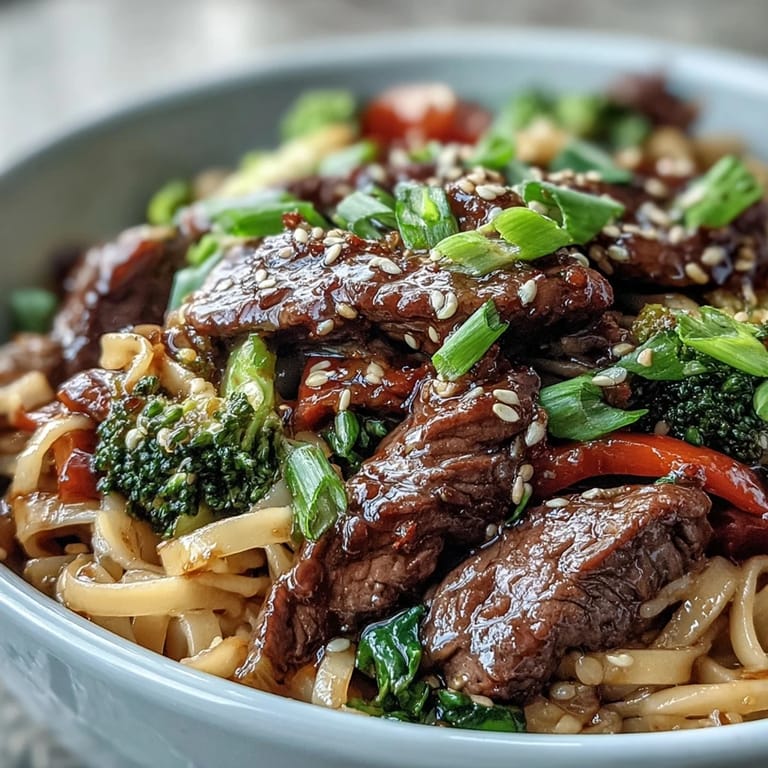
- Flank steak: Slicing it against the grain isn't just cooking jargon, it completely transforms the texture from potentially chewy to melt-in-your-mouth tender.
- Rice noodles: They soak up that glossy sauce without becoming soggy, and their mild flavor lets the bolder ingredients shine through.
- Fresh ginger: I keep mine in the freezer and grate it while frozen, which makes the prep easier and actually intensifies its spicy brightness.
- Brown sugar: The caramel notes here create depth in the sauce that plain white sugar just can't match.
- Sesame oil: Just a tablespoon creates this remarkable nutty undertone that makes people wonder what your secret ingredient might be.
Tired of Takeout? 🥡
Get 10 meals you can make faster than delivery arrives. Seriously.
One email. No spam. Unsubscribe anytime.
Instructions
- Prepare the noodles first:
- Cook rice noodles according to package directions until they're just tender with a slight bite. They'll finish cooking in the sauce later, so a touch underdone is perfect here.
- Sizzle the steak:
- Heat your wok or skillet until it's properly hot before adding the oil, then lay the sliced steak in without overcrowding. You should hear that satisfying sizzle that signals you're building flavor rather than steaming the meat.
- Create the aromatic base:
- When you add the garlic and ginger to the hot pan, stand back for that first moment and just inhale. That fragrant cloud rising up is the foundation of all the magic that follows.
- Rainbow the vegetables:
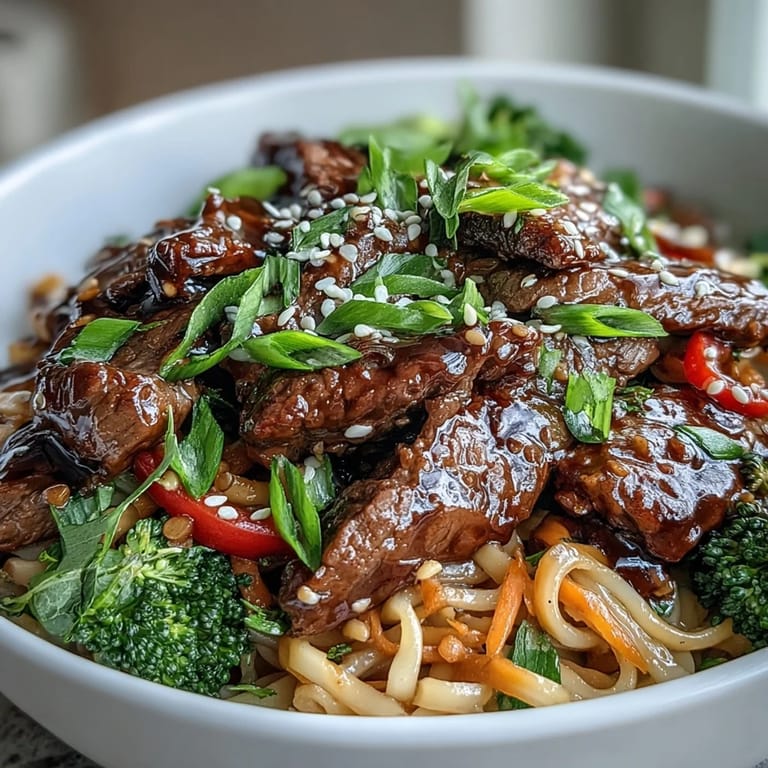
- Add your broccoli, bell pepper, and carrot to create a beautiful color palette in the pan. Keep them moving so they stay vibrant and maintain that perfect crisp-tender bite.
- Sauce magic:
- Whisking the soy sauce, brown sugar, and sesame oil until the sugar dissolves ensures every bite gets that perfect sweet-savory balance. Watch how it transforms from separate ingredients to a glossy, unified sauce.
- The grand reunion:
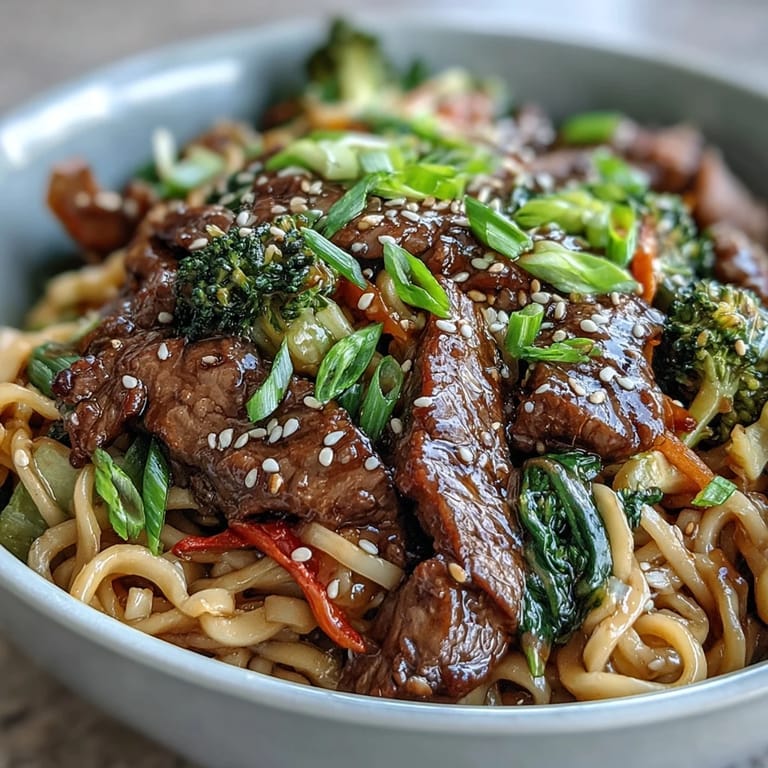
- When you return the beef to the skillet and add those waiting noodles, use tongs to gently lift and fold everything together. The noodles will drink up the sauce before your eyes, becoming glossier with each turn.
- Finishing touches:
- Scatter green onions and sesame seeds with abandon, creating little pops of color and texture. This isn't just garnish, it's the bright accent notes that make the whole dish sing.
 Save to Pinterest
 One frigid February evening, I made this dish when my brother dropped by unexpectedly after a tough day. He's not typically expressive about food, preferring to eat quickly and move on to conversation. But halfway through the meal, he paused, chopsticks mid-air, and said, That's the first thing I've actually tasted all week. Sometimes comfort food isn't just about the familiar, but about pulling someone back into the present moment, helping them notice something good right in front of them.
Versatile Variations
My vegetable drawer often dictates delicious detours with this recipe. Snow peas add a springtime sweetness and satisfying crunch, while baby bok choy wilts beautifully into the sauce, soaking up all those savory notes. Mushrooms bring an earthy dimension that pairs particularly well with the beef, creating almost a double-umami effect that makes the dish feel even more substantial. What began as a clean-out-the-fridge necessity has become intentional experimentation, with each version teaching me something new about balance and texture.
Heat Level Adjustments
The beauty of this recipe lies in how easily it adapts to different spice preferences. My partner prefers a gentle warmth, so I'll add just a teaspoon of gochujang to the sauce, while I prefer mine with enough kick to make my forehead glisten slightly. When serving guests, I've taken to placing small dishes of various heat options on the table: sriracha for those who like a bright, vinegary heat, chili oil for a deeper burn, and Korean pepper flakes for authentic flavor with moderate spice. The interactive element makes dinner more fun, and everyone gets exactly the experience they're craving.
Make-Ahead Strategy
I've developed a weeknight hack that makes this dish even more accessible when time is tight. On Sunday evenings, I'll slice the beef, julienne the vegetables, and mix the sauce components in separate containers in the fridge. The prep work is actually meditative when there's no pressure to get dinner on the table immediately, and having everything ready transforms a 35-minute recipe into a 15-minute assembly operation on busy days.
- For the freshest flavor, always add the green onions right before serving rather than storing them pre-chopped.
- Cook the noodles just before serving as they tend to stick together when refrigerated.
- If using leftover cooked beef from another meal, add it just long enough to warm through rather than cooking it again.
 Save to Pinterest
 This dish has become my reliable bridge between comfort and adventure, between quick weeknight cooking and food that feels special. Whenever I make it, I'm reminded that some of the best moments happen not on special occasions but on ordinary Tuesday nights, when the perfect bite brings everyone at the table back to the present moment.
Common Recipe Questions
- → Can I make this dish spicy?
Yes, add sriracha or gochujang to the sauce mixture for heat. Start with one teaspoon and adjust to your preferred spice level.
- → What other vegetables work well?
Snap peas, zucchini, mushrooms, or baby corn make excellent additions. Use whatever crisp vegetables you have on hand for variety.
- → Can I use different protein?
Sliced chicken breast or firm tofu work beautifully as alternatives. Adjust cooking time accordingly—chicken needs about 5-6 minutes, tofu just 2-3 minutes.
- → How do I prevent noodles from sticking?
Rinse cooked noodles under cold water to stop cooking and remove excess starch. Toss with a small amount of sesame oil before adding to the skillet.
- → Can I prepare components ahead?
Slice vegetables and beef up to 24 hours in advance. Store separately in airtight containers. The sauce can be mixed ahead and kept refrigerated.
- → Is this gluten-free?
Use gluten-free tamari instead of soy sauce and verify rice noodles are certified gluten-free. This makes the dish completely safe for gluten-sensitive diners.