 Save to Pinterest
 The first time I made French toast with melted ice cream, it was a last-minute decision born from a nearly empty freezer and the sudden arrival of houseguests. I'd had a half-empty container of vanilla ice cream that had been pushed to the back for weeks, and rather than toss it, I thought: what if this became the custard? The moment that melted ice cream mixed with eggs, it felt like the recipe was writing itself. That simple swap transformed something I'd made a hundred times into something that tasted like butter and cream and summer all at once.
I made this for my partner on a lazy Sunday morning when neither of us wanted to leave the kitchen, and something shifted in that half hour. The smell of butter and cinnamon filled the whole apartment, and they kept sneaking tastes straight from the griddle before the syrup even touched the plate. By the third batch, they were already planning when we'd make it again. That's when I knew this wasn't just a recipe—it was becoming our thing.
Ingredients
- Thick-cut bread (brioche or challah), slightly stale: 8 slices of sturdy bread creates the perfect structure to hold all that custardy richness without falling apart on the griddle—don't use fresh bread or it'll turn to mush.
- Premium ice cream, melted: 2 cups (480 ml) vanilla or your favorite flavor becomes the silky custard base, and honestly, the quality here matters because it's not being masked by anything.
- Large eggs: 2 eggs bind everything together and give those slices their tender interior.
- Ground cinnamon: 1/4 teaspoon adds warmth without overpowering, though you can skip it if you're using a flavored ice cream that already has its own personality.
- Pure vanilla extract: 1 teaspoon deepens the flavor in a way that's subtle but absolutely worth including.
- Salt: A pinch balances the sweetness and makes everything taste more like itself.
- Unsalted butter: 2 tablespoons for cooking creates those golden-brown, lightly caramelized edges that make this special.
Tired of Takeout? 🥡
Get 10 meals you can make faster than delivery arrives. Seriously.
One email. No spam. Unsubscribe anytime.
Instructions
- Combine the custard:
- Whisk together the melted ice cream, eggs, cinnamon, vanilla, and salt in a large bowl until completely smooth—you're looking for a consistency that's pourable but rich, with no streaks of unmixed ice cream.
- Heat your cooking surface:
- Get a nonstick skillet or griddle warming over medium heat while you prepare the bread, then add a tablespoon of butter and let it foam gently—you'll know it's ready when the butter turns light brown and smells nutty.
- Dip with intention:
- Take each bread slice and soak it for 10 to 15 seconds per side, turning it carefully so both sides get coated without the bread becoming waterlogged—the key is speed and confidence, not hesitation.
- Cook until golden:
- Place the soaked bread directly onto the hot skillet and cook for 2 to 3 minutes per side until the edges turn deep golden and caramelized, watching how the butter bubbles around the edges as it sets.
- Keep them warm:
- Transfer each finished slice to a wire rack or warm plate as you go, adding a bit more butter between batches so every slice gets the same treatment.
- Finish and serve:
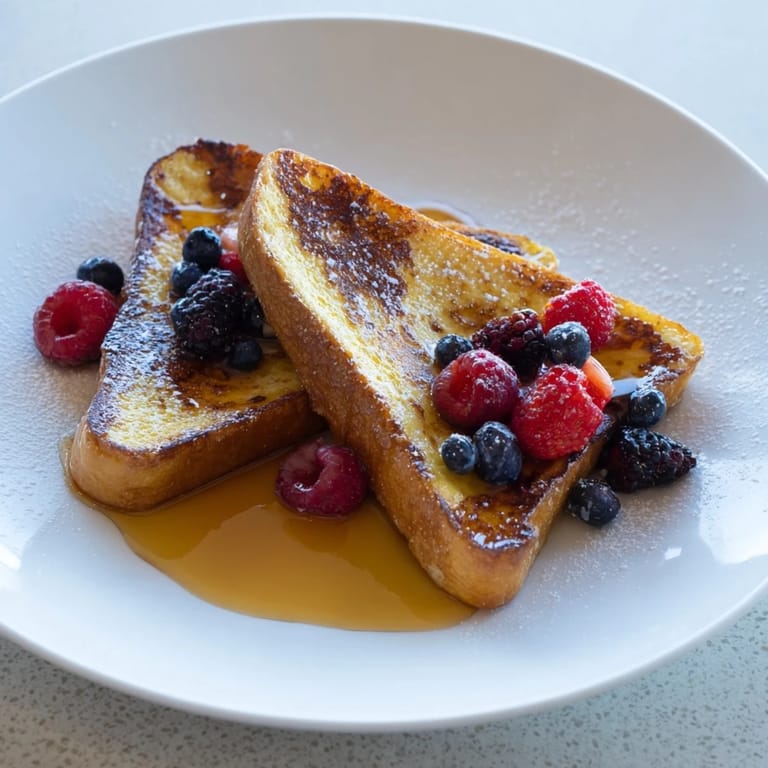
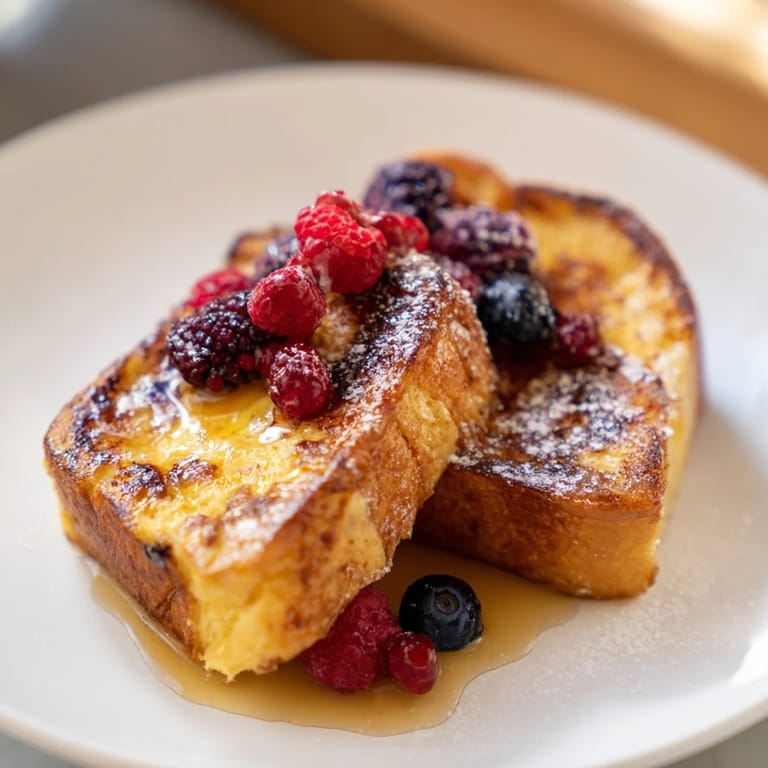
- Plate them while they're still warm, drizzle with maple syrup, scatter fresh berries across the top, and dust with powdered sugar if you're feeling it.
 Save to Pinterest
 There's a moment when everything is coming together—the griddle is hot, the butter is sizzling, and you place that first soaked slice down and hear it actually sizzle instead of just absorb. That's the moment you know this is going to be extraordinary. It's when French toast stops being breakfast and becomes something worth waking up for.
Why the Ice Cream Swap Changes Everything
Using melted ice cream instead of regular custard isn't just a gimmick—it's a shortcut that actually improves the final result. The fat content in premium ice cream is already optimized for richness and smooth texture, so you're not trying to balance cream and milk ratios or worry about curdling. Plus, if you use a flavored ice cream like cinnamon or coffee, you're layering in complexity without adding extra ingredients. I've made this with plain vanilla and with salted caramel, and both turned out equally incredible because the ice cream does most of the heavy lifting for you.
Bread Selection Matters More Than You'd Think
Brioche and challah are the obvious choices because their tender crumb and slight sweetness complement the custardy interior, but they also have enough structure to stand up to soaking. I learned this the hard way when I tried regular white bread fresh from the bag—it dissolved into the custard like it had given up. Texas toast works beautifully too if you want something sturdier and less sweet. The texture you're after is custard-soaked inside with caramelized edges, not a bread-flavored puddle.
Timing and Temperature Make the Difference
Medium heat is the sweet spot—too high and the outside burns before the inside cooks through, too low and you'll just be reheating without getting any caramelization. The whole process should take about 2 to 3 minutes per side, and you'll know it's done when the underside has turned deep golden brown and feels slightly crispy when you press it gently. I've found that letting the butter get properly hot before adding bread gives you a much better crust than starting with cold butter, even though that seems counterintuitive.
- Use a non-stick skillet to prevent sticking without needing extra butter.
- Let the custard soak in for exactly 10 to 15 seconds per side—any less and it's dry, any more and it falls apart.
- Keep a warm plate nearby so finished slices stay hot while you're cooking the rest.
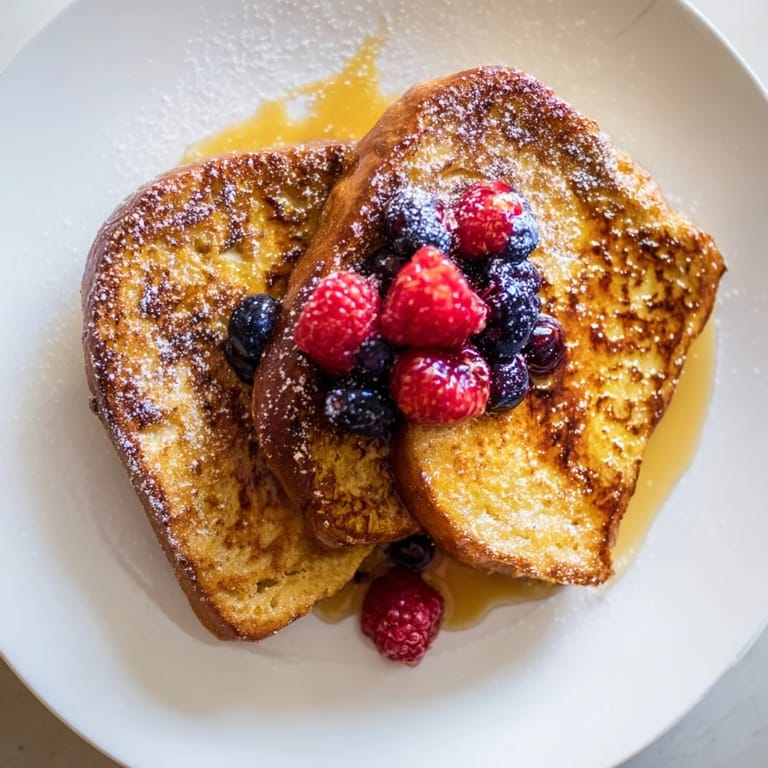 Save to Pinterest
 This is the kind of recipe that reminds you why cooking matters—it takes something ordinary and turns it into an occasion. Serve it while it's warm, gather whoever you can, and watch how quickly it disappears.
Common Recipe Questions
- → What type of bread works best?
Thick-cut breads like brioche, challah, or Texas toast absorb the custard well and offer a soft, rich texture.
- → Can any ice cream flavor be used?
Yes, vanilla ice cream is classic, but cinnamon, coffee, or chocolate flavors add unique twists to the custard.
- → How long should bread soak in the custard?
Dip each slice for 10–15 seconds per side to allow full absorption without becoming soggy.
- → What cooking method is recommended?
Use a medium-heat nonstick skillet or griddle, cooking slices 2–3 minutes per side until golden and caramelized.
- → Any tips for enhancing flavor?
Adding a pinch of cinnamon and pure vanilla extract to the custard enhances warmth and depth in every bite.