 Save to Pinterest
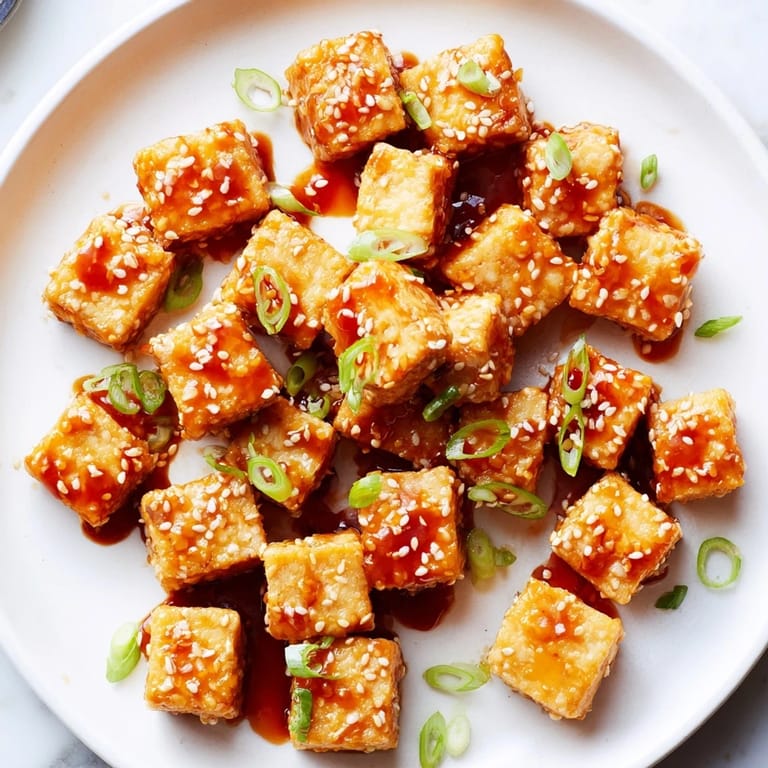
 One afternoon, I stood in my kitchen watching sesame oil catch the light as it heated in the pan, and I realized I'd been cooking tofu all wrong for years. The trick wasn't to baby it—it was to let it get golden and crispy, almost stubborn about it. That's when I discovered that crispy tofu glazed in gochujang sauce wasn't just dinner; it was the kind of dish that makes people pause mid-conversation and ask for the recipe.
I made this for a friend who swore she didn't really like tofu, and watching her expression change after that first bite was everything. She asked if I'd used some special ingredient she'd never heard of, but it was really just giving the tofu permission to be crispy and letting the sauce do what it does best—cling to every golden surface like it was meant to be there.
Ingredients
- Firm tofu, pressed and cubed (400g): Pressing matters more than you'd think—it gives the tofu room to crisp up instead of steam. Cornstarch is your secret weapon here, creating that crackling exterior.
- Cornstarch (2 tbsp) and salt (1/2 tsp): Together, these create the golden crust that makes people think you're more skilled than you are.
- Neutral oil (2 tbsp): Medium-high heat needs an oil that won't smoke and get moody—canola or sunflower works beautifully.
- Gochujang (2 tbsp): This Korean chili paste is where the magic lives, bringing umami and heat that honey softens into something almost addictive.
- Honey (2 tbsp): Not just sweetness—it's what makes the sauce glossy and gives the tofu that sticky, clingy finish.
- Soy sauce, rice vinegar, and sesame oil (1 tbsp each): These three are the supporting cast that deepens flavor and adds that toasted, warm note.
- Garlic and ginger (2 cloves and 1 tsp): Minced fresh, not jarred—they brighten the sauce and remind you that you're cooking, not just heating.
- Water (2 tbsp): A small amount that helps the sauce coat the tofu without drowning it.
- Sesame seeds and green onions: These aren't just garnish—they're the finish line, adding crunch and color that says you care.
Tired of Takeout? 🥡
Get 10 meals you can make faster than delivery arrives. Seriously.
One email. No spam. Unsubscribe anytime.
Instructions
- Press your tofu like you mean it:
- Wrap those tofu blocks in a clean kitchen towel and let them sit under something heavy for at least 10 minutes—a cast iron skillet works perfectly. This step is where moisture says goodbye, and crispiness says hello. Cut into 3/4-inch cubes once they're ready.
- Coat and get ready to fry:
- Toss your tofu cubes gently with cornstarch and salt until they're wearing a light, even coat—this is where the crust begins. Don't be shy; every surface matters.
- Crisp until golden:
- Heat your oil until it's shimmering, then add the tofu cubes carefully, giving them space to breathe. Let each side get golden and crispy, turning occasionally with tongs—about 8 to 10 minutes total. This is the moment you stop babying them.
- Make the sauce:
- Whisk gochujang, honey, soy sauce, rice vinegar, sesame oil, garlic, and ginger together in a bowl with water until smooth. Taste it—the balance of heat and sweet should make you nod in approval.
- Simmer and thicken:
- Pour the sauce into the hot skillet and let it bubble for 2 to 3 minutes until it thickens slightly and coats the back of a spoon. The aroma that fills your kitchen at this moment is non-negotiable.
- Reunite and coat:
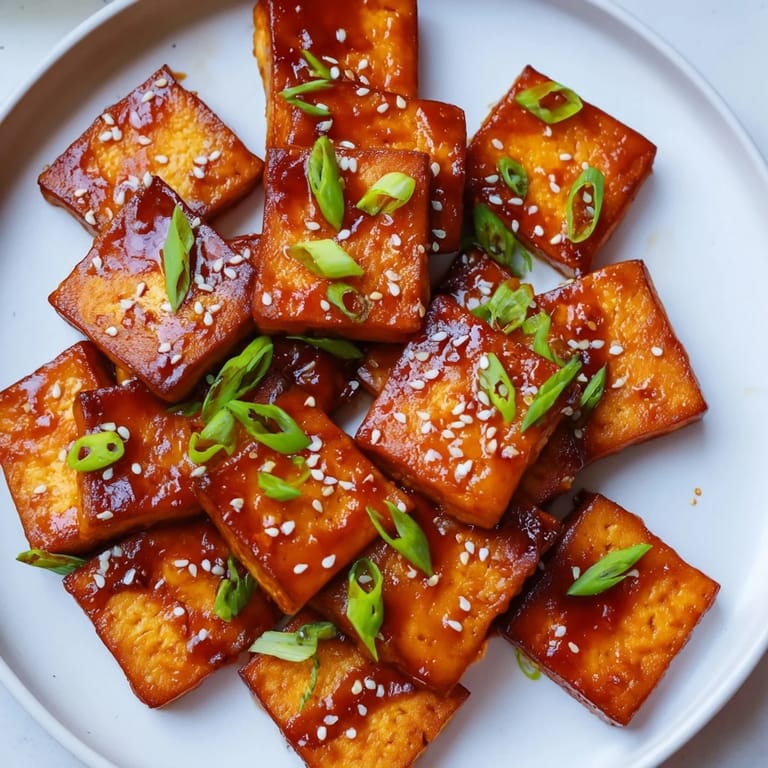
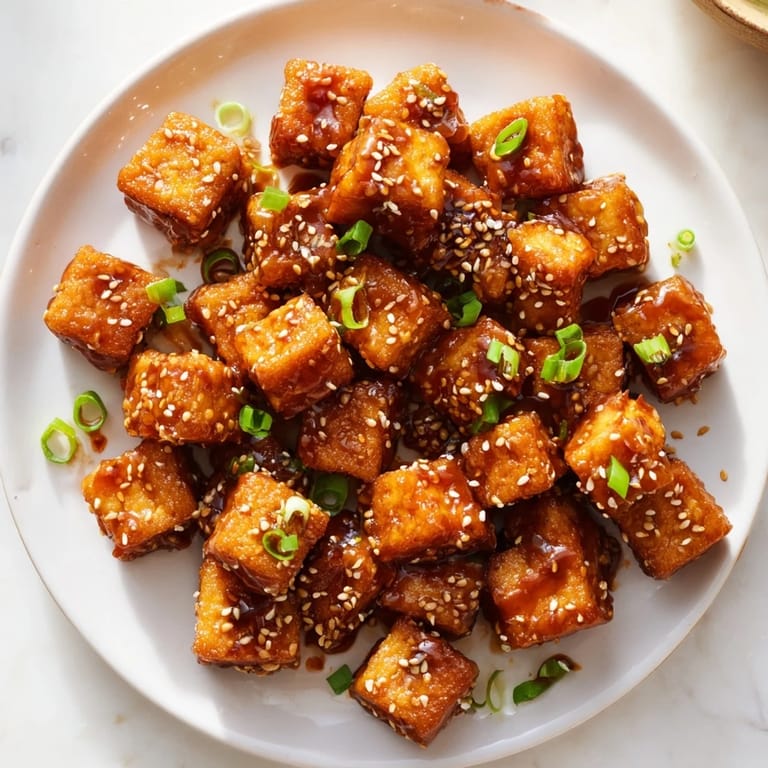
- Return the crispy tofu to the pan and toss everything together for another 2 minutes, watching as the sauce clings to each golden cube and turns glossy. This is when you know you've done it right.
- Finish and serve:
- Transfer to a plate, scatter sesame seeds and green onions on top, and serve while it's still warm enough to steam slightly. Over rice or on its own, it's a moment.
 Save to Pinterest
 There's something about the moment when crispy tofu first meets hot sauce—the sizzle, the way the golden surfaces disappear under that glossy coating. I remember thinking that this wasn't the tofu I'd grown up being skeptical of; this was something that tasted like intention.
Why Crispy Tofu Changes Everything
Tofu gets a bad reputation because most people cook it wrong, treating it like something fragile that needs protection. But firm tofu is actually sturdy and eager to crisp up if you let it. The cornstarch isn't a fancy trick—it's permission to fry something that usually gets steamed or soft-scrambled. Once you've made it this way, you realize that crispy tofu is textured and satisfying in a way that convinces even skeptics.
The Gochujang-Honey Moment
That combination of gochujang and honey is where Korean and comfort food meet without arguing about it. The chili paste brings heat and umami, and the honey softens it into something almost sweet, almost spicy, always craveable. Adding soy sauce, rice vinegar, and sesame oil layers in depth that makes people taste the sauce separately from the tofu, then realize they can't quite separate them anyway.
Serving and Pairing
This dish works as an appetizer that feels substantial, or spooned over a warm bowl of rice where it becomes a complete meal. The sticky sauce doesn't stay on the plate—it travels to the rice, coating every grain with flavor. Some nights I serve it with steamed broccoli or sautéed peppers; other nights, it stands alone because sometimes the main event doesn't need an opening act.
- Rice, quinoa, or lettuce wraps all catch and hold the sauce beautifully.
- A squeeze of lime right before eating brightens everything without erasing the heat.
- Leftovers reheat in a warm skillet in about 3 minutes and taste somehow even better.
 Save to Pinterest
 This recipe proves that some of the best meals come from three ingredients finding each other—tofu, heat, and sweetness creating something none of them could manage alone. Make it once and you'll understand why it keeps coming back to the table.
Common Recipe Questions
- → How do I get the tofu crispy without it sticking?
Press the tofu well to remove excess moisture, coat evenly with cornstarch, and use a hot non-stick skillet with neutral oil. Avoid overcrowding to maintain crispiness.
- → Can I make a vegan version of this dish?
Yes. Substitute honey with maple syrup or agave nectar to keep the glaze sweet while maintaining a plant-based profile.
- → What level of spice does the gochujang add?
Gochujang provides a mild to moderate heat with savory depth; adjust the amount to suit your preferred spice level.
- → What other vegetables pair well with this tofu?
Steamed broccoli, sautéed bell peppers, or fresh lettuce wraps complement the dish nicely by adding color and additional textures.
- → Is it necessary to press the tofu before cooking?
Yes, pressing removes moisture which helps the tofu crisp up better and absorb the flavorful glaze without becoming soggy.