 Save to Pinterest
 There's something about the simplicity of orzo that caught me off guard at a summer gathering—I wasn't planning to bring anything particularly fancy, just something that wouldn't wilt in the heat. A friend had left some fresh herbs on my counter, and I found myself tossing together pasta, tomatoes, and feta almost on instinct. What arrived at that picnic table became the dish people actually fought over, and now whenever warm weather hits, someone inevitably asks if I'm bringing it again.
I made this for a potluck where I didn't know many people, and watching everyone go back for seconds while standing around the kitchen table told me something had clicked. The conversation shifted from polite small talk to actual recipe requests, and I realized that good food genuinely brings people together, even strangers.
Ingredients
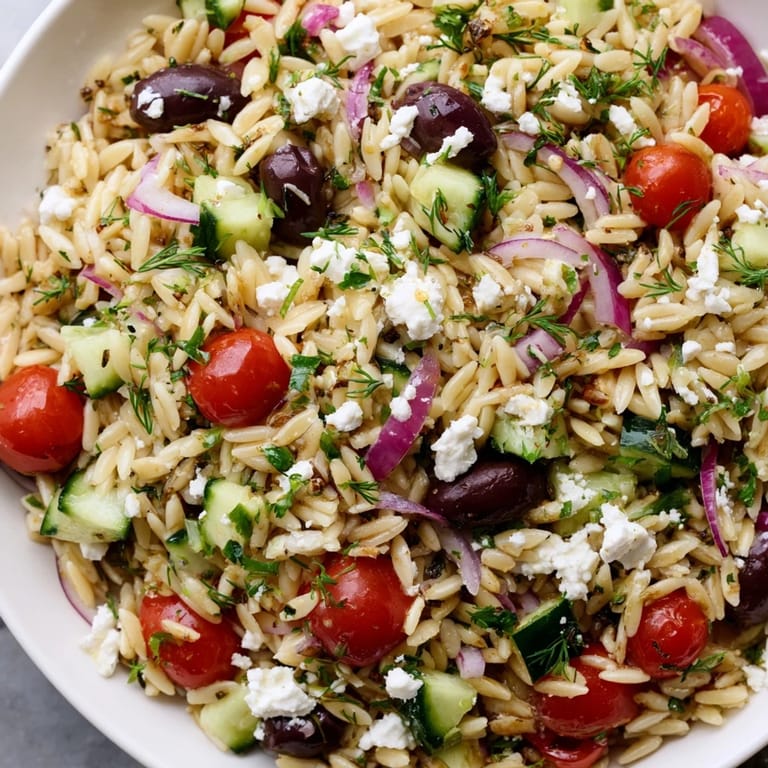
- Orzo pasta: It's shaped like grains of rice but has the heartiness of pasta, which means it holds up beautifully with acidic dressing without turning mushy.
- Cherry tomatoes: Halving them preserves their juiciness and prevents them from overwhelming the other flavors.
- Cucumber: Dice it small so it distributes evenly throughout each bite, and try to seed it lightly if it's particularly watery.
- Red onion: Finely diced means the sharpness mellows rather than overpowers, especially once the salad sits for a bit.
- Kalamata olives: They're salty and assertive, so taste your salad before adding them all—some batches are briner than others.
- Feta cheese: Crumble it by hand just before serving to keep the pieces larger and more distinct.
- Fresh parsley and dill: Fresh herbs brighten everything; dried just doesn't compare here.
- Extra-virgin olive oil: This is the backbone of your dressing, so don't skimp on quality.
- Lemon juice: Freshly squeezed makes a real difference—bottled tastes flat by comparison.
- Dried oregano: One teaspoon might seem modest, but it's exactly enough to whisper Mediterranean without shouting.
- Dijon mustard: This tiny amount acts as an emulsifier, helping the dressing cling to everything instead of pooling at the bottom.
Tired of Takeout? 🥡
Get 10 meals you can make faster than delivery arrives. Seriously.
One email. No spam. Unsubscribe anytime.
Instructions
- Boil your orzo until just tender:
- Bring a large pot of salted water to a rolling boil, add orzo, and cook according to package instructions, usually 8 to 10 minutes, until al dente—you want it to have a slight bite. Immediately drain and rinse under cold water, which stops the cooking and prevents everything from turning into mush.
- Combine everything while the pasta cools:
- In a large bowl, mix the cooled orzo with cherry tomatoes, cucumber, red onion, olives if you're using them, feta, parsley, and dill. At this stage it just looks like ingredients; that's exactly right.
- Whisk your dressing until it comes together:
- In a small bowl or jar, combine olive oil, lemon juice, oregano, Dijon mustard, salt, and pepper, whisking vigorously until the texture shifts from separated to creamy-looking. You're creating an emulsion, not just mixing things.
- Dress and toss gently:
- Pour the dressing over the salad and toss with a light hand, being careful not to crush the feta or tomatoes. Everything should glisten and come together.
- Chill and taste before serving:
- Let it sit in the refrigerator for at least 10 minutes so the flavors marry and the whole thing chills down. Taste it then, and adjust salt, lemon, or oregano to your preference.
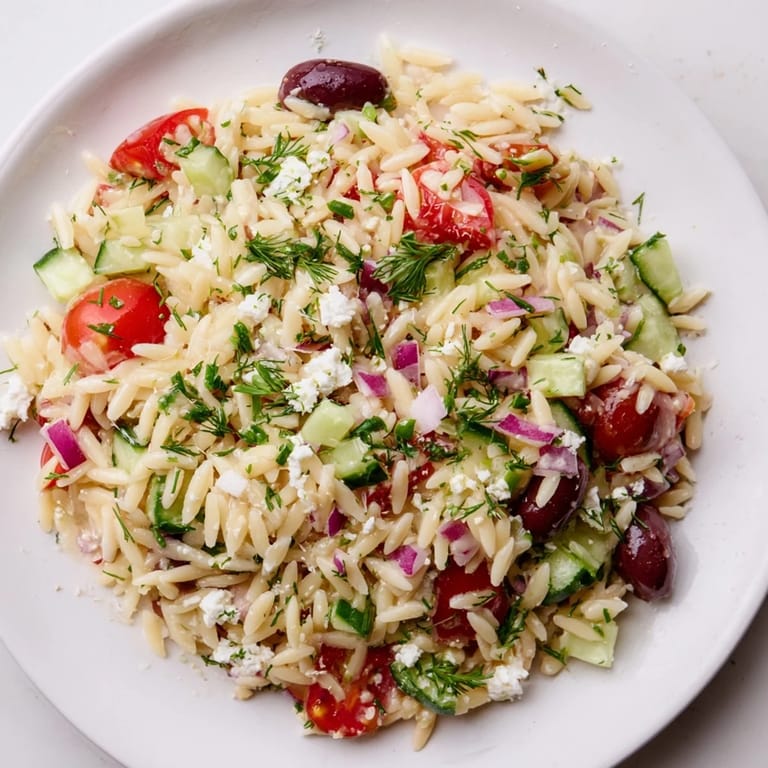 Save to Pinterest
 What struck me most was realizing this salad holds up in a cooler for hours without falling apart or turning soggy, which meant I could actually enjoy time with people instead of constantly checking on the food. That's when something shifts from being just another dish to being genuinely useful in real life.
Why This Works as a Make-Ahead Dish
The beauty of orzo is that it actually benefits from sitting with vinaigrette—the pasta absorbs the flavors in a way that makes every bite taste intentional rather than hastily assembled. I've learned to prep everything the morning of an event, keep the dressing separate, and combine them just before leaving the house or about 30 minutes before guests arrive. This approach means the salad stays fresh-tasting and the textures stay distinct instead of everything softening into a single mass.
Swapping and Substituting Without Losing Magic
Red wine vinegar works brilliantly in place of lemon if that's what you have, though the flavor leans slightly earthier and less bright. Grilled chicken or roasted chickpeas transform this into a main course without requiring a separate recipe. I've also added roasted red peppers, fresh mint, and even crumbled goat cheese when I was experimenting one afternoon, and each variation felt natural rather than forced.
Serving and Storing This Salad
Serve it cold straight from the refrigerator or let it come to room temperature on the counter—both work beautifully depending on the weather and your mood. It keeps refrigerated for up to two days, and honestly, it tastes even better on day two when all those flavors have really settled into the pasta.
- If you're transporting it, pack the dressing separately and toss everything together once you arrive to prevent sogginess.
- Toast the orzo in a dry pan for a minute before boiling if you want extra nuttiness and a more substantial texture.
- Always taste and adjust seasoning just before serving, as flavors can shift once things chill.
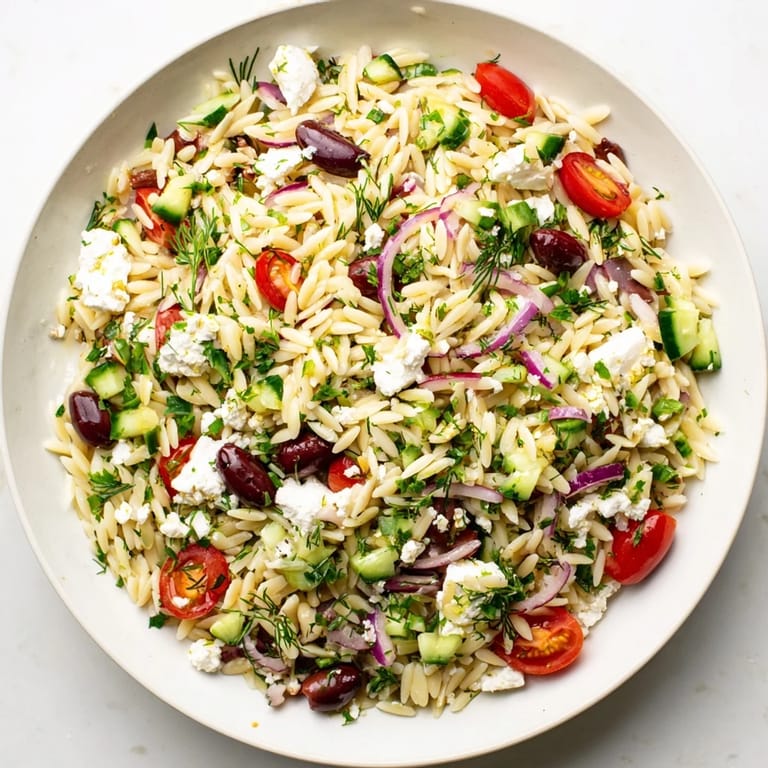 Save to Pinterest
 This salad taught me that the most memorable dishes aren't the complicated ones—they're the ones that show up reliably, taste delicious, and let you actually be present with the people around your table. That's a lesson worth remembering.