 Save to Pinterest
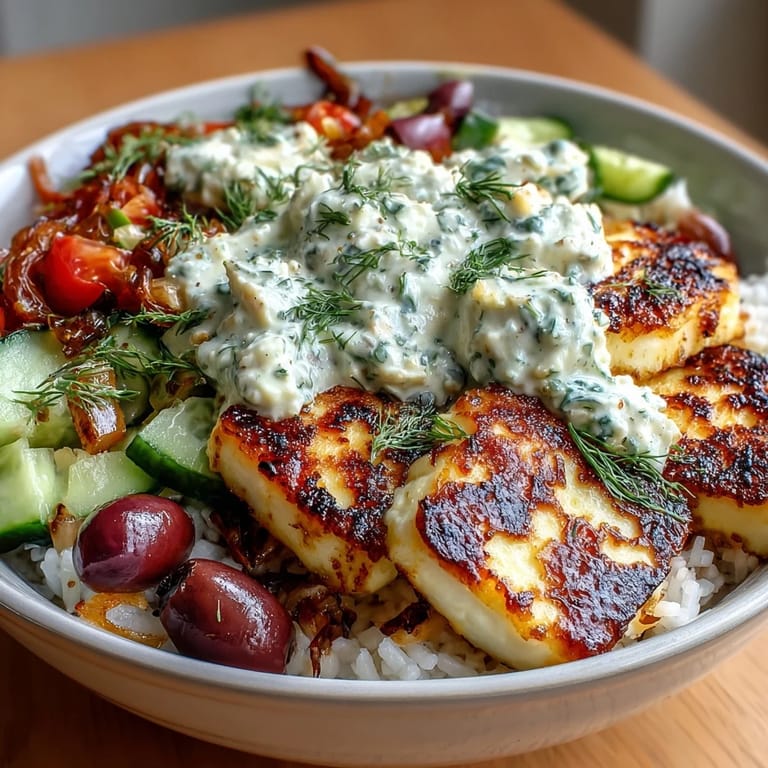
 There's something almost musical about the sizzle of halloumi hitting a hot pan—that immediate, unapologetic protest of cheese meeting heat. I discovered this bowl on a lazy Sunday afternoon when my fridge held scattered vegetables and a block of halloumi I'd been saving for the right moment. The moment arrived when I realized I wanted something warm, substantial, and bright all at once, and suddenly this Mediterranean-inspired combination felt inevitable. It's become my go-to when I want to feel nourished without spending an hour in the kitchen.
I made this for a friend who'd been craving something fresh but filling, and watching her face when she bit into the warm halloumi and cool cucumber was worth every second. She said it tasted like the Mediterranean without the passport, and we both laughed at how a simple bowl could transport you somewhere warmer, somewhere with better light. It's become her request whenever she visits.
Ingredients
- Halloumi cheese, 8 oz (225 g) block: This squeaky, high-melting-point cheese is the star—it won't collapse into a puddle when you cook it, which is exactly why it belongs in a hot pan.
- White rice, 2 cups cooked: The neutral base that lets everything else shine, though brown rice or quinoa work beautifully if you want more texture and nuttiness.
- English cucumber, 1/2, thinly sliced: The crisp counterpoint that makes each bite feel fresh; the thin slices mean it actually stays together rather than turning into mush.
- Cherry tomatoes, 1 cup, halved: Mix colors if you can find them—it changes the whole visual experience and honestly makes the bowl taste brighter.
- Red onion, 1/4 small, thinly sliced: A whisper of sharpness that anchors everything else; don't skip this or you'll notice something missing.
- Kalamata olives, 1/4 cup: The salty, briny punctuation mark that makes you think of islands and afternoon naps.
- Fresh dill, 1 tablespoon chopped: This herb carries the entire Mediterranean vibe—without it, it's just a bowl; with it, it's a story.
- Tzatziki sauce, 1/2 cup prepared: Cool, garlicky, and creamy, it's the reason warm halloumi and cold vegetables become something greater than the sum of their parts.
- Pita breads, 2, cut into wedges: Warm pita is essential—it becomes soft enough to scoop, sturdy enough to hold things together.
- Olive oil, 2 tablespoons: Use the best quality you have because you'll taste it; this is where good oil actually matters.
- Salt and black pepper, to taste: These aren't afterthoughts—they're the difference between good and memorable.
Tired of Takeout? 🥡
Get 10 meals you can make faster than delivery arrives. Seriously.
One email. No spam. Unsubscribe anytime.
Instructions
- Gather and prep your stage:
- Slice your cucumber thin enough that it flexes but stays intact, halve the tomatoes so they nestle into the bowl, and thinly slice the red onion so it softens slightly from the warmth. Having everything ready before you start cooking means you won't be frantically chopping while your halloumi sits cooling.
- Warm your pita gently:
- Run each pita through a dry skillet for just a few seconds until it becomes pliable and warm, or wrap them in a damp towel and microwave for ten seconds. You want them soft and inviting, not dried out and brittle.
- Prepare your halloumi for its moment:
- Cut the cheese into half-inch slices and pat them absolutely dry with paper towels—moisture is the enemy of a golden crust. This small step is what separates a pale, disappointed cheese slice from one that's golden and slightly crispy on the outside.
- Get your pan to the right temperature:
- Heat your skillet over medium-high until a drop of water sizzles and evaporates immediately, then add your olive oil and let it shimmer for a few more seconds. You want it hot enough to create a crust but not so hot that the outside burns before the inside softens.
- Sear the halloumi without moving it:
- Place the slices in the pan in a single layer and leave them alone for two to three minutes—resist the urge to peek or fidget. When you flip them, you'll see why: one side will be deep golden brown, almost caramelized, with a slight textural crust.
- Finish the second side:
- Flip each slice carefully and cook for another two to three minutes until that side matches the first. Transfer to a plate and take a moment to admire what you've created—it should still be warm and slightly jiggly in the center.
- Build your bowl with intention:
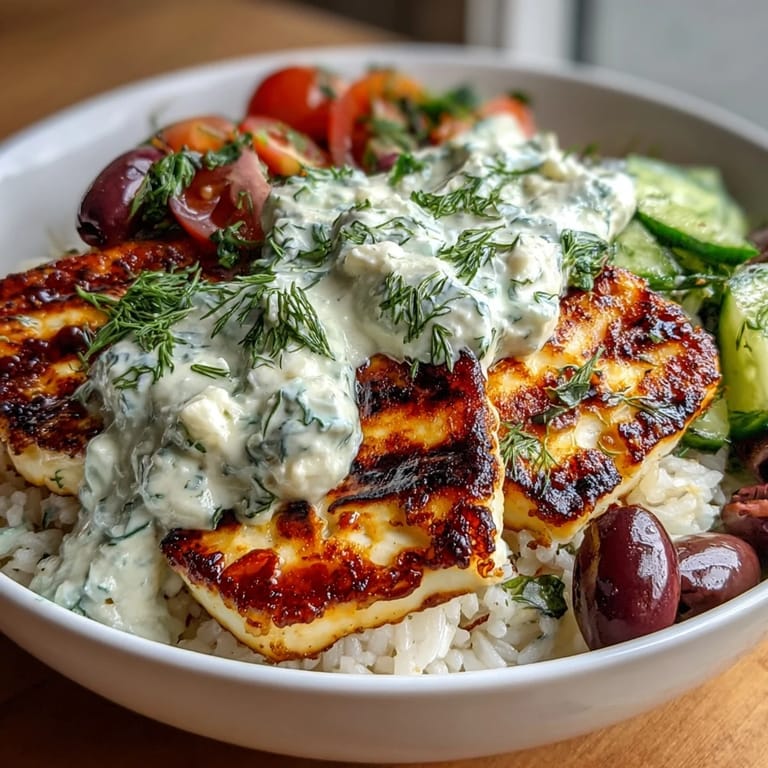
- Start with your rice, then arrange the halloumi, cucumber, tomatoes, onion, and olives in sections so the colors actually show. This isn't just presentation—it means every bite gets a little of everything, and you actually get to taste rather than just eat.
- Finish with the soul of the dish:
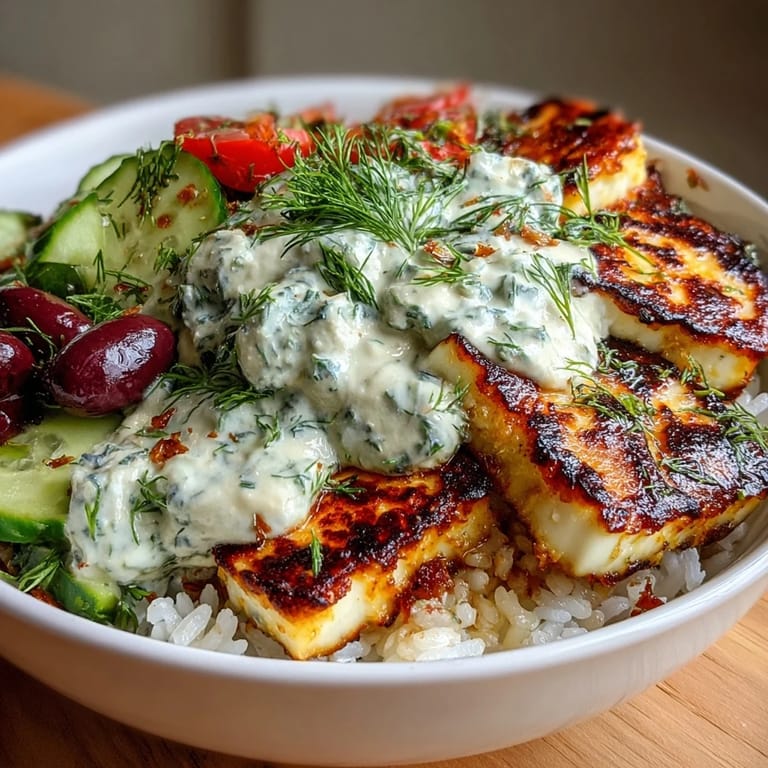
- Add a generous dollop of tzatziki, sprinkle the fresh dill over everything, season with salt and pepper, and serve immediately with your warm pita wedges. The contrast of warm halloumi against cool tzatziki is the magic moment.
 Save to Pinterest
 There was a moment when my partner tried this bowl and went quiet for a few seconds, and I realized that silence meant something had landed right. It's strange how a dish can feel both simple and complete, how something you make in your regular kitchen can transport you somewhere you've been or somewhere you want to go.
The Magic of Halloumi
Halloumi is one of those ingredients that seems almost magical the first time you cook with it—it's squeaky when raw, which feels wrong, but the moment it hits heat it transforms into something entirely different. I used to think I didn't like it until someone explained that the whole point is the contrast: the crispy, slightly browned exterior against the warm, soft center. Once I understood that, every cook felt intentional.
Why This Bowl Works Year-Round
In summer, I load it with extra tomatoes and add arugula for brightness; in cooler months, I use it as-is and it feels hearty and grounding. The beauty is that the base recipe never feels tired because the vegetables are flexible, the halloumi is always interesting, and the tzatziki ties everything together with that cool, herby comfort. You can make this bowl a hundred times and it will always feel like you're taking care of yourself.
Small Changes That Matter
A squeeze of fresh lemon over everything at the end changes the entire flavor profile, making it brighter and more alive; a splash of red wine vinegar adds complexity without overwhelming the other flavors. The best version of this bowl is the one that makes you happy, which might mean swapping rice for quinoa, adding greens like spinach or arugula, or drizzling with extra virgin olive oil because sometimes more is exactly right.
- If you can't find quality halloumi, this dish loses its centerpiece, so it's worth seeking it out or substituting with feta that's been briefly pan-fried instead.
- Room-temperature components work fine except for the halloumi and pita—those must be warm to create the textural contrast that makes the whole thing sing.
- Make the tzatziki fresh if you have time, or buy the best prepared version you can find because it's worth the money.
 Save to Pinterest
 This bowl has become my answer to the question of what to make when I want something that tastes like care but doesn't require sacrificing my evening. It's the kind of meal that reminds you why cooking for yourself or someone else matters.
Common Recipe Questions
- → What makes halloumi different from other cheeses?
Halloumi is a Cypriot cheese with a high melting point, allowing it to hold its shape when cooked. It develops a salty, savory crust when seared while remaining creamy inside.
- → Can I make this bowl ahead of time?
Prepare the vegetables and rice in advance, but sear the halloumi just before serving for the best texture. Store components separately and assemble when ready to eat.
- → What can I substitute for halloumi?
Paneer or firm feta can work, though they won't achieve the same golden crust. For a vegan option, try grilled extra-firm tofu marinated in Mediterranean herbs.
- → Is this bowl gluten-free?
The bowl becomes gluten-free by using gluten-free pita or omitting the bread. Ensure your tzatziki is certified gluten-free as some varieties contain thickeners with gluten.
- → How do I prevent halloumi from sticking to the pan?
Pat the halloumi completely dry with paper towels before cooking, use a well-seasoned skillet or non-stick pan, and ensure the oil is properly heated but not smoking.
- → What other grains work well in this bowl?
Quinoa, farro, bulgur, or brown rice make excellent alternatives to white rice, adding different textures and nutritional profiles to your Mediterranean bowl.