 Save to Pinterest
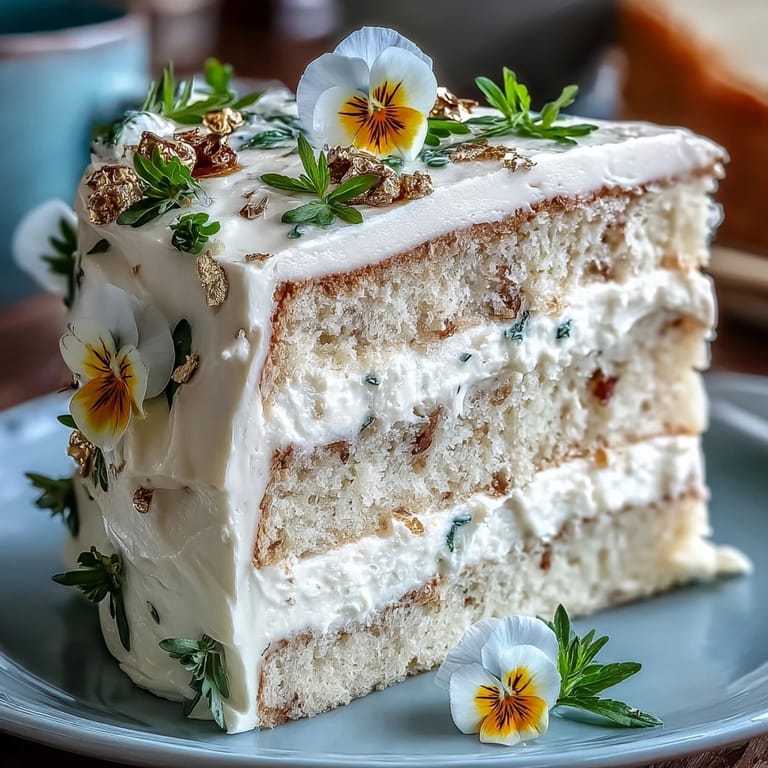
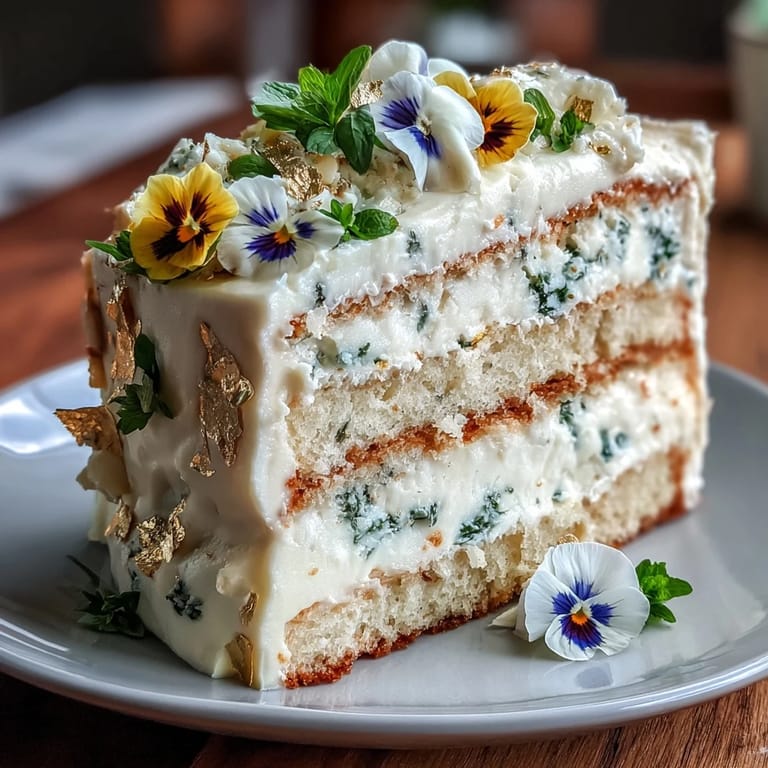
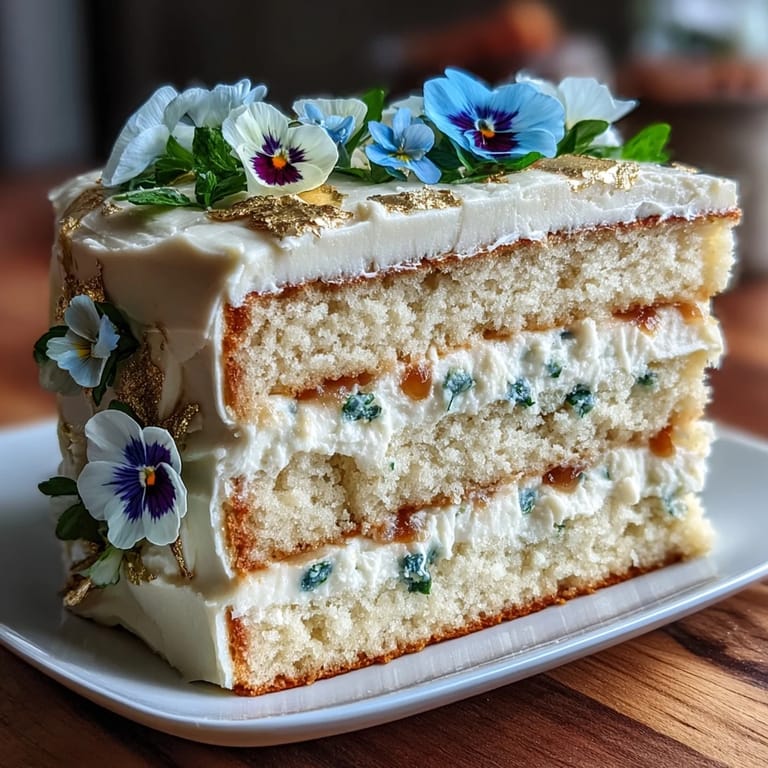
 My cousin texted me three weeks before her graduation asking if I could make her cake, and honestly, I panicked a little. But then she sent a photo of gold leaf on Instagram and whispered that she wanted something that looked like it belonged in a fancy gallery, not a typical grocery store bakery. That conversation sparked something in me—the challenge of creating layers of delicate vanilla sponge held together with silky Swiss meringue buttercream, then finishing it all with edible flowers and actual gold leaf. It became less about baking and more about celebrating her achievement in the most beautiful way I knew how.
I'll never forget pulling those first cake layers out of the oven and the whole kitchen filling with that warm, buttery vanilla smell that makes you feel like you're doing something important. My mom wandered in halfway through decorating and just stood there watching me carefully press gold leaf onto the frosting with a tiny paintbrush, like I was doing surgery. She said it looked like I was painting the cake gold, and honestly, that's exactly what it felt like.
Ingredients
- All-purpose flour (2 1/2 cups): This is your foundation—make sure it's fresh because old flour can make your cake dense and heavy, which would waste all your beautiful decoration effort.
- Baking powder (2 1/2 tsp): The chemical lift that keeps these layers tender and airy, crucial for a cake this elegant.
- Salt (1/2 tsp): Just a whisper to make the vanilla flavor sing without tasting salty itself.
- Unsalted butter (1 cup for cake, 1 1/2 cups for buttercream): Room temperature is non-negotiable—cold butter won't incorporate properly and you'll end up with a greasy mess instead of fluffy frosting.
- Granulated sugar (2 cups for cake, 1 1/4 cups for buttercream): The sweet structure that builds volume when beaten with butter, and the critical element in meringue that needs to fully dissolve.
- Large eggs (4 for cake, 5 for buttercream): They must be room temperature or they'll break the emulsion and leave you with separated, scrambled-looking batter or buttercream.
- Vanilla extract (1 tbsp for cake, 2 tsp for buttercream): Pure vanilla makes the difference between a good cake and one people remember—don't skimp on imitation.
- Whole milk (1 cup): Creates moisture and tender crumb, and switching to alternatives can change how the cake bakes.
- Edible gold leaf sheets: Food-safe and genuinely transformative—they catch light like magic and feel luxurious under your fingertips.
- Assorted edible flowers (pansies, violets, roses): Must be grown without pesticides and labeled as edible; farmers markets are your best bet for fresh, pesticide-free varieties.
- Food-safe paintbrush: A soft bristle brush makes applying gold leaf precise and prevents tearing the delicate sheets.
- Gold ribbon (optional): A finishing touch that ties everything together literally and visually.
Tired of Takeout? 🥡
Get 10 meals you can make faster than delivery arrives. Seriously.
One email. No spam. Unsubscribe anytime.
Instructions
- Set your stage:
- Preheat your oven to 350°F and prepare three 8-inch round pans by greasing them generously and lining the bottoms with parchment paper—this prevents sticking and makes turning out the cakes smooth and stress-free. Having everything prepped before you start mixing means you won't be rushed when the batter is ready.
- Dry ingredients together:
- Whisk flour, baking powder, and salt in a bowl and set it aside—this distributes the leavening evenly throughout the flour so you get consistent rise. It's a small step that makes a huge difference in cake structure.
- Cream butter and sugar:
- Beat room-temperature butter with sugar for about three minutes until it's pale, fluffy, and almost looks like frosting—this incorporates air that's essential for a tender crumb. You should be able to leave a fingerprint in it without much resistance.
- Add eggs gradually:
- Add each egg one at a time, beating well between additions so each one fully incorporates before the next arrives—rushing this step can lead to a curdled-looking mixture that bakes oddly. If it does look separated, don't panic; a splash of milk will bring it back together.
- Alternate wet and dry:
- Starting with flour and ending with flour, add the dry mixture and milk in alternating additions, mixing just until combined—overmixing develops gluten and makes cake tough instead of tender. The batter should look smooth and pourable, not overworked.
- Divide and bake:
- Pour batter evenly among your three pans and smooth the tops gently, then bake for 28 to 32 minutes until a toothpick comes out clean—start checking at 25 minutes because ovens vary and overbaked cake is dry. The cakes should spring back when you touch them lightly.
- Cool properly:
- Let the cakes rest in their pans for 10 minutes—this allows them to set enough to handle without breaking—then turn them out onto wire racks to cool completely. This step is crucial; frosting warm cake turns it into a sliding mess.
- Make the meringue base:
- Combine egg whites and sugar in a heatproof bowl over simmering water and whisk constantly for about five minutes until the sugar dissolves completely and the mixture reaches 160°F—this temperature pasteurizes the eggs safely. You'll feel the graininess disappear under your whisk and the mixture becomes smooth and hot.
- Whip to stiff peaks:
- Transfer the warm meringue to a stand mixer and beat on high for eight to ten minutes until you have stiff, glossy peaks and the bowl feels cool to the touch—this volume is what makes the buttercream so silky. The transformation from liquid to cloud is genuinely magical to watch.
- Incorporate butter carefully:
- Reduce speed to medium and add butter a few cubes at a time, letting each addition fully incorporate before adding more—this is where patience matters because rushing can cause the buttercream to break and look grainy. If it does separate, keep mixing; it usually comes back together.
- Season and taste:
- Add vanilla extract and a pinch of salt, mixing until the buttercream is smooth and billowy—taste it and adjust vanilla if needed because this is your chance to get the flavor exactly right. The salt enhances the vanilla without making it taste salty.
- Assemble with care:
- Place the first cooled cake layer on your serving plate and spread with buttercream, then repeat with the next two layers, creating a stacked structure that's stable and level. Press gently as you stack to avoid crumb shift.
- Crumb coat and chill:
- Cover the entire cake with a thin first layer of buttercream and refrigerate for 20 minutes—this seals in crumbs so your final frosting layer stays pristine. It's an extra step that separates polished cakes from amateur ones.
- Final frosting layer:
- Apply your final smooth layer of buttercream using an offset spatula, working slowly and with confidence—you can dip your spatula in warm water between strokes for a smoother finish. This layer is your canvas for decoration.
- Apply gold leaf:
- Using a food-safe paintbrush, gently press small sheets of edible gold leaf onto sections of the frosting, working in a pattern that feels balanced—the delicate sheets catch light and add genuine luxury. Less is often more; don't feel like you need to cover every inch.
- Arrange flowers:
- Place your edible flowers decoratively across the cake, considering color balance and spacing—fresh flowers look most beautiful placed just before serving to maintain their appearance. A light hand here makes the design feel intentional rather than crowded.
- Final touch:
- If using gold ribbon, wrap it gently around the base of the cake to frame everything you've created—this detail completes the polished, celebration-worthy presentation.
 Save to Pinterest
 When I finally set that finished cake on my cousin's graduation table, I watched her eyes light up in a way that had nothing to do with cake and everything to do with feeling celebrated. That's when I realized that the vanilla and gold leaf and delicate flowers weren't really about impressing people—they were about saying, 'You did something extraordinary and you deserve something beautiful.'
Why Timing Matters for Decoration
I learned the hard way that trying to apply gold leaf to warm buttercream is like trying to frost a waterslide. The leaf slides around and loses its delicate shimmer because the frosting is too soft. Making sure your cake is properly chilled before you even think about touching it with a brush gives you a firm surface and makes every decorative element stick exactly where you want it. There's a reason bakers fridge cakes—it's not just about crumb stability, it's about giving yourself control over those final beautiful moments.
Sourcing Flowers That Feel Luxurious
Not all edible flowers taste the same or look the same on a cake. I've made this with grocery store pansies that looked tired and farmers market pansies that had actual personality. The difference is freshness and the farmer's care in growing them. Roses tend to be dramatic and bold, violets are delicate and sweet, and pansies have this friendly, approachable vibe. Visit your local farmers market or specialty grocer a day or two before you need them and ask the person there which flowers are their favorite—that kind of recommendation usually leads to the most beautiful choices.
Making This Cake Your Own
The vanilla base is traditional, but there's room to play without losing the elegance this cake requires. If you want chocolate, swap half a cup of flour for quality cocoa powder and reduce the milk slightly because cocoa absorbs liquid. Lemon zest in the batter brightens everything, and almond extract instead of vanilla gives it an entirely different personality. The decorative elements—gold leaf, flowers, even the ribbon—can shift based on the graduate's favorite colors or personality. What matters is that the foundation stays solid and the frosting stays silky.
- A little lemon zest mixed into the buttercream adds brightness without overwhelming the vanilla.
- White chocolate can replace some of the regular buttercream for a richer, slightly sweeter finish.
- Personalize the flower selection based on the graduate's favorite colors or the season you're baking in.
 Save to Pinterest
 Every time you make this cake, you're not just following instructions—you're creating a moment that someone will remember alongside their achievement. That's what makes the precision and care actually matter.
Common Recipe Questions
- → What makes Swiss meringue buttercream special?
Swiss meringue buttercream is silky and smooth, made by gently heating egg whites and sugar before whipping and adding butter. It offers a light yet rich texture ideal for elegant cakes.
- → How do I apply edible gold leaf without tearing it?
Use a food-safe paintbrush to carefully lift and apply gold leaf. Work slowly in a low-humidity environment for best results.
- → Which flowers are safe for decoration?
Choose flowers labeled as edible and pesticide-free, such as pansies, violets, or roses, to ensure safety and suitability for cake decoration.
- → Can this cake be made in advance?
Yes, you can bake and assemble the cake a day ahead, keeping it refrigerated to allow flavors to meld and decorations to set properly.
- → How should I store leftover cake?
Store leftover cake in an airtight container in the refrigerator to maintain freshness and prevent drying out for up to 3 days.