 Save to Pinterest
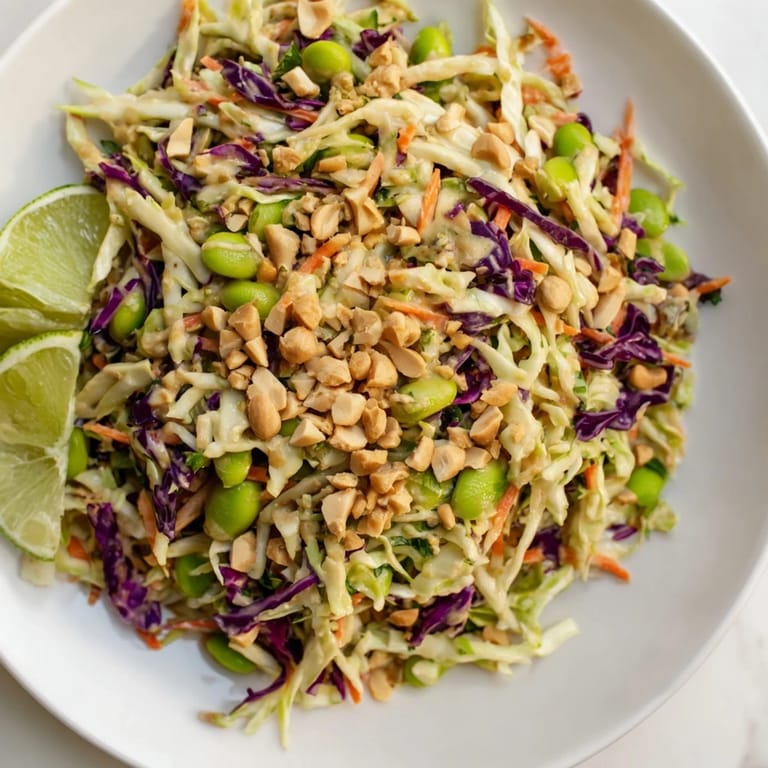
 There's something about a Thai market that makes you abandon all your usual cooking habits. I found myself standing in front of bins of roasted peanuts one afternoon, completely mesmerized by how simple ingredients could transform into something so alive and crunchy. That's when I started making this salad—not from a cookbook, but from watching how the vendors tossed vegetables together with such ease and confidence. The first time I assembled it at home, I was struck by how the raw cabbage stayed crisp even as the creamy peanut dressing wrapped around everything, creating this perfect tension between textures that shouldn't work but absolutely do.
I made this for a potluck last spring when everyone was tired of the same old heavy dishes, and something shifted in the room when people tasted it. Someone asked if I'd bought it from a restaurant, which felt like the highest compliment. That's when I realized this salad had a quiet confidence about it—no apologies, no explanation needed, just vibrant color and honest flavor.
Ingredients
- Green and purple cabbage: The foundation of everything—buy them fresh and slice them thin because cabbage that's been sitting around loses its snap. I learned this by accident after making it with half-stale cabbage, and it changed how I approach the prep.
- Carrots: Shred them yourself if you can, they taste sweeter somehow than the pre-shredded kind, and the texture holds up better against the dressing.
- Edamame: Buy them frozen and let them come to room temperature before tossing them in—they add a subtle sweetness and protein that keeps the salad from feeling like just vegetables.
- Red bell pepper and scallions: These aren't just garnish, they're the brightness that cuts through the richness of the peanut dressing and keeps your palate alert.
- Fresh cilantro: Don't skip this, even if you're someone who usually leaves herbs on the side—it changes everything about how the salad feels on your tongue.
- Creamy peanut butter: The real kind, the one with just peanuts and salt, not the one with added oils and sugar that will throw off the balance.
- Soy sauce: This is your umami anchor, the thing that makes someone take a bite and then immediately take another without thinking about it.
- Rice vinegar: Gentler than distilled vinegar, it adds tang without aggression, which matters when you're working with delicate vegetables.
- Lime juice: Fresh squeezed, always—bottled lime juice will make the dressing taste like it came from a jar instead of your kitchen.
- Maple syrup: Just enough to round out the sharp edges of the vinegar and soy, creating something that feels complete.
- Sesame oil: A small amount goes a long way; this is where nuttiness lives.
- Ginger and garlic: These wake everything up, especially on a day when you need waking up yourself.
- Roasted peanuts: The rough chop matters—you want some texture variation, not uniformity.
Tired of Takeout? 🥡
Get 10 meals you can make faster than delivery arrives. Seriously.
One email. No spam. Unsubscribe anytime.
Instructions
- Gather everything and get your mise en place right:
- I learned the hard way that chopping while tired leads to uneven pieces and a frustrating experience. Set out all your vegetables prepped and ready, your dressing ingredients nearby—this takes the chaos out of the process and makes cooking feel intentional.
- Build your vegetable base:
- Toss the cabbage, carrots, edamame, bell pepper, scallions, and cilantro together in a large bowl. The mixing matters because you're distributing different colors and textures evenly, not just heaping things on top of each other.
- Make the dressing where you can actually taste it:
- Whisk the peanut butter, soy sauce, rice vinegar, lime juice, maple syrup, sesame oil, ginger, and garlic together in a separate bowl. Add water slowly, tasting as you go—the dressing should be pourable but thick enough to cling to vegetables, and everyone's water situation is different depending on how thick their peanut butter starts out.
- Bring everything together with intention:
- Pour the dressing over your vegetables and toss thoroughly, making sure every handful gets coated. There's a satisfying moment when the pale vegetables start to glisten and everything becomes cohesive.
- Finish with ceremony:
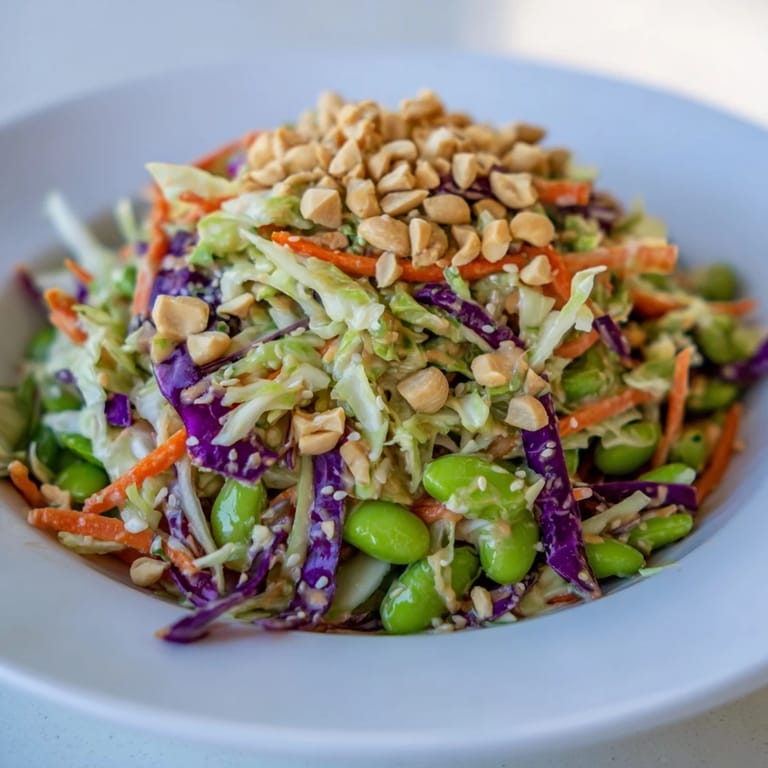
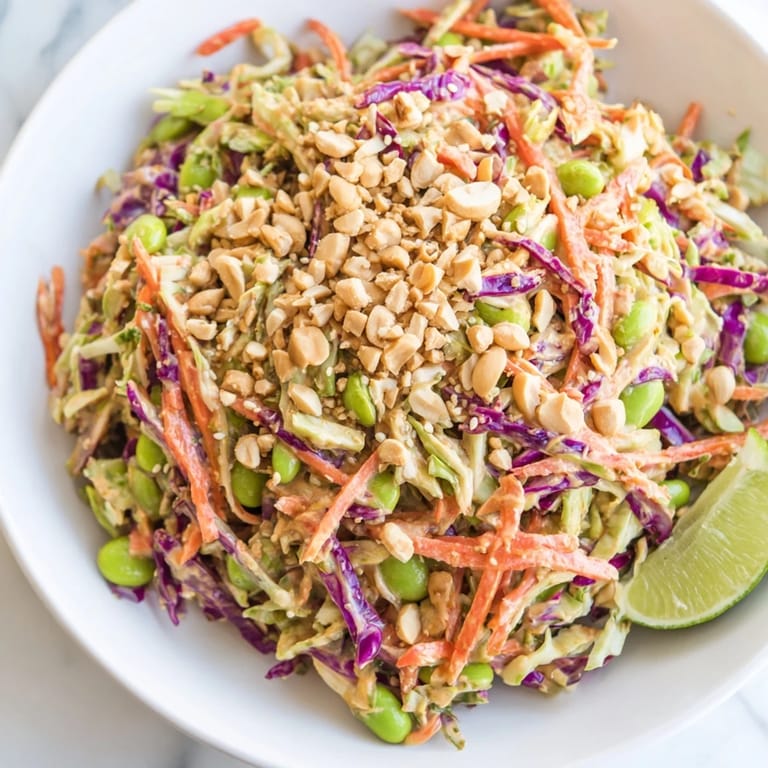
- Transfer to a serving vessel, scatter the roasted peanuts and sesame seeds over top, and serve immediately with lime wedges. This moment is when the salad shows its best self.
 Save to Pinterest
 There was a moment last week when my neighbor came over on a whim and I had just finished making this, and we ate it straight from the bowl standing in the kitchen, talking about nothing important and everything that mattered. That's when I understood that this salad is really about creating a small moment of ease and brightness, which sometimes is exactly what you need.
The Dressing Is Everything
I spent two seasons making this salad before I understood that the dressing isn't just a topping—it's the entire reason to make the dish. Every ingredient in that bowl serves a specific purpose, talking to each other in a language of salt, sweet, sour, and nutty. When you taste a spoonful before it hits the vegetables, you might think it's too strong, too peanut-forward, almost aggressive. Then it meets the crisp cabbage and something miraculous happens—it mellows and rounds and becomes greater than its individual parts. This is the real alchemy of cooking.
Texture as Flavor
What makes this salad memorable isn't just the peanut dressing, though that helps—it's the conversation between different textures in your mouth all at once. The snap of fresh cabbage against the softness of edamame, the slight resistance of carrot shreds, the sharpness of raw bell pepper, the final punctuation of chopped roasted peanuts. I used to think texture was something that happened to food, not something you created intentionally. Now I understand it's a choice, and honoring that choice means using the freshest vegetables and refusing shortcuts on things like hand-shredding or hand-chopping.
Making It Your Own
This is a salad that welcomes improvisation without losing itself. One winter I added thinly sliced cucumber because someone had grown too many. Another time I used almond butter instead of peanut because that's what I had, and it was revelatory in a different way. The foundation is strong enough to handle changes, which is the mark of a truly good recipe. If you're allergic to peanuts, the world doesn't end—sunflower seed butter or tahini will step in with grace. Add grilled tofu if you want more protein, or skip it entirely if the vegetables feel complete to you.
- For extra crunch and freshness, try adding snap peas or thin cucumber slices alongside the other vegetables.
- If you make this ahead, keep the dressing separate until right before serving to maintain maximum crunchiness.
- A few sliced red chilies on top will add heat if that's how you like to eat—no apologies needed.
 Save to Pinterest
 This salad has become my answer to the question "what do you feel like making?" on days when I want something bright and alive. It's proof that simple, honest cooking requires no apologies.
Common Recipe Questions
- → What ingredients give the salad its crunch?
The shredded green and purple cabbage, carrots, and edamame provide a satisfying crunchy texture, complemented by roasted peanuts and optional toasted sesame seeds.
- → How is the peanut dressing prepared?
The dressing blends creamy peanut butter with soy sauce, rice vinegar, lime juice, maple syrup, toasted sesame oil, grated ginger, minced garlic, and water to reach a pourable consistency.
- → Can this salad be made gluten-free?
Yes, by substituting regular soy sauce with tamari, this salad becomes gluten-free while retaining its authentic flavor.
- → What are some suggested additions for extra protein?
Grilled tofu or shredded rotisserie chicken can be added for more protein, though adding chicken will change the dish from vegan to non-vegan.
- → How should leftovers be stored?
Store leftovers in an airtight container in the refrigerator and consume within two days to maintain freshness and texture.
- → Are there allergy considerations with this salad?
This dish contains peanuts and soy; those with allergies should consider substitutes like almond or sunflower butter for the dressing.