 Save to Pinterest
 My neighbor Marcus brought over a jar of homemade dill pickles one summer, and I was stuck with an enormous container of the brine after we'd devoured the spears. Rather than dump it, I wondered aloud if pickle juice could actually make chicken taste incredible, and he dared me to try. That single jar sparked an obsession with this recipe—one that transformed a humble marinade into the crispiest, most unexpectedly delicious chicken I'd ever pulled from a skillet. The tangy-salty coating paired with nutty Parmesan felt like a flavor combination nobody asked for but absolutely needed.
I made this for my book club once, not thinking much of it beyond a quick weeknight dinner, and everyone asked for the recipe before they'd even finished eating. One person said it tasted like it came from a restaurant, which I still think about when I'm standing at my stove, oil popping in the pan. That night taught me that sometimes the best dishes are the ones you almost didn't bother perfecting.
Ingredients
- Boneless, skinless chicken breasts: Four medium breasts work best—they marinate evenly and cook through without drying out if you don't overcrowd the pan.
- Dill pickle juice: This is the secret weapon; use the liquid straight from a jar of dill pickles, not the vinegar-forward kind, because the subtle spice matters.
- All-purpose flour: It's your base layer and prevents the egg from soaking straight through to the chicken.
- Garlic powder and onion powder: Together they build umami depth that makes the coating taste savory and complete, not one-dimensional.
- Paprika: A half teaspoon adds color and a whisper of smokiness without overpowering the dill.
- Salt and black pepper: Season generously because the breadcrumb coating will dilute some of the seasoning intensity.
- Large eggs: These bind everything together and create that golden, crispy exterior when they hit hot oil.
- Seasoned breadcrumbs: They fry up crunchier than panko in my experience, though either works if that's what you have on hand.
- Grated Parmesan cheese: Use freshly grated if possible; the pre-shredded stuff contains anti-caking agents that affect texture.
- Cooking oil: Canola and vegetable oil both work perfectly; coconut oil would be too aggressive a flavor here.
Tired of Takeout? 🥡
Get 10 meals you can make faster than delivery arrives. Seriously.
One email. No spam. Unsubscribe anytime.
Instructions
- Marinate with intention:
- Place your chicken breasts in a shallow dish or zip-top bag and pour that pickle juice over them until they're fully submerged—this is non-negotiable. Let them sit in the refrigerator for at least 30 minutes, though two hours is even better if you've got the time, because the acid and salt work their magic slowly.
- Organize your breading station:
- Set up three shallow dishes in a row: the first gets your flour mixed with garlic powder, onion powder, paprika, salt, and pepper; the second holds your whisked eggs; and the third combines breadcrumbs and freshly grated Parmesan. This assembly line approach keeps things clean and prevents you from accidentally breading with egg-covered hands.
- Dry before coating:
- Remove the chicken from the marinade and pat it completely dry with paper towels—any wet spots will make the flour clump and your crust won't crisp properly. Don't skip this step even though it feels tedious.
- Dredge with care:
- Drag each chicken breast through the seasoned flour first, shake off the excess, dip it into the egg mixture until fully coated, then press it firmly into the breadcrumb-Parmesan blend. The pressure helps the coating stick, and you want full coverage because that's where all the flavor and crunch live.
- Get the oil ready:
- Pour about a half inch of oil into a large skillet and heat it over medium-high heat until it shimmers—if you have a thermometer, aim for around 350°F. Drop a tiny piece of breadcrumb into the oil and if it sizzles immediately, you're ready to go.
- Fry to golden perfection:
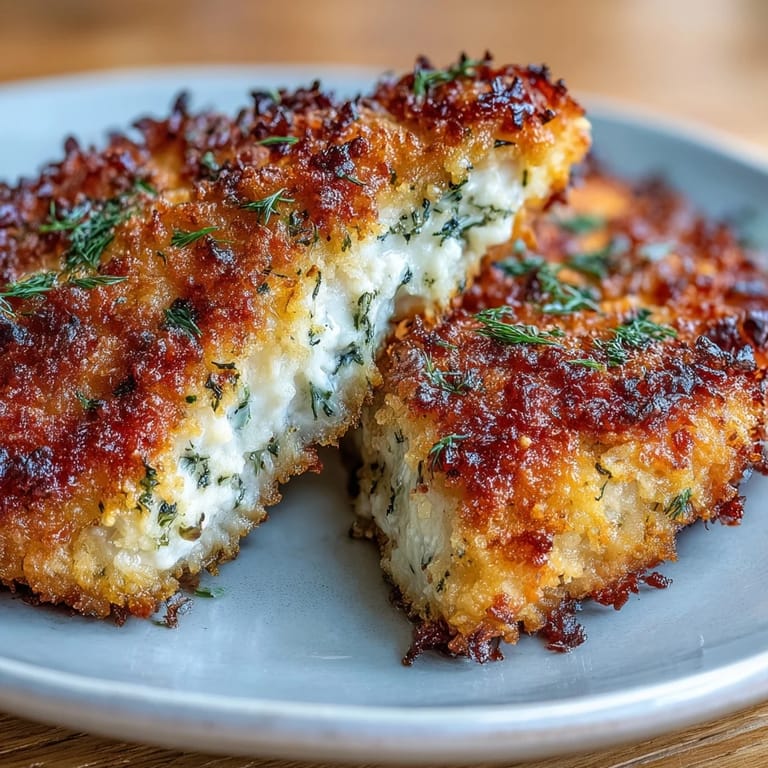
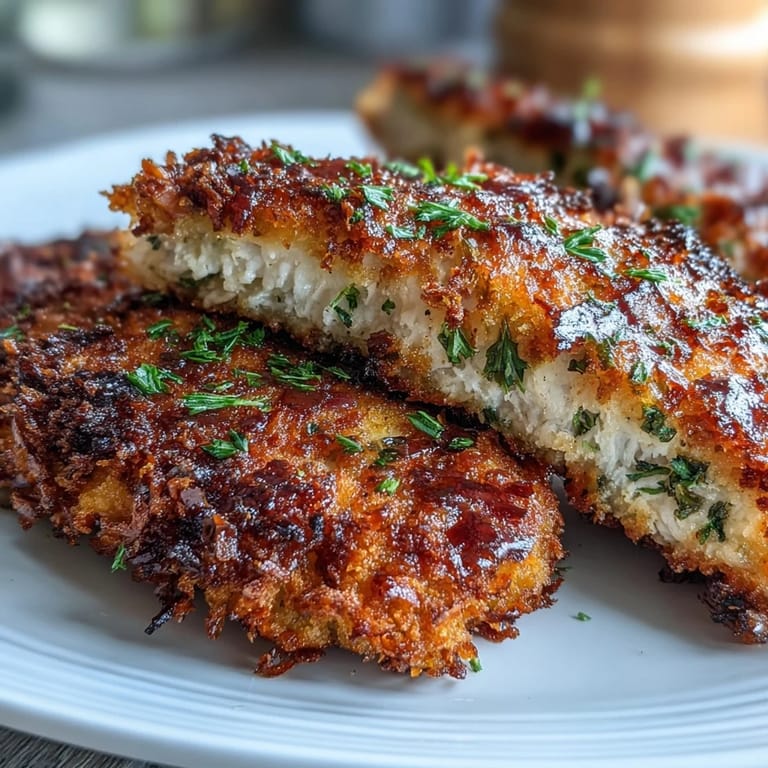
- Carefully lay each breaded chicken breast into the hot oil and listen for that satisfying sizzle—it should sound aggressive. Fry for five to seven minutes per side until the coating is deep golden brown and the internal temperature reaches 165°F when you check with a thermometer.
- Rest and drain:
- Transfer the cooked chicken to a wire rack placed over a baking sheet so the oil drips away and the bottom doesn't get soggy. Let it sit for a few minutes before plating so the crust stays crisp.
 Save to Pinterest
 There's something almost magical about the moment you bite into a piece and that crust shatters, releasing all that tangy pickle flavor mixed with nutty Parmesan. My kids, who claim to dislike vegetables, will demolish this without question—that's when I know a recipe has truly won.
Lighter Cooking Methods That Still Work
If you'd rather skip the deep frying, this chicken adapts beautifully to both the oven and air fryer. I've done both when oil splatters felt like too much cleanup, and while the texture isn't quite as shattery as pan-fried, it's still deeply satisfying. For the oven, arrange your breaded chicken on a wire rack set over a baking sheet and bake at 425°F for twenty to twenty-five minutes; for the air fryer, use 400°F for fifteen to eighteen minutes and flip it halfway through so both sides brown evenly.
What to Serve Alongside
The tang of the pickle-Parmesan coating pairs surprisingly well with cooling sides that balance out the richness. A simple green salad with lemon vinaigrette cuts through the richness beautifully, while a creamy coleslaw adds another textural layer that feels restaurant-quality on a weeknight. Extra dill pickles on the side are never wrong—let people chase that tangy flavor if they want more of it.
Flavor Variations Worth Trying
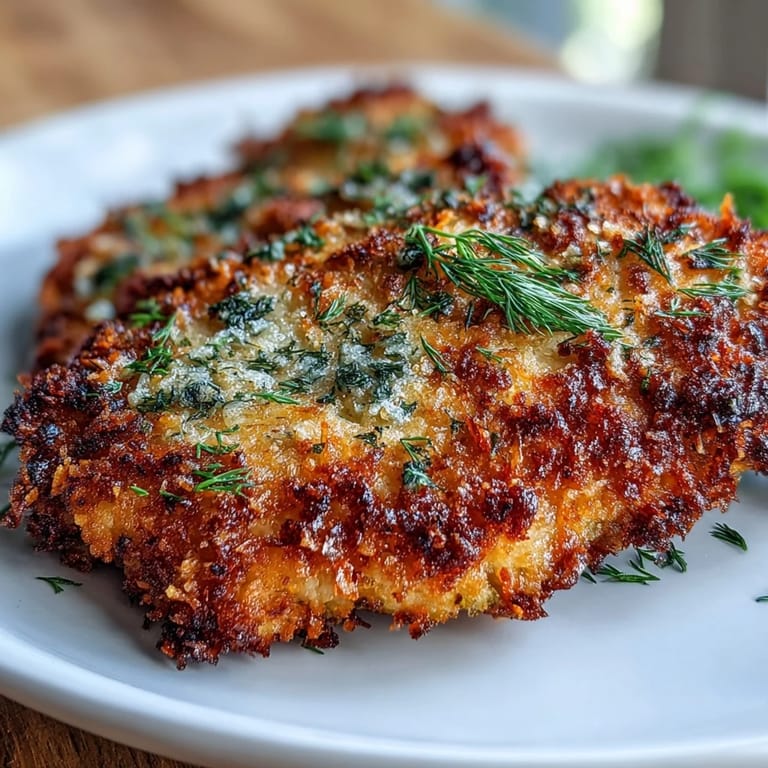
Once you understand how the pickle juice and Parmesan work together, you can start experimenting with additions that shift the whole vibe. A pinch of cayenne pepper in the flour mixture adds a subtle heat that wakes everything up, while some people swear by adding fresh dill or even a touch of lemon zest to the breadcrumb coating. I've also swapped in chicken thighs instead of breasts when I wanted a more forgiving cut of meat, and they actually stay juicier in the marinade.
- Try adding a half teaspoon of smoked paprika instead of regular paprika for deeper, more complex flavor.
- Fresh dill mixed into the breadcrumbs connects everything back to the pickle flavor in a sophisticated way.
- Chicken thighs have more fat and become even more succulent with the pickle juice treatment.
 Save to Pinterest
 This recipe proved to me that sometimes the best dishes come from improvising with what's already in your fridge, and that pickle juice was the beginning of something genuinely delicious. You're going to make this more than once, trust me.
Common Recipe Questions
- → How long should I marinate the chicken in pickle juice?
Marinate the chicken for 30 minutes to 2 hours in the refrigerator. Longer marinating time allows the acidity to tenderize the meat more effectively and infuse deeper dill flavor throughout the chicken breasts.
- → Can I bake this instead of frying?
Yes, bake at 425°F (220°C) on a wire rack set over a baking sheet for 20–25 minutes, or air fry at 400°F (200°C) for 15–18 minutes, flipping halfway through cooking time until golden and crispy.
- → What kind of pickles work best for the juice?
Classic dill pickles work perfectly—the juice provides the right balance of acidity and herbal dill flavor. Avoid sweet pickle varieties or bread-and-butter pickles as they'll alter the intended savory profile.
- → How do I know when the chicken is done cooking?
The chicken is ready when it reaches an internal temperature of 165°F (74°C) measured with an instant-read thermometer, and the coating is golden brown on both sides, typically 5–7 minutes per side when frying.
- → Can I use chicken thighs instead of breasts?
Absolutely. Boneless skinless chicken thighs work wonderfully and often stay juicier during cooking. Adjust cooking time as needed—thighs may take slightly longer to reach the proper internal temperature.
- → What should I serve with this chicken?
Extra dill pickles on the side complement the flavors perfectly. Coleslaw, potato salad, or a simple green salad provide fresh contrast. Mashed potatoes or roasted vegetables also make excellent sides.