 Save to Pinterest
 My neighbor knocked on my kitchen door one evening with a bag of gorgeous roasted red peppers from her garden, and I had exactly three things in my pantry that seemed worth building around: heavy cream, burrata, and pasta. That night taught me something I hadn't quite grasped before—the best meals sometimes arrive accidentally, when you stop overthinking and start playing with what's in front of you. This dish became my go-to proof that simplicity and creaminess can feel genuinely luxurious without fussing.
I made this for my sister's surprise birthday dinner last fall, and watching her close her eyes after the first forkful told me everything—that moment when someone realizes food has moved them, even a little. She asked for the recipe before dessert, and that's when I knew this pasta had crossed from my kitchen experiments into something worth keeping.
Ingredients
- Pasta (12 oz): Use whatever shape speaks to you—spaghetti catches the sauce in thin ribbons, fettuccine holds it generously, penne traps it inside each tube. I've learned that the pasta itself matters less than cooking it just shy of tender, so it has something left to give when it hits the skillet.
- Red bell peppers (2 large): Look for peppers with thin walls and deep color; they roast faster and taste sweeter. The charring isn't just flavor, it's a signal that the sugars have concentrated and the flesh is ready to become silk.
- Heavy cream (1 cup): Don't skip or substitute here unless you have a real reason—the fat is what makes this sauce velvety and forgiving. Cold cream straight from the fridge tempers the hot peppers beautifully.
- Garlic (1 clove, minced): One clove is all you need because the peppers are the star; too much garlic bullies everything else off the plate. Mince it fine so it dissolves into the blended sauce.
- Olive oil (1 tbsp): This goes in the skillet to warm the sauce gently without breaking the cream. I've noticed that rushing this step or using high heat can turn the sauce grainy, so patience here pays off.
- Salt (1/2 tsp) and black pepper (1/4 tsp): Taste as you go because the peppers vary in sweetness and saltiness depending on the season and variety. Sometimes I add a whisper more salt at the end.
- Red pepper flakes (1/4 tsp, optional): A tiny pinch wakes up the flavor without announcing itself; I use them when I want the dish to feel just slightly alive with heat.
- Burrata cheese (2 balls): Buy this as close to serving time as possible because its magic is fleeting. Room temperature burrata tears into clouds; cold burrata resists and loses its charm.
- Fresh basil (for garnish): Tear it by hand rather than cutting—your knife bruises the leaves and they'll oxidize and darken. A handful per bowl feels generous without smothering the cream.
Tired of Takeout? 🥡
Get 10 meals you can make faster than delivery arrives. Seriously.
One email. No spam. Unsubscribe anytime.
Instructions
- Roast the peppers until they surrender:
- Turn your oven to 400°F and lay whole peppers on a baking sheet—don't poke or prepare them, just let the dry heat do the work. They'll take 25 to 30 minutes, turning occasionally, until the skin is blackened and blistered and the peppers have collapsed slightly, signaling that everything inside is soft and sweet.
- Set the pasta water going and cook pasta:
- Fill a large pot with salted water (it should taste like the sea) and bring it to a rolling boil, then add your pasta and stir immediately so nothing sticks together. Cook until it's just tender enough to bite cleanly, not soft—the pasta will keep cooking slightly when it hits the warm sauce.
- Cool and peel the roasted peppers:
- Remove the peppers from the oven and cover them tightly with foil for five minutes; the steam loosens the burnt skin so it slides off like tissue paper. Once cool enough to handle, pull away the skin, halve each pepper, and scrape out the seeds and white membrane.
- Blend until the sauce is completely smooth:
- In a blender or food processor, combine your peeled peppers with the cold heavy cream, minced garlic, salt, pepper, and red pepper flakes if you're using them. Blend for about a minute until there are no flecks of pepper visible and the color is uniform—this is what transforms two simple ingredients into something that tastes complicated.
- Warm the sauce gently without breaking it:
- Heat olive oil in a large skillet over medium heat, then pour in the blended sauce and let it simmer quietly for five minutes, stirring now and then. You'll see it thicken slightly and smell the cream sweetening; this is the moment you know it's ready.
- Toss pasta with the sauce until coated:
- Add your drained pasta to the skillet and fold it into the sauce slowly, making sure every strand gets coated and warmed through. The heat will help the flavors marry and the pasta will absorb some of the cream's richness.
- Divide into bowls and crown with burrata:
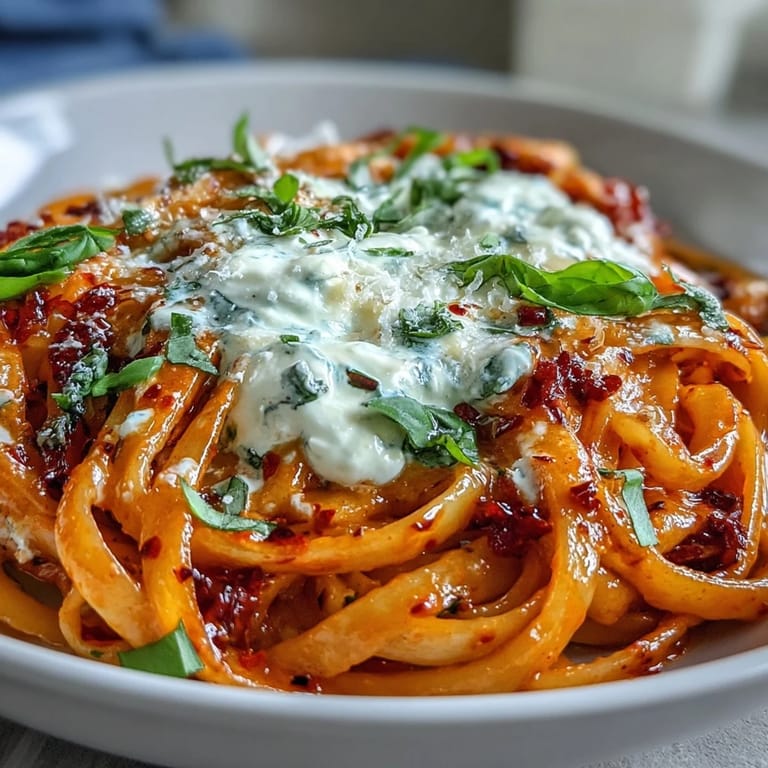
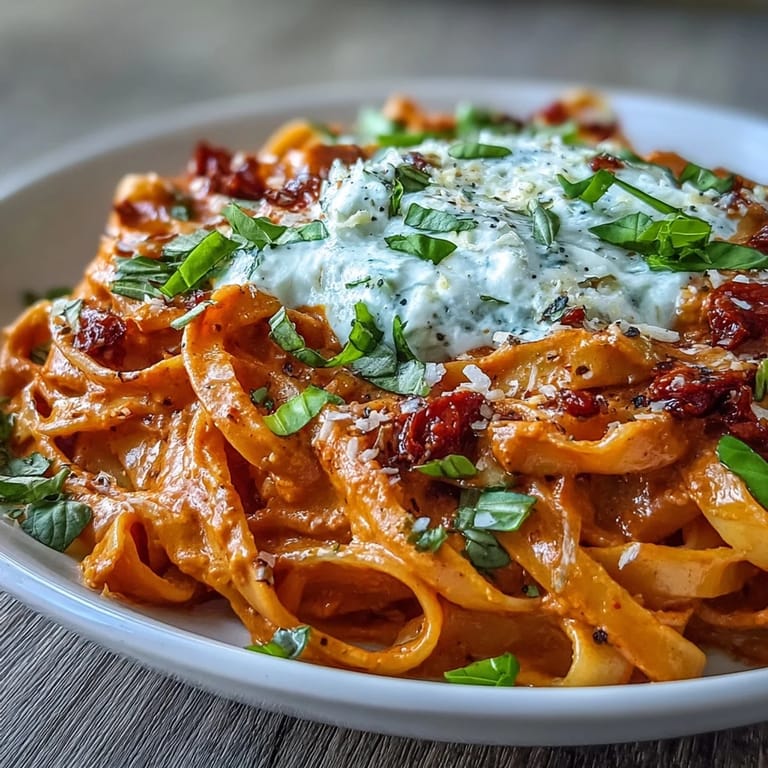
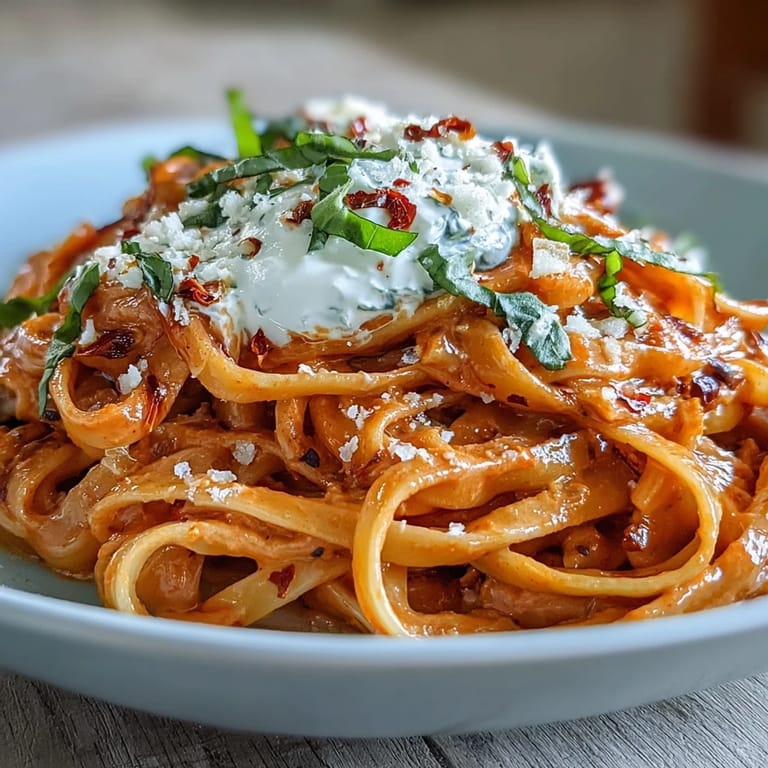
- Portion the creamy pasta into serving bowls while it's still warm, then tear burrata cheese directly over each bowl, letting the pieces scatter and partially sink. The warm pasta will soften the cheese just enough so it becomes part of the dish rather than a topping.
- Finish and serve immediately:
- Tear fresh basil over everything, add a pinch of Parmesan if you like, and serve right away while the burrata is still creamy and the pasta is warm. Waiting more than a few minutes will let the cheese firm up and lose its magic.
 Save to Pinterest
 What struck me most about cooking this dish wasn't the elegance or even the taste, but how forgiving it is—how it lets you exist in the kitchen without demanding precision, and then rewards you anyway. Food like this is a small rebellion against the idea that everything good requires suffering.
The Beauty of Roasted Red Peppers
Roasting peppers whole is a meditation if you let it be one—there's nothing to do but wait while the oven does the translating, turning raw vegetables into something sweet and concentrated. The char isn't just beautiful, it's flavor-building; those blackened patches develop a subtle smokiness that lingers in the background of the finished sauce. I learned this the hard way by trying to hurry the process with higher heat, which just dries out the peppers. The slow roast at 400°F is actually kindness.
Why Burrata Changes Everything
Regular mozzarella would be good, but burrata is what makes people pause mid-bite and ask what just happened. The difference is in the center—those delicate strands of curd surrounded by cream, which melt into the warm pasta and become indistinguishable from luxury. Once you've experienced burrata warming into a creamy sauce, you'll understand why it's worth the small extra expense. Buy it from a source you trust because quality matters; a sad burrata is a missed opportunity.
Variations That Work
This recipe is a starting point, not a rule, and some of my best versions came from improvising with what I had on hand. A splash of white wine poured into the skillet before you add the sauce deepens everything; roasted garlic instead of raw garlic softens the bite; a torn anchovy fillet adds umami without tasting like fish. For protein, grilled chicken breast shredded over the top, pink shrimp sautéed separately, or even roasted chickpeas for staying vegetarian all belong here.
- Try a whisper of lemon zest in the sauce if your peppers taste flat—the citrus brightens without announcing itself.
- A few toasted pine nuts scattered on top add crunch and a buttery sweetness that plays beautifully with the cream.
- If you want heat, add red pepper flakes during the roasting, or finish with fresh chili slices so the heat stays bright instead of cooking into the sauce.
 Save to Pinterest
 This pasta has become one of those dishes I make when I want to feel capable and thoughtful without expending much effort, which might be the most honest definition of a recipe worth keeping. It's elegant enough that you'll serve it to people you want to impress, and simple enough that you'll actually make it on a regular Tuesday.
Common Recipe Questions
- → Can I make the sauce ahead of time?
Yes, the roasted red pepper sauce can be prepared up to 3 days in advance and stored in an airtight container in the refrigerator. Reheat gently before tossing with freshly cooked pasta for best results.
- → What pasta shapes work best?
Long noodles like spaghetti or fettuccine capture the silky sauce beautifully, while tube shapes such as penne allow the creamy pepper sauce to collect inside. Choose based on your preference—both deliver excellent results.
- → Can I use jarred roasted peppers?
Absolutely. Jarred roasted red peppers work well as a time-saver. Just drain them thoroughly before blending to maintain the sauce's velvety consistency without excess liquid affecting the final texture.
- → How do I store leftovers?
Store cooled pasta and sauce separately in airtight containers for up to 3 days. Reheat the sauce gently in a pan, then toss with warmed pasta. Add a splash of cream or pasta water to restore silky consistency if needed.
- → What can I substitute for burrata?
Fresh mozzarella cut into cubes offers similar mild creaminess, while ricotta dolloped on top provides a lighter alternative. For extra richness, try torn pieces of fresh stracciatella cheese.