 Save to Pinterest
 I discovered this pasta by accident one Tuesday evening when I had cottage cheese that needed using and absolutely no cream in the house. My blender was already out for something else, so I just threw the cottage cheese in with milk and garlic, hit blend, and walked away. When I came back, I had this impossibly silky sauce that tasted nothing like what I expected—it was rich, almost luxurious, and somehow didn't scream cottage cheese at all. My partner had seconds, then thirds, and suddenly this desperate weeknight solution became something I find myself craving.
The first time I made this for guests, I was nervous—telling people cottage cheese was my secret ingredient felt risky. But the moment someone asked for the recipe, I knew I'd stumbled onto something worth keeping. Now it's the dish friends ask me to bring to potlucks, and I love watching their surprise when they realize what made it so creamy.
Ingredients
- Whole wheat or regular pasta (12 oz): Choose shapes like penne or fusilli that hold onto sauce in all their curves and ridges.
- Low-fat cottage cheese (1 1/2 cups): The star of the show—it blends into something so smooth you'd swear it was cream, and it brings real protein to the table.
- Milk (1/2 cup): Dairy or plant-based both work, but this is what makes the sauce flow and coat the pasta instead of sitting heavy.
- Grated Parmesan cheese (1/4 cup): This adds the savory depth that makes people ask what's in your sauce.
- Garlic (2 cloves): Minced or whole, it flavors the entire sauce from the inside.
- Extra-virgin olive oil (2 tbsp): A good one matters here—it rounds out the flavor and keeps things silky.
- Salt and pepper: Season to your taste; I've learned that cottage cheese sauce needs a little more salt than you'd think.
- Red pepper flakes (pinch, optional): A tiny pinch adds a whisper of heat that livens everything up.
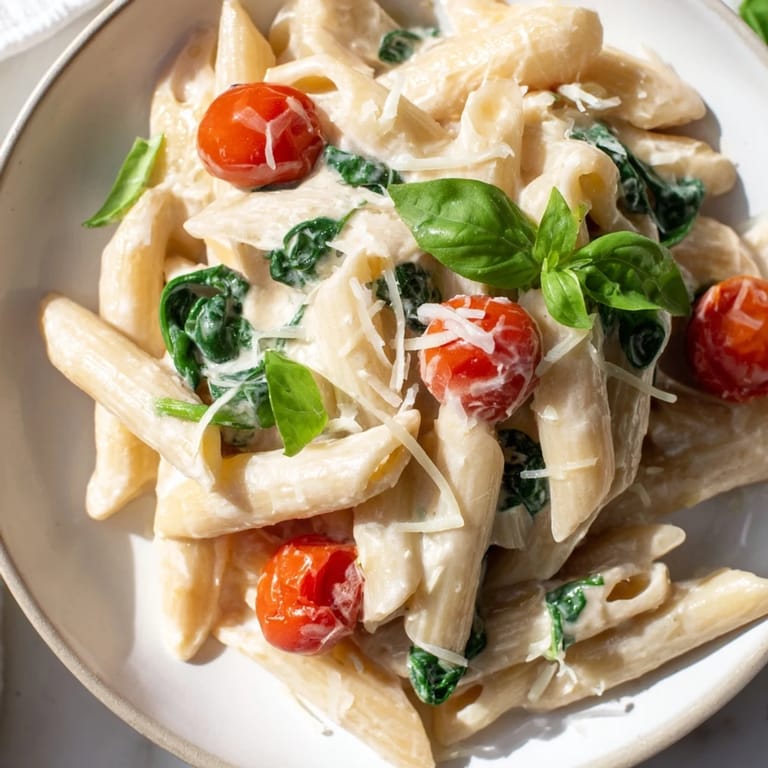
- Baby spinach (2 cups, optional): Wilts into the sauce in seconds and sneaks vegetables into what feels like pure comfort food.
- Cherry tomatoes (1/2 cup, halved, optional): They burst slightly when warm and add brightness against the creamy sauce.
- Fresh basil and extra Parmesan for garnish: These finish the dish with color and flavor you can actually see.
Tired of Takeout? 🥡
Get 10 meals you can make faster than delivery arrives. Seriously.
One email. No spam. Unsubscribe anytime.
Instructions
- Cook the pasta:
- Get a pot of salted water boiling and cook your pasta until it's tender but still has a little resistance when you bite it. Before you drain it, scoop out about half a cup of that starchy cooking water—you'll need it to adjust your sauce later.
- Make the sauce:
- While the pasta cooks, put the cottage cheese, milk, Parmesan, garlic, olive oil, salt, pepper, and red pepper flakes into your blender or food processor. Blend it for a full minute or two until there are absolutely no lumps and it looks creamy and uniform.
- Bring it together:
- Put your drained pasta back in the pot over low heat, pour that sauce over it, and toss gently, adding reserved pasta water a splash at a time until the sauce coats everything and moves around freely.
- Add the greens:
- If you're using spinach and tomatoes, stir them in now and let them warm through for just a minute or two—the spinach will soften into the sauce and the tomatoes will release their juices.
- Plate and serve:
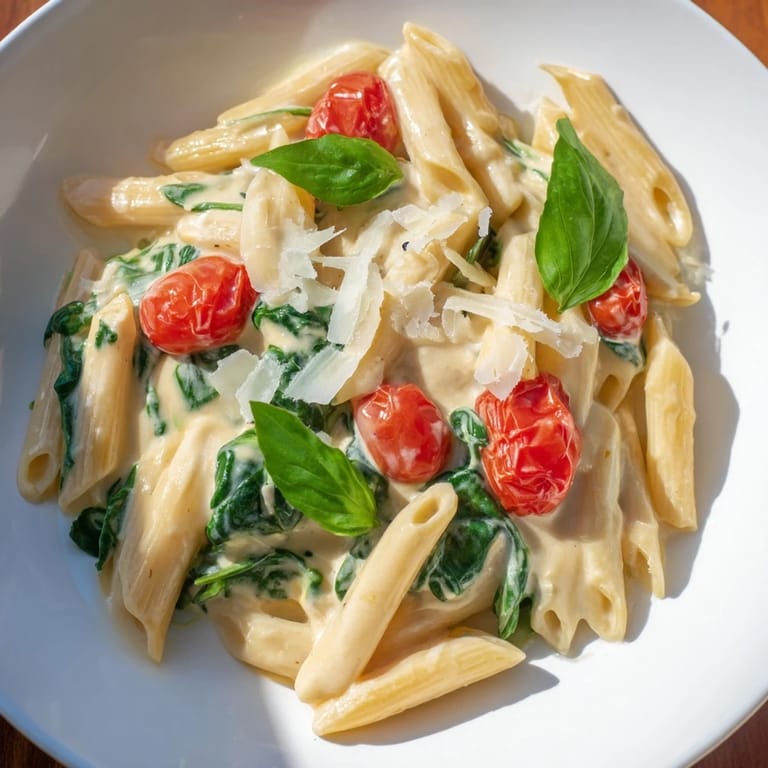
- Divide it among bowls while it's still hot, tear some fresh basil over the top, and finish with another shower of Parmesan.
 Save to Pinterest
 There's something about watching someone taste this for the first time and their face just shift with surprise. It happened when my mom tried it and said, 'This tastes expensive,' which absolutely made my week. A simple pasta dish became proof that the most satisfying meals don't need a long ingredient list.
How to Customize It
This sauce is honestly a blank canvas. I've stirred in roasted red peppers, diced zucchini, even mushrooms that I'd cooked down with a little garlic first. Add cooked chicken breast or sautéed tofu if you want even more protein, or swap the spinach for kale if that's what you have on hand. The beauty is that nothing fights with the sauce—everything seems to belong.
Why Cottage Cheese Works
Most creamy pasta sauces are built on cream or butter, which feel amazing but also kind of anchor you after eating. Blended cottage cheese gives you all that silky richness without the heaviness, and it brings genuine protein that actually makes you feel fuller longer. I used to think cottage cheese was just for breakfast or salads, but blended it becomes something almost unrecognizable—smooth, sophisticated, and honestly hard to believe isn't actual cream.
Storage and Reheating
Leftovers keep in the fridge for about three days, though the pasta will absorb more sauce as it sits. When you reheat it, do so gently over low heat with a splash of milk stirred in, because the sauce can tighten up when it cools. You can also freeze just the sauce and make fresh pasta to go with it whenever you need a quick dinner.
- Store in an airtight container and let it cool completely before refrigerating.
- Reheat gently on the stove, never in the microwave where it seizes up.
- If you're freezing, skip the pasta and sauce it fresh when you want to eat it.
 Save to Pinterest
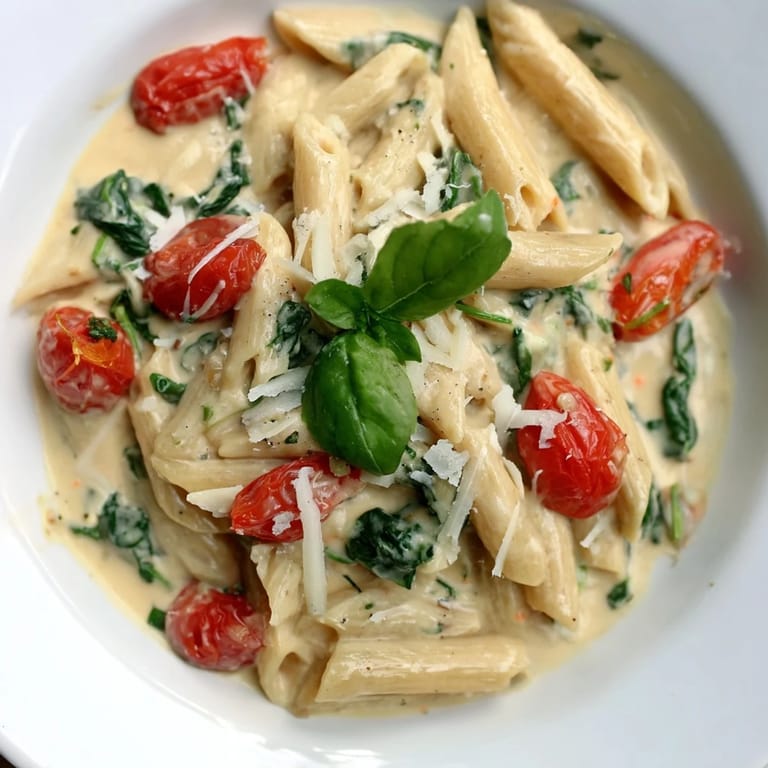
 This pasta turned into one of those dishes I make when I need something that feels like being taken care of, but I'm the one doing the caring. It's become my answer to the question I ask myself most nights: what can I make that feels special but doesn't require special effort?
Common Recipe Questions
- → What type of pasta works best?
Whole wheat varieties like penne or fusilli hold the creamy sauce well, but any preferred shape can be used. Gluten-free pasta is also suitable.
- → Can I use a non-dairy milk alternative?
Yes, unsweetened plant-based milks such as almond or oat milk blend smoothly to maintain the sauce's creamy texture.
- → How do I make the sauce extra creamy?
Blending cottage cheese with milk, Parmesan, and olive oil creates a velvety sauce. Adding reserved pasta water while tossing pasta helps achieve the perfect consistency.
- → Are vegetables necessary?
Vegetables like spinach and cherry tomatoes add freshness, but the dish works well without them or with alternatives like arugula or kale.
- → Can I add more protein?
Incorporate cooked chicken breast or sautéed tofu cubes to boost protein content and vary textures.