 Save to Pinterest
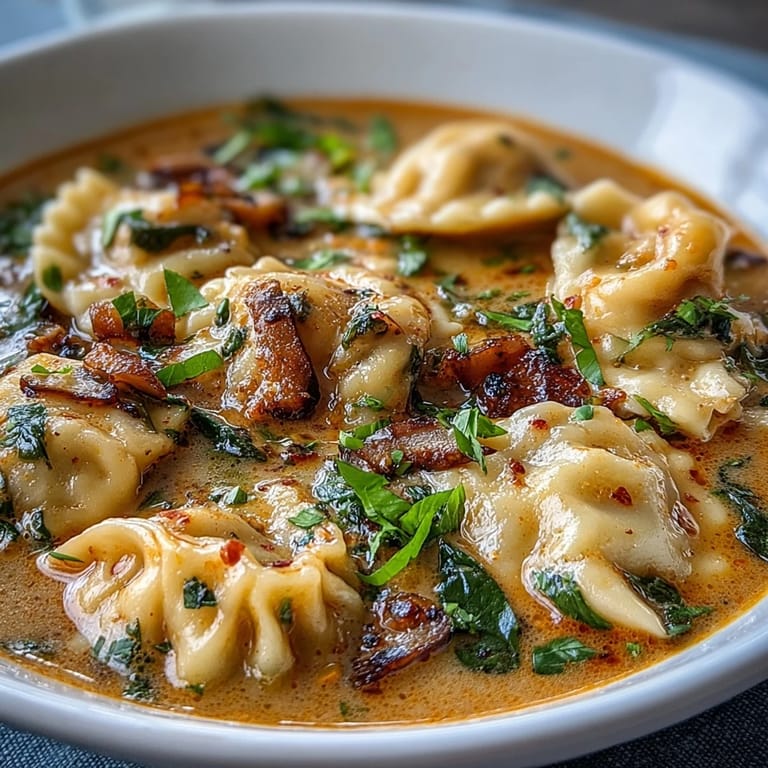
 There's something about a pot of coconut curry soup that transforms a quiet Tuesday night into something worth celebrating. I discovered this combination while standing in my kitchen at dusk, staring at a bag of frozen dumplings and wondering if they'd survive a bold Thai broth—they didn't just survive, they became the whole reason to make this soup again and again. The beauty of this dish is that it comes together faster than you'd expect, yet tastes like you've been simmering spices all afternoon.
I made this for my sister during her first week after moving to the city, when she was tired and overwhelmed and needed something that felt like care in a bowl. She ate two servings in silence, then looked up and asked for the recipe before she'd even finished. That's when I knew this wasn't just dinner—it was the kind of food that says I'm thinking of you without needing words.
Ingredients
- Avocado oil: Medium-high smoke point and neutral flavor, so it gets out of the way and lets the coconut and curry shine.
- Diced onion: The foundation of everything—these should soften until they're almost invisible but their sweetness is everywhere.
- Scallions: Split them early, whites for the base and greens for fresh finish, because this small detail makes the soup taste brighter.
- Minced garlic: Fresh is non-negotiable here; it'll perfume your whole kitchen.
- Cremini mushrooms: They add umami depth that makes the broth taste less like soup and more like something you've been building for hours.
- Red Thai curry paste: This is the backbone—look for a brand with minimal ingredients, and taste it before you buy to know what you're getting.
- Soy sauce: Just a teaspoon, but it rounds out all the other flavors and makes them louder.
- Sugar: A tiny pinch to balance the heat and salt; trust this even if it sounds odd.
- Vegetable broth: Quality matters here because it's your liquid foundation—use something you'd actually drink on its own.
- Full-fat coconut milk: Never the light version for this; you want that richness and body that only the full-fat can give.
- Frozen vegan dumplings: Any brand works, but buy ones you actually like eating because they're the star that floats in your bowl.
- Chili oil: Store-bought is fine, or make your own if you're feeling ambitious; this is where the heat and finish come from.
- Fresh cilantro: A handful torn just before serving—it brings everything alive.
- Crunchy garlic: Crispy, golden, almost scorched; it's the textural surprise that makes people pause mid-spoonful.
Tired of Takeout? 🥡
Get 10 meals you can make faster than delivery arrives. Seriously.
One email. No spam. Unsubscribe anytime.
Instructions
- Build your flavor base:
- Heat the oil over medium-low and let the onions, scallion whites, and garlic slowly soften together for 5 to 7 minutes, stirring every so often. You're listening for the sizzle to quiet down and watching for that moment when the onions turn golden and start to smell almost sweet—that's when you know they're ready.
- Add the mushrooms:
- Stir them in and let them release their moisture, about 3 to 4 minutes, until they've shrunk and the pan looks almost dry. This concentrates their flavor instead of diluting it.
- Toast the curry:
- Add the curry paste, soy sauce, and sugar, and stir for just one minute so the paste loses its raw edge. You'll smell the shift immediately—it becomes rounder and more inviting.
- Bring in the liquid:
- Pour in the vegetable broth and let it come to a gentle simmer, then add the coconut milk slowly, stirring until it's completely smooth. The color will shift to a warm, creamy golden-orange.
- Cook the dumplings:
- Add the frozen dumplings directly to the simmering broth—no need to thaw—and let them cook for 7 minutes until they're tender and heated through. They'll float when they're ready.
- Finish and serve:
- Ladle the soup into bowls and top each one with a drizzle of chili oil, a scatter of cilantro, those reserved scallion greens, and a generous pinch of crunchy garlic. The toppings are where the texture and final heat come in.
 Save to Pinterest
 My friend came over on a rainy evening when she was nursing a cold, and this soup did something I didn't expect—it made her actually want to eat instead of just politely pushing food around a bowl. By the second bowl, she was asking about the crunchy garlic, then the chili oil, then whether I'd made the dumplings from scratch, and suddenly we were laughing and talking like the weather outside didn't matter anymore.
The Magic of Coconut and Curry
There's a reason Thai curry and coconut milk exist together in so many cuisines—coconut's subtle sweetness mellows the intensity of the spices while keeping them bold enough to matter. This soup proves that balance; it's hot but not aggressive, creamy but not heavy, and filling without being dense. The curry paste does the real work, so choose one you like the smell of straight from the jar.
Dumplings as the Anchor
Those frozen dumplings aren't just a shortcut; they're actually the best vehicle for delivering all that broth directly to your mouth with every bite. They soften in the warm liquid, absorb the curry and coconut, and become something far better than they would be pan-fried or steamed alone. I used to think dumplings were a side dish until I made this soup and realized they could be the whole reason you're eating.
Building Texture and Final Flavor
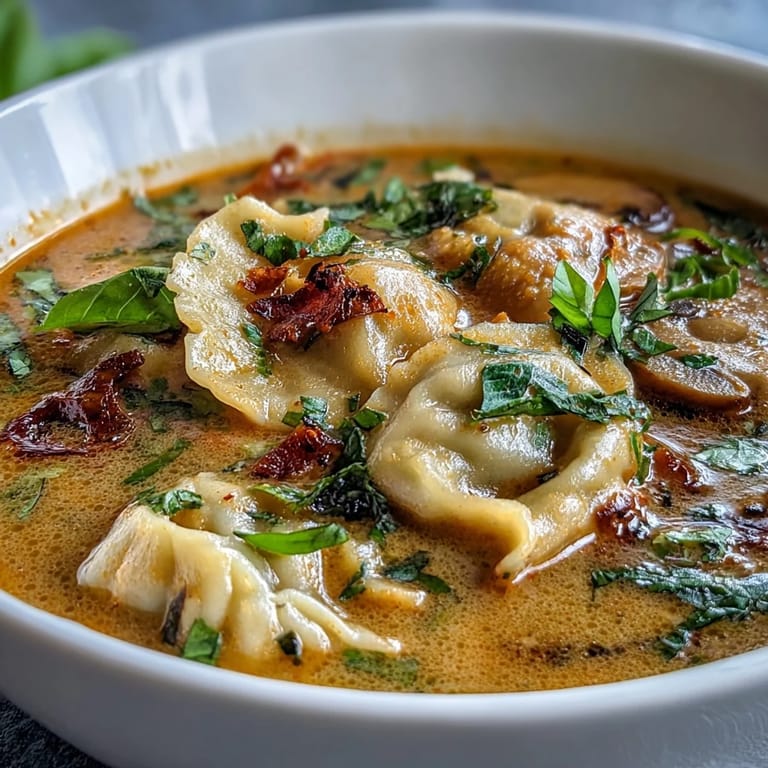
The difference between a good bowl of this soup and a great one lives entirely in the garnish—each topping does something different and necessary. The cilantro brings fresh green brightness, the scallions add a subtle onion bite, and the crunchy garlic is your textural anchor that makes your spoon pause. Don't skip any of it, and don't add it until the moment you serve, because the second it hits the hot broth, it softens and loses its purpose.
- Make the crunchy garlic ahead if you can; frying thin garlic slices in oil until they're golden takes focus and your full attention.
- If cilantro tastes like soap to you, swap it for basil or mint—Thai soups are flexible as long as you add something fresh.
- Keep the chili oil near your bowl so you can adjust the heat to your preference; some people want a whisper, others want fire.
 Save to Pinterest
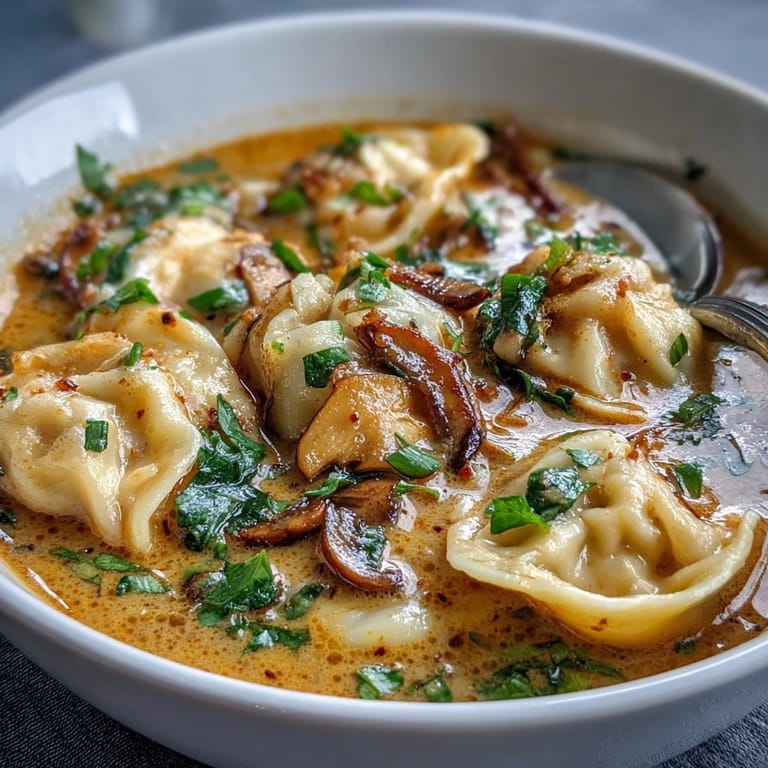
 This soup has become my answer to almost everything—a bad day at work, a friend stopping by unannounced, a Wednesday when I want something that tastes like I tried without actually having tried very hard. It's proof that good food doesn't require hours or an endless ingredient list, just intention and the willingness to let bold flavors do their job.
Common Recipe Questions
- → Can I use fresh dumplings instead of frozen?
Yes, fresh dumplings work well. Reduce cooking time to 4-5 minutes since they don't need to thaw. Add them when the broth is gently simmering, not at a full boil, to prevent breaking apart.
- → How can I make this gluten-free?
Substitute tamari for soy sauce and verify your dumplings are certified gluten-free. Also check the red curry paste label, as some brands contain wheat-based ingredients as thickeners.
- → Can I make this soup ahead of time?
The soup base stores well refrigerated for up to 3 days. However, add dumplings fresh when reheating, as they can become mushy if sitting in liquid too long. Reheat the base gently before adding dumplings.
- → What vegetables can I add for more variety?
Baby spinach, bok choy, snow peas, bell peppers, or carrots work beautifully. Add heartier vegetables like carrots during the initial sauté, and quick-cooking greens like spinach during the last 2 minutes of simmering.
- → How spicy is this soup?
The base has mild to medium heat from the red curry paste. Adjust spice level by adding more or less curry paste initially, then customize individual bowls with chili oil garnish. Start with less if you're sensitive to heat.