 Save to Pinterest
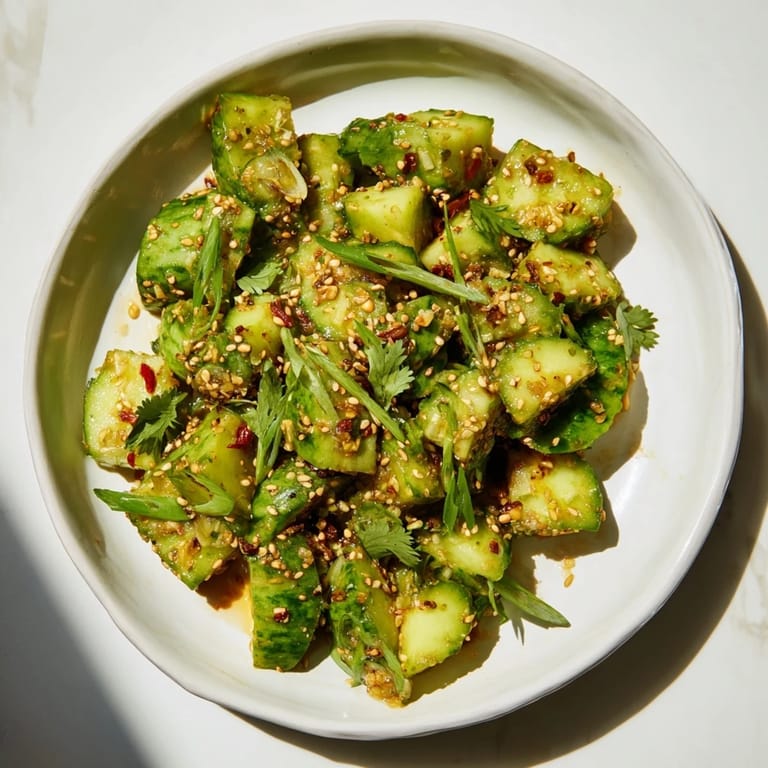
 There's this moment in every Chinese restaurant when you order smashed cucumber salad and the waiter sets it down with a satisfying smack—the sound alone tells you something good is about to happen. Years ago, I tried to replicate it at home and kept slicing the cucumbers neatly like a precision machine until my friend laughed and showed me the real trick: just whack them with the flat of your knife and let them crack naturally. That one gesture changed everything about how I approached this dish.
I made this for a potluck once and watched people bypass the elaborate casseroles to circle back to the cucumber salad three times over. One guest asked for the recipe with such genuine surprise in her voice—like she'd discovered something she didn't know she needed. Now it's become my default dish to bring when I'm not sure what will go with everything else on the table.
Ingredients
- English cucumbers (2 large, about 500 g): These long, thin varieties have fewer seeds and thinner skin than regular cucumbers, so you get pure crunch without watery pulp getting in the way of the flavors.
- Soy sauce (2 tablespoons): Use full-sodium soy sauce here—it's your foundation, and light versions tend to taste thin and salty without depth.
- Rice vinegar (1 tablespoon): This brings gentle acidity without the aggressive bite of regular vinegar; it lets the garlic and sesame shine.
- Toasted sesame oil (1 tablespoon): Don't skip the toasted version—regular sesame oil tastes pale and one-dimensional by comparison, and toasted gives you that warm, nutty backbone.
- Chili flakes (1–2 teaspoons): Start with 1 teaspoon if you're unsure; you can always sprinkle more on your portion, but you can't take it back once it's in the bowl.
- Garlic (2 cloves, finely minced): Fresh garlic is essential here—jarred or powdered versions won't give you that raw, crisp punch that cuts through the richness of the sesame oil.
- Sugar (1 teaspoon): Just a touch to round out the flavors and let the salt and soy sauce blend harmoniously.
- Salt (1/4 teaspoon): This is for the dressing; you'll also salt the cucumbers separately to draw out moisture.
- Scallions (2, thinly sliced): The brightness and slight onion bite keeps the salad from feeling heavy, especially if you've made it a few hours ahead.
- Toasted sesame seeds (1 tablespoon) and cilantro (optional): Sesame seeds add visual contrast and textural interest; cilantro is optional but pushes everything into fresher territory if you like herbaceous notes.
Tired of Takeout? 🥡
Get 10 meals you can make faster than delivery arrives. Seriously.
One email. No spam. Unsubscribe anytime.
Instructions
- Smash the cucumbers:
- Lay them flat on your cutting board and press down hard with the flat side of a chef's knife, using your body weight to crack them open. You'll hear and feel them give way, which is satisfying every single time.
- Cut into pieces:
- Tear or cut the smashed pieces into bite-sized chunks that will hold the dressing without being so small they disappear.
- Draw out the water:
- Put the cucumber pieces in a colander, sprinkle with salt, and let them sit for 10 minutes while the salt pulls out excess moisture. This step is what separates a watery salad from one with real presence.
- Pat dry:
- After draining, gently press the cucumbers with paper towels to remove lingering moisture without bruising them.
- Make the dressing:
- In a large bowl, whisk together soy sauce, rice vinegar, sesame oil, chili flakes, minced garlic, and sugar until the sugar dissolves completely. Taste and adjust the heat level before adding the cucumbers.
- Toss everything together:
- Add the drained cucumbers and sliced scallions to the dressing and toss gently but thoroughly so every piece gets coated.
- Garnish and serve:
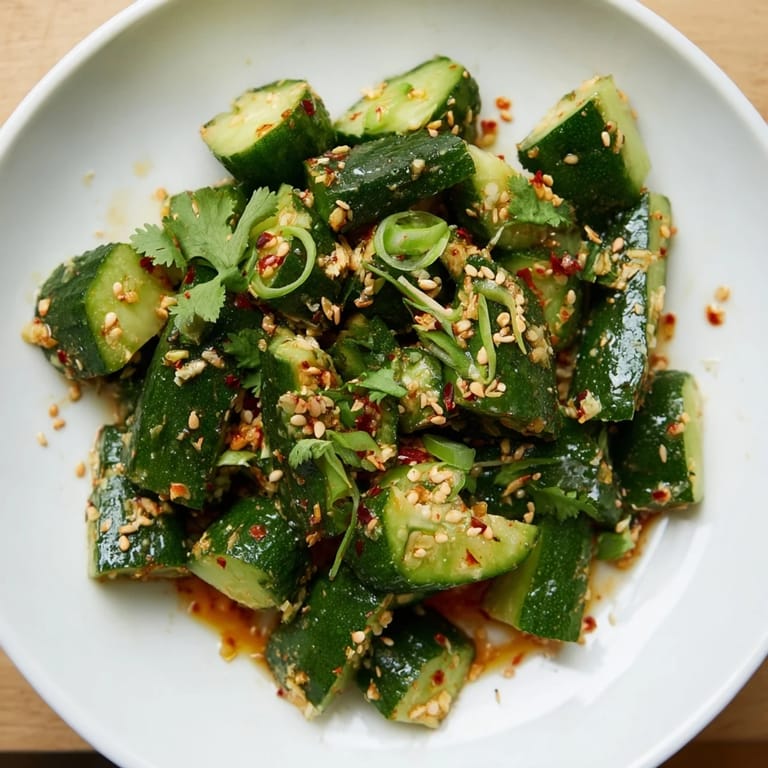
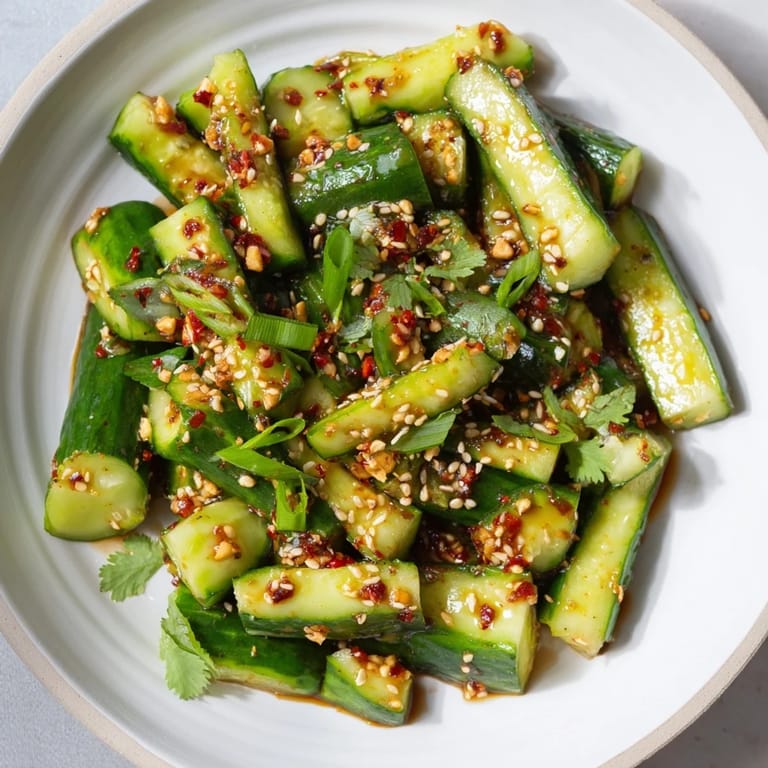
- Transfer to a serving platter and sprinkle with toasted sesame seeds and cilantro if you're using it. Serve right away for maximum crunch, or chill for 10–15 minutes if you prefer the flavors mellowed slightly and everything softer.
 Save to Pinterest
 I realized this dish was special when my partner started requesting it alongside ordinary weeknight dinners instead of treating it as a restaurant-only luxury. It became the thing we'd make when we wanted something that felt restaurant-quality but didn't require planning or stress.
Temperature and Timing
Cold is the natural state for this salad, but you have real flexibility. Serve it immediately and the sesame oil stays viscous and the cucumbers are at peak crunch. Chill it for 10–15 minutes and the flavors deepen, the garlic becomes less raw, and the textures soften slightly—it becomes a more meditative bite. Either way is correct; it just depends on your mood and what you're serving alongside it.
Customizing the Heat and Flavor
This is one of those recipes where you can actually taste your own preferences taking shape. The chili flakes are a starting point, not a ceiling—some people I know add a splash of chili oil for extra depth, while others stick with just 1 teaspoon because they're heat-sensitive. The ratio of vinegar to soy sauce can shift too; if you like things more acidic and bright, bump the rice vinegar to 1.5 tablespoons and pull back slightly on the soy sauce.
Make-Ahead and Storage
This salad is best eaten the day you make it, while the cucumbers still have their snap and the sesame oil hasn't lost its character to oxidation. That said, it holds reasonably well in the refrigerator for a day if you keep the dressing and cucumbers separate until just before serving. The scallions and sesame seeds should always go on last.
- Store drained cucumbers and dressing in separate containers if you're prepping ahead, then toss them together when you're ready to eat.
- English or Persian cucumbers stay crunchier longer than regular varieties, so choose them if you're planning to store this for even half a day.
- Refresh a slightly softened salad with a sprinkle of fresh sesame seeds and a handful of cilantro just before serving—it won't fully recover its crunch, but it will taste bright again.
 Save to Pinterest
 This is the kind of dish that reminds you that the best meals don't have to be complicated or time-consuming. It's proof that respecting your ingredients and knowing when to use restraint creates something that tastes far more sophisticated than the effort requires.