 Save to Pinterest
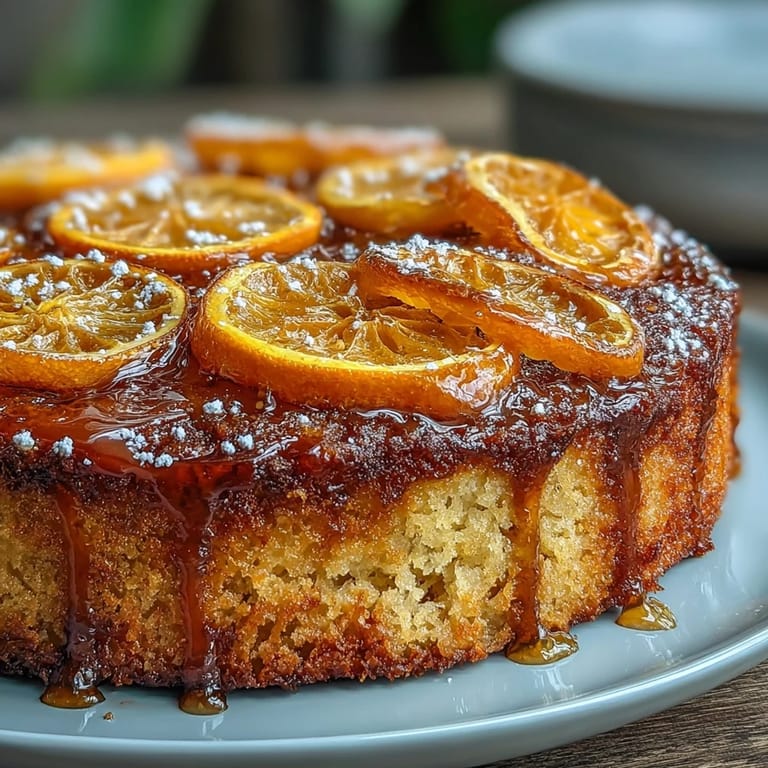
 A friend handed me a jar of homemade candied oranges last winter, and I stared at it for three days wondering what to do with something so beautiful and purposeful. Then one quiet Sunday morning, the answer arrived: a cake that would let those glossy, translucent slices shine while cushioning them in something tender and alive with olive oil. The first slice I cut revealed those amber circles suspended like stained glass, and I understood immediately why she'd bothered making them in the first place.
I made this for my mother's book club and watched three women go completely quiet mid-conversation when they took their first bite. That silence meant more than any compliment, and now when they gather here, someone always asks if I'm making the orange cake again.
Ingredients
- Candied Oranges: These aren't a shortcut; they're the soul of the cake, so don't skip them or substitute with store-bought versions that taste like rubber.
- Almond flour: The secret to keeping this cake moist without heaviness; it creates a tender crumb that regular flour simply cannot match.
- Extra-virgin olive oil: Use one you actually like drinking, because this is not the moment for harsh or rancid oils to ruin your work.
- Greek yogurt: This keeps the cake tender and adds a subtle tang that balances the sweetness of the candied oranges.
- Orange zest: Fresh zest from an unsprayed orange makes all the difference; jarred won't deliver the same bright, living flavor.
- Eggs at room temperature: Cold eggs are stubborn and don't incorporate smoothly, so pull them out of the fridge while you prep everything else.
- Gluten-free flour blend: If you're going that route, check that it includes xanthan gum or your cake might feel gritty.
Tired of Takeout? 🥡
Get 10 meals you can make faster than delivery arrives. Seriously.
One email. No spam. Unsubscribe anytime.
Instructions
- Candy the oranges with patience:
- Combine sugar and water in a medium saucepan and let the heat do the work—once it simmers, add your orange slices in a single layer and resist the urge to rush. Gently turn them every few minutes so they candy evenly, and you'll know they're ready when they turn glossy and almost translucent, about 20 to 25 minutes. Spread them on parchment to cool completely; they'll crisp up slightly and become easier to handle.
- Set up your pan with intention:
- Grease a 9-inch round cake pan thoroughly and line the bottom with parchment, then arrange those cooled candied orange slices in a single overlapping layer. This isn't just decoration—it's the first thing people see when you turn the cake out, so take a moment to make it look like something you meant to do.
- Combine your dry ingredients:
- Whisk together almond flour, gluten-free flour, baking powder, and salt in a large bowl until everything is evenly distributed. The whisking aerates the almond flour slightly and helps your cake rise more reliably.
- Build the wet mixture into something pale:
- Beat your room-temperature eggs with sugar until the mixture turns pale and slightly thickened, which takes about 2 to 3 minutes of steady beating. Then slowly whisk in your olive oil, Greek yogurt, orange zest, and vanilla, watching as the batter becomes smooth and glossy.
- Fold with a gentle hand:
- Pour the wet mixture into your dry ingredients and fold everything together using a spatula, stopping the moment you don't see any streaks of flour. Overmixing toughens the cake, so resist the urge to be thorough here.
- Transfer and bake:
- Pour your batter over the candied oranges and smooth the top with the back of your spatula, then slide the pan into your preheated 350°F oven. Bake for 40 to 45 minutes, until a toothpick inserted in the center comes out clean or with just a few moist crumbs clinging to it.
- Cool and unmold with confidence:
- Let the cake cool in the pan for exactly 10 minutes—not more, not less—then run a thin knife around the edges and invert it onto a serving plate. Peel away the parchment slowly to reveal those amber orange slices now firmly attached to the top of your cake.
 Save to Pinterest
 My neighbor tasted this cake and asked me to bake one for her daughter's wedding dessert table, and suddenly something I made on a Sunday morning became part of someone's marriage story. I'll never know if anyone else even remembers the cake, but I do, and that's enough.
The Story of Candied Citrus
Candying oranges used to feel like a luxury only fancy bakeries could justify, but once you realize it's just patience and heat, you start doing it all the time. I've learned that the thinner you slice your oranges, the faster they candy and the more elegant they look—thick slices turn chewy and tough. The syrup they're cooked in doesn't have to be thrown away either; it makes exceptional tea when you thin it with hot water.
Why Almond Flour Changes Everything
The first time I used almond flour in a cake, I was skeptical because I thought it would taste like marzipan, which it doesn't. Instead, it creates a tender, almost buttery crumb that makes regular flour cakes feel grainy by comparison. When you combine it with Greek yogurt and olive oil, you get something that stays moist for days without tasting greasy or heavy.
Making This Cake Your Own
Once you've made this cake once, you'll start seeing possibilities everywhere. Blood oranges in winter give you a dramatic color that catches the light differently; lemon adds a sharper brightness if you want something more tart. Some people brush a light honey glaze on top while it's still warm, which gives the cake an extra layer of shine and keeps it moist even longer.
- Dust the finished cake with powdered sugar just before serving so it doesn't absorb moisture and disappear into the crumb.
- A dollop of whipped cream or crème fraîche on the side transforms the whole experience from afternoon cake to actual dessert.
- This cake is forgiving enough to travel, so wrap it well and take it to someone who needs cheering up.
 Save to Pinterest
 This cake became one of those recipes I reach for when I want to feel like I'm taking care of people through something tangible and delicious. It's the kind of cake that invites second slices.
Common Recipe Questions
- → How do I prepare the candied oranges?
Simmer thinly sliced oranges in a sugar-water solution until translucent, about 20-25 minutes, turning occasionally. Then cool before use.
- → Can I substitute the almond flour?
Almond flour contributes nuttiness and moisture. For texture variation, you may experiment with other nut flours but expect flavor differences.
- → What is the role of olive oil in this cake?
Olive oil adds a rich, fruity depth and keeps the cake moist with a tender crumb.
- → How do I know when the cake is done baking?
Insert a toothpick into the center; it should come out clean or with a few moist crumbs, meaning the cake is fully baked.
- → Can this be made dairy-free?
Yes, substitute Greek yogurt with a dairy-free alternative to suit dietary needs while maintaining moisture.
- → What is the best way to store the cake?
Keep the cake covered at room temperature for up to 2 days to preserve freshness and texture.