 Save to Pinterest
 The first time I saw a lattice actually made from food instead of woven into pie crust, I was mesmerized. My neighbor brought this to a spring potluck, and I watched people hesitate before eating it—they almost felt bad disrupting something so carefully arranged. That moment taught me that sometimes the most impressive dishes are the ones that make you pause and appreciate the craft before you taste them.
I made this for a brunch where my mother-in-law was trying to eat more vegetables, and she actually went back for seconds. She kept saying she liked how the asparagus tasted green and fresh instead of overcooked, and that was when I realized the blanching timing was everything—those 1-2 minutes made all the difference between impressive and mediocre.
Ingredients
- 16 medium asparagus stalks: Choose ones that are tender but still firm; thinner stalks are easier to weave and won't snap as you build your grid.
- 16 fresh chives, long stems: These become your edible ties that hold the whole structure together, so pick the longest ones you can find.
- Blueberries, raspberries, strawberries, and golden berries: A mix of sizes and colors makes the squares feel alive; use whatever's in season and tastes bright.
- Extra virgin olive oil: The good kind matters here since there's nowhere for it to hide—it's one of your only seasonings.
- Flaky sea salt and freshly ground black pepper: These finish the dish with a whisper of seasoning that lets the vegetables and fruit speak for themselves.
Tired of Takeout? 🥡
Get 10 meals you can make faster than delivery arrives. Seriously.
One email. No spam. Unsubscribe anytime.
Instructions
- Blanch the asparagus until it's bright green:
- Boil salted water and add your asparagus, watching it go from dull to a vivid green in just 1-2 minutes. Transfer it immediately to an ice bath—you'll hear the sizzle, and that's exactly what you want because it stops the cooking dead and keeps that fresh crunch alive.
- Soften the chives with heat:
- Dip each chive stem into hot water for just 5 seconds until they become pliable enough to tie without snapping. The ice bath afterward keeps them from cooking further and preserves their delicate onion flavor.
- Lay down your foundation:
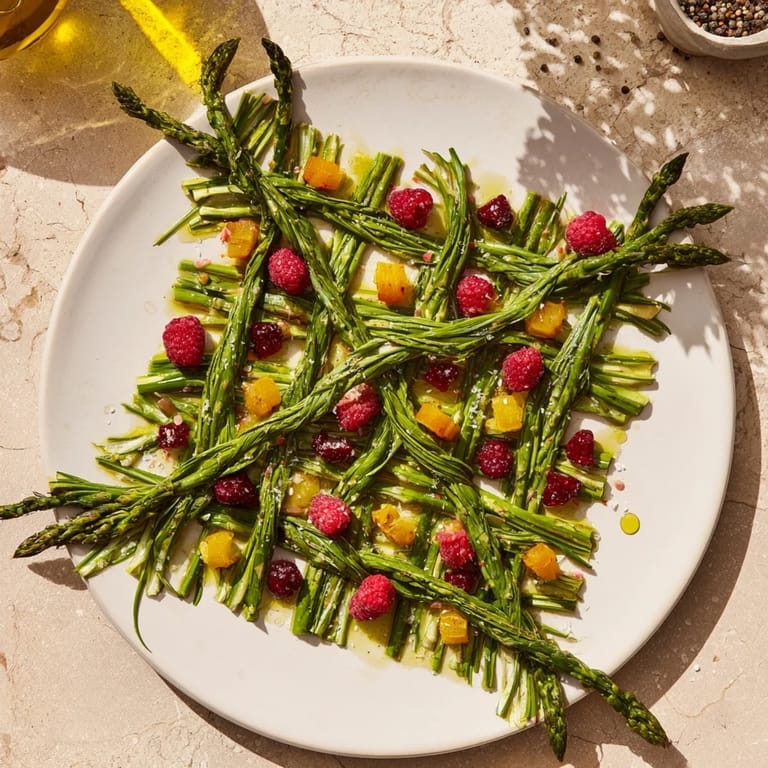
- On your platter, space 8 asparagus stalks parallel to each other with about 1 inch between them, like train tracks. This becomes your base layer, and getting the spacing even now makes the weaving smoother.
- Weave the perpendicular layer:
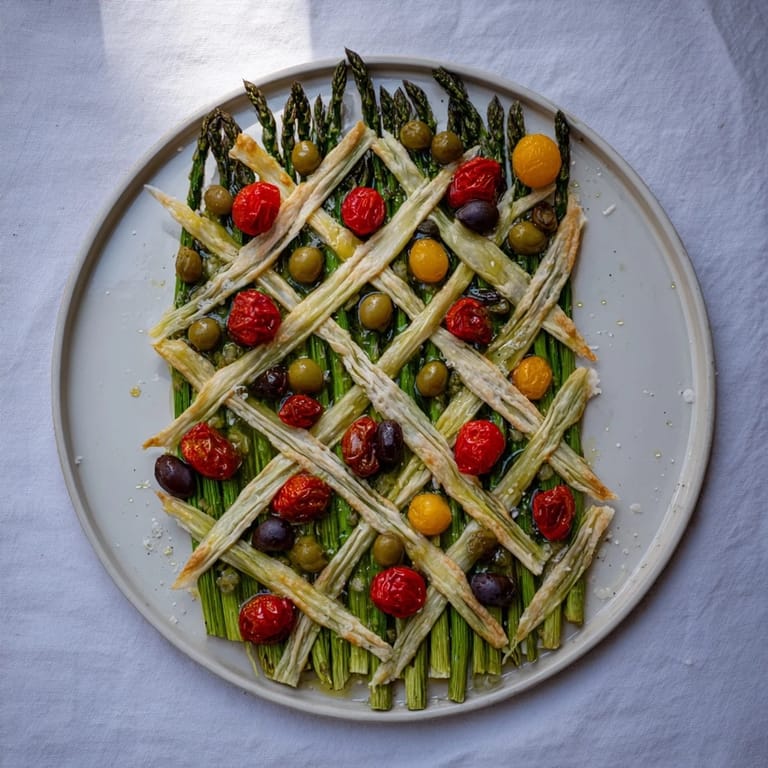
- Take the remaining 8 stalks and weave them over and under the first layer to create a grid pattern, alternating which stalks go on top. It feels like puzzle work, and you'll know you're doing it right when the lattice starts looking intentional instead of chaotic.
- Tie the intersections with chives:
- Where each asparagus stalk crosses another, gently loop a chive stem around the junction and tie a small knot. This is what keeps everything from sliding apart, so don't skip it even if it feels tedious.
- Fill the squares with berries:
- Nestle your mixed berries into each open square of the lattice, creating pockets of color. Let some berries sit proud and visible, and press others gently so they nestle into the grid.
- Finish with oil, salt, and pepper:
- Drizzle the whole thing lightly with olive oil just before serving, then finish with a pinch of flaky sea salt and a few grinds of black pepper. Wait until the last moment so nothing gets soggy.
 Save to Pinterest
 When my daughter saw this on the table, she asked if it was okay to eat something that looked like art. I told her the best dishes are the ones that make you feel that way—and she understood completely.
Choosing Your Berries
The beauty of this dish is that you're not locked into one combination. I've made it with blackberries when that's what looked good at the market, and once I used pomegranate seeds because they were crimson and gorgeous. The only rule is that your berries need to be firm enough to nestle into the squares without falling apart—soft berries like raspberries are forgiving, but always taste as you go to make sure there's enough tartness to balance the delicate vegetables.
Timing and Make-Ahead Strategy
You can blanch the asparagus and soften the chives up to 8 hours ahead, storing them in the refrigerator on paper towels. The actual assembly takes only 10 minutes, so do that just before your guests arrive when everything is still crisp. If you're serving this at brunch, prep your vegetables in the morning and weave the lattice right before people sit down—the freshness is what makes it shine.
Serving Suggestions and Variations
Serve this chilled as a spring starter, or make it the showstopping centerpiece of a light brunch spread. For extra flavor, drizzle a touch of aged balsamic reduction around the platter, or scatter fresh mint leaves across the squares just before serving. You can even add a thin smear of herbed cream cheese underneath the lattice for richness, though I prefer letting the vegetables and berries take center stage.
- Try currants or chopped fresh apricots for a more unexpected flavor profile.
- If you want to make this ahead for a party, keep everything separate and assemble 30 minutes before guests arrive.
- This serves 4 as an appetizer, but doubles easily if you're feeding a crowd.
 Save to Pinterest
 This dish reminds me that cooking isn't always about complicated techniques or long ingredient lists—sometimes the magic is in seeing something ordinary transformed into something people want to admire before they eat it. That's a gift worth giving at any table.
Common Recipe Questions
- → How do I soften the chives without losing flavor?
Quickly dipping the chives in hot water for a few seconds and then cooling them in an ice bath softens their texture while preserving the fresh, mild flavor.
- → What’s the best way to keep the asparagus crisp and vibrant?
Blanch the asparagus briefly in boiling salted water, then immediately transfer to an ice bath to stop cooking and retain its bright green color and crispness.
- → Can I substitute the fruits used in the lattice?
Yes, small firm fruits like blackberries, red currants, or pomegranate seeds work well to maintain texture and add sweetness.
- → How should I season the assembled lattice for balanced flavor?
A light drizzle of extra virgin olive oil, a sprinkle of flaky sea salt, and a touch of freshly ground black pepper enhance the natural ingredients without overpowering them.
- → What occasions suit this botanical lattice presentation?
This visually striking dish is ideal for spring gatherings, brunches, or as a centerpiece starter that impresses guests with both appearance and taste.
- → Can the lattice be prepared ahead of time?
The asparagus and chives can be prepared in advance, but it’s best to assemble and fill the lattice shortly before serving to maintain freshness and texture.