 Save to Pinterest
 One Tuesday morning, I was rushing between meetings when I realized I'd forgotten to eat breakfast. I had eggs, a blender, and maybe ten minutes. What came out of that pan was nothing like the thick pancakes I'd made a hundred times—it was delicate, almost gauzy, and somehow felt fancy despite being thrown together in a panic. That first crepe changed how I think about eggs. Now, whenever I need something that feels both nourishing and special without the fuss, I reach for this recipe.
I made these for my sister when she was staying with me, and she wrapped one around some smoked salmon and avocado, then just sat at the kitchen counter eating it slowly, eyes closed. She didn't say much, but that quiet moment told me everything. Now whenever she visits, that's the first thing she asks for, and I always know exactly how she wants it.
Ingredients
- 4 large eggs: The foundation of everything—they're what transforms from ordinary to silky when blended properly, so don't skip the blender step or use whisking as a shortcut.
- 2 tablespoons water or milk: This thins the mixture just enough to spread thin, and honestly, water works just as well as milk and keeps things simple.
- Pinch of salt and black pepper: Season generously even at this stage; it flavors the crepe itself rather than just the fillings.
- 1 teaspoon olive oil or butter: Enough to coat the pan without making things heavy—use what you have on hand.
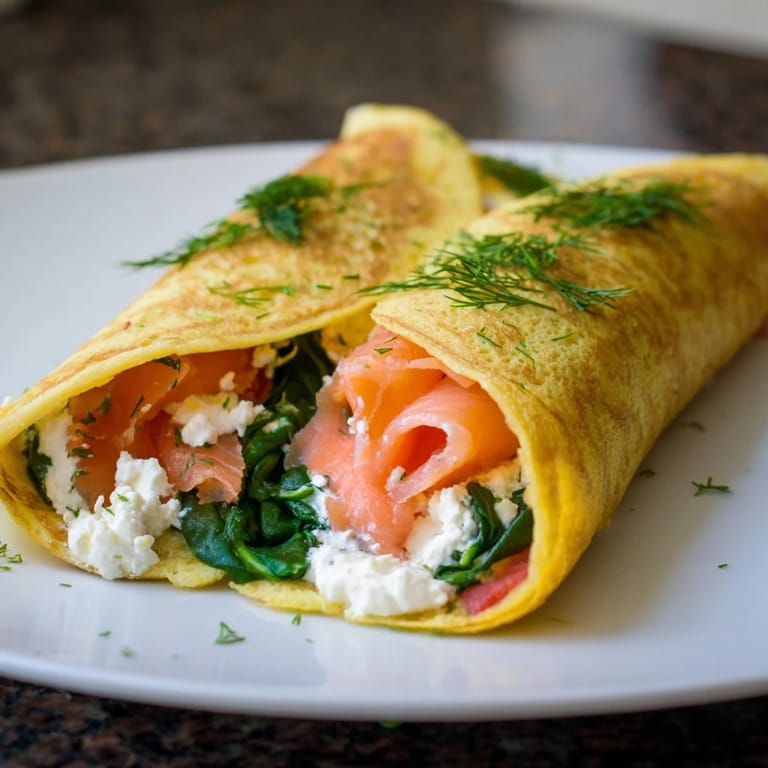
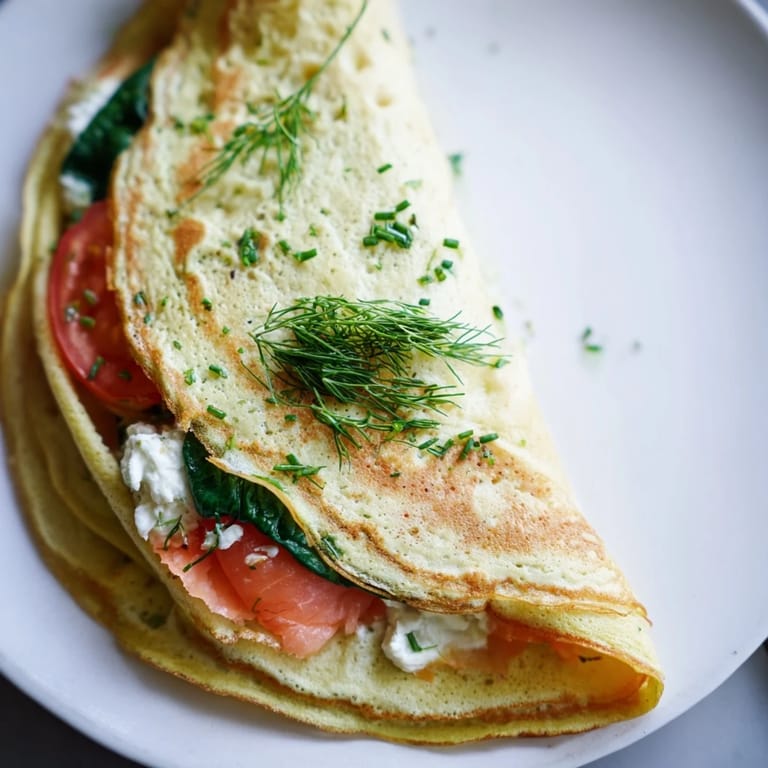
- Your choice of fillings: Baby spinach, smoked salmon, feta, tomato, avocado, fresh herbs—pick what excites you or whatever's in your fridge.
Tired of Takeout? 🥡
Get 10 meals you can make faster than delivery arrives. Seriously.
One email. No spam. Unsubscribe anytime.
Instructions
- Blend until it's cloud-like:
- Crack all four eggs into the blender with water, salt, and pepper, then blend on high for 30 to 45 seconds. You'll know it's ready when the mixture looks almost frothy, almost aerated—this is what gives the crepe that tender texture.
- Heat your pan just right:
- Set a non-stick skillet over medium heat and brush it lightly with oil or butter. If the pan is too hot, the crepe will cook too fast and tear; too cool, and it'll be rubbery.
- Pour and tilt in one smooth motion:
- Pour half the blended egg into the center of the pan, then immediately tilt and rotate so the mixture spreads thin and even across the bottom. It should look almost transparent in places.
- Watch for the edges to set:
- After about 1 to 2 minutes, you'll see the edges start to pull away from the sides and the bottom will be pale golden. Slide a spatula underneath carefully and flip—don't hesitate or it'll stick.
- Flip and finish:
- Cook the other side for just 30 seconds, then slide onto a plate. It should still be tender, not browned.
- Repeat for the second crepe:
- Use the remaining mixture and follow the same steps, adjusting heat if the first one cooked too fast or too slow.
- Fill and fold:
- Lay a crepe flat, arrange your fillings in a line down the center, then fold or roll it up while still warm. Serve right away when everything is soft and the crepe is pliable.
 Save to Pinterest
 There's something about serving someone a warm, handmade crepe that feels like you actually care, even when it took less time than ordering coffee. My neighbor tasted one and asked if I'd been taking cooking classes. I hadn't—I'd just been standing in my kitchen one morning, making something simple into something that mattered.
Sweet vs. Savory—And Why You Might Want Both
The beauty of this crepe is that it genuinely works both ways. For breakfast, I go savory with spinach, salmon, and a squeeze of lemon. But there have been afternoons when I've made the same crepe, filled it with berries and a dollop of yogurt, drizzled it with honey, and called it dessert. The crepe itself is so neutral that it's almost like a blank canvas waiting for whatever mood you're in.
Timing and Temperature Matter More Than Technique
I used to overthink the flipping part, white-knuckling the spatula and second-guessing myself. Then I realized the crepe tells you when it's ready—the edges will pull back, the bottom will smell toasted, and you'll feel it loosen from the pan. It's less about perfect execution and more about trusting what you see and hear. Once you make two or three, your hands just know.
Make It Your Own
The fillings I've listed are just suggestions based on what I've loved, but this is genuinely one of those recipes where you can't go wrong. Leftover roasted vegetables, pesto, caramelized onions, a fried egg, whatever proteins you have—they all work. Think of the crepe as edible wrapping paper for whatever story your fridge is telling that morning.
- If you're meal-prepping, you can make the crepes ahead and reheat them gently in a dry pan; they'll soften right back up.
- Add fresh herbs or spices directly to the egg mixture for subtle flavor without changing the texture.
- Keep a small bowl of water nearby while cooking to wipe your spatula between crepes so nothing sticks.
 Save to Pinterest
 This recipe taught me that simplicity and elegance aren't opposites—sometimes the most impressive thing you can do is let good ingredients speak for themselves. Make this when you want breakfast to feel like a moment worth pausing for.
Common Recipe Questions
- → How do I get the crepe batter frothy?
Blend the eggs with water or milk on high speed for 30–45 seconds until very frothy to achieve a light texture.
- → What type of pan is best for cooking egg crepes?
A non-stick skillet heated over medium heat works best to cook thin, even crepes without sticking.
- → Can I use dairy-free milk in the mixture?
Yes, using dairy or non-dairy milk helps create the right consistency while keeping it suitable for various diets.
- → What fillings pair well with these crepes?
Fillings like smoked salmon, baby spinach, crumbled cheese, avocado, fresh herbs, or sweet options like berries and yogurt work wonderfully.
- → How can I prevent the crepes from breaking when folding?
Cook the crepes thin and handle gently. Let the edges lift easily before flipping and folding carefully around fillings.