 Save to Pinterest
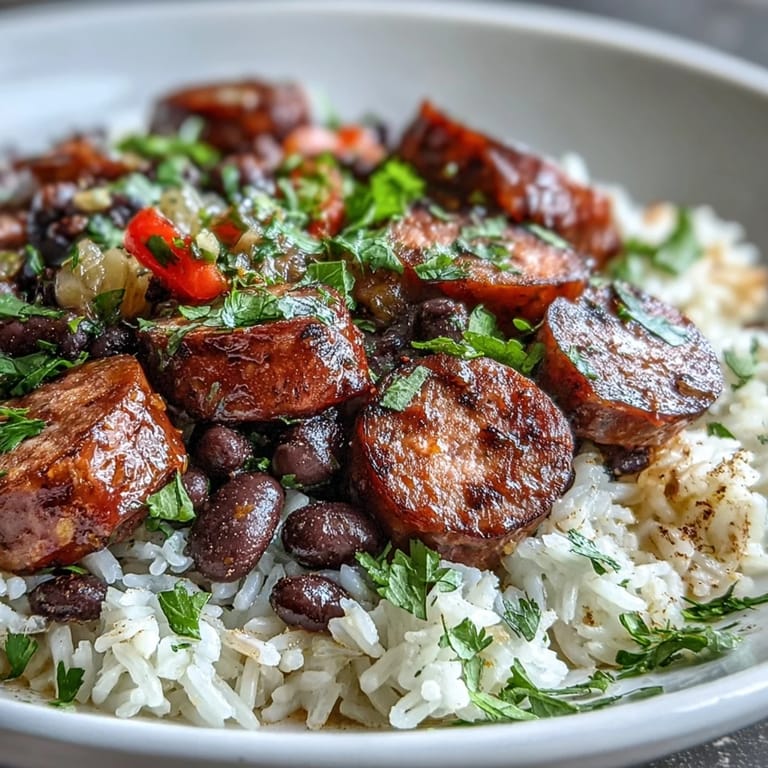
 There's something magical about a skillet that does all the work for you, especially on those evenings when the kitchen feels too warm and you've got maybe thirty minutes before hunger takes over. This black beans and sausage skillet landed in my cooking rotation on a Tuesday when I was standing in front of an open fridge, mentally exhausted, staring at some leftover sausage and a can of black beans. One pan, smoky flavors building on top of each other, and suddenly dinner became the kind of thing people actually want to eat.
I made this for a group of friends who showed up unannounced on a Saturday afternoon, and watching them circle back for seconds while barely looking up from their plates told me everything I needed to know. There's comfort in a dish that doesn't apologize, that shows up warm and filling and somehow makes people feel taken care of without any fussing on your part.
Ingredients
- Smoked sausage (300 g / 10 oz): Choose andouille or kielbasa for that signature smoky depth—slicing it first gives you more surface area to brown, which builds flavor before anything else gets added.
- Onion (1 medium, finely chopped): The foundation that makes everything else taste richer; don't skip the chopping step, texture matters here.
- Red bell pepper (1, diced): Adds sweetness and brightness that keeps the whole dish from feeling one-note, plus it stays tender enough to actually taste good.
- Garlic (2 cloves, minced): Raw garlic cooked for just a minute becomes mellow and sweet rather than harsh, which is why you add it after the onions soften.
- Jalapeño (1, seeded and finely chopped, optional): The seeds are where the heat lives, so removing them gives you flavor without forcing anyone's hand.
- Long-grain white rice (200 g / 1 cup, rinsed): Rinsing removes excess starch so each grain stays separate and fluffy rather than turning into mush.
- Black beans (400 g / 1 can, drained and rinsed): Rinsing the canned beans cuts the sodium and removes that metallic taste, making them taste fresher.
- Low-sodium chicken broth (400 ml / 1 2/3 cups): The liquid that transforms everything into a cohesive dish; low-sodium lets you control the salt level instead of fighting it.
- Diced tomatoes with juices (400 g / 1 can): The acid and moisture that make this whole thing sing, keep the juices for flavor you'd otherwise lose.
- Smoked paprika (1 tsp): The secret weapon that tastes like the sausage did all the work, even when it didn't.
- Ground cumin (1/2 tsp): Warm and earthy, it ties Spanish and Tex-Mex flavors together without announcing itself.
- Dried oregano (1/2 tsp): A quiet seasoning that deepens everything, especially when toasted for a minute in the pan.
- Salt and black pepper (1/2 tsp and 1/4 tsp): Start conservative because sausage and broth both carry salt, you can always add more at the end.
- Fresh cilantro (2 tbsp, chopped): Added right before serving, it brightens everything and makes the dish feel finished rather than just cooked.
- Lime wedges (for serving): A squeeze of lime at the table adds acidity that wakes up flavors that might have settled into one note.
Tired of Takeout? 🥡
Get 10 meals you can make faster than delivery arrives. Seriously.
One email. No spam. Unsubscribe anytime.
Instructions
- Brown the sausage first:
- Heat a large skillet over medium heat and add the sliced sausage, letting it sit long enough to develop a proper brown crust on both sides—about 4 to 5 minutes total. This isn't just about cooking it through, it's about building a flavor foundation that everything else will rest on.
- Build your flavor base:
- In the same skillet with the sausage fat still clinging to the bottom, add the onion and bell pepper, stirring for 3 to 4 minutes until they soften and start to smell like dinner. Add the garlic and jalapeño for one more minute, letting the raw edge cook off.
- Toast the rice and spices:
- Stir in the rinsed rice along with the smoked paprika, cumin, oregano, salt, and pepper, then keep stirring for about a minute—this toasting step makes the spices less raw and gives the rice a chance to pick up some color and flavor. You'll smell the difference immediately.
- Add the wet ingredients:
- Pour in the black beans, diced tomatoes with their juices, and chicken broth, stirring until everything is evenly distributed and there are no pockets of dry rice hiding at the bottom.
- Let it simmer gently:
- Bring the whole thing to a simmer, then drop the heat to low, cover it, and walk away for 20 minutes—the rice absorbs the liquid while steam does the work of cooking everything tender. You'll know it's ready when the rice is soft and you can tilt the pan and see just moisture glistening, not actual liquid pooling.
- Finish strong:
- Stir the browned sausage back in, then let it cook uncovered for 2 to 3 minutes so any excess liquid evaporates and the sausage warms through—this also gives the top a chance to dry out slightly, which makes the whole thing feel more intentional.
- Plate and brighten:
- Remove from heat, scatter cilantro over the top, and serve with lime wedges on the side so people can adjust the brightness to their taste.
 Save to Pinterest
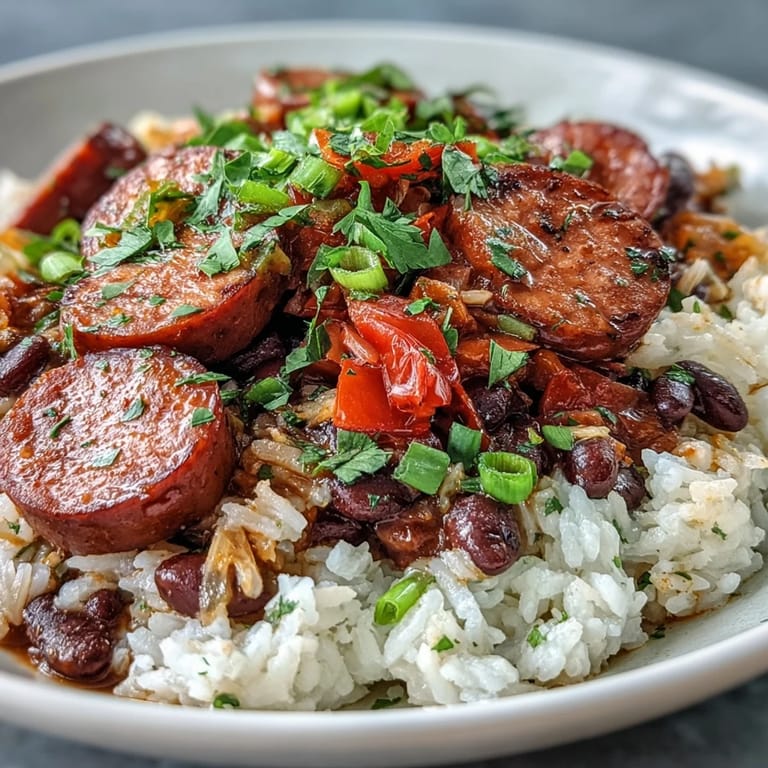
 This dish became more than just dinner one evening when I served it to my neighbor who had just moved in, and she came back the next day asking if I made it often. That simple question shifted how I thought about this recipe—it went from something I threw together to something that tasted like an invitation.
Why One Skillet Changes Everything
Cooking in a single pan isn't just about convenience, though that's certainly part of it. Every layer of flavor gets built in the same spot, flavors mingle rather than staying separate, and by the time everything comes together, it tastes integrated rather than assembled. The sausage browns and leaves behind fat that softens the vegetables, the vegetables sweeten the broth, and the rice soaks all of it up while staying distinct enough to taste good. You're not juggling multiple pans or trying to time different elements—you're watching one beautiful thing happen in front of you.
Making It Your Own
The skeleton of this recipe is sturdy enough to handle changes without falling apart. If you're in the mood for more heat, add an extra jalapeño or a small pinch of cayenne—it disappears into the background but adds warmth that builds as you eat. For a lighter version, turkey or vegetarian sausage swaps in seamlessly, though you might need to add a tablespoon of oil since they don't render fat the way smoked sausage does. Serve it topped with avocado slices or a dollop of sour cream if you want to cut through the richness, or keep it simple and let the lime do that work.
The Details That Matter Most
Rinsing the canned beans and the rice before they go into the skillet sounds like a small thing, but it's the difference between a dish that tastes intentional and one that tastes lazy. The rice releases starch when you rinse it, which keeps grains from clumping together, and the beans lose their canned flavor, which makes them taste fresher and less metallic. Smoked paprika is worth buying if you don't have it—it's what makes this taste like someone who knows their way around a kitchen made it, even if the whole process takes less time than ordering takeout. The toasting step for the spices happens quickly, just a minute, but suddenly they smell alive instead of dusty.
- Always taste at the end and adjust salt and acid before serving, because lime wedges work best as an option rather than a necessity.
- If you make this ahead, let it cool completely before storing, and reheat gently with a splash of broth to restore moisture without drying it out.
- Leftovers actually improve overnight as flavors settle together, so this is one of those rare dishes that tastes even better the next day.
 Save to Pinterest
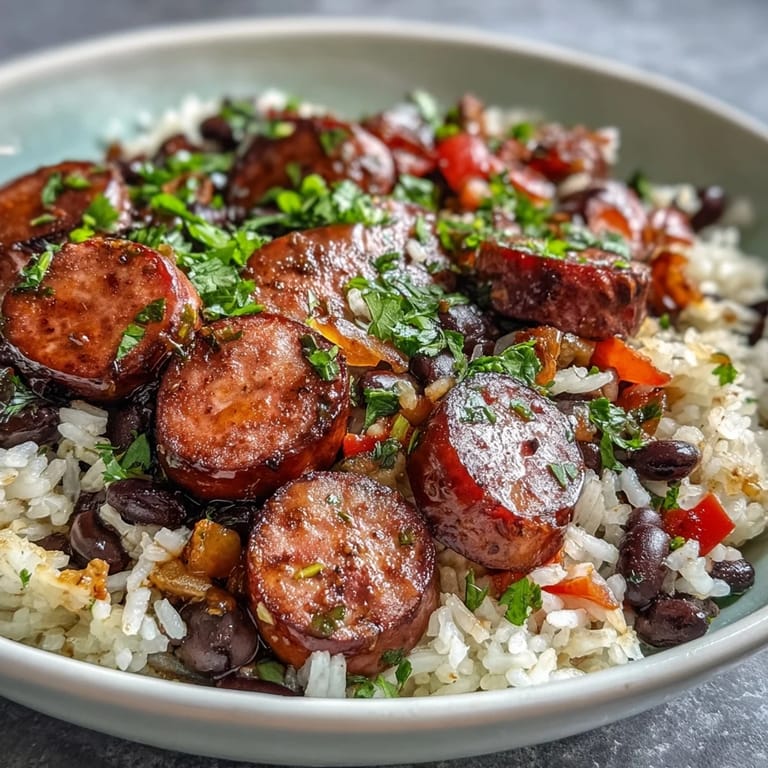
 This is the kind of meal that proves good food doesn't require complicated techniques or long ingredient lists. It just requires paying attention to the moments when flavors are building and knowing when to step back and let everything come together.
Common Recipe Questions
- → Can I use brown rice instead of white rice?
Brown rice works but requires additional liquid and cooking time. Increase the broth by 1/2 cup and extend simmering to 35-40 minutes. The texture will be nuttier and chewier than white rice.
- → What type of sausage works best?
Andouille or kielbasa provide excellent smoky flavor. Turkey kielbasa offers a leaner option, while vegetarian sausage works perfectly for a meatless version. Any smoked sausage will add depth to the dish.
- → How do I store leftovers?
Cool completely and refrigerate in an airtight container for up to 4 days. Reheat in the microwave with a splash of water or broth to prevent drying. The flavors often improve after sitting.
- → Can I make this dish spicier?
Add extra jalapeño, a pinch of cayenne pepper, or use hot Italian sausage. A few dashes of hot sauce or red pepper flakes during simmering also boosts the heat level.
- → What sides complement this skillet?
Serve with sliced avocado, a dollop of sour cream, or warm corn tortillas. A simple green salad with lime vinaigrette or sautéed zucchini rounds out the meal nicely.
- → Can I freeze this dish?
Yes, freeze cooled portions in freezer-safe containers for up to 3 months. Thaw overnight in the refrigerator before reheating. The rice may soften slightly after freezing and reheating.