 Save to Pinterest
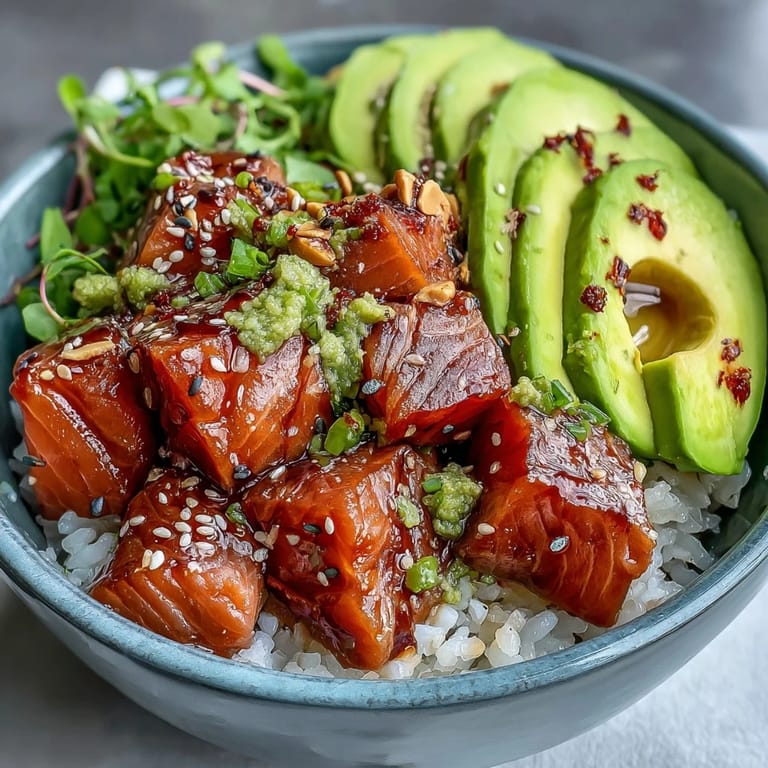
 My kitchen smelled like toasted sesame oil the first time I threw together an impromptu lunch with salmon I'd thawed too quickly and half an avocado sitting on the counter. I'd been craving something bright but substantial, so I grabbed leftover sushi rice, a jar of tamari, and started layering. What started as a desperate "use what you have" moment turned into the kind of bowl I now make intentionally, whenever I need to feel like I'm eating something both nourishing and a little bit special.
I served this to my partner on a Tuesday evening when we were both exhausted, and watching his face light up as he took that first bite reminded me why I love cooking at home. He kept asking what was in the sauce and whether I could make it again tomorrow, which somehow felt better than any restaurant meal we'd paid for.
Ingredients
- Fresh salmon fillet (250 g, skinless and cubed): The quality of your salmon matters here—look for bright color and a clean smell, and don't be afraid to ask your fishmonger for the freshest option.
- Tamari sauce (2 tbsp): This soy sauce alternative is naturally gluten-free and has a deeper, less salty flavor than regular soy sauce, which means the marinade doesn't overpower the salmon.
- Toasted sesame oil (1 tsp): A small amount goes a long way; it adds a nutty richness that ties the whole bowl together, but too much will make it taste overpowering.
- Rice vinegar (1 tsp for marinade, plus 1 tbsp for rice): This mild vinegar brightens the marinade without being sharp, and it's essential for seasoning sushi rice properly.
- Honey or agave syrup (1 tsp): Just a touch of sweetness balances the umami and adds complexity to the marinade.
- Cooked sushi rice (200 g or about 1 cup uncooked): Sushi rice is short-grain and sticky, which holds the bowl together; regular rice will fall apart when you try to eat it.
- Sugar (1/2 tsp): Combined with the rice vinegar, this seasons the rice the traditional way and makes it taste intentional rather than plain.
- Ripe avocado (1 large): Choose one that yields slightly to gentle pressure; if it's rock hard, let it sit on the counter for a day or two.
- Roasted peanuts (2 tbsp, roughly chopped): Roasting your own peanuts intensifies the flavor, but quality store-bought ones work perfectly well and save time.
- Chili oil (1 tbsp): This adds both heat and richness; start with less and drizzle more at the table so everyone can control their spice level.
- Wasabi paste (1 tsp): A little goes a long way here—this is the ingredient that makes your sinuses clear in the best way possible, so taste as you go.
- Nori sheets (1 sheet, cut into strips): The sea-like umami flavor complements the salmon beautifully, and the crunch adds another textural layer.
- Cucumber (1 small, thinly sliced): The coolness and crunch provide relief against the richer elements like avocado and salmon.
- Spring onions (2, sliced): These add a sharp, fresh bite that cuts through the richness of the other ingredients.
- Toasted sesame seeds (1 tbsp): Toast these yourself if you can—they taste infinitely better than the pre-toasted versions and take only two minutes in a dry pan.
- Fresh cilantro or microgreens (optional): Cilantro brings herbal freshness, while microgreens add a peppery note and make the bowl look intentional.
- Lime wedges (for serving): A squeeze of lime right before eating brightens everything and prevents the avocado from tasting flat.
Tired of Takeout? 🥡
Get 10 meals you can make faster than delivery arrives. Seriously.
One email. No spam. Unsubscribe anytime.
Instructions
- Make the marinade and coat the salmon:
- Whisk together the tamari, sesame oil, rice vinegar, and honey in a medium bowl until the honey dissolves. Add your salmon cubes and toss gently to coat every piece, then cover and refrigerate for 10 to 15 minutes—this is just long enough for the flavors to sink in without the acid cooking the fish.
- Season your rice:
- While the salmon marinates, combine the cooked sushi rice with rice vinegar, sugar, and a pinch of salt in a separate bowl, stirring gently to distribute the seasoning. Taste it and adjust; it should taste subtly tangy and a little sweet, almost like the rice at a good sushi restaurant.
- Prep all your toppings:
- Slice your avocado lengthwise, twist the halves apart, and scoop into crescents with a spoon. Roughly chop your peanuts, cut the nori into strips, and slice your cucumber and spring onions thin so they distribute evenly throughout each bite.
- Build your bowls:
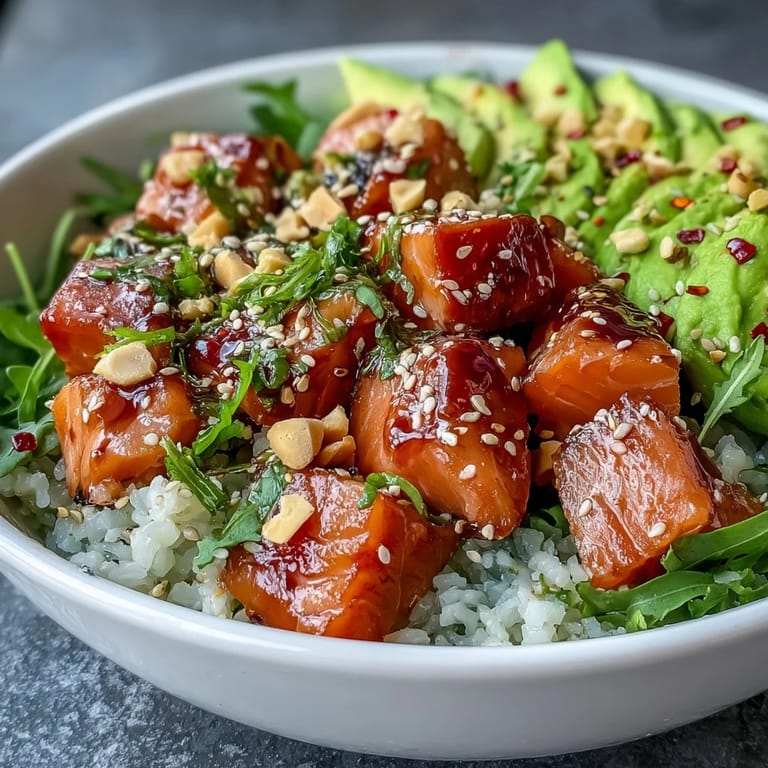
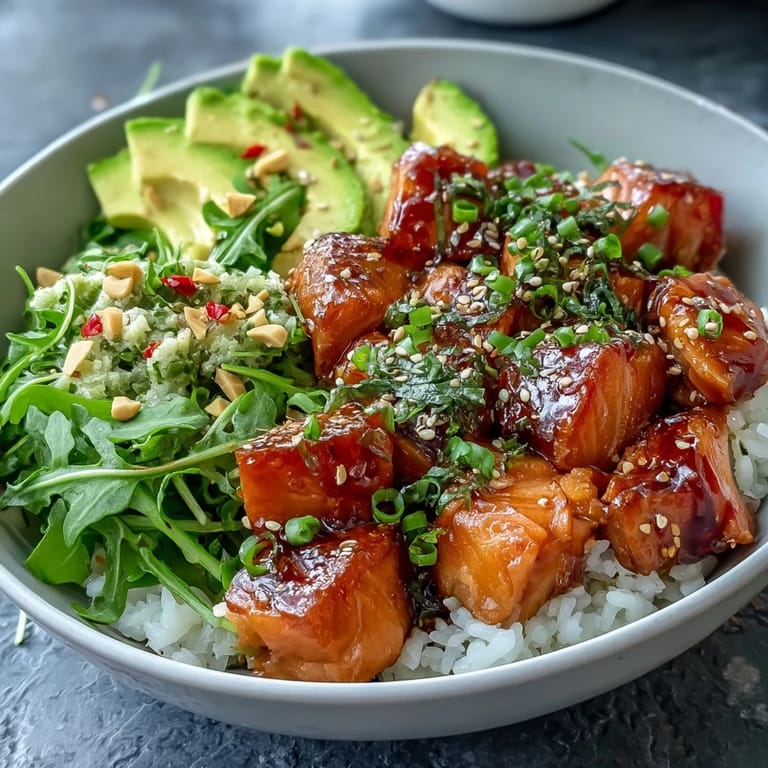
- Divide the seasoned rice between two serving bowls, creating a small well in the center or arranging it as a flat base. Layer your marinated salmon, avocado slices, cucumber, and spring onions on top of the rice in whatever pattern feels right to you—there's no wrong way to do this.
- Add heat, umami, and crunch:
- Drizzle each bowl with chili oil (start conservative and add more if you like heat), and place small dots of wasabi paste around the bowl so each forkful can hit that spicy note if you want it. Sprinkle the roasted peanuts, sesame seeds, and nori strips over everything, then garnish with cilantro or microgreens if you have them.
- Finish and serve:
- Tuck lime wedges next to each bowl and serve immediately while the rice is still warm and everything is at its best temperature contrast. Each person can squeeze lime over their bowl and mix it all together, creating their own perfect bite.
 Save to Pinterest
 There's something about a bowl like this—where you can taste the care in each layer and customize it completely to your mood—that reminds you why you cook at home. It's not fussy, but it's never boring, and it somehow feels both everyday and special at the same time.
Why Marinating Matters
The tamari-sesame marinade does more than just add flavor; it gently seasons the salmon while the rice vinegar begins to cure the outside slightly, creating a delicate texture that's tender inside and just slightly firm on the edges. I learned this the hard way by once skipping the marinade to save time, and the salmon tasted flat and one-dimensional in comparison. Those 15 minutes are non-negotiable if you want the bowl to taste like it's been thoughtfully prepared.
The Avocado Question
Choosing a perfectly ripe avocado is honestly half the battle with this bowl, because a hard or overripe avocado will throw off the whole experience. I now buy mine with intention three or four days before I plan to make this, checking their firmness daily, and I slice them just before assembly so they stay bright green and don't oxidize. If you're not eating immediately, a squeeze of lime juice over the sliced avocado prevents browning and adds flavor at the same time.
Customization and Swaps That Actually Work
The beauty of this bowl is that it's endlessly adaptable—I've made it with baked tofu when I didn't have salmon in the house, with cashews instead of peanuts for a friend with allergies, and even with a fried egg instead of fish when I was feeding someone vegetarian. The marinade, rice seasoning, and topping strategy stay the same, so you're never actually improvising, just substituting. Here are a few combinations that have actually become regular rotation in my kitchen.
- For a vegetarian version, marinate thick tofu slices or tempeh chunks in the same tamari mixture and pan-fry until golden before layering into your bowl.
- If peanuts don't work for your table, roasted sunflower seeds or cashews provide the same crunch and nutty flavor without the allergen concern.
- Pickled ginger or fresh edamame layered into the bowl add complexity and another textural element that keeps things interesting.
 Save to Pinterest
 This bowl has become my go-to weeknight dinner because it's fast enough to make when I'm tired but tastes like something I actually put care into. Once you've made it once, you'll understand why it becomes a reliable favorite.
Common Recipe Questions
- → Can I prepare the components ahead of time?
Yes, you can cook the rice and prepare all toppings up to a day in advance. Store them separately in airtight containers in the refrigerator. Marinate the salmon just before cooking for the best texture and flavor absorption.
- → What type of rice works best for this bowl?
Sushi rice is ideal because its sticky texture helps toppings stay in place. Short-grain white rice or brown sushi rice are excellent alternatives. Just ensure the rice is properly seasoned with vinegar, sugar, and salt for authentic flavor.
- → How can I adjust the spice level?
Start with less chili oil and wasabi, then add gradually to taste. You can also serve chili oil and wasabi on the side so everyone can customize their own heat level. For a mild version, omit wasabi entirely and use just a drizzle of chili oil.
- → Is there a substitute for salmon?
Marinated tofu cubes or tempeh work wonderfully for a vegetarian option. You could also use cooked shrimp, seared tuna, or even grilled chicken strips. Adjust marinade time accordingly—fish needs less time than plant-based proteins.
- → How do I prevent the avocado from browning?
Slice the avocado just before assembling the bowls. If you need to prep it earlier, toss the slices with a bit of lime juice and store in an airtight container. The citrus helps prevent oxidation and maintains the vibrant green color.
- → Can I use brown rice instead of white?
Absolutely. Brown sushi rice adds nutty flavor and extra fiber. Cook it according to package directions, then season with the vinegar mixture just like white rice. Note that brown rice may take longer to cook—about 45 minutes compared to 20 minutes for white rice.