 Save to Pinterest
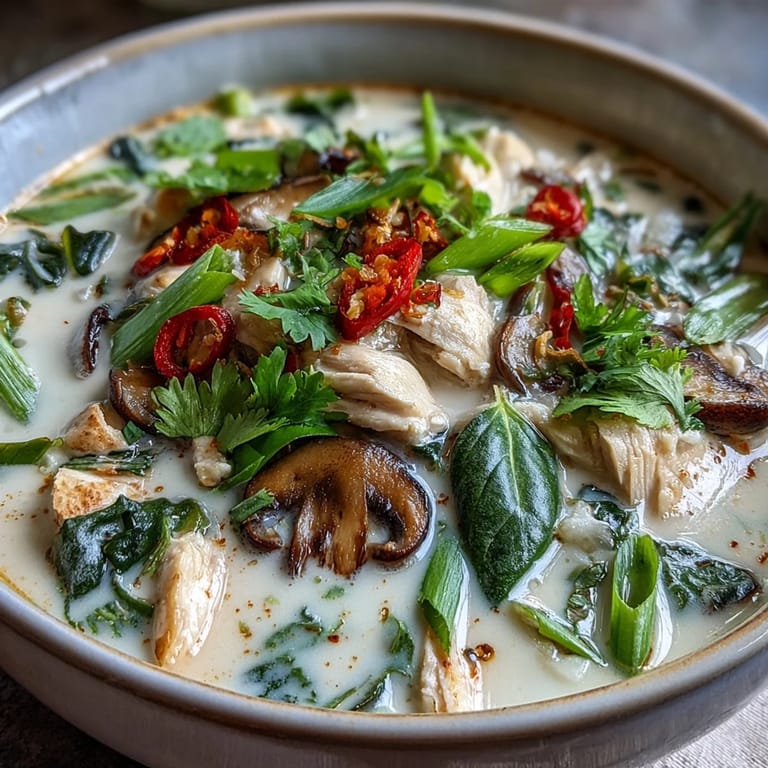
 My first bowl of tom kha gai arrived on a humid Bangkok evening, steam rising off the surface while my friend warned me about the heat hidden beneath that creamy coconut surface. She'd ordered it for me without asking, insisting I needed to taste what real Thai comfort food tasted like. That first spoonful—the way the lemongrass and galangal perfume hit before the richness of coconut milk followed—completely rewired what I thought soup could be. Now when I make it at home, I'm chasing that exact moment of discovery, that balance between fragrant and creamy and just slightly dangerous.
I made this for a coworker who mentioned offhand that she missed Thai food from her childhood, and watching her close her eyes after that first taste felt like I'd done something meaningful. She asked for the recipe that same day, but also asked me to promise I wouldn't judge how long it took her to track down galangal at three different stores. That's when I realized tom kha gai isn't just delicious—it's the kind of dish that makes people feel seen.
Ingredients
- Chicken broth: Use good quality broth here because it's your foundation—the aromatics will ride on top of it, so thin or overly salty broth will undermine everything else.
- Lemongrass: Smash it gently to release the oils but don't pulverize it; you want big pieces that infuse rather than disintegrate into the soup.
- Galangal: This is the secret weapon that makes tom kha taste authentically Thai—it has a peppery, almost medicinal edge that ginger can't replicate, though ginger works in a pinch.
- Makrut lime leaves: Tear them by hand rather than cutting so the edges release more fragrance and the flavor spreads through the broth more naturally.
- Thai bird's eye chilies: Lightly crush them to control heat—whole peppers will be milder, crushed ones pack more punch, so adjust based on your tolerance.
- Chicken thighs: They stay tender and flavorful in soup way better than breasts, which can turn stringy if you're not careful with timing.
- Coconut milk: Full-fat and unsweetened is non-negotiable; that's where the richness and authenticity comes from.
- Mushrooms: Straw mushrooms are traditional and add a delicate texture, but cremini work beautifully too and are easier to find.
- Fish sauce: It smells aggressive straight from the bottle, but trust the process—it's what gives the soup its savory depth without being identifiable as fish.
- Palm sugar: It dissolves differently than regular sugar and adds a subtle complexity; brown sugar is a fair substitute if you can't find it.
- Lime juice: Fresh lime is crucial here; bottled changes the flavor profile noticeably.
Tired of Takeout? 🥡
Get 10 meals you can make faster than delivery arrives. Seriously.
One email. No spam. Unsubscribe anytime.
Instructions
- Build your aromatics foundation:
- Start with a gentle simmer of broth and let the lemongrass, galangal, lime leaves, and chilies steep for 5 to 7 minutes. Your kitchen will smell incredible—that's how you know the fragrance is migrating into the liquid and you're on the right track.
- Cook the chicken gently:
- Add your sliced chicken and shallot, giving them 3 to 4 minutes just until the meat loses its raw exterior and turns opaque. The chicken continues cooking when the coconut milk goes in, so don't overcook it here.
- Add richness carefully:
- Slide in the mushrooms and pour in the coconut milk slowly, stirring gently as you go. Bring everything back to a simmer but never let it boil hard—aggressive heat can break the coconut milk and make it separate.
- Season with balance in mind:
- This is where experience matters—add fish sauce, palm sugar, and lime juice, then taste and adjust. You're aiming for a harmony between salty, sweet, and sour, with none of them shouting over the others.
- Finish and serve:
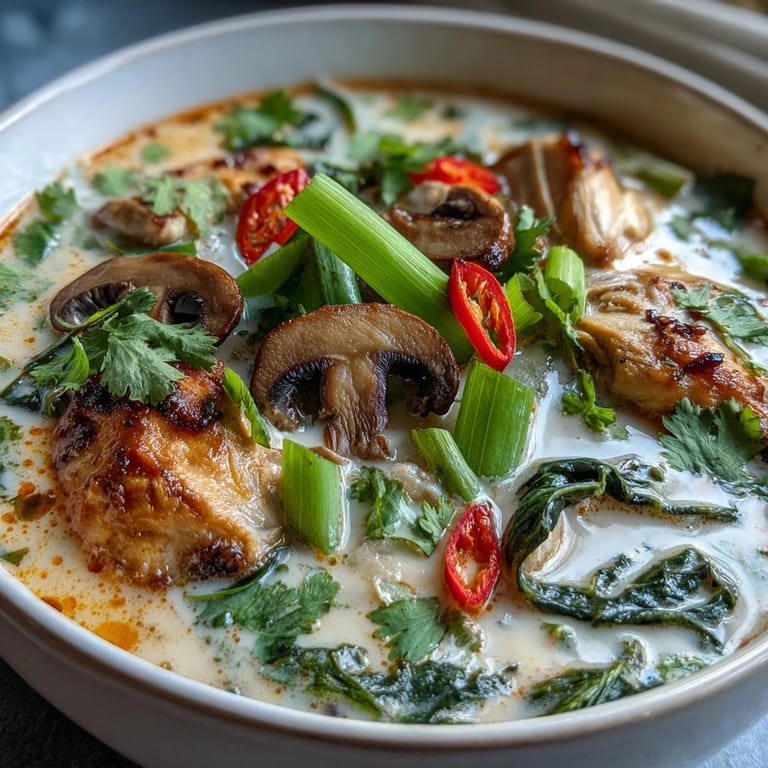
- Remove from heat and discard the large aromatics if you prefer a cleaner bowl, though some people love leaving them in for continued flavor. Ladle into bowls and pile on the cilantro and green onions—the fresh herbs are essential for cutting through the richness.
 Save to Pinterest
 There was a moment during a winter dinner party when someone dunked a lime wedge into their bowl and the whole soup took on this brightness that made everyone pause mid-conversation. That's when I understood that tom kha isn't just about the individual ingredients—it's about the ritual of finishing it yourself, adjusting the heat and acidity to exactly what your palate needs in that moment.
Finding Your Aromatics
The first time I couldn't find galangal, I tried substituting with extra ginger and the soup tasted completely different—not bad, just wrong in a way that made me understand why the traditional ingredients matter. Now I hunt for galangal at Asian markets where the staff actually know what I'm asking for, and I've found that once you track down a reliable source for these harder-to-find items, your entire approach to Thai cooking opens up. Makrut lime leaves have this citrus perfume that bottled lime juice simply cannot provide, so if you're feeling adventurous, look for a market that sells them fresh or frozen rather than dried.
Heat and Balance
The beautiful thing about tom kha gai is how forgiving it is once you understand the flavor equation—if it's too salty, hit it with more lime; too sour, balance it with a tiny pinch of sugar; too mild, add another crushed chili and let it steep for a minute. I've learned that tasting as you go, especially with the fish sauce and lime juice, prevents those awkward moments where you've overseasoned and can't fix it. The soup actually improves if you let it sit off heat for a few minutes before serving, as the flavors deepen and meld together.
Serving and Variations
Jasmine rice is traditional alongside this soup, soaking up all that creamy broth in the best way possible, though I've also eaten it as a standalone bowl on nights when I wanted something lighter. For vegetarian versions, swap the chicken for silken tofu or extra mushrooms, use vegetable broth, and replace fish sauce with soy sauce—it won't be identical but it honors the spirit of the dish. Some people garnish with roasted cashews or sliced red chilies for texture and heat, which feels like a natural evolution rather than a betrayal of tradition.
- Serve this immediately after garnishing so the cilantro and green onions stay bright and don't wilt into the warm soup.
- Leftovers keep beautifully in the refrigerator for three days and actually taste richer the next day as flavors deepen.
- If you're doubling the recipe, resist the urge to double the aromatics—increase them by about half instead or your broth becomes overwhelming.
 Save to Pinterest
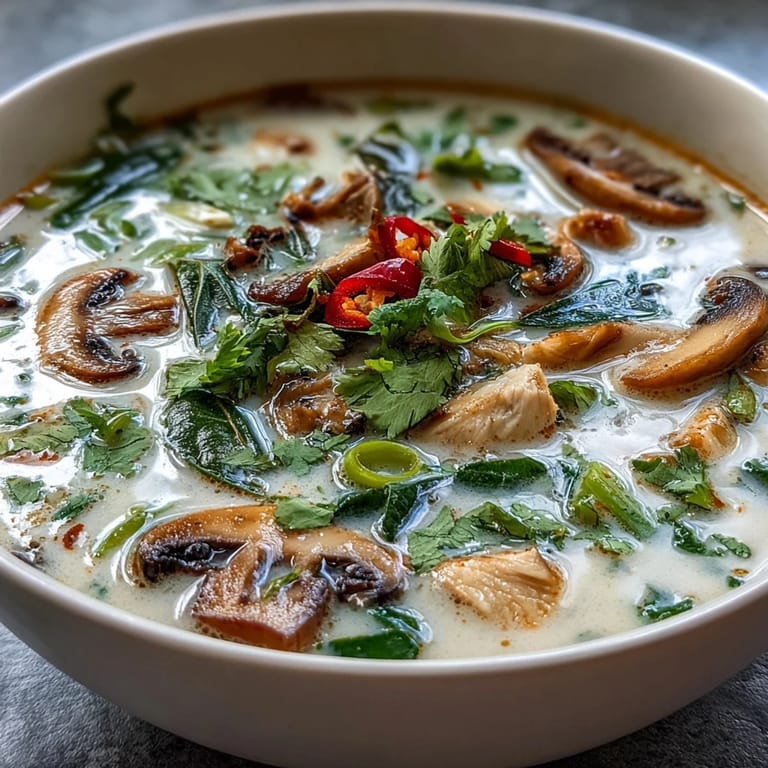
 This soup has become my answer to so many kitchen questions—how to build layers of flavor, when to trust ingredients over complicated technique, what makes someone ask for seconds. Making it reminds me why I love cooking in the first place.
Common Recipe Questions
- → What makes Tom Kha Gai different from other Thai soups?
Tom Kha Gai stands apart through its rich coconut milk base, creating a creamy texture unlike the clear broth of Tom Yum. The coconut milk mellows the heat while adding natural sweetness, perfectly complementing the aromatic herbs like galangal and lemongrass that give this soup its distinctive fragrant character.
- → Can I substitute galangal with regular ginger?
While ginger works in a pinch, galangal has a unique piney, citrusy flavor profile that's essential to authentic taste. If substituting, use younger ginger and increase the quantity slightly, though the flavor will be less complex. Seek frozen galangal at Asian markets—it maintains flavor remarkably well.
- → How do I prevent the coconut milk from separating?
Keep the heat at a gentle simmer rather than a rolling boil. Vigorous boiling causes coconut milk to separate and become grainy. Stir gently and avoid rapid temperature changes. Adding coconut milk last and heating through slowly helps maintain that silky, smooth texture essential to this dish.
- → Can I make this vegetarian?
Absolutely. Swap chicken broth for vegetable broth, replace chicken thighs with firm tofu cubes, and substitute fish sauce with soy sauce or a vegetarian fish sauce alternative. The aromatic base remains unchanged, so you'll still capture those essential Thai flavors in a plant-based version.
- → How spicy should this soup be?
Traditional Tom Kha Gai offers gentle heat rather than overwhelming spice. Three crushed bird's eye chilies provide warmth without overpowering the delicate coconut flavor. Adjust by reducing chilies for milder results or adding fresh chili slices at serving for those who prefer more heat in their bowl.
- → What's the best way to serve Tom Kha Gai?
Serve steaming hot in deep bowls, garnished generously with fresh cilantro and sliced green onions. Extra lime wedges on the side allow diners to adjust the sourness to their preference. This soup pairs perfectly with steamed jasmine rice to soak up the fragrant broth, or enjoy it on its own as a light yet satisfying meal.