 Save to Pinterest
 My friend texted me a photo of a salmon bowl from her favorite restaurant, and I remember staring at it thinking, why am I paying for this when I can make it better at home? The next Saturday, I raided the farmers market for the crispest vegetables I could find, grabbed a beautiful salmon fillet, and spent an afternoon in the kitchen experimenting with a glaze that would sing. What started as a casual cooking project became my go-to meal when I want something that feels both indulgent and honest about its health.
I made this for my partner during a busy week when we'd both been eating takeout too much, and I watched their face change the moment they took that first bite. The warmth of the rice, the brightness of the raw vegetables, the way that glaze caught the light as it dripped down the salmon—it felt like more than just dinner, you know? That's when I realized this bowl wasn't just efficient, it was actually nourishing in a way that mattered.
Ingredients
- Salmon fillets (about 150 g each): Look for fillets that smell like the ocean, not fishy—if it reeks, it's too old. The skin should look shiny and feel firm when you press it gently.
- Soy sauce: This is the backbone of your glaze, so use something decent; cheap soy sauce tastes thin and salty rather than complex and savory.
- Honey: Just a couple tablespoons balance the saltiness and help the glaze caramelize beautifully in the oven.
- Fresh ginger: Grating it yourself makes an enormous difference—bottled ginger tastes tired and fibrous by comparison.
- Garlic: Minced fresh cloves, not powder; the fresh version brings a brightness that powder can't match.
- Rice vinegar: It's gentler and slightly sweet, which keeps the glaze from tasting one-dimensional.
- Sesame oil: Use just a little since it's intense, but it gives the whole glaze a toasty, sophisticated edge.
- Jasmine or sushi rice: Jasmine has a subtle fragrance that complements the Asian flavors, while sushi rice is slightly stickier and holds together beautifully.
- Fresh vegetables: Carrots, cucumber, and bell pepper should be crisp and colorful; julienne them thin so they feel delicate in every bite.
- Edamame: Buy frozen shelled ones if you can—they're convenient and taste just as good as fresh when cooked.
- Sesame seeds: Toast them yourself if you have time; the dry heat brings out a nutty flavor that makes your bowl taste finished and intentional.
- Scallions: These add a sharp, fresh note at the end; slice them just before serving so they stay bright.
Tired of Takeout? 🥡
Get 10 meals you can make faster than delivery arrives. Seriously.
One email. No spam. Unsubscribe anytime.
Instructions
- Rinse and cook the rice:
- Rinse under cold water until the water runs clear—this removes excess starch and keeps your rice from turning gluey. Bring water and rice to a boil, then drop the heat low, cover, and let it steam gently for 15 minutes; the patience here pays off in texture.
- Make the glaze:
- Whisk soy sauce, honey, grated ginger, minced garlic, rice vinegar, and sesame oil in a small bowl until the honey dissolves and everything smells incredible. If you want a thicker glaze that clings to the salmon rather than pooling at the bottom of your bowl, whisk cornstarch with water and stir it in.
- Prepare the oven and salmon:
- Preheat your oven to 200°C (400°F) and line a baking sheet with parchment paper so the salmon doesn't stick. Place fillets on the sheet and brush them generously with glaze, reserving what's left for later.
- Bake the salmon:
- Slide the sheet into the oven and bake for 12 to 14 minutes—you're looking for salmon that flakes easily when you press it gently with a fork, but still has a tiny bit of moisture inside. Don't skip this part of paying attention; overcooked salmon gets dry and disappoints.
- Finish the glaze:
- While the salmon bakes, pour your reserved glaze into a small saucepan and bring it to a gentle simmer over medium heat, stirring occasionally. If you used cornstarch, it will thicken noticeably within a minute or two; without it, it just warms through and concentrates slightly.
- Prepare the vegetables:
- Julienne your carrots, cucumber, and bell pepper into thin, delicate matchsticks—the thinness matters because it makes them tender enough to eat raw but still keeps their crunch. Arrange them on a cutting board and feel good about how colorful everything looks.
- Assemble your bowls:
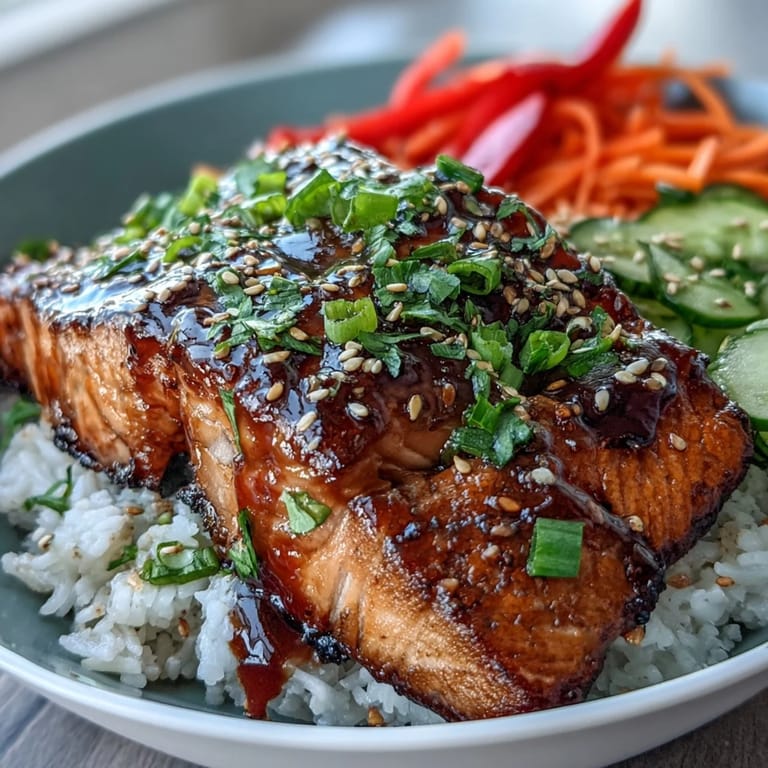
- Divide the warm rice among four bowls, then carefully place a salmon fillet on top of each. Arrange the julienned vegetables and edamame around the salmon in little piles so everything stays distinct and beautiful.
- Finish and serve:
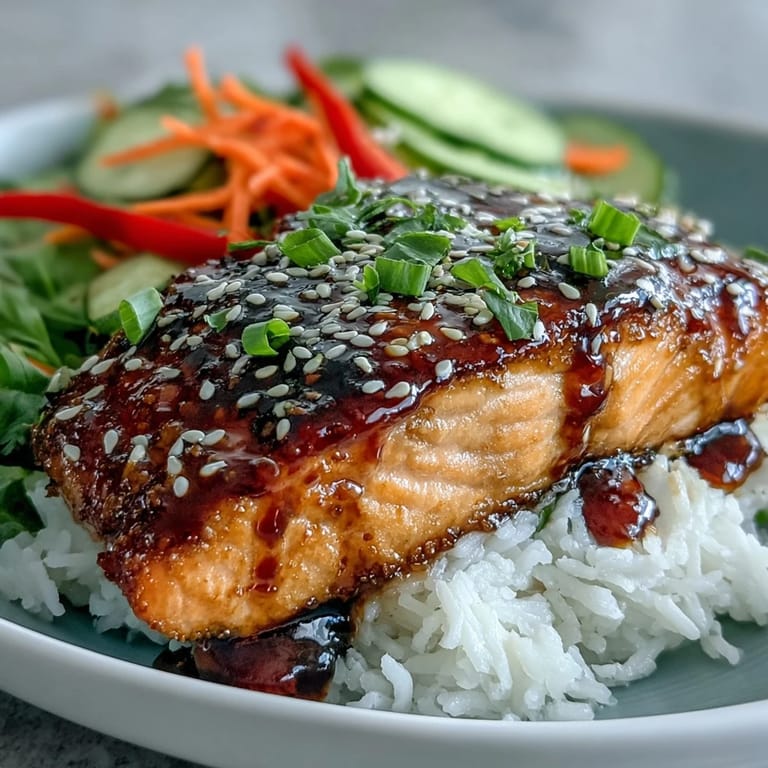
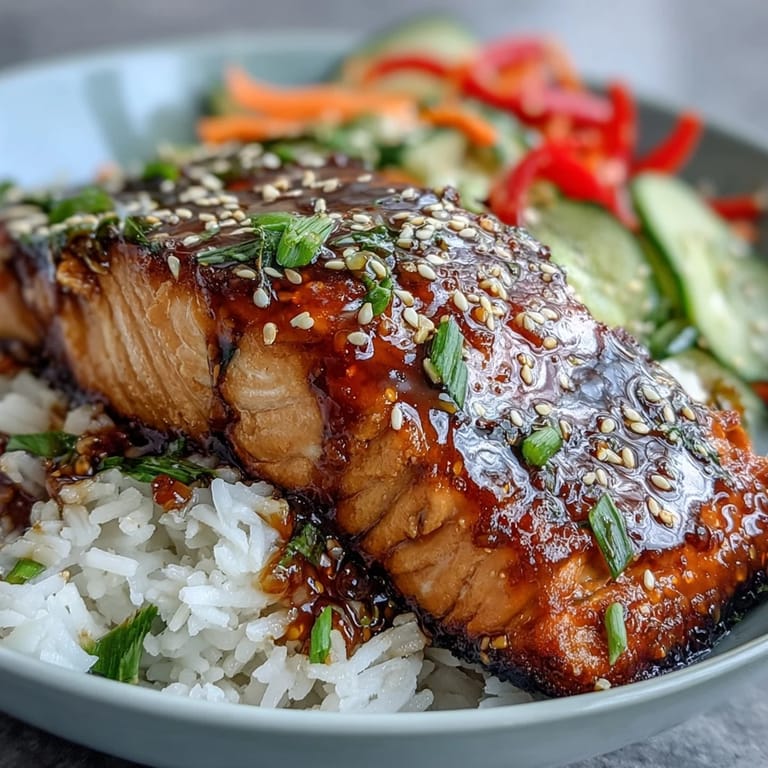
- Drizzle each bowl with the finished glaze, then scatter sesame seeds and sliced scallions over the top. Serve with lime wedges on the side so people can squeeze juice over their bowl if they want that extra brightness.
 Save to Pinterest
 One evening, my roommate came home to the smell of ginger and sesame filling our whole apartment, and she asked if I was making something special. I told her it was just dinner, but watching her face light up when I handed her a bowl reminded me that simple food, made with care, becomes the most special thing of all. That's what this bowl does—it turns an ordinary weeknight into something you actually want to remember.
Why This Glaze Changes Everything
The magic of this bowl lives entirely in the soy-ginger glaze, which transforms plain salmon into something that tastes like you've been cooking for hours. The honey brings sweetness, the ginger brings heat and brightness, the garlic adds depth, and the sesame oil wraps everything together with a toasty finish. I spent months trying different ratios before landing on this one, and I promise you it's worth the precision; even a tablespoon more or less shifts the balance.
Making This Bowl Your Own
The beauty of this recipe is that it welcomes substitutions without falling apart. Use brown rice or quinoa if you want more nutrition, add avocado if you want richness, or layer in pickled ginger if you want extra brightness. Some people toss in shredded purple cabbage for earthiness, and I've even seen someone add a soft-boiled egg for protein and creaminess—all of it works beautifully with the core flavors.
Kitchen Wisdom and Final Thoughts
The key to making this bowl feel effortless is doing your prep work while the rice cooks, so by the time your salmon hits the oven, everything else is already ready to go. This is the kind of meal that teaches you that good food doesn't require complicated techniques or obscure ingredients—it just requires paying attention and using fresh things respectfully. Build this bowl slowly, taste as you go, and let the simplicity be the whole point.
- If you can't find jasmine rice, sushi rice works just as well and actually holds its shape a little better for bowl assembly.
- Make the glaze while the rice is cooking so everything comes together on the same timeline and nothing gets cold.
- Lime wedges aren't optional in my house—that little squeeze of acid at the end brings the whole bowl into focus.
 Save to Pinterest
 This bowl taught me that the best meals aren't the most complicated ones—they're the ones you actually feel like making and eating again. Build it with intention, taste as you go, and let yourself enjoy something that's nourishing without being fussy.
Common Recipe Questions
- → Can I use frozen salmon fillets?
Yes, frozen salmon works well for this bowl. Thaw completely in the refrigerator overnight before marinating and pat dry with paper towels to ensure the glaze adheres properly.
- → What vegetables can I substitute?
Feel free to swap julienned vegetables based on preference or seasonal availability. Snap peas, shredded cabbage, thinly sliced radishes, or baby bok choy make excellent alternatives.
- → How can I make this gluten-free?
Simply replace regular soy sauce with tamari or a certified gluten-free soy sauce alternative. All other ingredients naturally fit gluten-free dietary requirements.
- → Can the salmon be grilled instead of baked?
Absolutely. Grill the marinated salmon over medium-high heat for 4-5 minutes per side. The glaze will create lovely charred edges and smoky depth.
- → How long does the glaze keep?
The prepared glaze stores well in an airtight container in the refrigerator for up to one week. Bring to room temperature and whisk briefly before using.
- → Can I prepare components ahead?
Cook rice and julienne vegetables up to 24 hours in advance. Store separately in the refrigerator. Salmon tastes best when baked just before serving.