 Save to Pinterest
 There was this Tuesday afternoon when my energy completely bottomed out around 3 PM, and I realized I'd been eating the same tired salads for weeks. That's when I started experimenting with warm, composed bowls that actually felt like meals rather than obligations. This Anti-Inflammatory Glow Bowl came together almost accidentally—a combination of ingredients I had on hand that somehow transformed into something I couldn't stop making. The tahini yogurt sauce was the real turning point, creamy and tangy enough to make everything else sing. Now I make versions of this bowl constantly, sometimes for myself on hectic weeknights, sometimes for friends who need convincing that healthy food can be genuinely delicious.
I made this for my sister during her health kick phase, and she was genuinely shocked that something so nourishing could taste this good. She kept asking for the sauce recipe, convinced there was some secret ingredient I was hiding. When she finally realized it was just tahini, yogurt, and lemon juice, something clicked for her about simple, clean eating. That bowl became her go-to lunch for months, and watching her energy levels improve made me realize how much the right food actually matters.
Ingredients
- Quinoa: Always rinse it thoroughly before cooking—this removes the natural coating that can make it taste bitter or soapy, a lesson I learned the hard way during my first batch.
- Sweet potatoes: Cut them into similar-sized pieces so they roast evenly and develop that caramelized exterior that makes them addictive.
- Chickpeas: The key is using canned chickpeas that you've drained and rinsed well, which removes excess starch and helps them get crispy when sautéed.
- Tahini: Use pure sesame tahini, not the kind with added oils, and stir it well before measuring since it separates easily.
- Greek yogurt: Full-fat Greek yogurt creates a richer, more luxurious sauce than the non-fat versions.
- Fresh spinach: Baby spinach works beautifully here because it wilts slightly from the warm components without turning into mush.
- Avocado: Slice it just before assembling to prevent browning, and choose one that's perfectly ripe—not too soft, not too firm.
- Lemon juice: Freshly squeezed makes a noticeable difference in brightness and cuts through the richness of the tahini.
- Cumin and turmeric: These warm spices are anti-inflammatory and add depth without overpowering the other flavors.
Tired of Takeout? 🥡
Get 10 meals you can make faster than delivery arrives. Seriously.
One email. No spam. Unsubscribe anytime.
Instructions
- Get your oven ready:
- Preheat your oven to 425°F and position the rack in the middle so the heat circulates evenly around whatever you're roasting.
- Season and roast the sweet potatoes:
- Toss your diced sweet potatoes with olive oil, cumin, salt, and pepper, then spread them on a baking sheet in a single layer. Let them roast for about 25 minutes until the edges are caramelized and a fork slides through easily—you'll know they're done when the kitchen smells like caramel and spice.
- Prepare the quinoa:
- While the potatoes roast, rinse your quinoa under cold water in a fine mesh strainer, swirling it gently to remove any bitter coating. In a saucepan, combine the rinsed quinoa with 2 cups of water and a pinch of salt, bring it to a boil, then reduce the heat to low, cover it, and let it simmer undisturbed for 15 minutes.
- Cook the chickpeas until crispy:
- In a skillet over medium heat, warm the remaining olive oil and add your drained chickpeas along with the rest of the cumin, turmeric, salt, and pepper. Sauté them for about 10 minutes, stirring frequently so they develop a golden, slightly crispy exterior that contrasts beautifully with their creamy interior.
- Make the tahini yogurt sauce:
- In a bowl, whisk together tahini, yogurt, fresh lemon juice, and the last tablespoon of olive oil, seasoning with salt and pepper. Gradually add water, one tablespoon at a time, whisking until you reach a pourable but still creamy consistency—it should coat a spoon but fall easily when poured.
- Assemble your bowls:
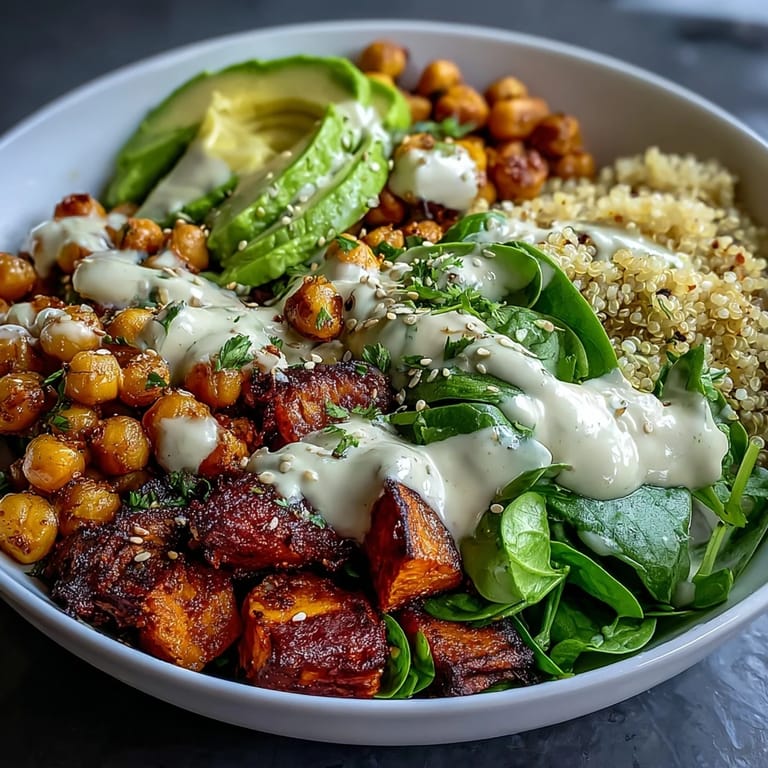
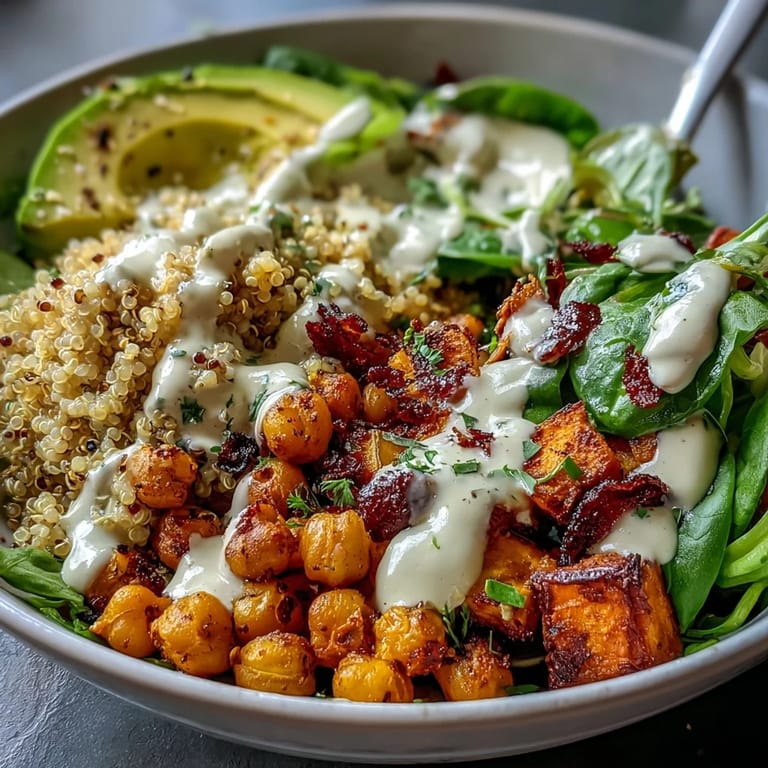
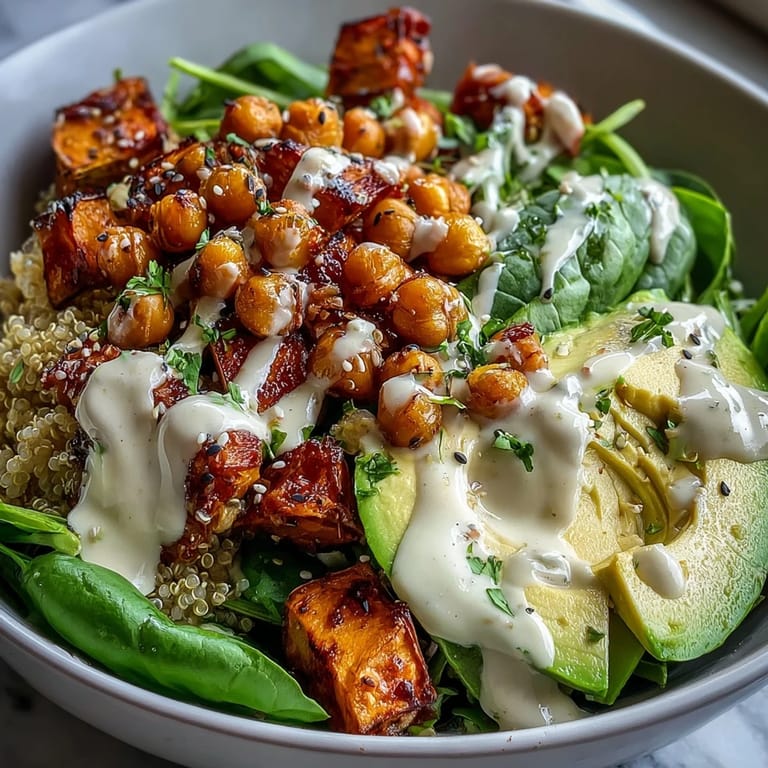
- Divide the fluffy quinoa among four bowls, then arrange the roasted sweet potatoes, crispy chickpeas, fresh spinach, and avocado slices on top in sections. Drizzle the tahini yogurt sauce generously over everything and serve immediately while the warm ingredients are still slightly steaming.
 Save to Pinterest
 There's something almost meditative about assembling these bowls, watching the warm and cool elements come together into something both visually beautiful and genuinely nourishing. My body always thanks me after eating one of these—that satisfied, clear-headed feeling that comes from feeding yourself real food.
Why This Bowl Works as Anti-Inflammatory Medicine
Every component of this bowl was chosen specifically because it contains compounds that help reduce inflammation in your body. The turmeric contains curcumin, which is one of the most studied anti-inflammatory compounds in nutrition. Tahini provides lignans and healthy fats that support your body's natural healing processes. The chickpeas offer plant-based protein and resistant starch, which feeds your gut bacteria in ways that calm inflammatory responses. When you eat all of these together, they work synergistically rather than in isolation, creating something more powerful than any single ingredient on its own.
Customization That Actually Makes Sense
This bowl thrives on flexibility without becoming chaotic or losing its identity. You can substitute baby kale for spinach if you want something more robust, or use arugula if you prefer peppery notes. The beautiful thing about composed bowls is that you're not bound by traditional recipe logic—you're creating a platform for whatever seasonal vegetables excite you. I've made versions with roasted beets instead of sweet potatoes, sautéed mushrooms alongside the chickpeas, and even added pomegranate seeds for brightness. The tahini sauce remains the constant that ties everything together, so even when you're improvising with vegetables, the bowl still feels cohesive and intentional.
Making This Your Weekly Staple
This bowl has earned a permanent spot in my meal prep rotation because it holds together beautifully for days when stored properly. The quinoa stays fluffy, the vegetables remain fresh when stored separately, and the tahini sauce keeps in the fridge for up to five days in a covered container. I usually cook the quinoa and roast the sweet potatoes on Sunday, store them separately, and then spend about 10 minutes assembling bowls throughout the week. On particularly hectic days, knowing I have these components ready transforms dinner from stressful to effortless, which is honestly when you're most likely to make consistently good choices for yourself.
- Toast sesame seeds in a dry skillet for 2-3 minutes before sprinkling them over the assembled bowl for nutty flavor and satisfying crunch.
- Fresh herbs like cilantro or parsley scattered over the top add brightness and make the bowl feel more restaurant-quality than it actually is.
- A squeeze of extra lemon juice right before eating cuts through the richness and prevents the bowl from feeling heavy, even though it's actually quite substantial.
 Save to Pinterest
 This bowl taught me that anti-inflammatory eating doesn't have to mean deprivation or boredom—it can actually be the most satisfying, colorful, joyful food on your table. Make one this week and notice how you feel afterward.
Common Recipe Questions
- → Can I make this bowl ahead for meal prep?
Absolutely. The roasted sweet potatoes, cooked quinoa, and spiced chickpeas all store well in the refrigerator for up to 4 days. Keep the sauce and fresh components (spinach, avocado) separate and assemble just before serving for best texture.
- → What can I substitute for quinoa?
Other grains like brown rice, farro, or freekeh work beautifully here. For a grain-free option, try cauliflower rice or extra chickpeas. Just adjust cooking times according to your chosen grain.
- → How do I prevent the tahini sauce from seizing?
Whisk the tahini and yogurt first, then slowly incorporate lemon juice while stirring continuously. If the mixture thickens too much, add warm water one tablespoon at a time until smooth and creamy.
- → Can I roast the chickpeas instead of pan-frying?
Yes, roasting works great. Toss seasoned chickpeas on a separate baking sheet and roast at 425°F for 20-25 minutes until crispy. This saves stovetop time and yields an excellent crunch.
- → Is this bowl freezer-friendly?
The quinoa, sweet potatoes, and chickpeas freeze well for up to 3 months. However, the fresh spinach, avocado, and sauce don't freeze well—prepare those fresh when you're ready to eat.
- → How can I add more protein?
Consider adding grilled chicken, baked tofu, or a soft-boiled egg. You could also increase the chickpeas to two cans or mix in hemp seeds while assembling for a plant-based protein boost.