 Save to Pinterest
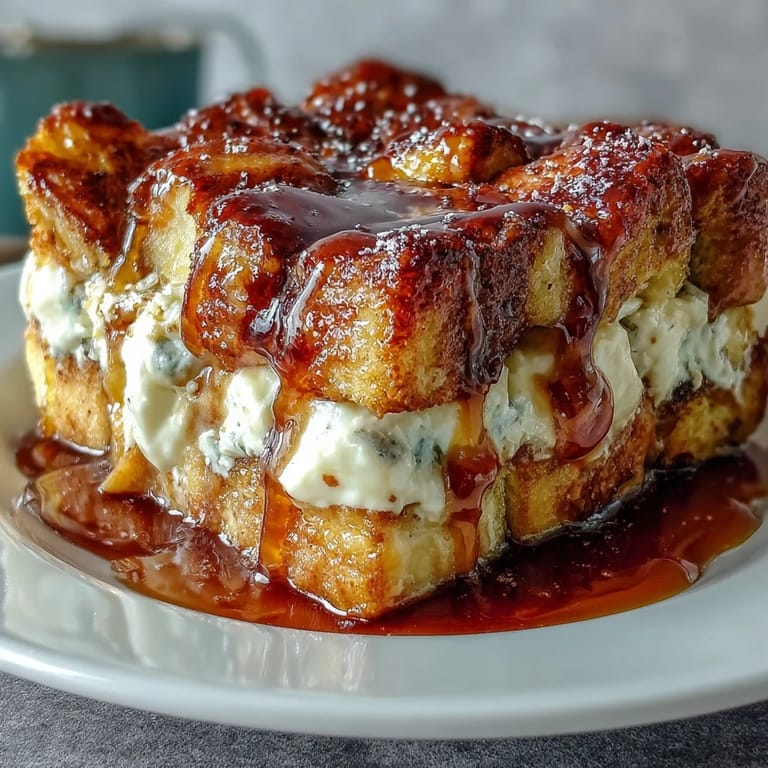
 My sister texted me at 10 PM asking if I could bring brunch for eight people the next morning. Panicked, I remembered this casserole that sits overnight in the fridge, requiring nothing but patience and an oven. The moment I pulled it from the oven, golden and bubbling at the edges, I knew I'd found my answer to every last-minute gathering. Caramel cream cheese French toast casserole became the dish I make when I need to look like I have my life together, even when I absolutely don't.
I made this for my book club gathering last spring, and one friend took a bite, went completely quiet, and then asked if I'd add it to every meeting forever. That's when I realized this casserole does something special—it transforms a casual brunch into something people actually remember. Nobody cares that you didn't slave away; they just know something felt special about the meal.
Ingredients
- 1 loaf brioche or challah bread, cut into 1-inch cubes: The soft crumb soaks up the custard without falling apart, unlike denser breads that turn mushy or dry.
- 225 g cream cheese, softened: This needs to be at room temperature or it'll stay in lumps throughout the casserole, so pull it out while you're prepping everything else.
- 240 ml whole milk and 240 ml heavy cream: The combination creates a custard that's rich but not heavy, striking that perfect balance between indulgent and not overpowering.
- 5 large eggs: These are your binder and what gives the casserole that custardy texture that makes each bite feel luxurious.
- 60 g unsalted butter, melted: Melt this gently so it blends smoothly into the egg mixture without creating greasy pockets.
- 150 g granulated sugar and 100 g brown sugar: The combination gives you sweetness while the brown sugar adds depth and helps create that golden exterior.
- 2 tsp vanilla extract, ½ tsp cinnamon, ¼ tsp salt: The vanilla rounds out the sweetness, cinnamon adds warmth, and salt makes everything taste more like itself.
- 240 ml caramel sauce: Use store-bought if you're short on time, or homemade if you want to control the depth—both work beautifully.
Tired of Takeout? 🥡
Get 10 meals you can make faster than delivery arrives. Seriously.
One email. No spam. Unsubscribe anytime.
Instructions
- Prepare your dish:
- Grease a 9 by 13 inch baking dish thoroughly so nothing sticks when you flip or serve it. This is one of those small steps that makes cleanup and plating infinitely easier.
- Build the first bread layer:
- Spread half your bread cubes across the bottom in an even layer—you want coverage but not too tight or the custard won't seep through. Think of it like setting a foundation; this layer anchors everything above it.
- Make the cream cheese mixture:
- Beat softened cream cheese with a quarter cup of granulated sugar and a teaspoon of vanilla until smooth and fluffy, about two minutes of mixing. Dollop these spoonfuls over the bread—you don't want a solid layer, just scattered pockets of richness.
- Add the first caramel drizzle:
- Pour half your caramel sauce over the cream cheese and bread, letting it pool in the spaces between the cubes. This is where the flavor foundation happens, so don't skip this step.
- Top with remaining bread:
- Layer the second half of your bread cubes over everything, creating an uneven surface that will hold the custard better than a perfectly flat top. Think of it like a small mountain range rather than a perfectly level plain.
- Make the custard:
- In a large bowl, whisk eggs, milk, cream, melted butter, remaining sugar, brown sugar, remaining vanilla, cinnamon, and salt until completely combined and no egg streaks remain. The mixture should be light and slightly frothy, which means you're incorporating air that'll help it bake up tender.
- Pour and soak:
- Pour the custard slowly and evenly over all the bread, pressing down gently with a spatula as you go so the bread absorbs the liquid without compacting too much. You'll notice the bread immediately starts softening and drinking in the mixture, which is exactly what you want.
- Refrigerate overnight:
- Cover the dish tightly with plastic wrap and refrigerate for at least eight hours, though twelve is even better. This resting period is crucial—the bread continues absorbing liquid and the flavors meld together into something unified and delicious.
- Bake when ready:
- Preheat your oven to 350°F and let the casserole sit out while it warms, about fifteen minutes. Bake uncovered for forty to forty-five minutes until the top turns deep golden brown and the center feels just barely set when you gently tap it.
- Finish with caramel:
- Warm your remaining caramel sauce gently in a small saucepan and drizzle it generously over the hot casserole right before serving. The heat will make it flow beautifully and reactivate that caramel flavor throughout.
 Save to Pinterest
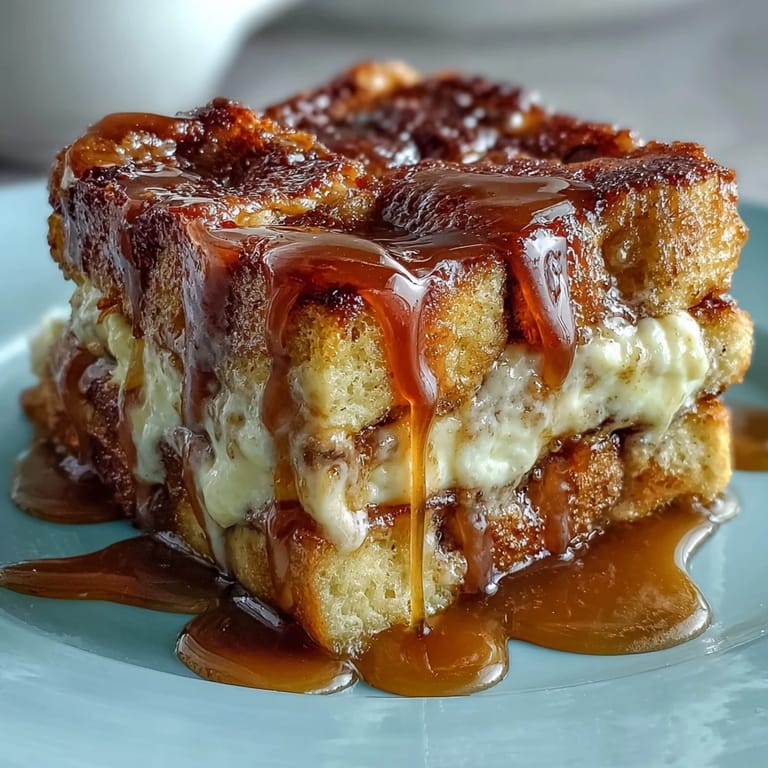
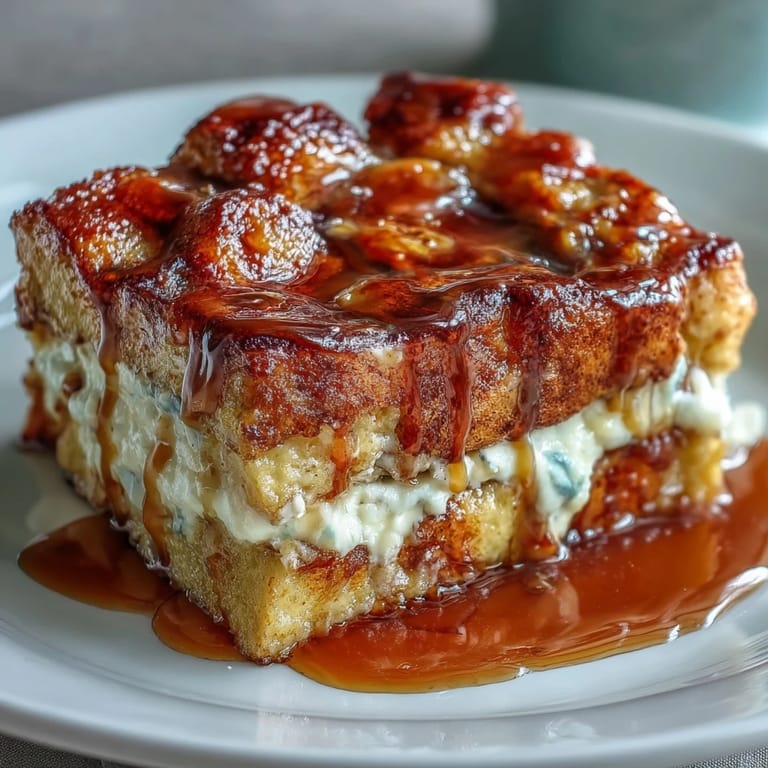
 The most magical moment happens when you slide this out of the oven and the kitchen fills with this smell of caramel and toasted brioche and vanilla, and you know everyone who's about to walk through the door is going to lose their mind. It's that feeling of being able to offer something warm and special without having to pretend you spent hours on it.
Why This Works as an Overnight Dish
The genius of overnight casseroles is that time does most of the work for you. The bread soaks, the flavors marry together, and the custard sets into something cohesive and delicious. You could bake it immediately after assembly, but it won't have the same depth or tender crumb that develops during those quiet hours in the fridge. This particular casserole benefits enormously from that rest period because the brioche, cream cheese, and caramel need time to understand each other.
Serving Suggestions That Feel Special
I've learned that a casserole feels fancier when you pay attention to what goes around it. Fresh berries scattered on top right before serving add brightness and cut through the richness in the best way. A dollop of whipped cream on the side means guests can add as much or as little as they want, which somehow makes people feel more in control even though you're the one feeding them.
Storage and Leftovers
Leftovers actually taste better the next day because the flavors continue deepening and mellowing together. Store covered in the refrigerator for up to three days, and you can reheat gently in a 300°F oven until warmed through without drying out the custardy center. Microwave reheating works too if you're in a hurry, though the oven method keeps the texture closer to freshly baked.
- Sprinkle chopped pecans or walnuts over the top before baking if you want a crunch that contrasts the soft interior.
- Try adding a pinch of nutmeg to the custard mixture for a subtle warmth that plays beautifully with the cinnamon.
- Make this up to two days ahead and bake it when you need it, giving you serious flexibility for busy weekends.
 Save to Pinterest
 This casserole has become the answer to so many mornings when I want to gather people around food that feels abundant and special. It's the kind of dish that makes you look like the kind of person who has everything figured out, even on the mornings when you absolutely don't.
Common Recipe Questions
- → Can I use regular sandwich bread instead of brioche?
While you can substitute regular bread, brioche or challah creates the best texture. Their rich, eggy composition absorbs the custard beautifully and holds up during baking without becoming mushy. French bread works as an alternative if allowed to stale slightly.
- → How long should the casserole refrigerate before baking?
For optimal texture and flavor, refrigerate at least 8 hours or overnight. This allows the bread to fully absorb the custard mixture, resulting in a moist, evenly set final dish. You can prepare it up to 24 hours in advance.
- → Can I freeze this casserole before or after baking?
Yes, you can freeze the unbaked casserole for up to 2 months. Thaw overnight in the refrigerator before baking. Leftover baked portions freeze well in individual containers for quick breakfasts—reheat in the microwave or oven.
- → What other toppings work well with this dish?
Chopped pecans or walnuts add delightful crunch and nutty flavor. Fresh berries like strawberries, blueberries, or raspberries provide bright contrast to the rich sweetness. Whipped cream, a dusting of powdered sugar, or even bacon crumbles make excellent additions.
- → How do I know when the casserole is fully baked?
The casserole is done when the top is golden brown and the center feels set, not jiggly or liquid. This typically takes 40-45 minutes at 350°F. If the top browns too quickly, loosely cover with foil for the final 10 minutes of baking time.
- → Can I reduce the sugar content?
You can decrease the granulated and brown sugar slightly, but keep in mind sugar contributes to both flavor and the caramelized exterior. The cream cheese and caramel provide significant sweetness, so you might reduce added sugars by about 25% if desired.