 Save to Pinterest
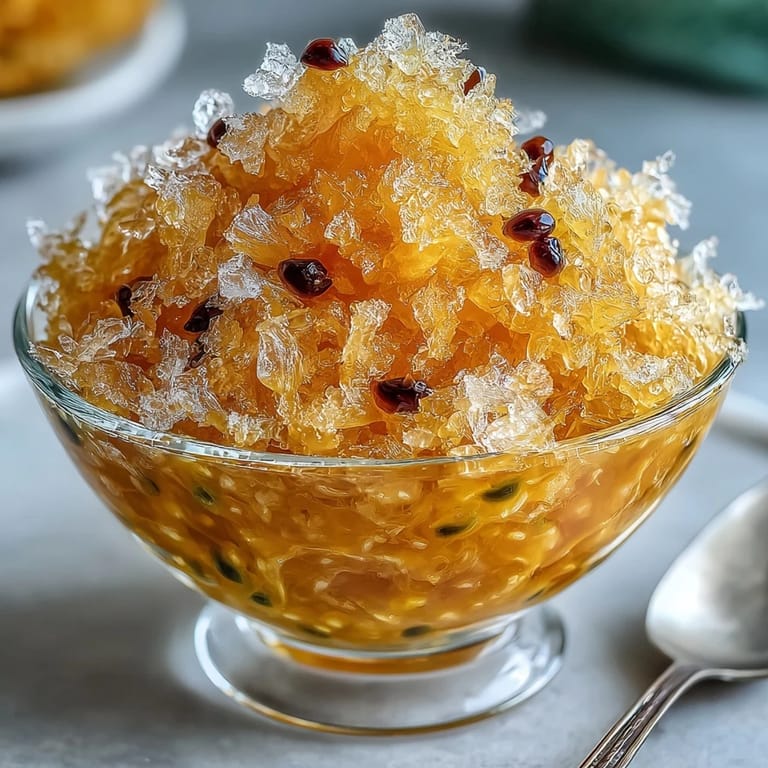
 There's something about summer heat that makes you crave something sharp and icy, and passionfruit granita arrived in my kitchen one July afternoon when a friend mentioned she'd never had one. I pulled up a recipe, grabbed a handful of wrinkled passionfruits from the market, and within minutes the kitchen smelled like tropical sunshine. What started as a casual experiment became something I make whenever I need to impress someone or simply want to taste that bright, tangy joy melting on my tongue.
I once made this for a potluck during a heat wave, and the relief on people's faces when they took that first spoonful was unforgettable. Someone actually closed their eyes and didn't speak for a moment—that's when I knew this dessert had real power. Since then, it's become my go-to when I want to feel like a gracious host without spending hours in a hot kitchen.
Ingredients
- Passionfruit pulp: The star ingredient that brings that distinctive tart-sweet complexity; use fresh passionfruits rather than bottles if you can, as they taste so much brighter and the pulp is more vibrant.
- Granulated sugar: Dissolves easily into the cold liquid and balances the passionfruit's natural tartness without overpowering it.
- Cold water: The base that lets the passionfruit flavor shine while creating that ideal texture when frozen.
- Fresh lime juice: A brilliant counterpoint that lifts the entire dish and prevents the granita from tasting one-dimensional.
Tired of Takeout? 🥡
Get 10 meals you can make faster than delivery arrives. Seriously.
One email. No spam. Unsubscribe anytime.
Instructions
- Mix your base:
- Pour the passionfruit pulp, sugar, water, and lime juice into a medium bowl and stir until the sugar fully dissolves. You want no gritty resistance when you taste it.
- Freeze it thin:
- Pour everything into a shallow freezer-safe dish—the wider and shallower, the better. A metal baking pan works beautifully because it conducts cold so efficiently.
- First break-up:
- After 45 minutes, take a fork and scrape around the edges where ice crystals first form, breaking them apart and dragging them toward the center. This is where the granita's personality develops.
- The patient scraping:
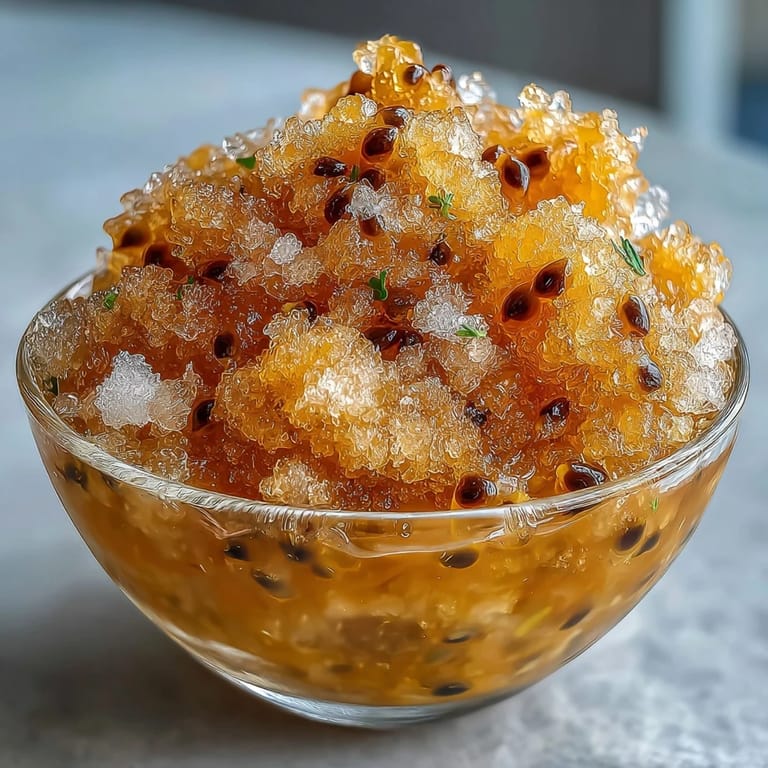
- Return it to the freezer and repeat this scraping every 30 minutes for about 3 hours total. Each pass creates finer, fluffier crystals—this is the technique that separates granita from a frozen brick.
- Serve with intention:
- Scoop the granita into chilled glasses or bowls immediately before serving. The temperature drop keeps those precious crystals from melting into liquid on your tongue.
 Save to Pinterest
 My neighbor tasted this and asked if I'd been secretly trained as a pastry chef, which made me laugh because it's truly one of the easiest things I make. The beauty is that it feels fancy and effortless at the same time—the kind of dessert that makes people think you've spent hours when you've barely been in the kitchen.
Choosing Your Passionfruits
Ripe passionfruits should feel slightly soft and wrinkled—that's when the flavor is most concentrated. If yours are smooth and firm, give them a few days on the counter before cutting into them. The moment you scoop out that golden pulp and smell it, you'll know you made the right choice.
Seeds or No Seeds
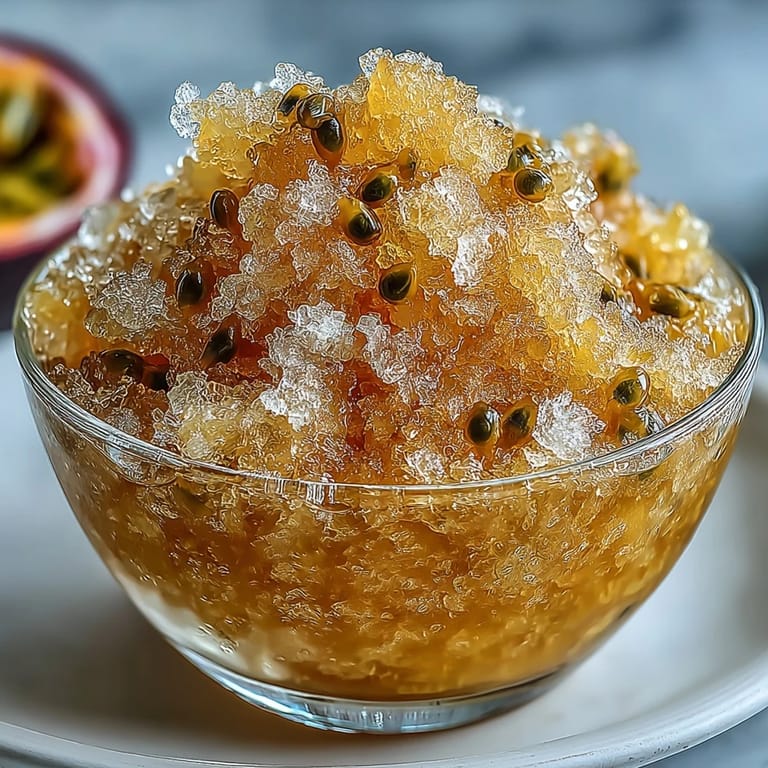
This is genuinely your call. I love the seeds for crunch and visual appeal, but if you want a silkier texture, push the pulp through a fine strainer and leave the seeds behind. Either way tastes wonderful—it's just about what texture makes you happy.
Taking It Further
Once you master the basic recipe, granita becomes a playground for creativity. I've added a splash of rum, topped it with coconut whipped cream, paired it with a crisp Prosecco, and even served it alongside vanilla gelato for contrast.
- A drizzle of honey or a pinch of sea salt right before serving can add unexpected depth.
- Try infusing the water with fresh mint or ginger the day before for subtle flavor layers.
- If you're serving with wine, Moscato d'Asti is your friend—the sweetness plays beautifully against the tartness.
 Save to Pinterest
 Every time I make this, I'm reminded that sometimes the simplest recipes are the ones people remember longest. Passionfruit granita doesn't require special skills or obscure ingredients, just a little patience and a willingness to play with ice crystals until they're just right.
Common Recipe Questions
- → What is granita?
Granita is a traditional Italian frozen dessert similar to sorbet but with a coarser, crystalline texture. Unlike smooth ice cream or sorbet, granita is manually scraped during freezing to create fluffy ice crystals. This passionfruit version delivers intense tropical flavor with minimal ingredients.
- → Can I use frozen passionfruit pulp?
Absolutely. Frozen passionfruit pulp works beautifully and often provides consistent sweetness year-round. Thaw completely before combining with other ingredients. If using sweetened frozen pulp, reduce the sugar slightly to maintain balanced flavor.
- → How long does passionfruit granita last?
Store properly covered in the freezer for up to 2 weeks. The texture remains best when served within the first week. For optimal results, let sit at room temperature for 5 minutes before serving, then give a quick fluff with a fork to restore crystalline texture.
- → What can I serve with passionfruit granita?
This pairs beautifully with coconut whipped cream for creamy contrast. Fresh mint leaves make an elegant garnish. For adult occasions, serve alongside Moscato d'Asti or chilled Prosecco. The tartness also complements vanilla bean cakes or buttery shortbread cookies.
- → Should I strain the passionfruit seeds?
Both methods work well. Straining creates smoother texture while keeping seeds adds pleasant crunch and visual appeal. For best results, strain half the pulp and leave seeds in the remainder. This delivers passionfruit's signature tropical appearance while ensuring consistent texture throughout.
- → Why is lime juice added?
Fresh lime juice brightens the tropical passionfruit flavor while adding necessary acidity to balance sweetness. The citrus also helps prevent ice crystals from becoming too large during freezing. Lemon juice makes a suitable substitute if preferred, though lime provides the most complementary profile.