 Save to Pinterest
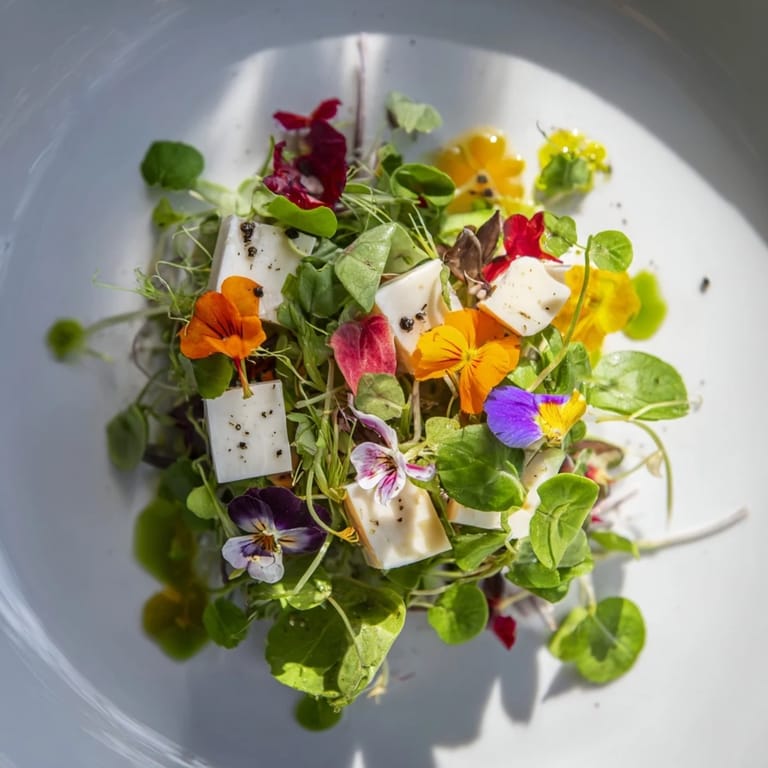
 The first time I served this was at a dinner party where someone complained everything felt too formal, too orchestrated. I wanted to prove that elegance doesn't require fuss, so I grabbed a cutting board, scattered some cheese cubes, and let the garden do the talking. Watching my guests lean in with genuine curiosity, carefully moving petals aside to discover hidden treasures of cheese, I realized I'd stumbled onto something magical. It wasn't about impressing anyone—it was about creating a moment of play at the table, where even adults felt like kids again. That night changed how I think about entertaining.
I remember making this for my sister's engagement party last spring, and her fiancé—who claims he doesn't eat flowers—carefully plucked a violet petal aside to reach a piece of goat cheese, then paused. He looked genuinely delighted, like he'd discovered something he didn't know he wanted. The whole room watched this unfold, and suddenly everyone was leaning in, searching, discovering. That's when I knew this wasn't just an appetizer; it was an experience that brings people together through curiosity.
Ingredients
- Aged cheddar, cut into small cubes (100 g): The sharpness cuts through the delicate flowers beautifully; I learned this after a first attempt with mild cheese that got completely lost. Aim for roughly half-inch cubes so they're substantial enough to find and satisfy.
- Goat cheese, cut into small cubes (100 g): Its tanginess and creamy texture feel like a little luxury, and the white color creates gorgeous contrast against dark microgreens. Keep your knife wet while cutting so it doesn't stick.
- Gruyère, cut into small cubes (100 g): This one has a nutty, complex flavor that makes guests pause and wonder what they're tasting. It's the cheese that makes people ask for the recipe.
- Microgreens—pea shoots, radish greens, or mixed micro herbs (75 g): These are your camouflage, your magic trick; they hide the cheese while adding peppery brightness and delicate texture. Buy them the day of if you can, and keep them in a sealed container until the last moment.
- Edible flowers—nasturtiums, pansies, violets, borage, calendula (1 cup): This is non-negotiable territory: confirm your flowers are pesticide-free and actually labeled edible, or don't use them at all. I learned this lesson after a panicked call to a guest who had a mysterious rash.
- Extra virgin olive oil, optional (1 tbsp for drizzling): A whisper-light drizzle adds richness and helps everything feel cohesive; skip it if you prefer the dish lighter and purely vegetable-forward.
- Flaky sea salt and freshly ground black pepper, to taste: These two finish everything; they're what guests taste first and remember last.
Tired of Takeout? 🥡
Get 10 meals you can make faster than delivery arrives. Seriously.
One email. No spam. Unsubscribe anytime.
Instructions
- Gather your players:
- Cube your cheeses with a sharp knife, aiming for uniform pieces so nothing dominates the board. Lay out your edible flowers and microgreens in small piles so you can work quickly when the moment comes.
- Build your foundation:
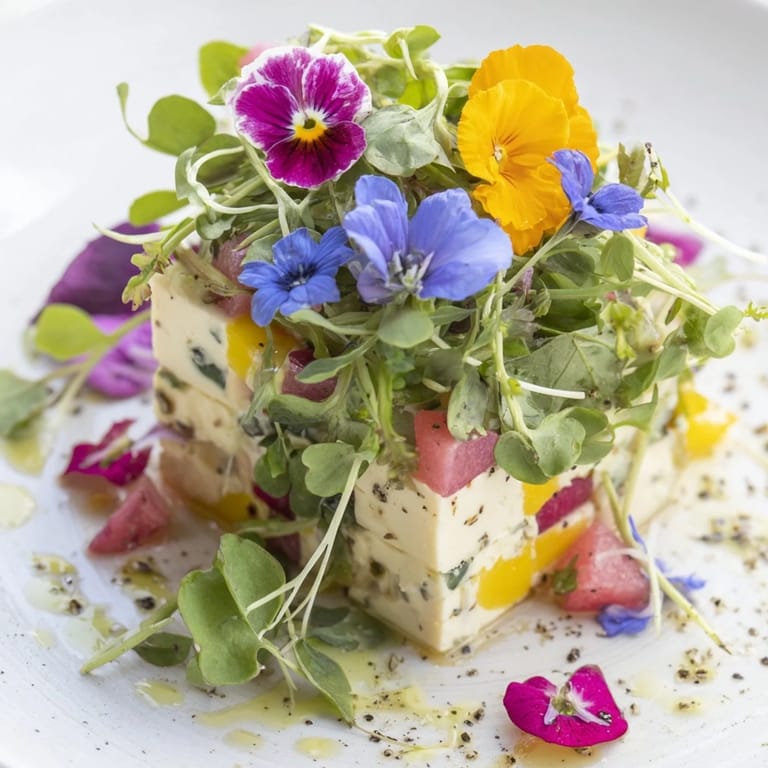
- Arrange cheese cubes across your board with intentional spacing—think constellation, not cluster. Leave room for greens to weave through; this is where the magic of discovery happens.
- Create the landscape:
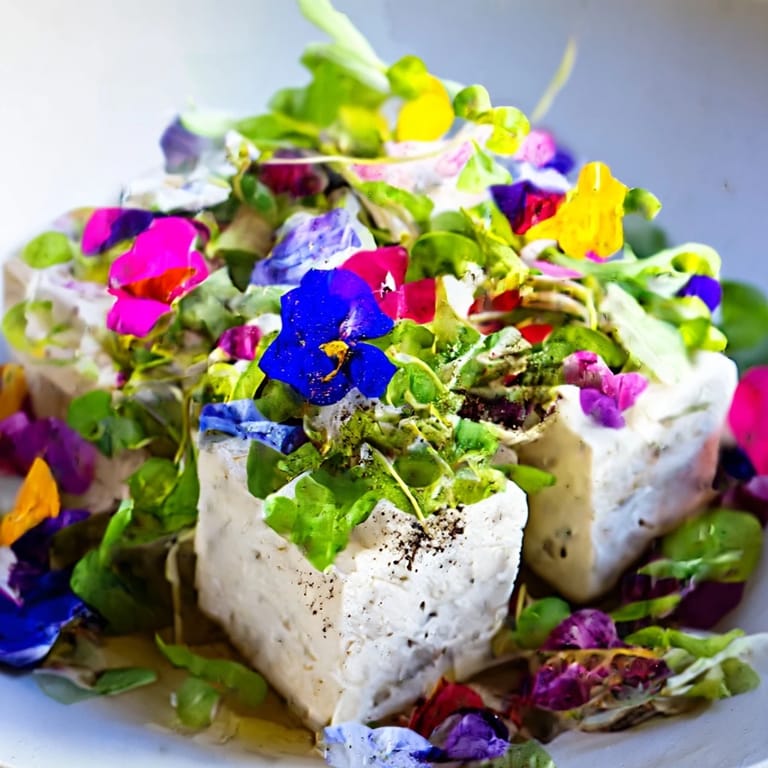
- Scatter microgreens generously over and around the cheese, letting some cubes peek through while others disappear completely. This is intuitive work; there's no wrong way, just more or less hidden.
- Tuck the flowers:
- Nestle edible flowers among the greens, treating them like little jewels. Alternate colors and types so the board reads as a living garden, not a random pile.
- Finish with intention:
- Drizzle olive oil if you're using it, then season sparingly with flaky salt and black pepper. Taste a tiny piece of each cheese to confirm the seasoning sings.
- Serve and watch:
- Bring the board to the table and step back—this is the moment your guests become foragers, discovering cheese treasures beneath the foliage. It's more engaging than any plated appetizer could ever be.
 Save to Pinterest
 There was this one moment—quieter than the laughter and chatter—when a guest who usually rushes through meals stopped, held a single petal up to the light, then smiled at it like it was the most beautiful thing she'd ever seen. That's when I understood that this dish is really about permission. Permission to play. Permission to slow down. Permission to find joy in the smallest gesture.
Sourcing Your Flowers Matters
This was my hardest lesson. I initially thought farmers' market flowers and grocery store bouquets would work fine, until I learned the hard way that even "fresh" flowers at standard markets are sprayed with all kinds of preservatives and antimicrobials. Now I source mine from specialty grocers, or better yet, local farms that grow specifically for consumption. Ask questions. Look for labels. If you can't confirm a flower is food-safe, don't serve it. Your peace of mind and your guests' safety are worth the extra effort.
Why This Works as Theater
Food that looks like art but tastes like a treasure hunt somehow bypasses all the noise in people's heads. It gives permission for play at the dinner table, which honestly feels rarer every year. I've noticed guests who usually sit on their phones start engaging with each other while foraging. Something about the interactivity—the searching, the discovery, the tiny delight of finding a piece of sharp cheddar under a nasturtium—makes people present.
Variations and Pairings
I've experimented with this enough to know it's endlessly adaptable. Manchego brings a different mineral quality, feta adds briny punch, and even a soft cheese like fresh mozzarella works if you freeze it briefly first. I once added paper-thin radish slices for crunch and everyone noticed immediately—it wakes up the whole bite. Crisp white wine or sparkling rosé are the natural companions, but honestly, it pairs beautifully with almost anything because the flavors are delicate and clean.
- Try adding thinly sliced cucumber or crisp radishes for a textural contrast that feels unexpected and delightful.
- Experiment with different edible flowers for color and flavor—calendula is slightly spicy, violets are mild and floral, borage tastes faintly like cucumber.
- Taste everything before service to confirm seasoning; it's an uncooked dish and that's your only chance to adjust.
 Save to Pinterest
 This dish taught me that the most elegant entertaining is often the simplest: good ingredients arranged with intention and a touch of playfulness. Serve it and watch what happens.
Common Recipe Questions
- → What cheeses work best for this dish?
Aged cheddar, goat cheese, and Gruyère provide a balanced blend of sharp, creamy, and nutty flavors ideal for this garden-inspired presentation.
- → Can the edible flowers be substituted?
Yes, any fresh, pesticide-free edible flowers like nasturtiums, pansies, or violets complement the dish beautifully while adding vibrant color.
- → Is this dish suitable for gluten-free diets?
Absolutely; all ingredients used are naturally gluten-free, making it safe for gluten-sensitive guests.
- → How should I serve this appetizer?
Arrange cheese cubes on a platter, scatter microgreens and edible flowers over them, optionally drizzle olive oil, and season lightly with salt and pepper for an eye-catching starter.
- → Can this be prepared ahead of time?
For best freshness, assemble shortly before serving to maintain the vibrant appearance and delicate textures of the greens and flowers.