 Save to Pinterest
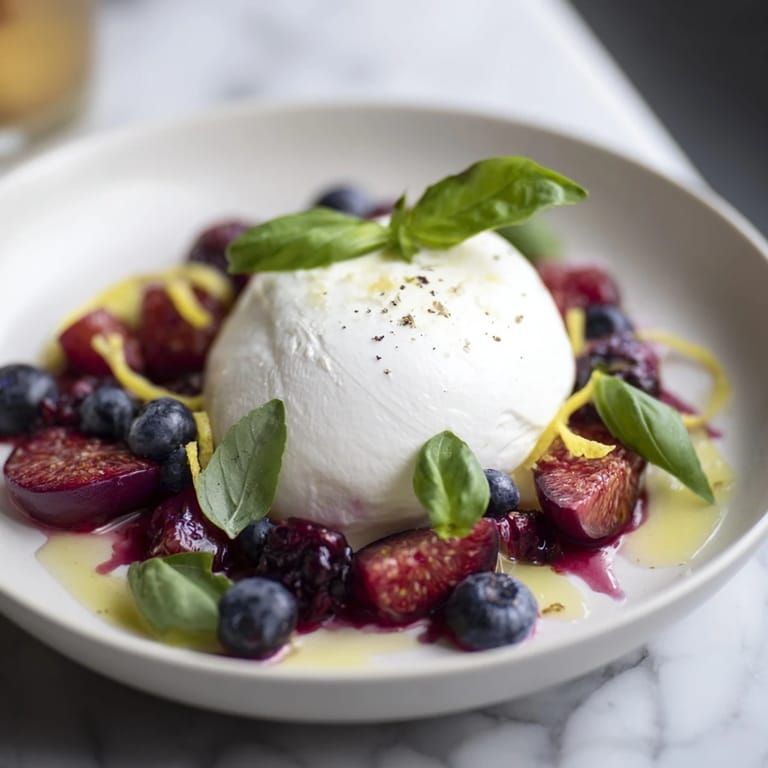
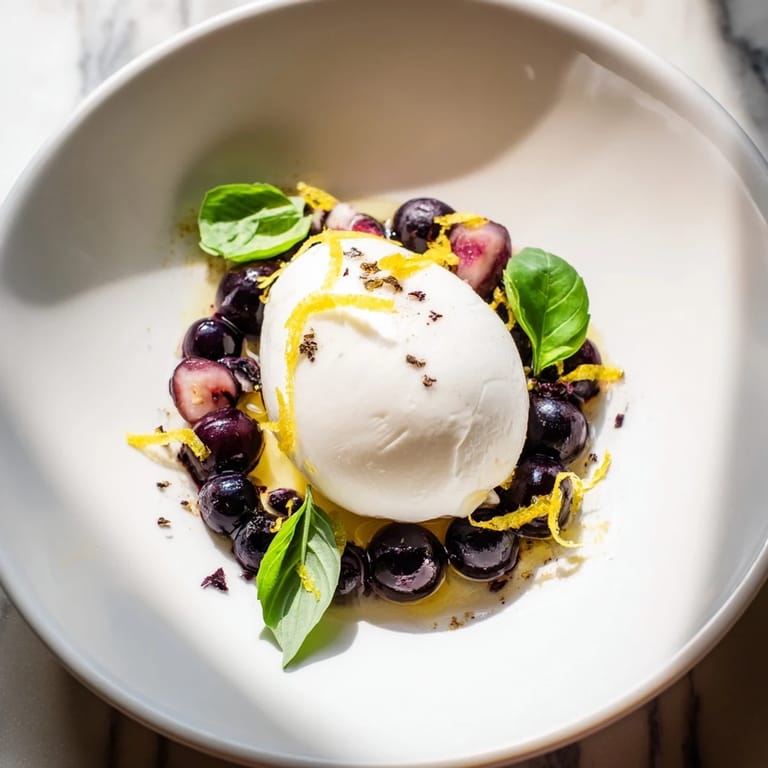
 There's something about late summer evenings that makes you want to build something beautiful on a plate. I was standing in my kitchen one twilight hour, surrounded by this incredible purple bounty from the farmer's market—blueberries so dark they were almost black, grapes that gleamed like tiny jewels—and I suddenly wanted to arrange them like a night sky. The burrata, creamy and delicate, became the moon at the center of it all. That single moment of playful composition turned into something I make whenever I want to feel like I'm doing something a little bit special, even on a simple Tuesday.
I made this for a dinner party where someone had cancelled last minute, leaving me with a small group and a lot of nervous energy. Setting this salad on the table felt like exhaling—suddenly the evening shifted. One guest asked if I'd gone to culinary school, which made me laugh because it's genuinely just fruit arranged on a platter. But that's the magic of it: simplicity can look like intention when you take a moment to arrange it with care.
Ingredients
- Fresh blueberries (1 cup): The darker they are, the more flavorful—avoid any that look dull or soft.
- Seedless purple grapes (1 cup, halved): Halving them exposes their juicy centers and makes them nestle beautifully against the burrata.
- Burrata cheese (1 large ball, about 200 g): Buy it as close to serving time as possible; it's at its creamiest and most precious when fresh.
- Fresh basil leaves (1/3 cup, torn): Tear rather than chop to keep the leaves from bruising and turning dark.
- Baby arugula or mixed greens (1 cup, optional): These add a peppery foundation, but the salad shines even without them.
- Extra-virgin olive oil (2 tbsp): This is where quality matters—use something you actually enjoy tasting.
- Balsamic glaze (1 tbsp): The reduced version is essential; regular balsamic vinegar will make everything too wet.
- Sea salt and freshly ground black pepper: Add these to taste, remembering that burrata is already quite mild.
- Lemon zest (from 1 lemon, optional): A whisper of brightness that makes the whole dish sing.
Tired of Takeout? 🥡
Get 10 meals you can make faster than delivery arrives. Seriously.
One email. No spam. Unsubscribe anytime.
Instructions
- Create your base (if using greens):
- Spread the arugula or mixed greens across a wide, shallow serving bowl or platter. You want enough greenery to anchor everything, but not so much that the fruit and burrata feel crowded.
- Build the ring:
- Scatter the blueberries and halved grapes in a generous circle around the edge of your platter, leaving a clear space in the center. This is where you get to play—there's no wrong way to arrange them, but leaving that moon-sized circle open is key to the visual.
- Place the moon:
- Gently set the burrata ball in the center. If it feels fragile (which it is), use your hands rather than utensils—you'll have better control.
- Dress with oil:
- Drizzle the olive oil evenly over the fruit and the top of the burrata, using a thin stream so you don't create puddles.
- Add the glaze:
- Spoon the balsamic glaze in thin, artful streaks across the berries and over the burrata. Go slowly here—the glaze is intense, and a little goes a long way.
- Finish with flourish:
- Scatter the torn basil leaves across everything, add a pinch of lemon zest if you're using it, then season gently with sea salt and black pepper.
- Serve immediately:
- This salad is best eaten right away, while the burrata is still at peak creaminess and the greens haven't started to wilt.
 Save to Pinterest
 The first time someone actually got quiet when I set this on the table, I realized it wasn't about the recipe at all—it was about taking five extra minutes to make something look like it mattered. Food becomes memory that way sometimes, not because of what's in it, but because of how it felt to receive it.
Why This Arrangement Works
The visual composition isn't just decoration—it's actually functional. By arranging the fruit in a ring, you ensure that every bite includes berries and grapes alongside the burrata and greens. The balsamic glaze pools slightly in the center, creating a sauce that catches and holds the burrata's creaminess. It's food that tastes as intentional as it looks.
The Burrata: Your Ingredient Star
Burrata is a marvel: a ball of mozzarella filled with cream and soft curds, so delicate that it demands respect. When you cut into it or break off a piece, the inside practically melts onto whatever it touches. This means the burrata isn't just an ingredient—it's the reason everything else exists on the plate. Treat it gently, and it will reward you with something genuinely luxurious.
Customization and Pairing
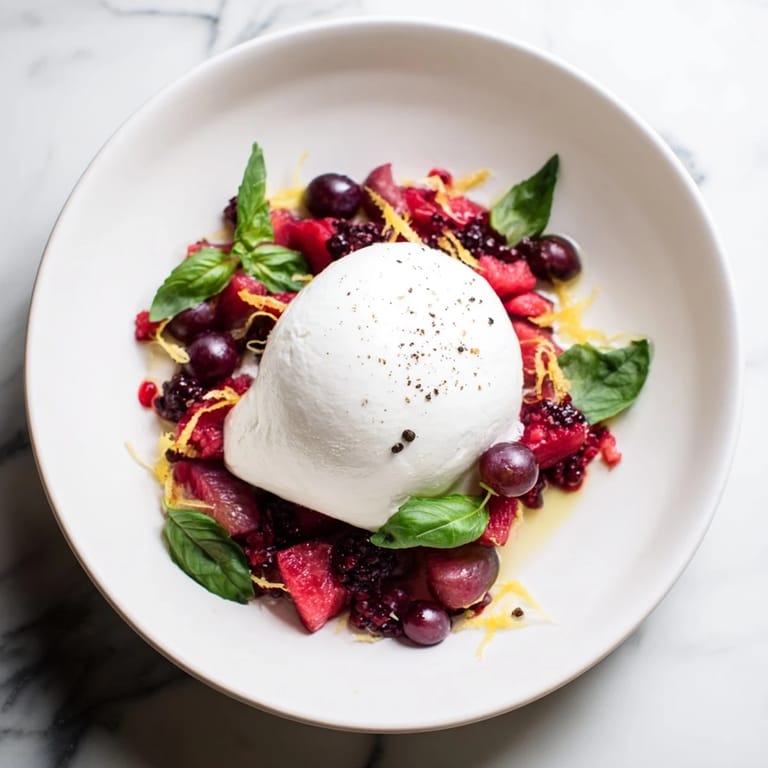
This salad is a canvas, even though it looks finished as is. Some people add toasted pistachios for crunch, others swap blackberries for blueberries or add fresh mint alongside the basil. The beauty is that it stays light and elegant no matter what you adjust. Serve it with crusty bread to soak up the balsamic and olive oil, or pair it with a crisp Sauvignon Blanc or dry rosé if you're making it part of a larger meal. The salad works equally well as a striking appetizer or a summer supper alongside grilled fish.
- For extra crunch, scatter toasted pistachios or walnuts over the top right before serving.
- If you can't find burrata, fresh mozzarella works in a pinch, though you'll lose some of that signature creaminess.
- Taste as you go with the salt and pepper—burrata is already quite mild, so you have room to season boldly.
 Save to Pinterest
 This dish reminds me that cooking doesn't always mean spending hours at the stove. Sometimes the most memorable meals come from noticing what's beautiful right in front of you and letting it shine.
Common Recipe Questions
- → What cheese is used in this salad?
The salad features a large ball of creamy burrata cheese, which serves as a rich and smooth centerpiece.
- → Can I substitute the fruits used?
Yes, blackberries can replace blueberries if preferred, and seedless purple grapes provide a sweet, juicy contrast.
- → Is this dish suitable for vegetarians?
Absolutely, it is vegetarian-friendly containing fresh fruits, burrata cheese, and herbs.
- → How is the balsamic glaze applied?
The balsamic glaze is drizzled delicately over the berries and burrata, adding a tangy sweetness that balances the creamy cheese.
- → What greens can I use as a base?
Baby arugula or mixed greens can be used as a light, fresh base under the fruits and cheese, enhancing texture and flavor.
- → Are there any suggested pairings for this dish?
Pair this salad with a crisp Sauvignon Blanc or a dry rosé for a refreshing complement.