 Save to Pinterest
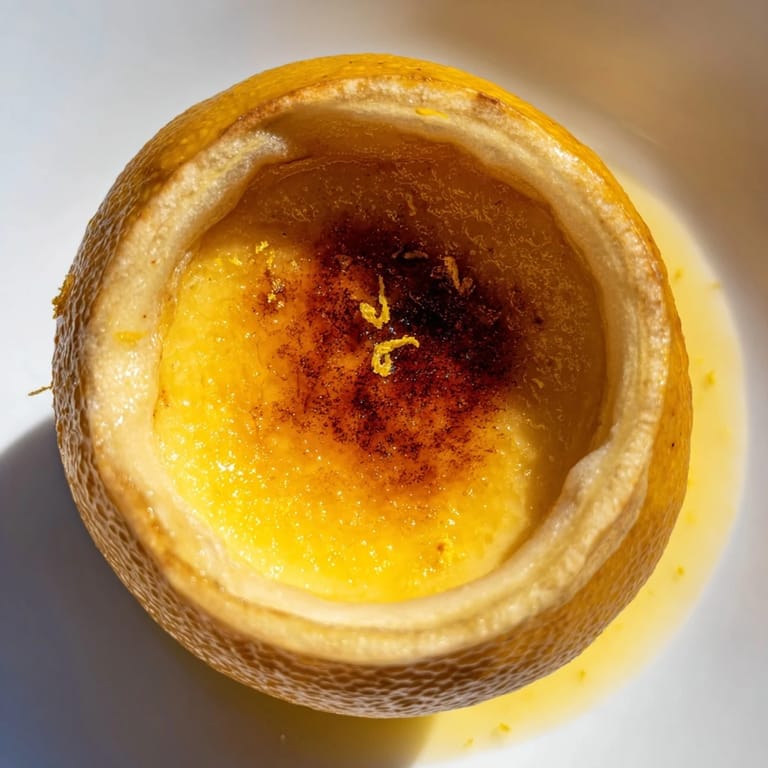
 The first time I served lemon brûlée posset, my dinner guest nearly tipped over their spoon when that caramelized sugar crackled against the silky cream beneath. I'd discovered this dessert almost by accident, looking for something that felt elegant but not fussy, and what struck me was how a lemon shell could become both container and storyteller. Now, whenever I make it, that moment of crackling sugar against cold posset reminds me why I fell in love with this particular dish.
I remember plating these for a dinner party on a warm summer evening, and someone asked if they could eat the lemon shell too—which honestly made me laugh because yes, you can, but most people want to savor the cream first. What fascinated me was how the natural tartness of the lemon zest infused into the sweetness, creating this balance that felt almost alive on the tongue. That night, everyone wanted the recipe, and I realized it wasn't just the flavors they loved; it was the presentation, the ritual of cracking into something beautiful.
Ingredients
- Double cream (500 ml): This is the soul of the posset—its richness makes the lemon brightness pop instead of overwhelming it, so don't skimp on quality here.
- Caster sugar (140 g, plus 6–8 tsp for brûlée): The finer granules dissolve smoothly into warm cream without grittiness, which matters more than you'd think.
- Lemon zest (2 lemons): The zest carries oils that regular juice can't give you; grate it just before using so it's vibrant and aromatic.
- Freshly squeezed lemon juice (90 ml): This is what curdles the cream into silky posset, so fresh juice is non-negotiable—bottled won't do it right.
- Large lemons for shells (6): Look for heavy, thick-skinned lemons with firm flesh; thin-walled ones collapse under the weight of the cream.
Tired of Takeout? 🥡
Get 10 meals you can make faster than delivery arrives. Seriously.
One email. No spam. Unsubscribe anytime.
Instructions
- Hollow out your lemon shells with intention:
- Halve each lemon lengthwise and scoop out the flesh with a melon baller or small spoon, working gently so you don't puncture the skin. Trim a thin slice from the bottom of each half so it sits flat and steady in the fridge—this matters because a tilted shell will let your posset pool to one side.
- Warm the cream and sugar until they're singing together:
- Combine the double cream, sugar, and lemon zest in a medium saucepan and bring it to a gentle boil, stirring so the sugar dissolves evenly. Let it simmer for exactly 3 minutes—you'll see the mixture turn pale and silky—then pull it from heat and let it cool for about 10 minutes.
- Add the lemon juice and watch the magic happen:
- Pour in the fresh lemon juice slowly, stirring as you go; the mixture will thicken slightly and become glossy, which is exactly what you want. Strain it through a fine mesh to remove the zest bits, which gives you that pristine, elegant appearance.
- Fill your waiting shells with restraint:
- Pour the warm posset into each lemon shell, leaving just a tiny space at the top so the brûlée topping sits proud and ready to crack. The warmth will help it settle into every curve of the shell.
- Let time do the work:
- Chill for at least 3 hours until the posset sets firm but still giggles slightly when you nudge the plate. This is the waiting game that pays off.
- Brûlée with confidence right before serving:
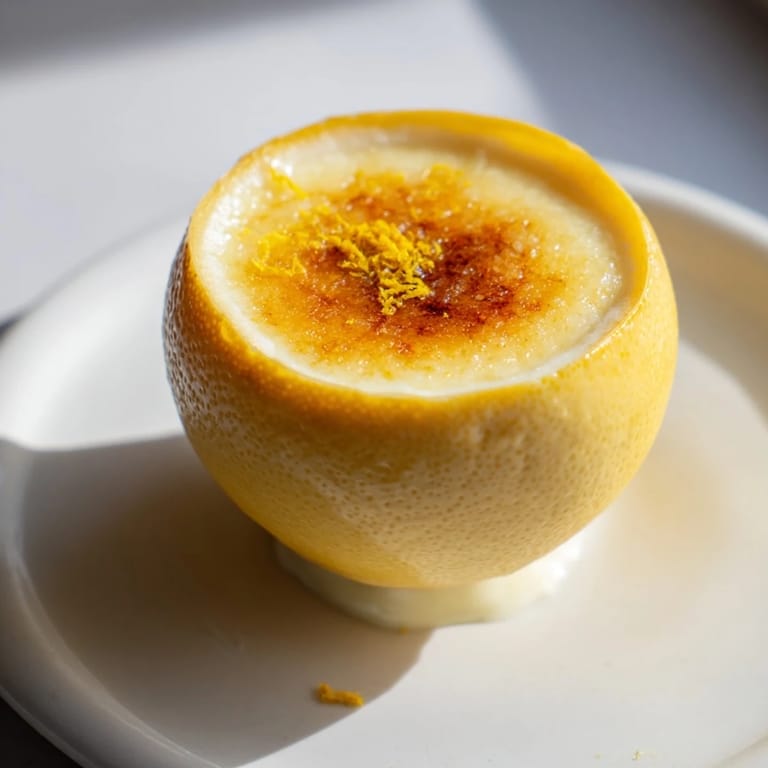
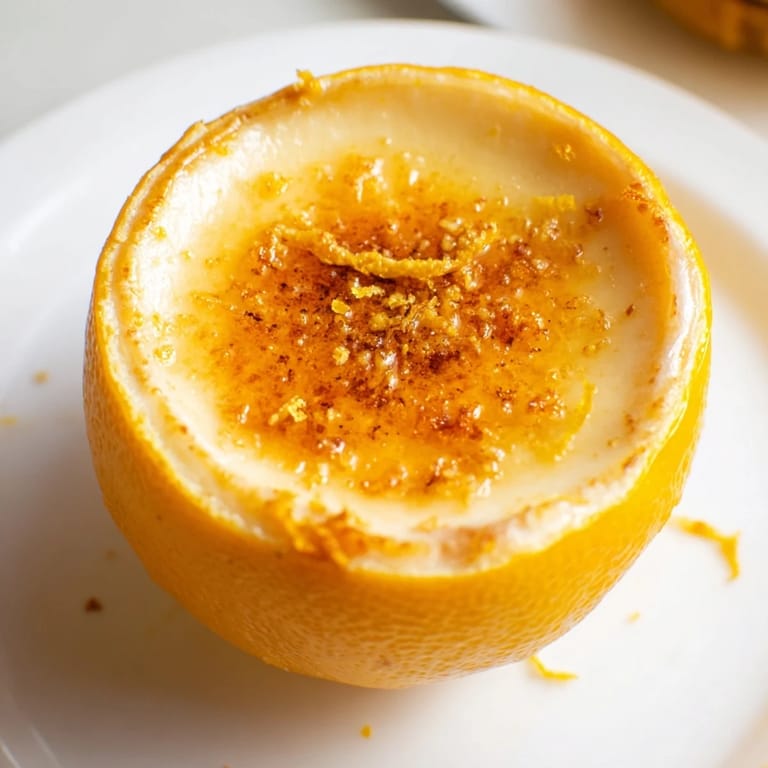
- Sprinkle about a teaspoon of caster sugar evenly over each posset and torch it until the sugar bubbles and turns deep golden brown. The sound it makes as it hardens is part of the experience—that satisfying snap.
 Save to Pinterest
 There's a moment, right after you torch the sugar and it hardens into that amber shell, when you realize you've made something that tastes like summer and feels like celebration. I still remember the quiet satisfaction of setting these down in front of guests, watching them pick up their spoons and pause for just a second before breaking through.
The Secret of Silky Posset
Posset is actually a medieval concept that modern cooks sometimes misunderstand—it's not a mousse, it's not a panna cotta, it's something that works through the chemistry of acid meeting warm fat. The lemon juice curdles the cream in the gentlest possible way, creating that signature silk without any gelatin or whipping. I spent years making versions that were either too thick or too thin before I realized the timing and temperature were everything; adding cold lemon juice to hot cream, or hot juice to cold cream, changes the whole texture.
Why Lemon Shells Matter Beyond Presentation
Using the lemon itself as the serving vessel isn't just theatrical—it's practical and delicious. The shell protects the posset, keeps it colder longer, and when people eat it, they get a hint of the natural lemon oil from the zest as they scrape the sides. Plus, there's something about eating from a lemon shell that makes people feel like they're part of something special, like this isn't just dessert, it's an experience.
Variations and Serving Suggestions
Once you understand the basic posset technique, you can play with it in ways that feel exciting and personal. I've infused the cream with a sprig of thyme or basil while simmering, which adds an herbal whisper underneath the bright lemon. The brûlée topping is your chance to get creative too—a tiny pinch of sea salt on the sugar before torching, or even a grind of black pepper, transforms the whole flavor dynamic. Serve these alongside crisp shortbread or almond biscuits, or even just on their own if you want the posset to be the star.
 Save to Pinterest
 This dessert has taught me that the most memorable food doesn't have to be complicated; it just needs to surprise you a little and taste like someone cared. Every time I make it, I'm transported back to that first dinner party and that satisfying crackle of caramelized sugar.
Common Recipe Questions
- → How do I prepare the lemon shells without tearing?
Carefully halve the lemons lengthwise and gently scoop out the flesh using a spoon or melon baller, taking care to keep the shells intact. Trim a thin slice from the bottom to ensure they stand upright securely.
- → Can I infuse herbs into the cream for extra flavor?
Yes, adding a sprig of thyme or basil while simmering the cream and sugar adds subtle herbal notes. Remove the herb before stirring in lemon juice to maintain smoothness.
- → What’s the best method to caramelize the sugar topping?
Using a kitchen blowtorch is ideal for an even caramelized crust. Alternatively, a very hot grill or broiler can be used, but watch closely to prevent burning.
- → How long should the posset chill before serving?
Chill the mixture in lemon shells for at least 3 hours, allowing it to set firmly and develop a smooth texture.
- → Can this dessert be prepared in advance?
Yes, prepare and chill up to a day ahead. Apply and caramelize the sugar topping just before serving for optimal texture.