 Save to Pinterest
 My grandmother used to make Hoppin John every New Year's Day without fail, and I'd watch from the kitchen stool as she'd brown that bacon until the whole house smelled like smoke and possibility. She swore by the superstition—black-eyed peas for prosperity, the rest for tradition—but honestly, I think she just loved the excuse to cook something that made everyone gather around the table before noon. The first time I made it myself, I burned half the bacon and nearly overcooked the peas, yet somehow it still tasted like luck.
I made this for my roommate's first Southern meal, and watching her face when she tasted the crispy bacon mixed with those tender peas over rice—that's when I realized this dish is less about following a recipe and more about passing something forward. She asked for the recipe that night, and now it's her New Year's tradition too.
Ingredients
- Thick-cut bacon, 6 oz diced: Don't skimp here—the rendered fat is your flavor foundation, and those crispy bits scattered on top are what make people ask for seconds.
- Onion, 1 medium finely chopped: This is your aromatic anchor; soften it properly and it becomes the backbone of the whole dish.
- Celery stalks, 2 finely chopped: Fresh celery adds a subtle sweetness that balances the savory peas beautifully.
- Garlic, 2 cloves minced: Use fresh, never garlic powder—you'll taste the difference in how it rounds out the flavors.
- Green bell pepper, 1 diced (optional): I learned to add this for color and a gentle vegetal sweetness that complements the earthiness of the peas.
- Dried black-eyed peas, 1½ cups soaked overnight: Soaking matters more than you'd think; it ensures even cooking and creamier centers.
- Low-sodium chicken or vegetable broth, 4 cups: The broth is where the peas drink their flavor, so choose something you'd actually taste on its own.
- Bay leaf, 1: A single leaf adds sophistication without announcing itself—remember to fish it out before serving.
- Dried thyme, ½ teaspoon: Just enough to whisper, not shout; thyme respects the peas' humble nature.
- Cayenne pepper, ¼ teaspoon (optional): This is your heat; add it if you want a gentle warmth rather than a kick.
- Salt and freshly ground black pepper: Taste as you go—your seasoning is the final edit that brings everything into focus.
- Long-grain white rice, 2 cups: The canvas for your peas; fluffy and uncomplicated.
- Water for rice, 4 cups: Measure carefully so the rice absorbs everything without turning into paste.
- Unsalted butter or oil, 1 tablespoon: A little fat makes the rice tender and keeps grains from sticking together.
- Scallions, 2 thinly sliced: The fresh, sharp green finish that makes people notice and remember this dish.
- Hot sauce, to taste (optional): On the side, never forced—let everyone find their own heat level.
Tired of Takeout? 🥡
Get 10 meals you can make faster than delivery arrives. Seriously.
One email. No spam. Unsubscribe anytime.
Instructions
- Render the bacon until it sings:
- Dice your bacon and cook it over medium heat in a large pot or Dutch oven, listening for that gentle sizzle to turn into a steady crackle. After about 6 to 8 minutes, it should be deeply browned and crisp, and you'll want to pull half of it out with a slotted spoon to save for the end.
- Build your flavor base with vegetables:
- Into the bacon fat (don't drain it), add your chopped onion, celery, and green pepper if using, stirring occasionally until they soften and the onion turns translucent—about 5 minutes. This is the moment when your kitchen fills with that savory, comforting smell that tells you something good is happening.
- Introduce the garlic and spices:
- Stir in your minced garlic and cook for just one more minute until the rawness mellows and it smells almost sweet. Add your bay leaf, thyme, and cayenne if you're using it, letting these dry spices toast for a few seconds in the warm fat.
- Simmer the peas into tenderness:
- Pour in your soaked peas and broth, bring everything to a boil, then lower the heat and let it simmer uncovered for 35 to 45 minutes (only 20 to 25 if you're using canned). You're watching for the peas to soften completely but still hold their shape—they should never fall apart into mush.
- Cook rice alongside and keep it simple:
- While the peas do their work, combine your rice, water, butter, and a pinch of salt in a separate saucepan and bring it to a boil. Once boiling, reduce heat to low, cover with a tight-fitting lid, and let it cook for 15 minutes without peeking, then remove from heat and let it rest for 5 minutes before fluffing with a fork.
- Taste and season until it's yours:
- When the peas are tender, remove the bay leaf and taste carefully—this is your moment to add salt and pepper until it feels perfectly balanced and unmistakably delicious.
- Assemble and finish with flair:
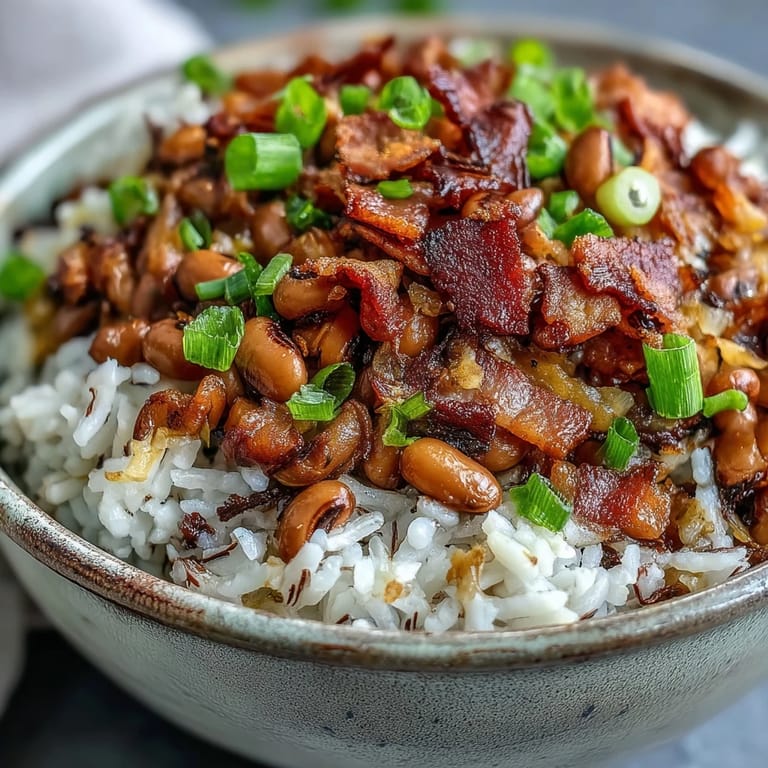
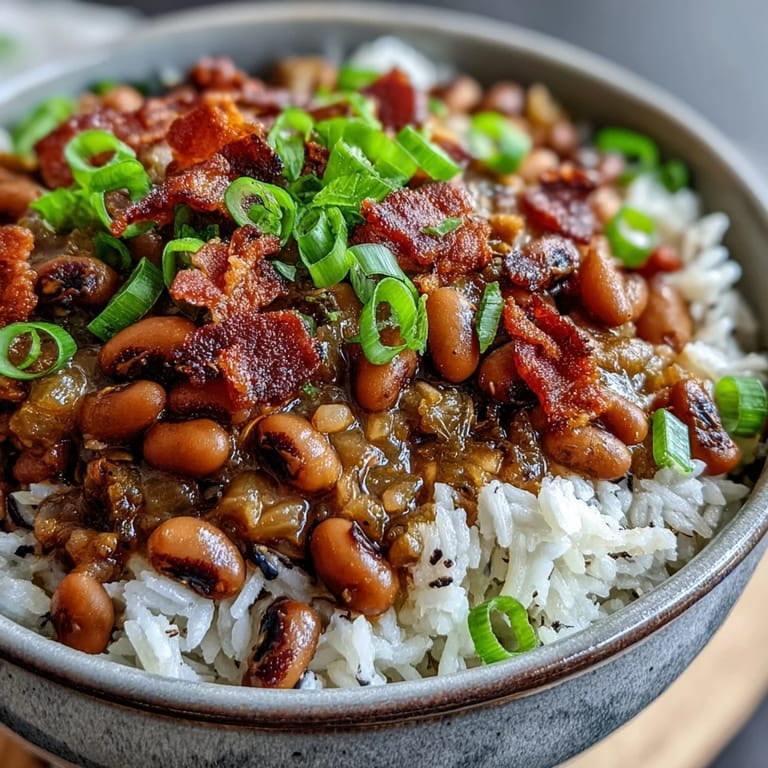
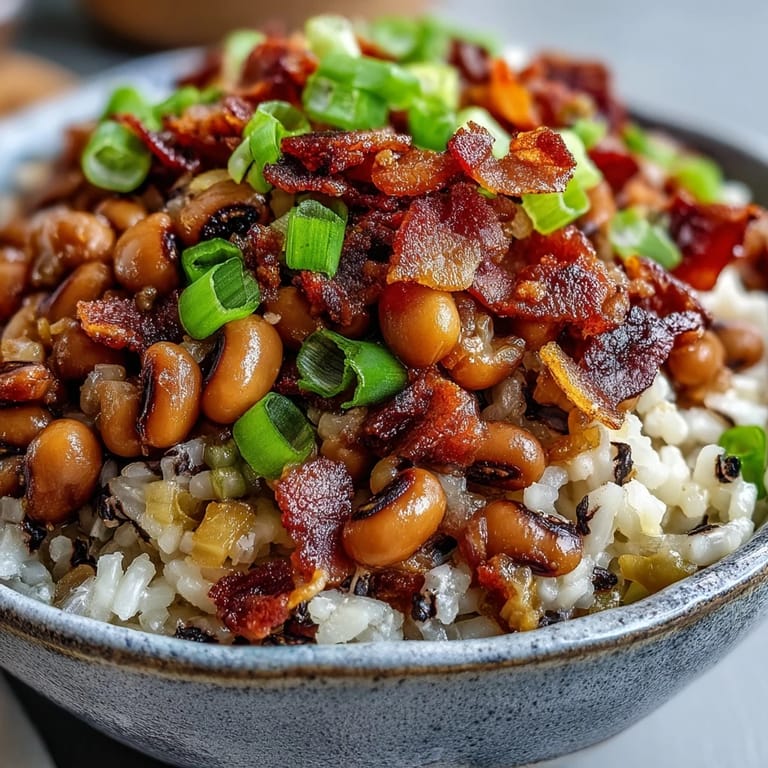
- Spoon those creamy peas over the fluffy rice, scatter the reserved crispy bacon on top, and finish with bright green scallions. Offer hot sauce on the side for anyone who wants to turn up the heat.
 Save to Pinterest
 The real magic of Hoppin John isn't in any single ingredient—it's in how it brings people together with the kind of comfort that doesn't need explanation. I've served this to friends who'd never tried it, family members during rough winters, and strangers who somehow became friends over shared bowls, and every time the same thing happens: people slow down, they taste more carefully, and they ask if they can come back next year.
The Story Behind the Luck
Hoppin John carries the weight of superstition in Southern kitchens—legend says the black-eyed peas represent coins and prosperity, the greens represent paper money, and cornbread represents gold. My grandmother treated it like fact, not folklore, and I've never been brave enough to skip making it on New Year's Day since she passed. Whether you believe in the luck or not, there's something undeniably powerful about sitting down to a meal that thousands of families are eating at the same time, all hoping for the same good things.
When to Make This
New Year's Day is the traditional time, but honestly, this dish deserves to appear whenever you need comfort or want to impress someone with food that tastes like it comes from somewhere real. Cold months are perfect because it's the kind of warming, stick-to-your-ribs meal that makes bitter weather feel less sharp. I've also found it works as a bridge meal—something hearty enough for dinner but light enough to eat for lunch the next day.
Making It Your Own
The beauty of Hoppin John is that it welcomes your creativity without losing its soul—vegetarians can skip the bacon and use smoked paprika to capture that depth, while others might add diced tomatoes for brightness or collard greens for an extra layer of Southern tradition. Some cooks swear by a touch of hot sauce simmered right into the peas, while others keep theirs pure and let people doctor their own bowls. The only rule that matters is that it tastes good to you, and that's where the real luck lives.
- Collard greens can be wilted into the peas or served on the side to complete the traditional trio of prosperity.
- A piece of cornbread on the side finishes the story and gives you something soft to soak up every last bit of that savory broth.
- Leftovers taste even better the next day when the flavors have had time to get better acquainted.
 Save to Pinterest
 This dish has taught me that the best food is the kind people return to, not because it's complicated, but because it tastes like someone cares. Make Hoppin John and you're not just cooking dinner—you're joining a conversation that's been happening for centuries.
Common Recipe Questions
- → Why is Hoppin John traditionally eaten on New Year's Day?
The black-eyed peas symbolize coins and prosperity, while the rice represents abundance. Southern tradition holds that eating this dish on January 1st brings good luck and financial fortune throughout the coming year.
- → Can I use canned black-eyed peas instead of dried?
Absolutely. Canned peas work well and reduce cooking time significantly. Rinse and drain them thoroughly, then simmer for 20-25 minutes instead of 35-45 minutes. The flavor remains excellent, though texture differences are subtle.
- → What makes Hoppin John authentic?
Authentic versions feature black-eyed peas cooked with pork fat or bacon, the holy trinity of Southern vegetables (onion, celery, bell pepper), and served over white rice. The smoky depth from bacon and gentle warmth from cayenne and thyme define traditional preparation.
- → How should I store and reheat leftovers?
Keep components separate in airtight containers. The peas and rice each last 4-5 days refrigerated. Reheat gently with a splash of broth or water to restore moisture. The flavors often deepen and improve after a day or two.
- → What dishes pair well with Hoppin John?
Cornbread is the classic accompaniment, perfect for soaking up the flavorful broth. Sautéed collard greens, mustard greens, or kale complement beautifully. Fried okra, sliced tomatoes, or coleslaw round out a traditional Southern spread.
- → Can I make Hoppin John vegetarian?
Certainly. Replace bacon with smoked paprika or liquid smoke for that essential smoky depth. Use vegetable broth instead of chicken broth. Some cooks add diced smoked tofu or mushrooms for additional umami character while keeping the dish plant-based.