 Save to Pinterest
 My grandmother used to say that black-eyed peas on New Year's Day weren't just food—they were insurance. She'd spend the morning before January first chopping vegetables with the kind of focus usually reserved for important decisions, and the house would fill with this deep, savory warmth that made you believe in luck. Years later, I realized it wasn't magic in the pot, but rather the care of someone who understood that traditions anchor us. Now when I make this dish, I'm thinking of her hands moving through the kitchen, and somehow that muscle memory finds its way into mine.
I made this for my neighbors on January first a few years back, and watching them taste it for the first time was like seeing someone discover something they didn't know they were missing. One of them, who'd grown up in a completely different food tradition, asked for the recipe right there at the table, sauce still on her fork. That's when I understood that some dishes speak a universal language, even when they're rooted in a very specific place and very specific history.
Ingredients
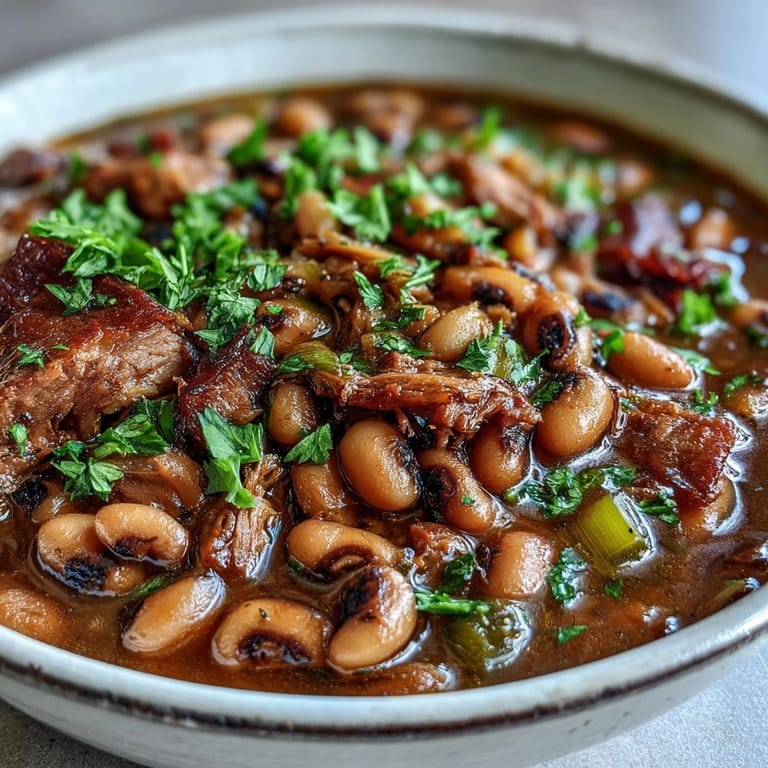
- Black-eyed peas: A pound of dried peas might seem like a lot until you taste how they transform into something creamy and tender—the rinsing and sorting step matters more than you'd think, catching any little stones the processor missed.
- Smoked pork neck bones: These are the soul of the dish, lending their deep, smoky flavor to every single bean; if you can't find neck bones, ham hocks work beautifully and are often easier to locate.
- Onion, celery, and bell pepper: This trio, the holy trinity of Southern cooking, creates the aromatic foundation that makes everything taste like it's been simmering for generations.
- Garlic: Four cloves minced fine will dissolve into the broth and add a subtle richness that balances the smokiness.
- Water or chicken broth: Seven cups gives you enough liquid for the peas to cook through while building a silky broth that's almost gravy-like by the end.
- Creole seasoning: This blend of spices is what gives the dish its distinctive warmth; you can adjust it up or down depending on how bold you like your food.
- Bay leaf, thyme, smoked paprika, and black pepper: Each one adds a layer—the bay is structural, the thyme adds earthiness, the paprika echoes the pork's smokiness, and pepper keeps everything honest.
- Salt: Always taste at the end; the pork and broth already contribute salt, so you might need less than you think.
- Fresh parsley and hot sauce: These are your finishing touches, adding brightness and a little heat that makes people lean back and say mmm.
Tired of Takeout? 🥡
Get 10 meals you can make faster than delivery arrives. Seriously.
One email. No spam. Unsubscribe anytime.
Instructions
- Soak your peas the night before:
- If you're thinking ahead, cover a pound of rinsed peas with water and let them sit overnight—this head start makes them cook more evenly and helps them maintain their shape. If you're short on time, the quick soak method works too: boiling water, one hour of patience, and you're ready to go.
- Build your flavor base:
- Heat a little oil in your Dutch oven over medium heat, then add your onion, celery, and bell pepper, letting them soften for about five minutes until the kitchen smells like the beginning of something good. When the vegetables start to look translucent around the edges, add your minced garlic and let it toast for just a minute until it's fragrant but not brown.
- Combine everything and bring it to life:
- Add your drained peas, smoked pork, broth, and all your seasonings to the pot, stirring gently to combine everything without crushing the beans. Bring it to a boil so you see those first big bubbles breaking the surface, then immediately turn the heat down low, cover the pot, and let it settle into a gentle simmer.
- Let time do the work:
- Walk away and let the peas cook for about an hour and a half, stirring every twenty minutes or so to prevent sticking and to check how things are progressing. You'll know you're done when the peas are tender enough to break with a gentle push of your spoon and the pork is so soft it's practically falling off the bone.
- Finish with the pork:
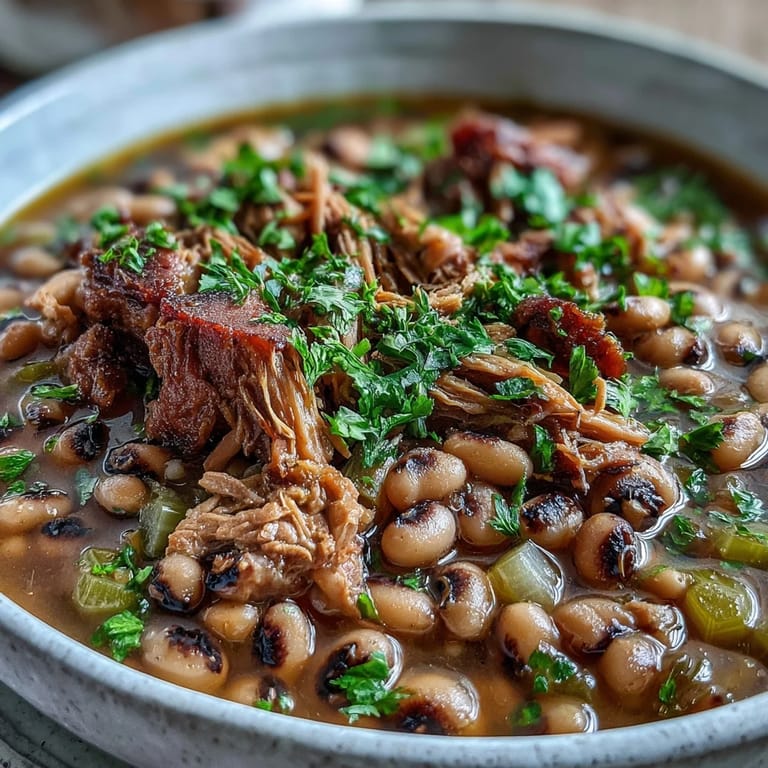
- Carefully remove the pork bones from the pot and set them on a plate to cool slightly, then pick off any meat that's clinging to them and shred it into bite-sized pieces. Return that shredded meat to the pot and discard the bones, letting all those flavors meld together one final time.
- Taste and season to your satisfaction:
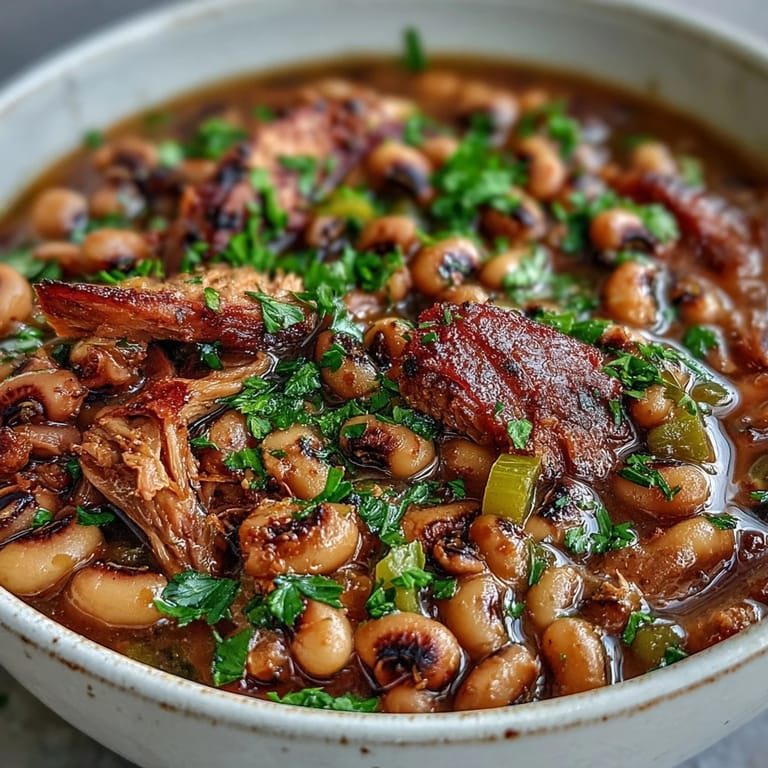
- Remove the bay leaf, then taste the broth carefully and add salt as needed—remember that you've been building flavor for nearly two hours, so you might be surprised at how little you need. Serve it hot in wide bowls, finished with a sprinkle of fresh parsley and a drizzle of hot sauce if you want that final kick.
 Save to Pinterest
 There's something sacred about serving this dish on the first day of the year, something that acknowledges both the weight of what came before and the lightness of possibility ahead. My daughter asked me once why we had to have black-eyed peas specifically, and I told her it wasn't about magic, but about honoring the people who taught us that taking time to cook something thoughtfully is itself a kind of luck.
Why This Dish Matters on January First
The tradition runs deep in Southern culture, a blend of African, Caribbean, and Southern American cooking traditions that converged in the American South. The symbolism—black-eyed peas for coins, greens for paper money, cornbread for gold—might seem quaint until you remember that food and ritual have always been how humans mark time and hope for better things. Making this dish connects you to generations of people who understood that feeding yourself and others with intention is its own form of blessing.
Storage and Leftovers
I've found that black-eyed peas actually taste better the next day, when all the flavors have had time to get to know each other in the fridge. The broth thickens slightly and becomes even more luxurious, and if you're reheating it on the stove with a little splash of water or broth, it warms through in about ten minutes and tastes like fresh cooking.
Serving Suggestions and Variations
The traditional route is over white rice or with cornbread on the side—the cornbread soaks up the broth in a way that feels almost indulgent. But I've also served it alongside roasted vegetables, with crusty bread for soaking, or even spooned over polenta for a slightly different take. If you're cooking for vegetarians, the smoked paprika and a splash of liquid smoke do an impressive job of mimicking that pork flavor, and the beans themselves are hearty enough to carry the dish.
- Pair it with collard greens for the traditional New Year's trio, where the greens represent paper money alongside the peas' coins.
- Add a hot sauce condiment at the table so everyone can dial in their own heat level without you having to guess.
- Make a double batch and freeze half in portions—it's the kind of thing you'll be grateful to find when a cold January afternoon needs something warm and nourishing.
 Save to Pinterest
 There's a quiet comfort in knowing how to make this, in understanding that something so simple can carry so much meaning. Every time you make it, you're participating in something larger than just feeding yourself.
Common Recipe Questions
- → Why are black-eyed peas eaten on New Year's Day?
Black-eyed peas are a Southern tradition believed to bring good luck and prosperity in the coming year. The peas represent coins, and when eaten with collard greens (representing paper money) and cornbread (representing gold), they symbolize wealth and fortune.
- → Do I need to soak the black-eyed peas overnight?
Overnight soaking is recommended for the best texture and even cooking, but you can use the quick soak method by covering the peas with boiling water for one hour. Either method ensures the peas cook properly and become tender.
- → What can I use instead of pork neck bones?
Smoked ham hocks, smoked turkey wings, or a smoked ham shank work beautifully as alternatives. For a vegetarian version, omit the meat entirely and add extra smoked paprika plus a splash of liquid smoke for that distinctive smoky flavor.
- → How long will leftovers keep in the refrigerator?
Cooked black-eyed peas will stay fresh in an airtight container in the refrigerator for 4-5 days. The flavors actually develop and improve over time, making this an excellent dish to prepare ahead of time.
- → Can I freeze this dish?
Yes, this freezes exceptionally well for up to 3 months. Cool completely before transferring to freezer-safe containers. Thaw overnight in the refrigerator and reheat gently on the stovetet, adding a splash of water or broth if needed.
- → What should I serve with black-eyed peas?
For the traditional New Year's spread, serve over steamed white rice with collard greens and cornbread. Hot sauce, diced raw onions, or pickled peppers make excellent toppings for added flavor and heat.