 Save to Pinterest
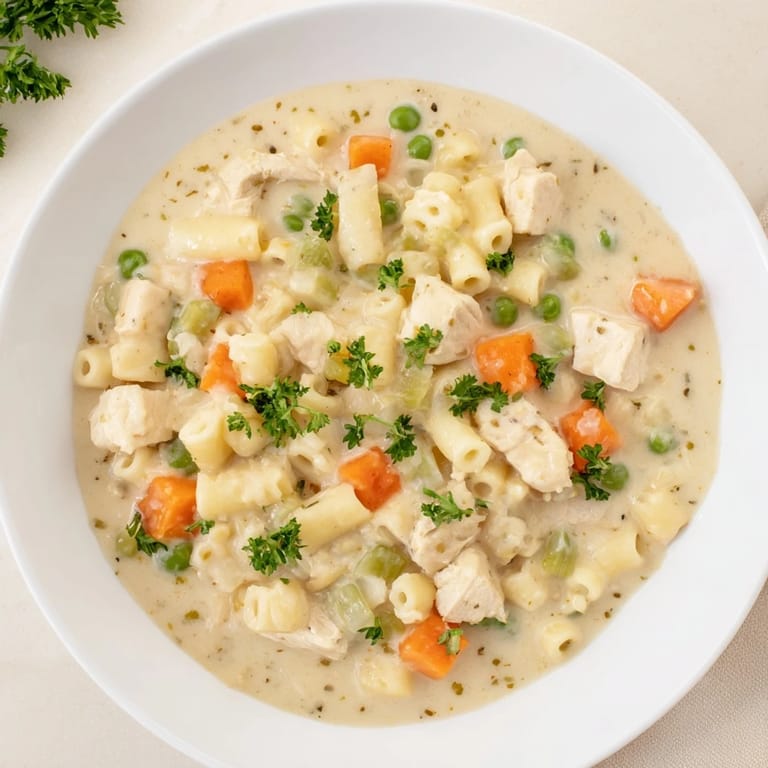
 There's something about a bowl of chicken pot pie soup that makes everything feel manageable again. I discovered this deconstructed version on a rainy Tuesday when I opened the fridge to find leftover rotisserie chicken and realized I didn't have the energy to roll out pie dough. The idea hit me suddenly: what if I just made it into soup instead? Twenty minutes later, I was ladling something so creamy and deeply satisfying that my partner asked for seconds before I'd even sat down. It became the recipe I reach for when life needs a hug.
The first time I made this for someone else was when my sister called to say she'd had a rough day at work. I had her come over, and while she sat at my kitchen counter telling me about everything that had gone wrong, I quietly started chopping vegetables. By the time the soup was ready, her shoulders had dropped, and she told me it tasted like the stuff our grandmother used to make—which it absolutely doesn't, but that's when I knew I'd nailed something important.
Ingredients
- Cooked chicken breast, 2 cups: Use shredded if you want it to melt into the broth, or dice it if you like bites you can really sink your teeth into. Rotisserie chicken saves you an entire step and honestly tastes better.
- Carrots, 1 cup diced: Don't skip these—they add sweetness that rounds out the whole soup.
- Celery, 1 cup diced: It's the quiet backbone of flavor here, barely noticeable but missed if it's gone.
- Frozen peas, 1 cup: They stay bright and slightly tender rather than mushy, which matters more than you'd think.
- Yellow onion, 1 small diced: Cook it long enough that it becomes translucent and soft, almost invisible but everywhere.
- Garlic, 2 cloves minced: Fresh makes all the difference, so don't use the pre-minced jar.
- Fresh parsley, 2 tablespoons chopped: Save some for garnish at the end—it brightens everything up.
- Ditalini pasta, 1 cup uncooked: These tiny tubes catch the broth like little flavor sponges, but regular small pasta works if that's what you have.
- Low-sodium chicken broth, 4 cups: Go for real broth if you can, not bouillon, it's worth the difference.
- Whole milk, 1 cup: This is the backbone of the creamy texture.
- Heavy cream, 1/2 cup: It sounds like a lot but gets distributed throughout, adding richness without heaviness.
- Unsalted butter, 2 tablespoons: Lets you control the salt level and tastes cleaner.
- All-purpose flour, 2 tablespoons: This is your thickener—the secret to why it coats the spoon just right.
- Salt, 1 teaspoon: Taste as you go and adjust, because homemade broth varies.
- Black pepper, 1/2 teaspoon: Freshly ground if you have a grinder, which honestly changes the whole flavor profile.
- Dried thyme, 1/2 teaspoon: It brings that herbal warmth that whispers chicken pot pie.
- Dried sage, 1/2 teaspoon optional: Use this if you want to lean all the way into that pie flavor, skip it if you prefer something lighter.
Tired of Takeout? 🥡
Get 10 meals you can make faster than delivery arrives. Seriously.
One email. No spam. Unsubscribe anytime.
Instructions
- Build your flavor base:
- Melt butter in a large pot over medium heat and add the onion, carrots, and celery. Let them soften for about 5 minutes, stirring every so often—you're not looking for color here, just tenderness. The kitchen will smell like the start of something warm.
- Add the garlic bloom:
- Stir in the minced garlic and cook just for a minute until it stops smelling raw and starts smelling like dinner. This matters more than you'd think because raw garlic tastes sharp and awkward in a creamy soup.
- Make your roux:
- Sprinkle the flour over the vegetables and cook for 2 minutes, stirring constantly, so the flour cooks right into the butter and loses that raw, chalky taste. This is what will make your soup thicken instead of staying watery and sad.
- Whisk in the broth:
- Pour in the chicken broth slowly while whisking—this is the step people skip and then wonder why they have lumps. A steady hand and patience here saves you everything. Then add the milk and cream, still whisking, and let it all come to a gentle simmer.
- Cook the pasta:
- Add the ditalini, thyme, sage if you're using it, salt, and pepper. Simmer uncovered for 10 minutes, stirring occasionally, until the pasta is tender but still has a tiny bit of resistance when you bite it. You want al dente because it'll soften more as the soup sits.
- Finish with the chicken:
- Stir in your cooked chicken and the frozen peas, then let everything simmer together for another 3 to 5 minutes until the peas are tender and the whole thing smells like it should be served at a dinner table with people you love. Taste it and adjust the salt and pepper—this is non-negotiable.
- Plate and garnish:
- Stir in the fresh parsley right before serving, ladle into bowls, and finish with a sprinkle of extra parsley on top. It looks prettier and tastes fresher.
 Save to Pinterest
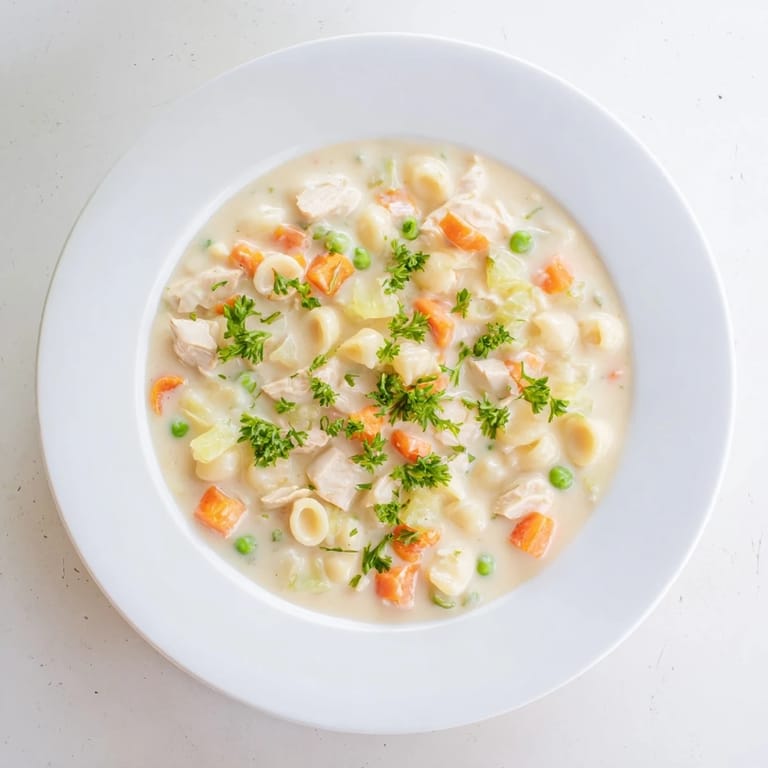
 What I love most about this soup is that it's become the thing I make without thinking, the way other people bake cookies or make grilled cheese. It sits on the stove during real conversations, not taking up mental space, just quietly becoming something that matters.
How to Make It Even Better
The base recipe is solid, but there are small moments where you can make it feel special. A splash of dry white wine whisked in with the broth adds a brightness that cuts through the cream in a way people notice but can't quite name. If you're serving this to someone who loves herbs, a pinch more thyme or a tiny bit of dried tarragon will make them feel seen. Some nights I add a bay leaf while it simmers and fish it out before serving—it doesn't change the flavor exactly, but it deepens something underneath.
Timing and Temperature Notes
This soup takes about 45 minutes from pantry to bowl, with most of that time being gentle simmering while you're free to do something else. The beauty is that it doesn't require precision or special equipment—just a large pot, a whisk, and attention to when things are actually tender. If you're cooking for a crowd, the recipe doubles beautifully and actually tastes better the next day after the flavors have gotten to know each other.
Storage and Serving Ideas
This soup keeps in the refrigerator for up to 4 days and reheats gently over medium heat with a splash of broth or milk so it doesn't get too thick. It also freezes well for up to 3 months, though the pasta softens a bit more on thaw—which some people actually prefer. Serve it with crusty bread for dipping or a sharp green salad that cuts through the richness and makes you feel like you're eating balanced meals.
- If the soup thickens too much in storage, just thin it with a little broth or milk when you reheat.
- Toast your bread with butter and garlic on the side—this deserves proper accompaniments.
- Pair with something acidic like a salad or lemon to balance the cream.
 Save to Pinterest
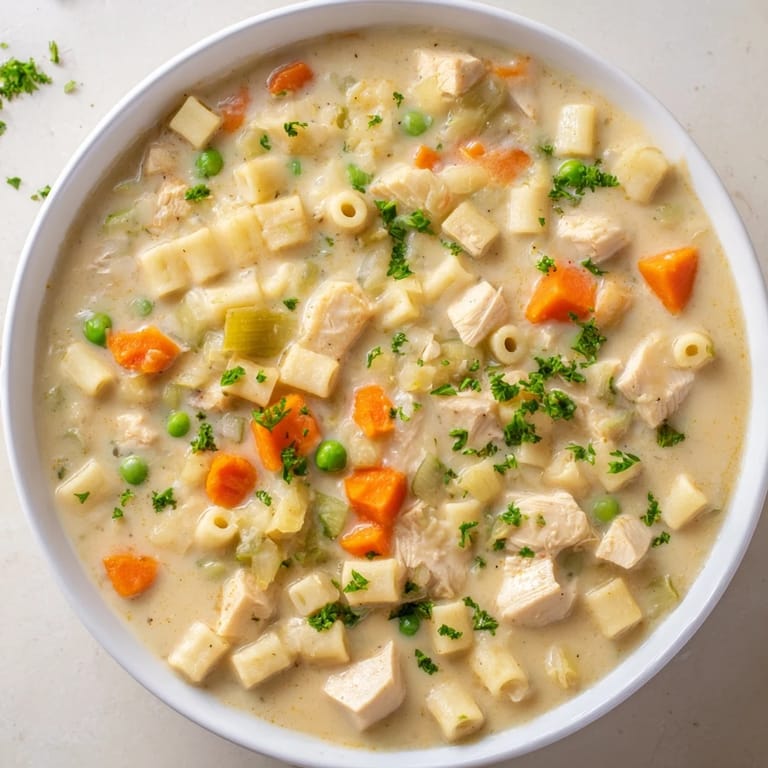
 This is the soup that proves comfort food doesn't have to be complicated. It's there when you need something warm and it simply works.
Common Recipe Questions
- → Can I use rotisserie chicken instead of cooked chicken breast?
Yes, rotisserie chicken works well and speeds up preparation without compromising flavor.
- → How can I make the dish gluten-free?
Substitute ditalini pasta and all-purpose flour with gluten-free alternatives to keep it safe for gluten sensitivities.
- → What is the best way to avoid lumps when adding flour?
Sprinkle flour over the sautéed vegetables and stir continuously for 2 minutes before gradually whisking in broth to prevent lumps.
- → Can I adjust the seasoning to suit my taste?
Absolutely, taste before serving and add salt, pepper, or herbs as desired for balanced flavor.
- → What sides pair well with this dish?
Crisp green salads or crusty bread complement the creamy pasta and chicken blend perfectly.