 Save to Pinterest
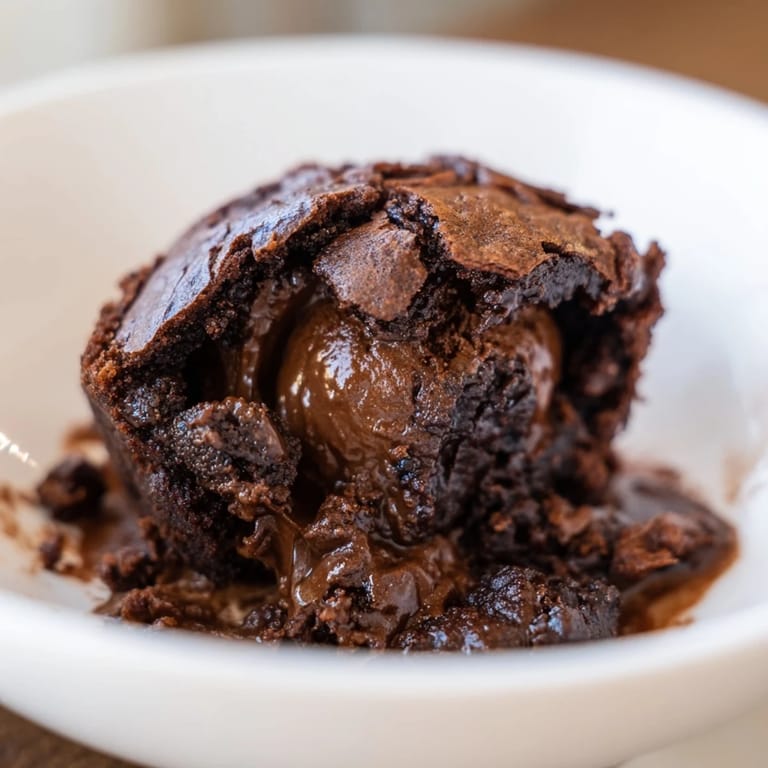
 I discovered this brownie pudding on a rainy afternoon when I was determined to impress someone who claimed they'd tasted every chocolate dessert worth eating. The moment it came out of the oven with that crackled, almost weathered surface hiding a warm, molten center, I knew I'd found something special. There's a magic in desserts that transform as they cool—this one rewarded patience with layers of texture and flavor that felt like a secret only a few people knew.
I made this for a dinner party once, and someone asked for seconds before finishing their first serving—which never happens with chocolate desserts because people usually play it cool. But this dish breaks through that restraint, maybe because it's warm, maybe because it's unexpected, or maybe because there's something about molten chocolate that makes people honest about their cravings.
Ingredients
- Unsalted butter (225 g): The foundation of richness; room-temperature mixing matters more than you'd think.
- Semisweet chocolate, chopped (170 g): Chop it yourself if you can—the smaller pieces melt more evenly and taste fresher.
- Large eggs at room temperature (4): Cold eggs fight against the sugar and won't whip to that pale, ribbon-like stage that traps air and lightness into the batter.
- Granulated sugar (2 cups/400 g): This isn't just sweetener; it's what transforms the eggs into something almost mousse-like.
- All-purpose flour (1/2 cup/65 g): The flour keeps the structure from collapsing, but keep it minimal—this isn't a cake.
- Unsweetened cocoa powder (2 tbsp): Adds depth without adding moisture, so the pudding stays luscious.
- Vanilla extract (2 tsp): A small amount that somehow unlocks all the other chocolate flavors.
- Kosher salt (1/4 tsp): Salt makes chocolate taste more like chocolate—don't skip it.
- Vanilla ice cream or whipped cream: Optional but honestly, not really optional when you taste the warm pudding with something cool.
Tired of Takeout? 🥡
Get 10 meals you can make faster than delivery arrives. Seriously.
One email. No spam. Unsubscribe anytime.
Instructions
- Heat your oven and prepare the vessel:
- Set the oven to 325°F—lower than you'd expect, which is the secret to keeping that center soft. Butter the baking dish thoroughly so nothing sticks to those delicate edges.
- Melt chocolate and butter together:
- Use a double boiler or a bowl over simmering water, stirring until there are no streaks left. Let it cool just enough that it won't scramble the eggs when you combine them.
- Whip eggs and sugar into pale submission:
- This takes 5–10 minutes with a stand mixer on medium-high speed. You'll see the mixture transform from glossy and thin to thick, pale, and mousse-like—this trapped air is what creates the structure.
- Fold in chocolate gently:
- Add vanilla and salt first, then pour in the cooled chocolate mixture. Mix on low speed just until combined; overworking here deflates all that careful air you just whipped in.
- Fold in flour and cocoa:
- Sift them together first so there are no lumps, then use a spatula to fold gently. Stop as soon as you don't see dry streaks—this takes maybe 20 seconds of folding.
- Create a water bath:
- Pour batter into the prepared dish, then nestle it into a larger roasting pan. Fill the pan with hot tap water until it reaches halfway up the sides of the baking dish—this gentle, humid heat is what keeps the center from setting.
- Bake and watch for the moment:
- Bake for 1 hour until the top is set and crackly but the center still jiggles slightly when you gently shake the dish. Overbaking is the enemy here.
- Cool and serve warm:
- Let it rest for at least 15 minutes so the structure firms up just slightly, but serve it still warm. The pudding will continue to set as it cools, revealing new textures with each spoonful.
 Save to Pinterest
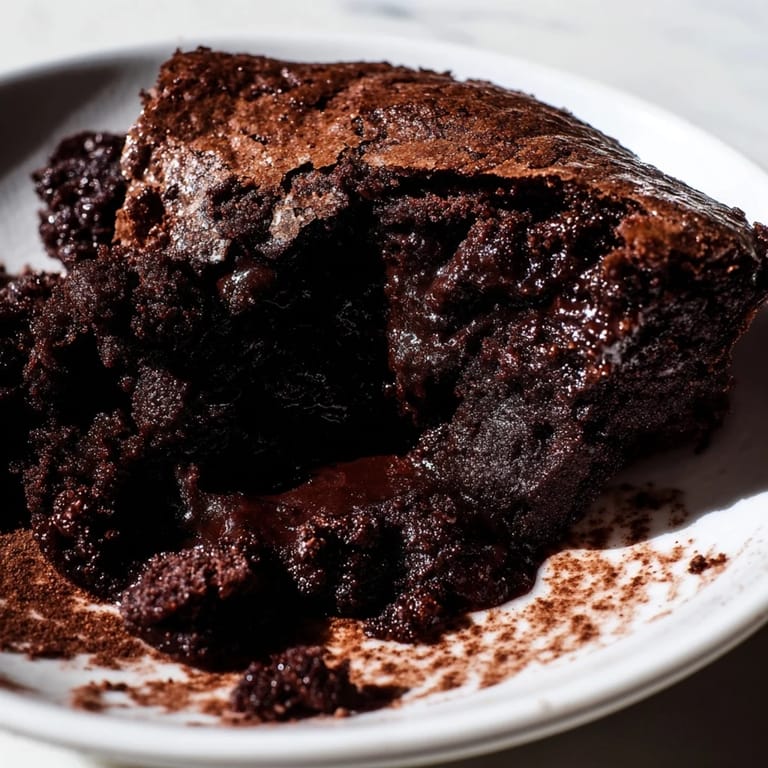
 There's a moment when you pull this out of the water bath and the steam rises up, and you just know something good is about to happen. That's when I realized this dessert isn't complicated—it's just precise, and precision is really just respect for the ingredients.
Why This Dessert Works
The magic lives in the contrast: a fully set, crackled exterior that's almost crispy, and a center that stays soft and spoonable. This balance happens because of the water bath and the lower oven temperature—they prevent the edges from racing ahead and drying out while the middle stays molten. It's the same principle used in custards and crème brûlée, but expressed through chocolate in a way that feels almost too indulgent.
The Chocolate Question
Semisweet chocolate is the starting point, but this dessert invites experimentation. Some people add a pinch of espresso powder to deepen the chocolate flavor without making it taste like coffee—it's like turning up the volume on what's already there. Others use bittersweet chocolate if they find semisweet too sweet, though you might want to reduce the sugar slightly if you go that route. The choice changes the mood of the entire dessert, so trust your instincts about what kind of chocolate experience you're after.
- Chop chocolate finely so it melts evenly and incorporates smoothly.
- If using espresso powder, sift it with the cocoa powder to distribute it evenly.
- Taste a small piece of your chocolate before using it—you're choosing a flavor, not just an ingredient.
Serving and Storing
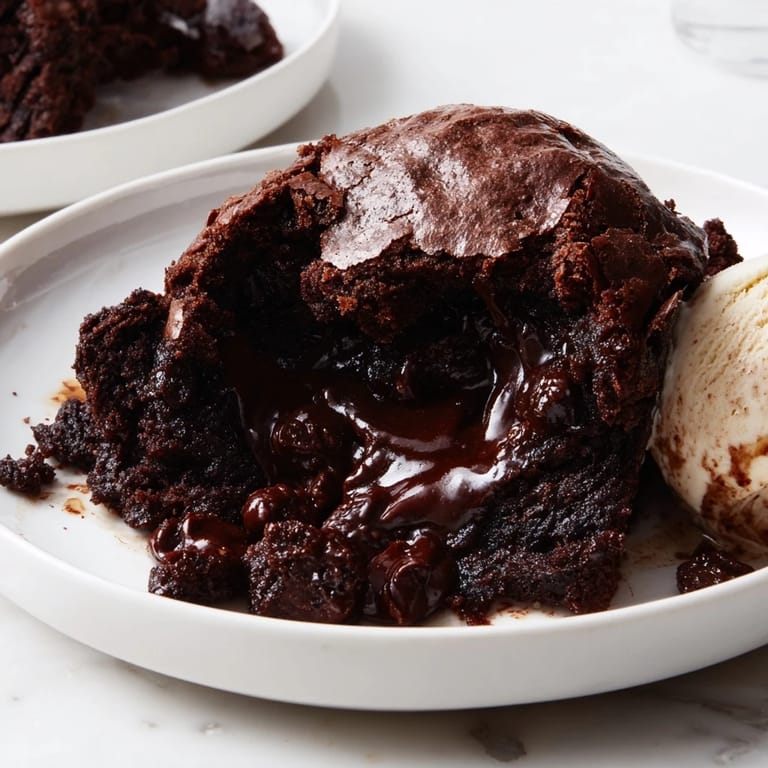
Serve this warm, ideally within an hour of it coming out of the oven, when that pudding center is still soft and the contrast between textures is most pronounced. Vanilla ice cream or lightly whipped cream isn't optional in spirit—the cool, creamy element against warm chocolate is essential to the experience. If you need to make it ahead, the baked pudding keeps at room temperature for a few hours, and you can gently reheat it in a 300°F oven for about 10 minutes before serving.
 Save to Pinterest
 This brownie pudding is the kind of dessert that reminds you why chocolate exists—not as an everyday comfort, but as something worth slowing down for. Make it when you want to say something without words.
Common Recipe Questions
- → How do I achieve the crackly top on this dessert?
Beating the eggs and sugar until ribbon-like creates the glossy crust. Baking in a water bath helps set the outer layer while keeping the center soft.
- → What type of chocolate works best for this dish?
Semisweet chocolate provides balanced sweetness and depth. For stronger flavor, bittersweet chocolate or adding espresso powder can enhance richness.
- → Why is a water bath necessary during baking?
The water bath gently cooks the batter, preventing it from drying out and ensuring a soft, pudding-like center beneath the crackly surface.
- → Can I prepare this ahead of time?
This dessert is best served warm shortly after baking, but it can be cooled and reheated gently to maintain its gooey texture.
- → What sides complement this chocolate dessert?
Lightly sweetened whipped cream or vanilla ice cream add creamy contrast that balances the intense chocolate flavor.